What is a KNX control system?
If you are investigating smart home or building automation, you might have encountered the term KNX control system. But what is it precisely, and why is it so prevalent in residences, hotels, offices, and commercial establishments? This guide provides a comprehensive overview of KNX systems, their advantages, and their role in enhancing contemporary automation.
What is a KNX Control System?
A KNX control system is a standardized protocol for smart building automation that facilitates the management and control of various devices, including:
- Lighting and dimmers
- Heating, ventilation, and air conditioning (HVAC)
- Blinds and shutters
- Security and access control
- Energy monitoring and metering
KNX enables these devices to communicate over a unified network, establishing a centralized and intelligent control system for your home or building.
Key Features of KNX Control Systems
- Interoperability – KNX devices from various manufacturers can operate together without issues.
- Scalability – You can easily expand your system by adding new devices, rooms, or floors.
- Energy Efficiency – Automated management of lighting, HVAC, and blinds leads to reduced energy consumption.
- Remote Access – You can control your KNX system through smartphone applications, tablets, or web portals.
- Customization – You can personalize automation scenarios to fit your requirements, such as lighting scenes and climate control schedules.
- Reliability – KNX is a globally acknowledged standard with a proven track record in both residential and commercial applications.
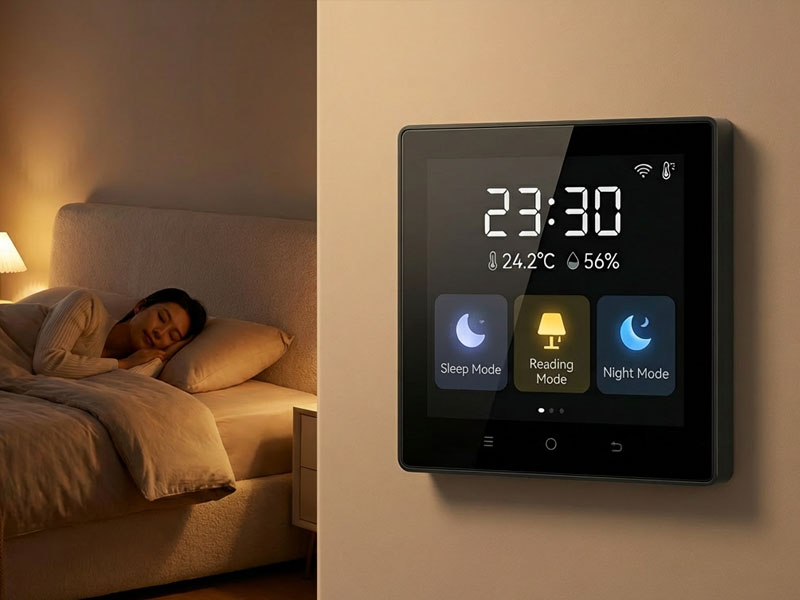
YC-SM41P-KNX
4″ KNX Smart Touch Control Panel
How KNX Functions
A KNX system operates on a bus network where devices interact through twisted-pair wiring, powerline, IP/Ethernet, or even wireless protocols. The devices share information, allowing for:
Centralized monitoring
- Automated responses to sensor inputs
- Remote management and scheduling
For instance, a motion sensor can activate lights, adjust blinds, and control HVAC when an individual enters a room.
Uses of KNX Control Systems
- Smart Homes – Centralized management of lighting, climate, and security for enhanced convenience and energy efficiency.
- Smart Hotels – Automation of rooms, energy optimization, and improvements in guest comfort.
- Offices & Commercial Buildings – Monitoring of environmental conditions, energy management, and integration of security systems.
- Industrial & Public Spaces – Automated lighting, HVAC, and safety systems designed for large-scale operations.
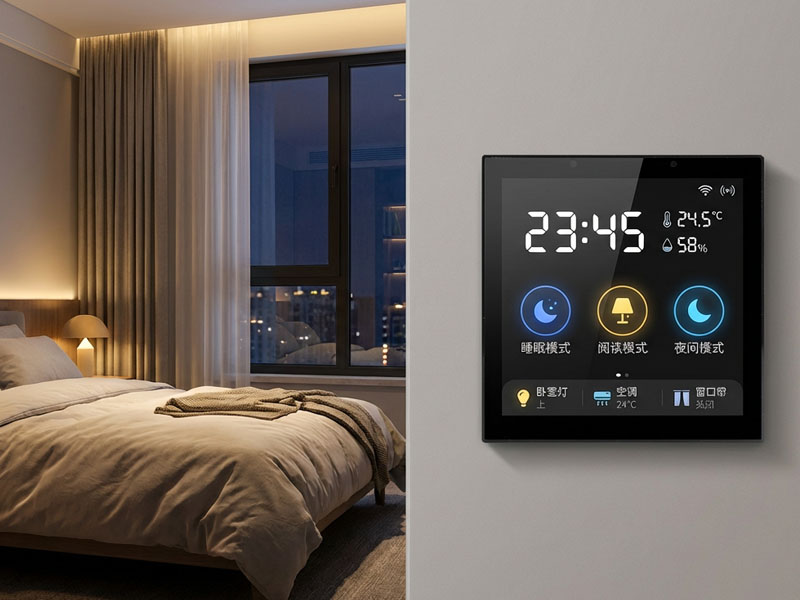
4″ KNX Smart Touch Control Panel
Why Opt for KNX Panels from Portworld?
Portworld provides high-performance KNX touch panels suitable for both residential and commercial applications:
- 4-inch compact panels designed for room-level management
- 10.1-inch large panels intended for centralized dashboards
- Compatibility with Android, Linux, and custom UI integration
- Works seamlessly with Zigbee, PoE, and multi-sensor configurations
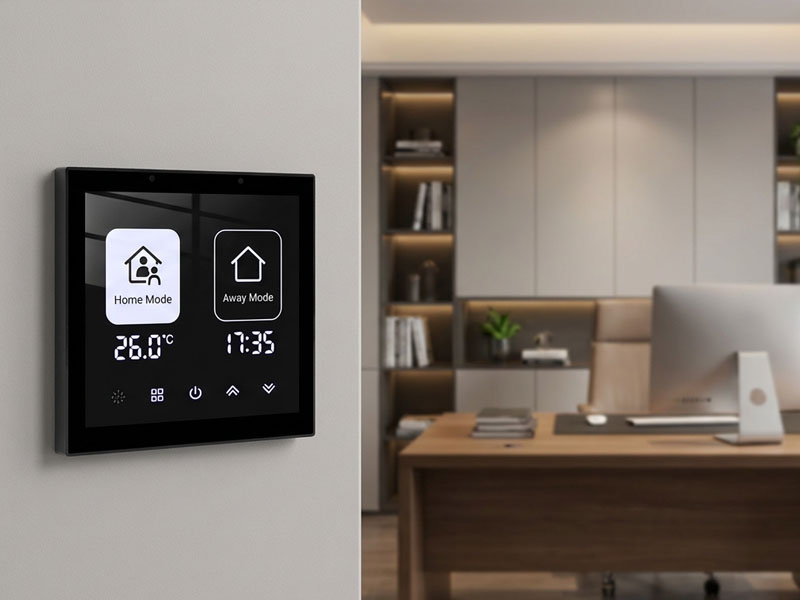
4″ KNX Smart Touch Control Panel
With more than 17 years of research and development experience, Portworld offers customizable OEM/ODM solutions for KNX-based smart homes and buildings.
A KNX control system serves as the foundation of contemporary automation, facilitating centralized, dependable, and scalable management of lighting, HVAC, security, and energy systems. Whether you are constructing a smart home, hotel, or commercial establishment, selecting a KNX system guarantees efficiency, comfort, and adaptability for the future.
SEO Keywords: KNX control system, smart home automation, KNX panels, building automation, KNX touch panel, smart hotel control, energy-efficient automation