What Is a Digital Signage Display and How Does It Work?
In the current digital-centric landscape, companies are transitioning from conventional posters and printed ads to more engaging communication methods. A digital signage display refers to an electronic system utilized to convey multimedia content, including advertisements, announcements, product details, navigation assistance, and interactive services.
Digital signage has emerged as a vital resource for enhancing customer interaction and providing real-time information across various settings, from retail outlets and airports to hospitals and smart offices.
What Constitutes a Digital Signage Display?
A digital signage display is a commercial-grade screen system that employs LCD, LED, or OLED technology to showcase digital content.
In contrast to standard consumer televisions, digital signage displays are tailored for professional settings, featuring:
- Continuous operation 24/7
- Enhanced durability
- Remote management of content
- Components designed for commercial use
- Versatile installation options
Digital signage systems can function as basic advertising screens or sophisticated interactive terminals equipped with touch capabilities, sensors, cameras, and network connectivity.
How Does Digital Signage Operate?
A comprehensive digital signage system typically comprises three primary components:
1. Display Hardware
The display serves as the visual output device that showcases content to the audience.
Common types include:
- Wall-mounted digital signage displays
- Floor-standing kiosks
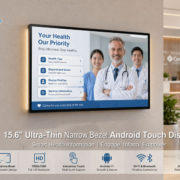
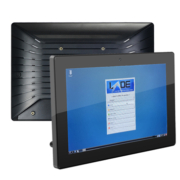
- Interactive touch display
- Stretched bar displays
- Outdoor high-brightness displays
- Double-sided hanging displays
Depending on the intended use, displays can vary from compact 7-inch panels to expansive 86-inch commercial screens.

Digital Signage Display
For outdoor applications, digital signage displays may feature:
- High brightness ranging from 1500 to 3000 nits
- IP65 waterproof protection
- IK10 anti-vandal glass
- Wide operational temperature range
These specifications ensure visibility and dependability in demanding environments.
2. Media Player or Embedded System
The media player governs the content displayed on the screen.
Contemporary digital signage displays frequently incorporate embedded computing platforms rather than relying on external players.
Common hardware platforms consist of:
- Rockchip RK3566
- RK3568
- RK3576
- RK3588
These processors facilitate seamless multimedia playback, 4K video, AI functionalities, and tailored software solutions.
Operating systems may encompass:
- Android
- Linux
- Debian
- Windows
This adaptability enables businesses to implement their own applications and management systems.
3. Content Management System (CMS)
The CMS serves as the software platform utilized to oversee and manage digital signage content.
Via a CMS, users can:
- Upload images and videos
- Schedule advertisements
- Update numerous displays remotely
- Monitor device status
- Manage various locations
For instance, a retail chain can refresh promotions across hundreds of stores without the need to physically visit each site.

Stretch Bar Monitor
Types of Digital Signage Displays
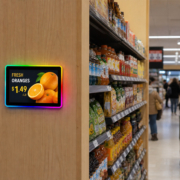
Retail Digital Signage
Retail establishments utilize digital displays to advertise:
- Product promotions
- Discount offers
- Brand initiatives
- New product launches
Stretched bar displays are particularly favored for shelf-edge advertising due to their ability to fit into compact spaces.
Interactive Touch Displays
Touchscreen digital signage enables customers to engage directly with the content.
Applications encompass:
- Self-service kiosks
- Product search terminals
- Visitor registration systems
- Intelligent wayfinding solutions
Meeting Room Scheduling Displays
Modern offices employ digital signage panels outside meeting rooms to indicate:
- Room availability
- Booking schedules
- Meeting details
PoE-powered touchscreen panels facilitate easier installation and management.
Outdoor Digital Signage
Outdoor displays are specifically designed for public settings such as:
- Bus stops
- Airports
- Tourist attractions
- Smart city initiatives
These displays necessitate enhanced protection against sunlight, adverse weather conditions, and physical damage.
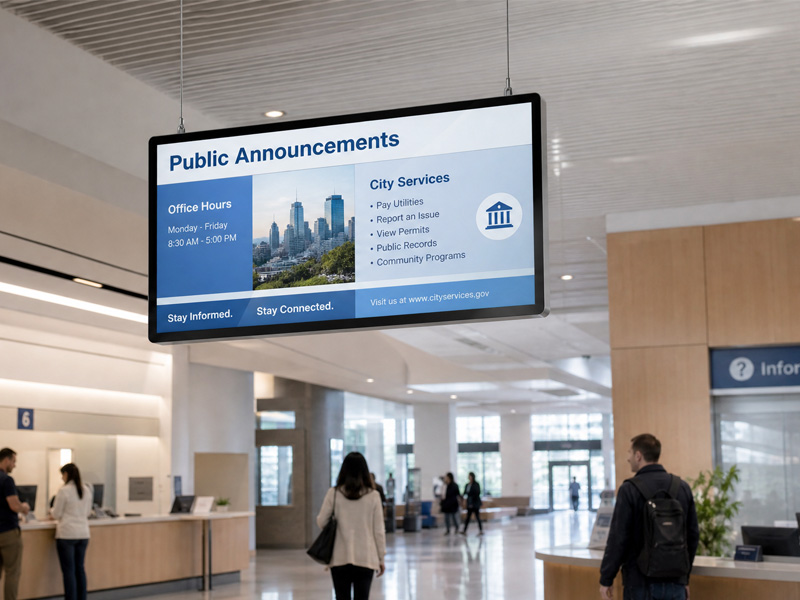
Stretch Bar Monitor
Advantages of Digital Signage Displays
Dynamic Content Updates
In contrast to printed posters, digital signage enables immediate updates. Businesses can modify promotions, announcements, or information in real time.
Enhanced Customer Engagement
Videos, animations, and interactive content capture more attention than static advertisements.
Centralized Management
Multiple displays across various locations can be managed from a single platform, enhancing operational efficiency.
Cost Efficiency
While the initial investment may be greater than that of traditional signage, digital signage significantly lowers long-term printing and maintenance expenses.
Portworld Digital Signage Solutions
Portworld offers tailored digital signage hardware solutions for commercial and industrial applications worldwide.
With OEM/ODM capabilities, Portworld provides support for:
- Android/Linux digital signage displays
- Touchscreen kiosks
- Outdoor advertising displays
- Stretched bar displays
- Custom PCBA and embedded systems
- CMS integration
- Hardware and software customization
From retail advertising and smart offices to transportation and healthcare applications, Portworld assists businesses in establishing dependable digital communication systems.
A digital signage display transcends being merely a screen—it serves as a comprehensive communication platform that integrates display hardware, embedded computing, and content management software.
By offering dynamic content, remote control, and interactive experiences, digital signage empowers businesses to enhance customer engagement and foster smarter commercial environments.