What Does an IK Rating Mean for Outdoor Digital Signage Displays?
The IK number indicates that a higher value corresponds to a greater capacity for the enclosure to endure impact energy under designated testing conditions. This rating is derived from standardized impact tests rather than a broad assertion of product durability.
In the context of outdoor digital signage, IK protection is pertinent to the housing, the protective front glass, and the overall display structure. The level of actual protection is contingent upon the configuration of the tested product; therefore, purchasers should confirm whether the indicated rating pertains to the entire display or solely to a specific component.
Overview of Common IK Ratings
The table below outlines various levels of impact protection that buyers might encounter when selecting digital signage for commercial applications.
| IK Rating | Impact Energy | What It Means |
|---|---|---|
| IK06 | 1 joule | Protection against relatively low-energy impacts |
| IK07 | 2 joules | Greater resistance to mechanical impact |
| IK08 | 5 joules | A commonly considered level for public-facing equipment |
| IK09 | 10 joules | Higher impact resistance for more demanding environments |
| IK10 | 20 joules | High impact resistance under standardized testing |
These values describe standardized impact energy, not a guarantee against every type of damage. The actual result depends on the test method, impact location, enclosure design, and product construction.
For example, an IK10 test represents a significantly higher impact energy than an IK08 test. However, it does not mean that an IK10-rated display is impossible to damage. Buyers should choose a rating based on the foreseeable risks at the installation site rather than automatically selecting the highest available rating.
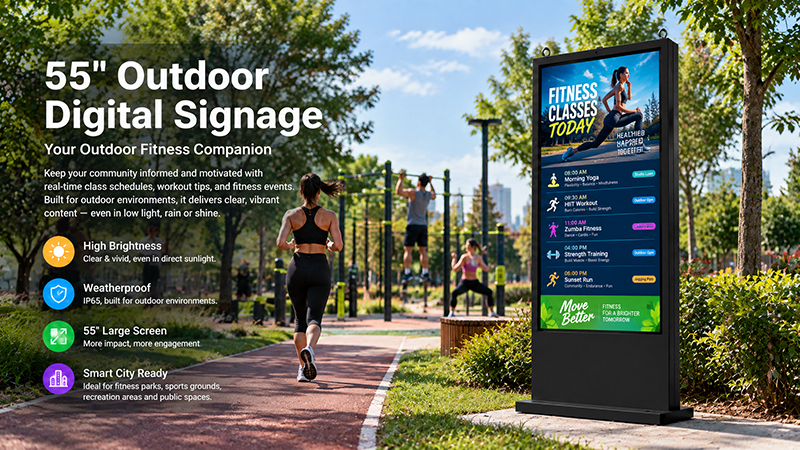
55 digital signage display1
The Importance of IK Rating for Outdoor Digital Signage
Safeguarding Displays in High-Traffic Public Spaces
Outdoor advertising screens are frequently positioned in areas where individuals maneuver equipment, transport luggage, park vehicles, or come into close proximity to the display. Unintentional impacts can happen even when the equipment is not being deliberately misused.
A display situated near the entrance of a shopping center may encounter different impact hazards compared to a screen installed high on a building’s wall. Similarly, a standalone advertising kiosk may necessitate greater consideration for enclosure durability and accessibility than a display placed within a restricted zone.
When choosing a commercial digital signage display, it is essential to take into account the mounting height, pedestrian flow, closeness to vehicles, and whether the public can directly access the screen.
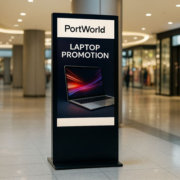
Portworld provides a variety of digital signage products in multiple formats, including wall-mounted displays, interactive touchscreen systems, and floor-standing advertising displays. For projects that involve installations visible to the public, these product types serve as initial points for assessing screen dimensions, mounting techniques, enclosure specifications, and the necessity for additional impact protection.
It is crucial to verify the appropriate IK rating for the specific model and configuration.
Mitigating the Risk of Damage to Screens and Enclosures
The screen constitutes merely one component of a digital signage system. An impact may also influence the front frame, mounting structure, internal connectors, or additional elements.
Consequently, it is essential to assess impact protection at the system level. Depending on the specific project, pertinent design factors may encompass reinforced enclosure structures, appropriate protective glass, secure mounting points, and the mechanical integration of the display panel.
In the case of interactive advertising displays, special attention should be given to the front glass and touch assembly, as they are directly exposed to user interaction. Buyers ought to verify the impact resistance of the assembled front structure instead of presuming that a robust enclosure inherently offers the same level of protection to the screen surface.
Portworld offers digital signage hardware along with OEM/ODM customization services. For projects with distinct mechanical specifications, clients can engage with the engineering team to discuss enclosure design, display integration, mounting limitations, and other hardware considerations.
These specifications should be examined during the product definition and prototype assessment phases, prior to advancing the design to mass production.
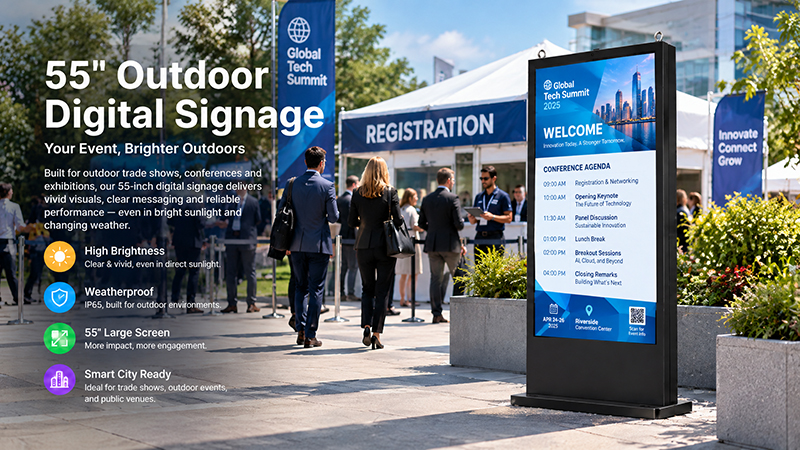
55寸 digital signage display
IK Rating vs. IP Rating: What Distinguishes Them?
IK and IP ratings serve distinct purposes in terms of environmental protection. Misunderstanding these ratings can result in inappropriate product specifications.
An IK rating evaluates the resistance to mechanical impacts, whereas an IP rating indicates the level of protection against the entry of solid particles and water under specific testing conditions.
For outdoor digital signage, both ratings can be crucial. A display may possess a high IP rating for dust and water resistance but could still be susceptible to mechanical damage. On the other hand, an enclosure designed to withstand impacts does not inherently ensure that water cannot penetrate the system.
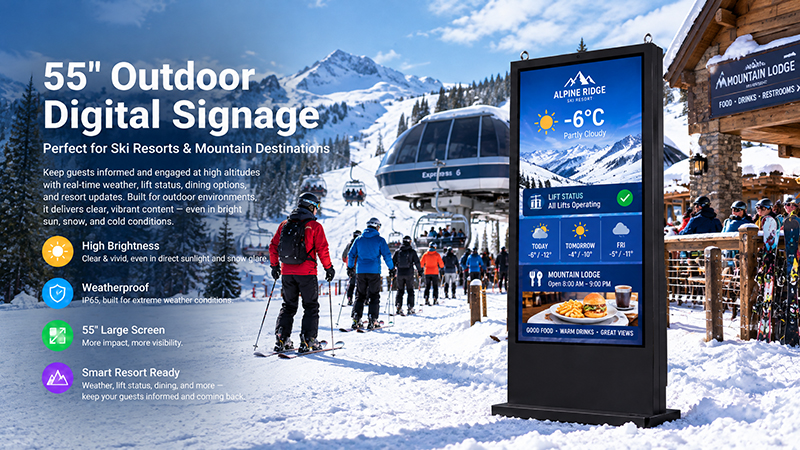
55 digital signage display
Take into account an outdoor advertising display situated in a bustling public space. Its design must consider:
- Impact resistance for both the screen and the enclosure.
- Adequate dust and water protection tailored to the installation environment.
- Sufficient brightness to contend with the anticipated ambient light.
- Effective thermal management for the specified operating conditions.
- Secure mounting and convenient maintenance access.
Portworld’s digital signage solutions encompass commercial display hardware and tailored display configurations. When planning an outdoor or semi-outdoor project, clients should specify both the necessary IP protection and the preferred IK rating, ensuring that the final assembled product aligns with these specifications.
It is essential to avoid assuming that all Portworld digital signage models share identical IP or IK ratings. The ratings and corresponding test evidence must be verified for the specific model under consideration.