PoE vs. DC Power for Wall-Mounted Smart Home Control Panels
When selecting a wall-mounted smart home control panel, key considerations include display size, processor performance, operating system, and communication protocols. Yet one important choice is sometimes overlooked: the power supply.
Should a smart home control panel be powered through Power over Ethernet (PoE) or a conventional DC connection?
Both options provide reliable power, but they differ in installation, network connectivity, cable management, and project costs. In smart homes, hotels, apartments, and commercial buildings, the choice of power solution can significantly affect the overall installation experience.
1. Understanding PoE and DC Power
Before comparing these options, it helps to understand how each works.
What Is PoE?
Power over Ethernet (PoE) enables a compatible Ethernet cable to carry both electrical power and network data to a device.
Rather than needing separate power and network cables, a PoE-powered smart home control panel can connect to a PoE switch or injector using a single Ethernet cable.
This offers two primary benefits:
- Power and wired network access are delivered through a single cable.
- Installation is easier for touchscreen devices mounted on walls.
- PoE is especially useful for smart home control panels placed where neat, well-organized wiring is a priority.
What Is DC Power?
- DC power operates the control panel using a dedicated direct-current power supply.
- Depending on the product’s design, the panel may accept different DC input voltages, such as 12V or other specified values.
- Network access is provided separately via Wi-Fi or an Ethernet connection.
DC power is a flexible choice for projects that already have a compatible power supply or do not need a wired network connection.
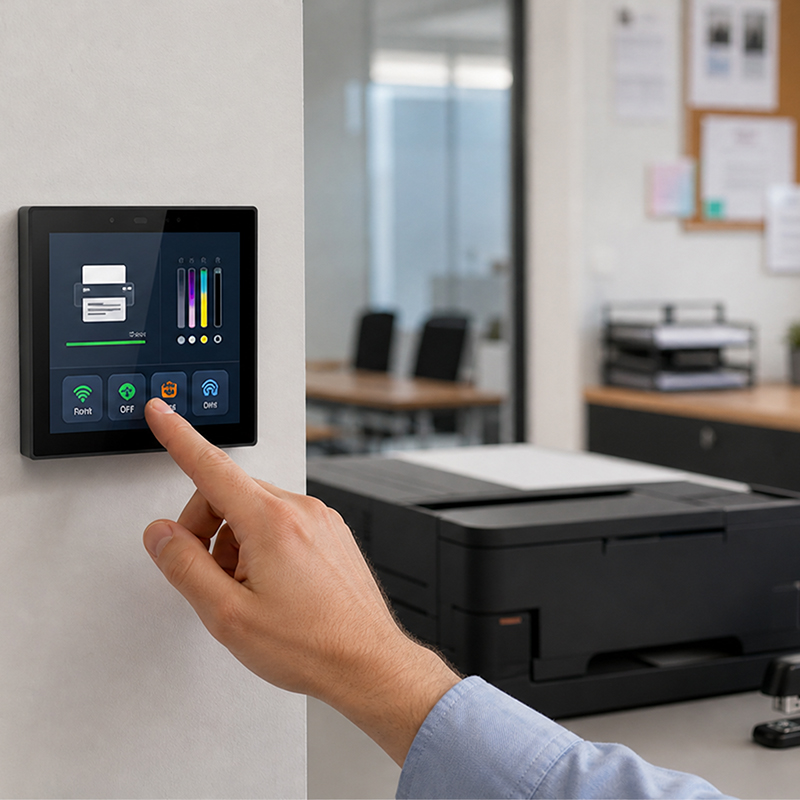
YC-SM43P ESP32 4″ Smart Touch Panel
2. PoE vs. DC Power: Key Differences
The main difference is how power is delivered and how network connectivity is arranged.
| Comparison | PoE Power | DC Power |
|---|---|---|
| Power connection | Ethernet cable | Dedicated DC input |
| Network connection | Wired Ethernet | Wi-Fi or separate Ethernet |
| Cable management | One cable for power and data | Separate power and network cables if using Ethernet |
| Installation | Convenient with existing PoE infrastructure | Flexible with available DC wiring |
| Centralized power | Supported through compatible PoE switches | Requires separate power distribution |
| Infrastructure cost | Requires PoE switch or injector | Requires a suitable DC power supply |
| Network stability | Wired Ethernet connection | Depends on Wi-Fi or separate Ethernet |
| Typical applications | Hotels, smart buildings, new installations | Residential retrofits and standalone panels |
It is worth noting that PoE is a power delivery method, not a network protocol. A PoE-powered panel can also support Wi-Fi, while a DC-powered panel can still use wired Ethernet if its hardware provides that interface.
3. Why PoE Is a Strong Option for Wall-Mounted Smart Home Panels
For touchscreen control panels installed permanently, PoE provides several practical benefits.
3.1 Easier Wall Installation
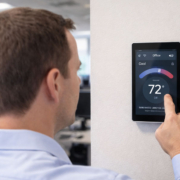
Wall-mounted control panels are commonly placed in living rooms, bedrooms, hallways, hotel rooms, and meeting spaces.
Conventional DC-powered installations may need separate cables for power and networking. PoE delivers both through a single Ethernet cable, reducing cable clutter and making installation simpler.
This approach is particularly useful in new construction, where Ethernet cabling can be planned before the walls are completed.
3.2 More Dependable Wired Connectivity
A smart home control panel may communicate with lighting controllers, HVAC systems, automation gateways, and other connected equipment.
Ethernet provides a stable network connection that does not rely on the strength of the local Wi-Fi signal.
When several control panels are installed, PoE can supply both power and network access through centralized Ethernet infrastructure.
3.3 Centralized Power Management
When several panels are installed across a building, a PoE switch can deliver power from a central location.
Depending on the capabilities of the switch and panels, administrators may also be able to restart connected devices remotely by cycling the relevant PoE port.
This approach can simplify maintenance in hotels, apartment buildings, and commercial properties.
3.4 A Cleaner Smart Home Design
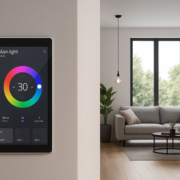
A wall-mounted touchscreen contributes to a room’s interior design. Visible power adapters and additional cables can make an installation appear less polished.
PoE supports a cleaner setup by reducing the number of cables connected to the panel.
This is a valuable benefit for projects focused on minimalist interiors and integrated smart home experiences.
4. When Is DC Power the Better Choice?
Although PoE is well suited to many installations, DC power remains a practical option.
4.1 Existing Residential Installations
In renovation projects, Ethernet cabling may not be present behind the planned panel location.
If an appropriate DC power connection is already available, using DC input can eliminate the need for additional network cabling work.
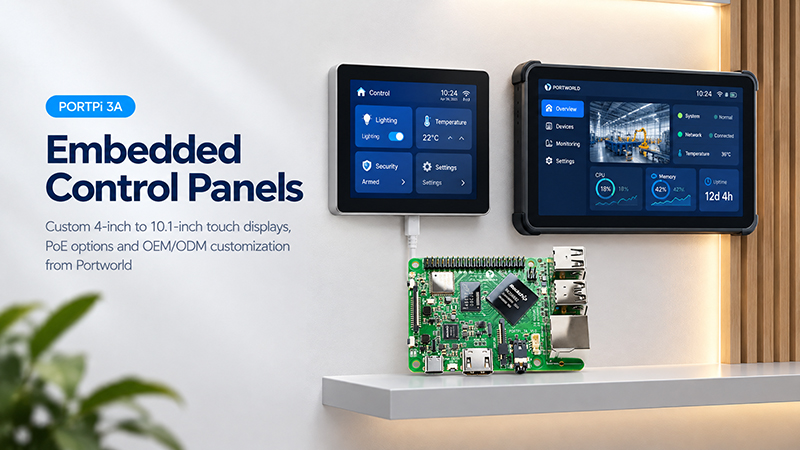
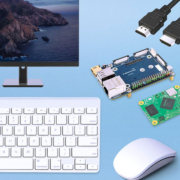
PortPi 3A single board computer
4.2 Wi-Fi-Based Smart Home Systems
Some smart home control panels communicate mainly via Wi-Fi.
In these cases, a dedicated DC power connection may be adequate, particularly if the panel does not require a wired network connection.
4.3 Projects With Limited Budgets
A PoE installation may involve additional costs for PoE switches, injectors, and network infrastructure.
For a small project using only one or two panels, DC power may be more cost-effective when suitable power supplies are already available.
4.4 Flexible Hardware Requirements
DC input can benefit custom embedded projects with varying voltage requirements, power budgets, and installation conditions.
For manufacturers developing smart home panels for multiple markets, DC power support can offer greater product flexibility.
5. PoE vs. DC: Which Is Better for Different Applications?
The best choice depends on the installation environment and system architecture.
| Application | Suggested Power Option | Reason |
|---|---|---|
| Smart villa | PoE | Centralized networking and cleaner installation |
| Hotel room control panel | PoE | Simplified wiring across multiple rooms |
| Smart apartment | PoE or DC | Depends on existing infrastructure |
| Wi-Fi-based home automation | DC | Suitable when wireless connectivity is sufficient |
| Commercial building management | PoE | Centralized network and power management |
| Residential renovation | DC | Can reuse existing power wiring |
| Multi-room control system | PoE | Easier centralized deployment |
For new smart-building projects, PoE is often the more convenient choice. In retrofit installations and wireless-focused systems, DC power may be more cost-effective.
6. What Should You Check Before Choosing a PoE Smart Home Control Panel?
Not every touchscreen panel with an Ethernet port supports PoE. An Ethernet connection and PoE power input are separate hardware capabilities.
Before selecting a panel, consider the following factors.
PoE standard compatibility: Verify that the panel supports IEEE 802.3af, IEEE 802.3at, or another specified power standard. The PoE switch or injector must support a compatible standard and supply sufficient power.
Power consumption: Account for the processor, screen size, display brightness, touch controller, and connected peripherals. Larger screens and more powerful processors may require a greater power budget.
Network interfaces: Confirm that the panel offers the Ethernet speed and Wi-Fi connectivity the project requires.
Installation environment: Assess the available cabling, wall-mounting structure, power infrastructure, and maintenance needs.
System integration: Determine whether the panel must communicate with KNX, Zigbee gateways, Modbus devices, MQTT brokers, or other automation systems. Such capabilities depend on the panel’s hardware interfaces, software, and project configuration—not merely its power supply.
7. Portworld PoE Smart Home Control Panel Solutions
Portworld develops wall-mounted touchscreen control panels for smart home automation, hospitality, apartments, and commercial building projects.
Its product range offers a choice of display sizes, processor platforms, operating systems, and connectivity options to accommodate different installation needs.
For example:
- YC-SM41P: A compact, 4-inch RK3566 smart home control panel featuring a 480 × 480 touchscreen, Android or Linux platform options, and PoE/RS485 configurations.
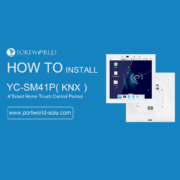
- YC-SM41P-KNX: A 4-inch RK3566-based smart control panel for projects that require KNX integration and PoE connectivity.
- YC-SM10P: A 10-inch RK3566 touchscreen panel with a 1280 × 800 display, Android 11, and PoE support.
Together, these models offer options for compact room controls, centralized smart home interfaces, and building automation applications. Confirm the specific hardware and protocol configuration for each project.
OEM and ODM Customization
Smart home projects have varying requirements. Some call for a compact 4-inch touchscreen, while others need a larger display, a tailored user interface, or specific communication interfaces.
Portworld offers OEM/ODM services that include:
- Hardware and PCB/PCBA customization.
- Display size, resolution, and touch configuration.
- Android and Linux system customization.
- Customized UI/UX and brand integration.
- PoE, Ethernet, RS485, and other interface configurations.
- KNX, Zigbee, Modbus, MQTT, and other protocol integration to meet project requirements.
Logo, packaging, firmware, and SDK support.
With more than 18 years of experience in embedded touchscreen solutions, Portworld supports customers throughout the entire process, from product design and prototyping through to mass production.
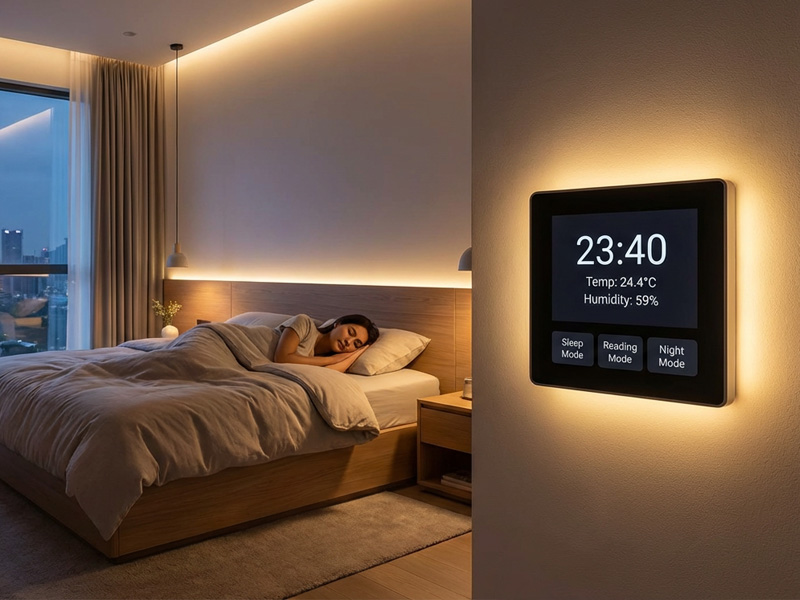
smart control panel factory-1
Final Recommendation: PoE or DC Power?
So, is PoE better than DC power for a wall-mounted smart home control panel?
For new installations, smart hotels, and commercial buildings, PoE is often the preferred option because it combines power and wired network connectivity, simplifies cable management, and supports centralized power distribution.
For existing homes, Wi-Fi-based systems, and projects with limited infrastructure, DC power remains a flexible and economical choice.
The most practical approach for product developers is to evaluate both options during the hardware design stage. If the target market includes different installation environments, offering PoE and DC power configurations can make a smart home control panel more adaptable to different customer requirements.