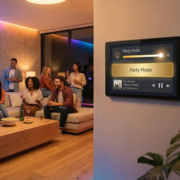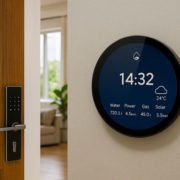
Local-control Smart Home Panel Compatible with Home Assistant and Zigbee2MQTT
As smart home ecosystems evolve, users are placing greater emphasis on local control, privacy, and system reliability rather than relying on cloud-based solutions. A local-control smart home panel that is compatible with Home Assistant and Zigbee2MQTT delivers precisely this—offering a fully offline-capable, highly adaptable, and robust central interface for contemporary home automation.
This type of smart control panel is commonly utilized in smart homes, apartments, hotels, and professional automation projects where stability and local processing are crucial.
What Is a Local-Control Smart Home Panel?
A local-control smart home panel is a wall-mounted touchscreen device that functions primarily within a local network environment, without depending on cloud services for its essential operations.
It generally operates on Android or Linux and serves as a dedicated interface for smart home platforms such as:
- Home Assistant
- Zigbee2MQTT
- Node-RED
- MQTT-based IoT systems
This configuration guarantees rapid response times, improved privacy, and reliable automation even in the absence of an internet connection.
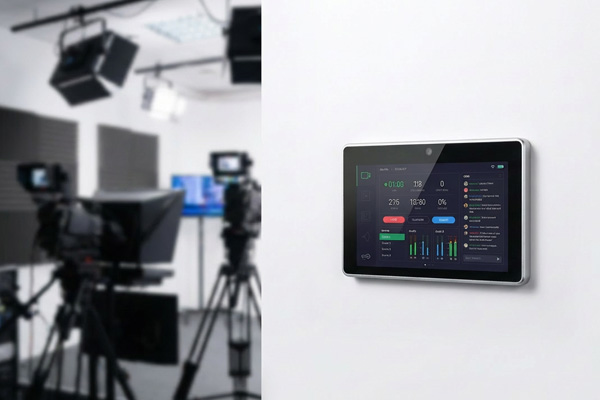
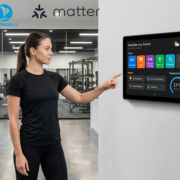
smart home control panel
Why Combine Home Assistant and Zigbee2MQTT?
Home Assistant and Zigbee2MQTT represent two of the most potent open-source smart home platforms currently available.
Home Assistant offers a centralized automation and dashboard system, while Zigbee2MQTT facilitates direct communication with Zigbee devices without vendor limitations.
Together, they provide:
- Complete local control of smart devices
- Extensive compatibility with Zigbee sensors and switches
- Sophisticated automation logic
- Operation free from cloud dependency
- Flexible integration with MQTT-based systems
A smart control panel serves as the visual and interactive interface for this ecosystem.
Advantages of Local-Control Smart Home Panels
A significant advantage of local-control architecture is its autonomy from cloud services.
This leads to:
- Quicker response times
- Enhanced system reliability
- Improved data privacy
- No reliance on external servers
- Uninterrupted operation even during internet disruptions
These benefits are particularly crucial in mission-critical settings such as smart hotels or security-sensitive residences.
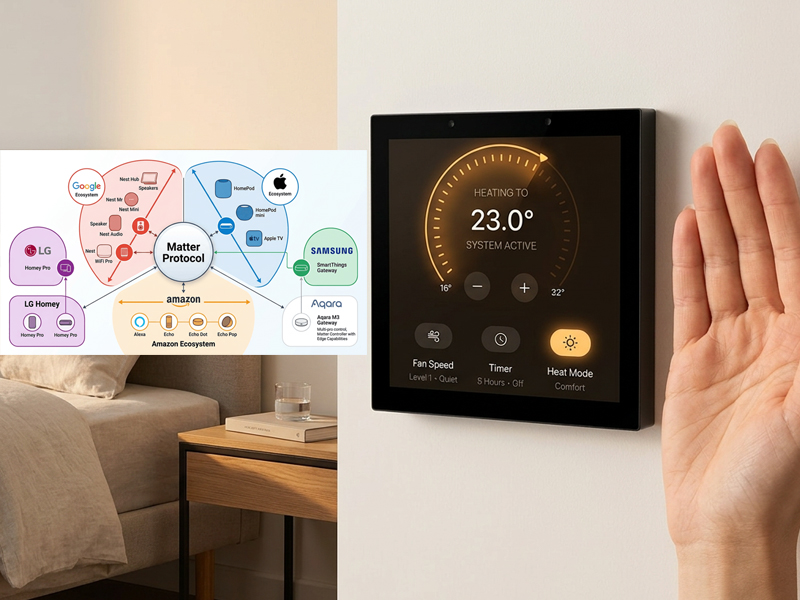
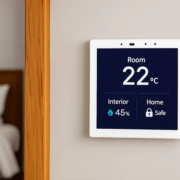
smart home control panel
How the Smart Control Panel Operates in a Local Environment
In a standard local-control system, the smart panel connects to a local network through Ethernet or WiFi.
It interacts with Home Assistant, which serves as the central automation hub.
Zigbee2MQTT facilitates communication with Zigbee devices via a local coordinator, typically linked through USB or a gateway.
The smart panel presents dashboards, control buttons, and automation scenes, enabling users to manage the entire system from a unified interface.
Zigbee2MQTT Integration Advantages
Zigbee2MQTT is an essential element in contemporary smart home systems as it eliminates the reliance on proprietary hubs.
With Zigbee2MQTT integration, users can:
- Connect devices from various manufacturers
- Bypass cloud-based limitations
- Obtain real-time device information
- Tailor automation functionalities
- Easily expand the system with additional devices
This makes it particularly suitable for scalable smart home implementations.
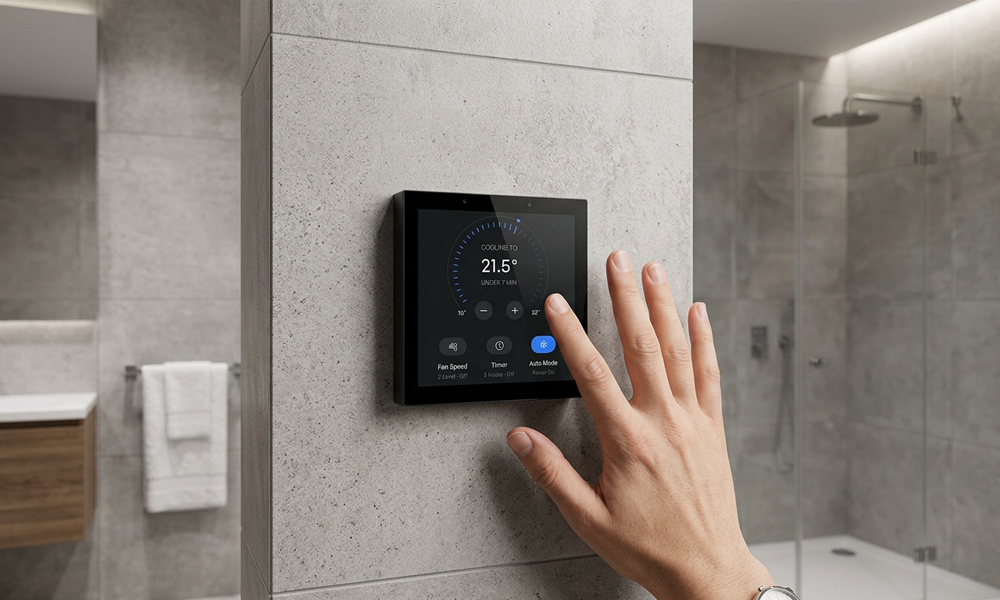
The smart control panel functions as the primary dashboard for the smart home system.
Rather than relying on mobile applications or web browsers, users can engage directly with a wall-mounted touchscreen.
Typical functionalities encompass:
- Control of lighting and scenes
- Adjustment of HVAC temperatures
- Monitoring of security systems
- Visualization of energy usage
- Overview of device statuses
- Triggers and controls for automation
This results in a more intuitive and user-friendly experience.
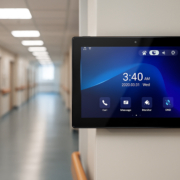
smart home control panel
Hardware Specifications for Local-Control Panels
To effectively support Home Assistant and Zigbee2MQTT, smart control panels generally incorporate:
- Embedded ARM processors (such as Rockchip or comparable platforms)
- An operating system based on Android or Linux
- A capacitive multi-touch display
- Connectivity options including Ethernet and WiFi
- An optional Power over Ethernet (PoE) power supply
- RS485 or GPIO interfaces for potential expansion
These components guarantee stable performance in environments that operate continuously.
Local-control smart home panels are commonly utilized in:
- Smart homes that prioritize privacy-centric automation
- Smart apartments featuring centralized control interfaces
- Smart hotels that provide automation systems for guest rooms
- Office buildings equipped with local IoT control frameworks
- Smart buildings that integrate hybrid Zigbee and MQTT networks
In all instances, the system ensures dependable offline-first control capabilities.
Portworld Local-Control Smart Panel Solutions
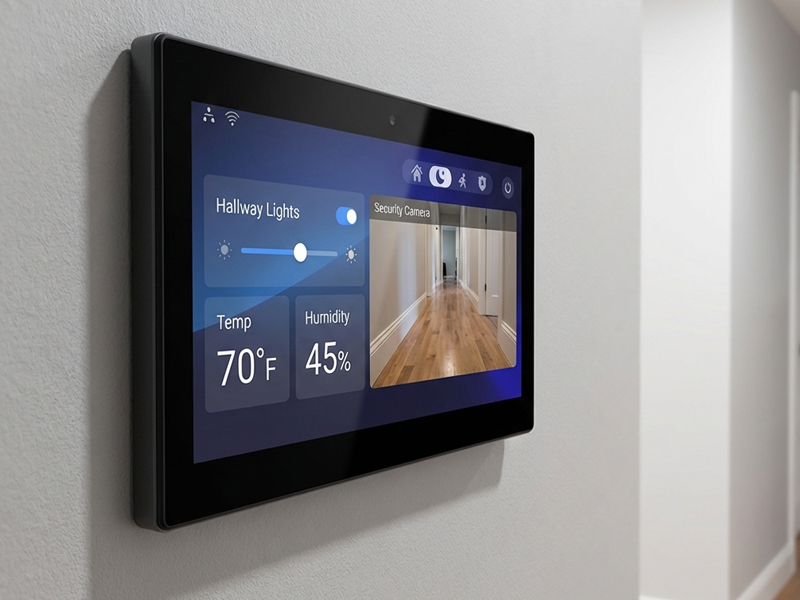
In practical applications, manufacturers like Portworld offer smart control panel solutions that are optimized for integration with Home Assistant and Zigbee2MQTT.
Typically, Portworld solutions encompass:
- Smart control panels based on Android and Linux that support local network operations
- Hardware designed for seamless integration with Home Assistant dashboards
- Compatibility with Zigbee, MQTT, and RS485 protocols
- Power over Ethernet (PoE) enabled wall-mounted designs for a tidy installation
- OEM/ODM customization options for hardware, firmware, and user interface development
These solutions are extensively utilized in smart home, hotel, and building automation projects that necessitate local control architectures.
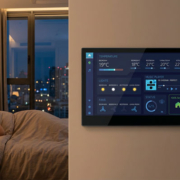
smart home control panel-1
OEM/ODM Customization for Smart Home Ecosystems
Each smart home project presents unique integration needs.
Portworld offers OEM/ODM services that include:
- Customization of hardware such as display dimensions, enclosure design, and interface setup
- Software customization that includes optimization of the Home Assistant user interface and pre-installed applications
- Protocol integration for Zigbee, MQTT, KNX, and RS485
- Branding and system customization tailored for commercial deployment
This enables developers and system integrators to create fully branded smart control ecosystems.
A local-control smart home panel that is compatible with Home Assistant and Zigbee2MQTT signifies the future of privacy-centric, dependable, and highly adaptable home automation systems.
By merging local processing capabilities with open-source platforms, it removes reliance on cloud services while enhancing speed and system reliability.
With OEM/ODM solutions from manufacturers such as Portworld, these systems can be entirely customized and implemented on a large scale, making them suitable for smart homes, hotels, and commercial automation initiatives.