Industrial Touch Screen Monitors for Oil and Gas: Key Selection Factors
The oil and gas sector depends on sophisticated digital systems for monitoring, automation, and operational management. Operators require dependable human-machine interfaces (HMIs) that can function effectively in extreme conditions, spanning from drilling sites and refineries to pipeline stations and offshore platforms.
In contrast to standard commercial displays, industrial touch screen monitors designed for oil and gas applications must endure dust, moisture, temperature variations, vibrations, and continuous operation. Selecting the appropriate industrial touchscreen solution is crucial for enhancing safety, efficiency, and system dependability.
Reasons for the Necessity of Industrial Touch Screen Monitors in Oil and Gas Industries
Oil and gas facilities frequently function in isolated and challenging environments where equipment malfunctions can result in considerable downtime and safety hazards.
Industrial touchscreen monitors are utilized for:
- Process monitoring systems
- Equipment control interfaces
- SCADA systems
- Pipeline monitoring terminals
- Offshore platform control panels
- Refinery automation systems
A dependable industrial display grants operators real-time access to essential information, enabling swift reactions to evolving conditions.
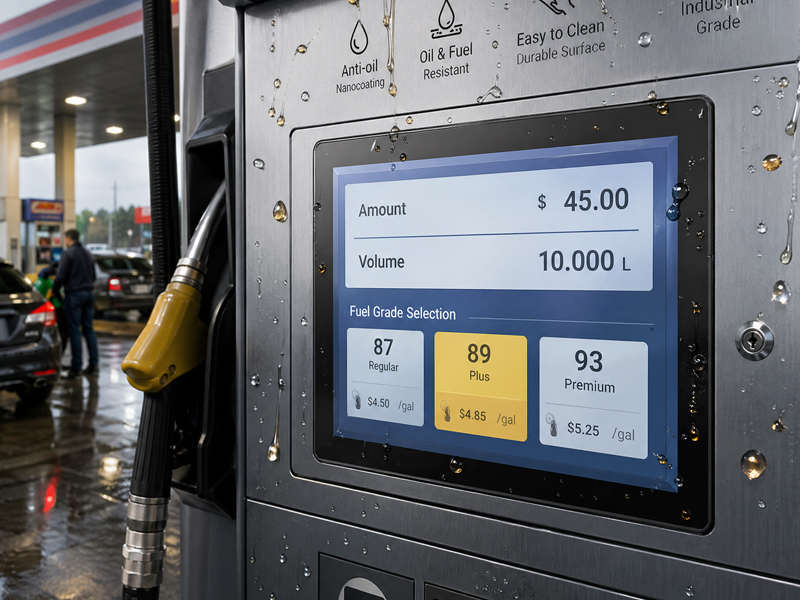
Industrial Embedded Touch Monitor
Key Selection Factors for Oil and Gas Touch Screen Monitors
1. Rugged Industrial Design for Harsh Environments
The primary factor to consider when choosing a touchscreen monitor for oil and gas applications is its durability.
Industrial displays should possess:
- Robust metal housing
- Resistance to shock and vibration
- Fanless cooling systems
- Components of industrial-grade quality
- Extended lifecycle availability
Locations such as drilling platforms and processing facilities often endure mechanical vibrations and require continuous operation, thus necessitating a rugged construction.
2. IP65 Protection Against Dust and Moisture
Equipment in oil and gas settings is often subjected to:
- Dust particles
- Oil contamination
- Water spray
- Humidity
An industrial touch screen monitor with an IP65 rating offers protection against dust ingress and water splashes, rendering it appropriate for outdoor and industrial applications.
Additionally, a sealed front panel design facilitates easier cleaning and enhances long-term reliability.
3. Wide Temperature Operation
Oil and gas equipment can be deployed in extreme climates, ranging from desert facilities to offshore environments.
An appropriate industrial touchscreen must accommodate:
- High-temperature operation
- Low-temperature environments
- Consistent performance during temperature fluctuations
Effective thermal management, utilizing aluminum alloy housing and fanless heat dissipation, is essential for maintaining system stability.
4. Sunlight Readability for Outdoor Applications
Numerous oil and gas operations occur outdoors, where displays may be subjected to direct sunlight.
Key display features include:
- High brightness LCD panels
- Anti-glare coating
- Wide viewing angles
- High contrast ratio
These characteristics enable operators to clearly view control information, even in bright outdoor settings.
5. Reliable Touch Performance
Operators may need to engage with displays while wearing protective gear.
Industrial touchscreen monitors should offer:
Capacitive Touch
Ideal for:
- Control rooms
- Indoor automation systems
- Interactive monitoring terminals
Benefits:
- Smooth operation
- Multi-touch capability
- Quick response
- Resistive Touch
Ideal for:
- Heavy industrial settings
- Glove operation
- Outdoor equipment
The selection depends on the specific working conditions.
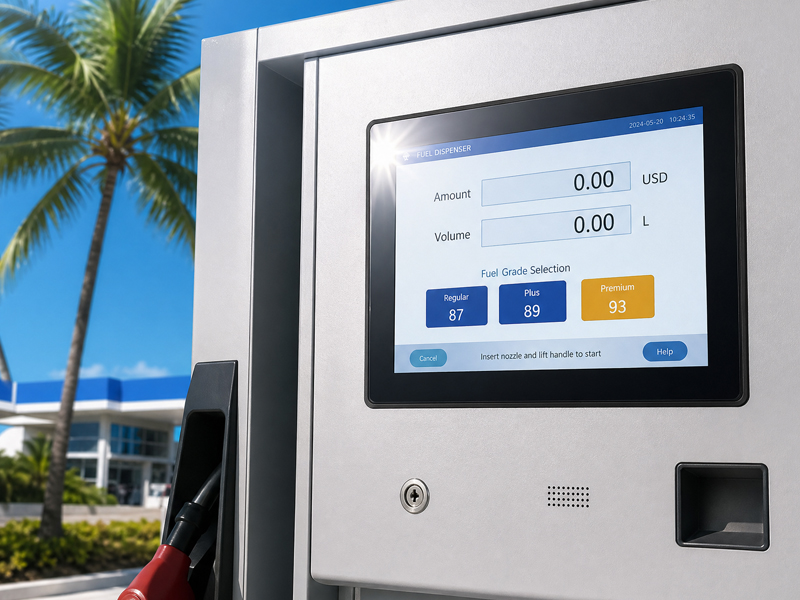
Industrial Embedded Touch Monitor
6. Flexible Industrial Interfaces
Oil and gas systems typically consist of numerous interconnected devices, making interface compatibility essential.
Common industrial interfaces include:
- RS232
- RS485
- Ethernet
- USB
- HDMI
- VGA
- GPIO
- CAN Bus
These interfaces facilitate connections with:
- PLC controllers
- Industrial PCs
- Sensors
- Data acquisition systems
- Automation equipment
7. Long-Term Reliability and Lifecycle Support
Industrial projects frequently span many years, thus product lifecycle stability is of utmost importance.
When procuring industrial touchscreen monitors, it is advisable to consider:
- Stable supply chain
- Long-term component availability
- Technical support
- Firmware and software maintenance
- OEM customization capability
A dependable supplier can significantly lower future replacement and redesign expenses.
Applications of Industrial Touch Screen Monitors in Oil and Gas
Control Room HMI Systems
Touchscreen monitors equip operators with:
- Equipment status monitoring
- Process visualization
- Alarm management
- System control
Pipeline Monitoring Stations
Remote pipeline sites necessitate robust displays for:
- Pressure monitoring
- Flow control
- Data visualization
- Maintenance operations
Offshore Platforms
Offshore settings demand equipment that can withstand:
- Salt spray
- Humidity
- Vibration
- Temperature changes
Industrial touch panels ensure reliable performance in these demanding environments.
Refineries and Chemical Processing Facilities
Industrial touchscreen systems facilitate:
- Monitoring of production
- Control of automation
- Management of safety
- Diagnostics of equipment
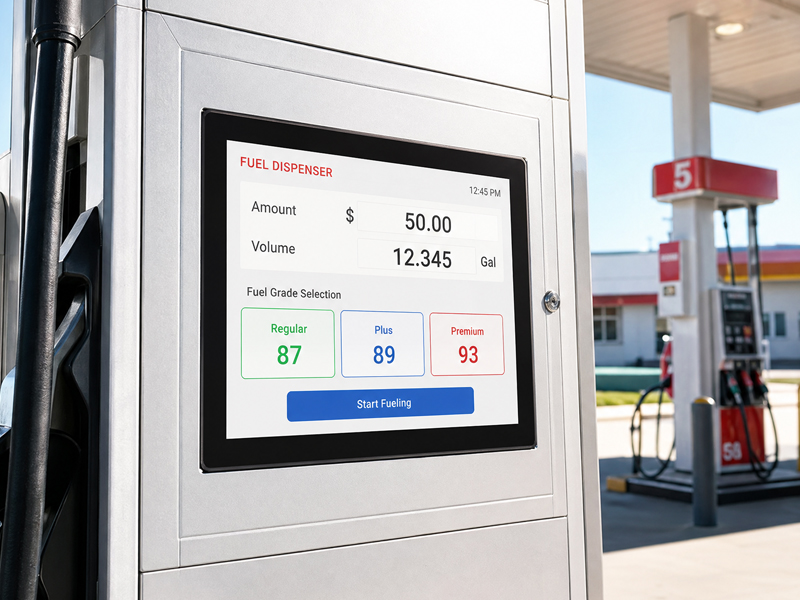
Industrial Embedded Touch Monitor
Portworld Industrial Touch Screen Solutions for Oil and Gas
Portworld offers robust industrial touchscreen monitors and panel PC solutions tailored for challenging environments.
Key features include:
- IP65 rated front panel protection
- Aluminum housing of industrial quality
- Fanless thermal design
- Capacitive touch technology
- Various screen sizes
- Compatibility with Windows/Linux/Android
- Options for RS232/RS485 and industrial interfaces
- Customization through OEM/ODM
These solutions are ideal for:
- Automation in oil and gas
- Systems for energy monitoring
- Terminals for industrial control
- Interfaces for outdoor equipment
- Stations for remote operation
Choosing the appropriate industrial touch screen monitor for oil and gas applications necessitates thorough evaluation of durability, protection standards, connectivity options, and long-term reliability.
A robust touchscreen solution featuring IP65 protection, industrial interfaces, support for a wide temperature range, and dependable touch performance can assist oil and gas companies in enhancing operational efficiency while ensuring consistent performance in demanding environments.