ESP32 vs. ARM Linux Platforms for Embedded Touch Screen Panels
Selecting the right processor platform is a critical hardware decision when developing an embedded touchscreen panel. It influences system performance, user-interface design, connectivity, software development, power usage, and total product cost.
Two widely used options are ESP32 microcontroller platforms and ARM-based Linux platforms.
Both can support embedded touchscreen panels, but they address different application needs. ESP32 is well suited to compact, energy-efficient control interfaces, whereas ARM Linux platforms provide greater computing capacity and a more extensive software environment for complex applications.
Which platform is the best fit for your next embedded touchscreen project?
This guide compares ESP32 and ARM Linux in terms of architecture, performance, display capabilities, software ecosystems, connectivity, and application scenarios.
1. Understanding ESP32 and ARM Linux Platforms
Before comparing performance, it is helpful to understand how each platform operates.
ESP32: A Microcontroller-Based Platform
ESP32 is a family of microcontrollers developed by Espressif. Depending on the specific model, an ESP32 platform may include wireless connectivity, GPIO, peripheral interfaces, and real-time control features.
The ESP32-S3 is a popular choice for embedded touch-screen panels.
It can run lightweight graphical user interfaces with LVGL, a graphics library built for embedded systems with limited resources. Developers can create touch buttons, menus, sliders, charts, and other interface components without using a full operating system.
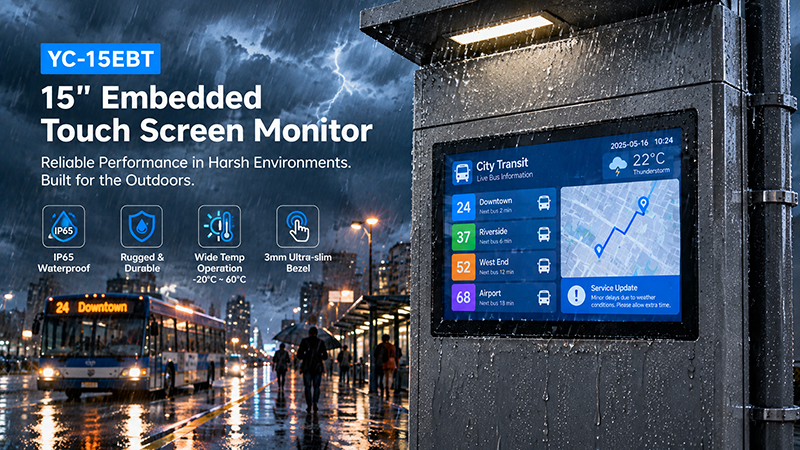
YC-15EBT touch screen solutions
Common characteristics include:
- Microcontroller-based architecture
- Support for real-time operating systems such as FreeRTOS
- Integrated Wi-Fi and Bluetooth on supported models
- GPIO, SPI, I2C, UART, and other peripheral interfaces
- Lightweight graphical interface development
- Low system resource requirements
ESP32 is well suited to devices whose primary functions are displaying information, accepting user input, communicating with sensors, and controlling connected equipment.
ARM Linux: A Processor-Based Platform
ARM Linux platforms typically rely on application processors that offer greater computing capacity than microcontrollers.
Common embedded processors include the Rockchip RK3566, RK3568, RK3576, and RK3588.
Depending on the hardware and software configuration, these platforms can run complete operating systems such as Linux, Ubuntu, Debian, or Android.
Unlike a typical microcontroller-based system, an ARM Linux platform can run multiple applications and system services at the same time.
Typical characteristics include:
- Multi-core application processors
- Higher-capacity RAM and storage
- Support for full operating systems
- Broader software and driver ecosystems
- Advanced networking and communication services
Support for sophisticated graphical interfaces and multimedia applications
ARM Linux is widely used in industrial HMIs, smart control terminals, digital signage, self-service kiosks, and embedded devices that require more advanced software capabilities.
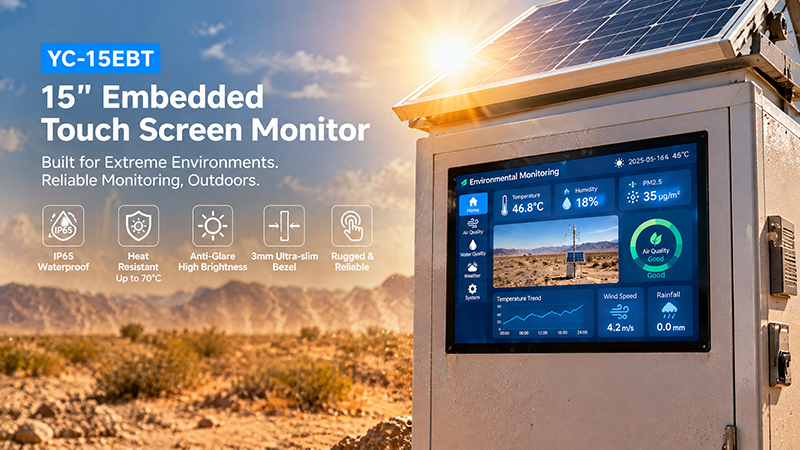
YC-15EBT High-temperature outdoor scene
2. ESP32 vs. ARM Linux: Key Differences
The following table summarizes the main differences.
| Comparison | ESP32 Platform | ARM Linux Platform |
|---|---|---|
| Architecture | Microcontroller (MCU) | Application processor (MPU) |
| Operating system | Bare-metal or FreeRTOS | Linux, Ubuntu, Debian, Android |
| Processing resources | Limited, application-dependent | Generally higher |
| RAM and storage | Smaller memory footprint | Larger configurable memory and storage |
| GUI framework | LVGL and lightweight embedded GUI | Qt, LVGL, GTK, Android UI and others |
| Connectivity | Wi-Fi, Bluetooth and peripheral interfaces, depending on model | Ethernet, Wi-Fi, Bluetooth and additional interfaces, depending on board |
| Multitasking | RTOS-based task management | Full OS process and service management |
| Multimedia | Limited and hardware-dependent | Broader multimedia and video capabilities |
| Power consumption | Generally lower | Generally higher |
| Development complexity | Relatively lightweight | More extensive system integration |
| Typical applications | Smart switches, compact control panels, IoT interfaces | Industrial HMIs, kiosks, smart terminals, digital signage |
This comparison is broad, not definitive. Real-world performance varies with the processor, memory, display resolution, software setup, and peripheral design.
3. Processing Performance and System Resources
Processing capability is among the most significant differences between ESP32 and ARM Linux.
ESP32: Optimized for Dedicated Control Tasks
ESP32 platforms are built for embedded control and communications, rather than for running several resource-intensive applications.
For instance, an ESP32-S3 touchscreen panel can:
- Display device status and sensor readings
- Accept touch input
- Operate relays and switches
- Communicate with external devices
- Connect to cloud platforms using supported network protocols
- Run lightweight graphical interfaces
- These tasks do not necessarily require a powerful application processor.
For a smart home panel primarily used to manage lighting, temperature, curtains, and other connected devices, an ESP32 platform may offer adequate computing resources.
ARM Linux: A Stronger Choice for Complex Applications
ARM Linux platforms are better suited to touchscreen systems that need to handle more than basic control displays.
Depending on the processor and system configuration, they can support:
- Multiple applications running at the same time
- Web-based interfaces and browser applications
- Local databases and file systems
- Advanced multimedia playback
- Complex networking services
- Integration with industrial software
- More demanding graphical applications
For example, an industrial HMI may need to show machine status, process production data, communicate with a PLC, retain historical records, and run a customized application.
An ARM Linux platform offers a more flexible foundation for meeting these requirements.
4. Graphical Interface and Touchscreen Performance
Both platforms can run graphical user interfaces, but they differ in development methods and resource needs.
ESP32 with LVGL
LVGL is a lightweight graphics library built for embedded systems. It provides common interface components, including buttons, charts, sliders, lists, animations, and touchscreen input.
Because it uses relatively few resources, LVGL is well suited to touchscreen panels based on microcontrollers.
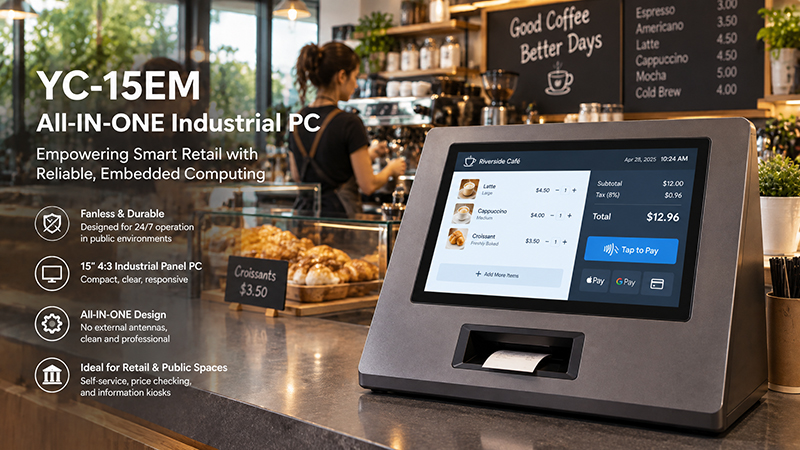
YC-15EM touch screen solution
Typical ESP32 touchscreen applications include:
- Smart home control dashboards
- Temperature and humidity displays
- Device status indicators
- Lighting and scene controls
- Simple equipment configuration menus
For a compact control panel with a straightforward interface, LVGL can deliver a responsive user experience without the need for a full Linux operating system.
ARM Linux and Advanced GUI Frameworks
ARM Linux platforms provide a broad selection of graphical development options.
Depending on the application, developers can choose from:
- Qt for embedded graphical applications
- LVGL for lightweight interfaces
- GTK for Linux-based applications
- Android application frameworks
- Web-based interfaces
Linux also supports a variety of display and touch-input backends, with rendering capabilities ranging from software rendering to GPU acceleration when supported by the hardware and software stack.
This flexibility makes ARM Linux a strong fit for applications that require complex dashboards, multiple screens, rich visual content, or multimedia playback.
Touchscreen performance depends on more than the processor. Display resolution, the touch controller, memory bandwidth, graphics acceleration, and software optimization all contribute to the end-user experience.
5. Connectivity and Industrial Communication
Connectivity is another key consideration when choosing a touchscreen platform.
ESP32 Connectivity
The ESP32-S3 includes built-in Wi-Fi and Bluetooth, making it well suited to wireless IoT applications.
It can also connect to external devices using interfaces such as:
- UART
- SPI
- I2C
- GPIO
- RS485, with appropriate external hardware
Ethernet can also be added using a suitable interface and external hardware design.
In smart home and IoT control panels, the ESP32 can communicate with sensors, controllers, gateways, and cloud services.
However, having a physical connection does not by itself ensure support for a specific industrial protocol. Modbus RTU, Modbus TCP, MQTT, and other protocols require appropriate software implementation and hardware configuration.
ARM Linux Connectivity
ARM Linux platforms typically offer greater flexibility for demanding networking and industrial communication needs.
Depending on the motherboard, available interfaces may include:
- Gigabit Ethernet
- Wi-Fi and Bluetooth
- USB
- UART
- RS232 and RS485
- GPIO
- CAN or other interfaces supported by the hardware
Linux also provides a broad software ecosystem for networking, protocol stacks, device drivers, and application integration.
For instance, an industrial touchscreen may need to communicate with PLCs, gateways, industrial sensors, and remote monitoring systems. An ARM Linux platform can offer a flexible software environment for bringing these capabilities together.
However, the required physical interfaces, drivers, and protocol implementations must be confirmed for each specific hardware configuration.
6. Power Consumption and System Cost
Power use and cost can strongly affect platform selection, particularly for products manufactured at high volumes.
ESP32: A Cost-Effective Choice for Lightweight Applications
Compared with similar systems based on application processors, ESP32 platforms typically need fewer system resources and involve less hardware complexity.
Potential benefits include:
- Lower processor and memory requirements
- Simpler overall system design
- Lightweight firmware
- Suitability for compact embedded devices
- Lower power consumption in many use cases
These characteristics make the ESP32 a compelling option for smart switches, compact wall-mounted panels, sensor interfaces, and dedicated control terminals.
Nevertheless, the overall cost also depends on the display, touch controller, power supply, enclosure, connectivity components, and software development.
industrial touch screen
ARM Linux: Additional Resources for Advanced Capabilities
ARM Linux platforms typically need more memory, storage, and supporting hardware.
They may also require extra development effort for operating system integration, driver support, application deployment, and ongoing maintenance.
These added resources can be worthwhile when a project depends on advanced software capabilities.
Rather than pushing a microcontroller beyond its intended purpose, choosing an ARM Linux platform from the outset can reduce development constraints and make future feature expansion easier.
A sound cost comparison should account for the entire product lifecycle, not merely the processor’s price.
7. Typical Applications: Which Platform Is Right for Your Project?
The right platform depends on the tasks the touchscreen must perform.
Applications Well Suited to ESP32
1. Smart Home Control Panels
ESP32 works well in compact, wall-mounted control panels for managing lighting, curtains, temperature, and smart home scenes.
A lightweight LVGL interface can support the necessary touch interactions while keeping the system architecture relatively straightforward.
2. IoT Sensor Displays
For devices that show temperature, humidity, pressure, and other sensor readings, ESP32 can handle data collection, wireless communication, and graphical display on a single embedded platform.
3. Smart Switches and Appliance Interfaces
Small touchscreen interfaces for switching modes, changing settings, and displaying operating status are well suited to ESP32.
4. Dedicated Robot Control Interfaces
ESP32 can function as a lightweight interface or peripheral controller for robots, managing buttons, status indicators, sensor communication, and basic touch-based commands.
However, it should not automatically be considered the primary computing platform for advanced robot navigation, vision processing, or AI inference.
Applications Well Suited to ARM Linux
1. Industrial HMI Systems
Industrial equipment frequently requires advanced graphical interfaces, communication with PLCs, production data visualization, and local application processing.
ARM Linux provides the flexibility to support these functions.
2. Self-Service Kiosks
Kiosks may require browser-based applications, payment software integration, multimedia content, databases, and remote management.
An ARM Linux platform is generally better suited to these needs.
3. Digital Signage Displays
Applications that involve video playback, dynamic content, network management, and remote updates can benefit from the processing and multimedia capabilities of ARM Linux platforms.
4. Advanced Smart Control Terminals
For smart control panels that require multiple applications, complex device integration, local data processing, or advanced graphical interfaces, ARM Linux offers greater flexibility for expansion.
8. Portworld ESP32 and ARM Touchscreen Solutions
Portworld offers embedded touchscreen solutions powered by ESP32 and Rockchip ARM platforms, enabling customers to choose hardware that aligns with their application needs.
ESP32-S3 Touchscreen Panel: YC-SM43P
The Portworld YC-SM43P is a compact, 4-inch smart home control panel powered by the ESP32-S3 platform.
Key specifications include:
- ESP32-S3 dual-core processor operating at up to 240 MHz
- 4-inch display with a resolution of 480 × 480
- 8 MB PSRAM and 16 MB Flash
- Support for the LVGL graphical interface
- Wi-Fi and Bluetooth 5 connectivity
- RJ45 Ethernet
- PoE support
- RS485 interface
The YC-SM43P is intended for compact smart home control and IoT applications.
It is well suited to projects involving lighting control, sensor monitoring, device status displays, and lightweight embedded interfaces.
Developers can use LVGL to create customized graphical interfaces and connect the panel to external devices through its supported communication interfaces.
For applications that need greater processing capacity and a full operating system, Portworld offers touchscreen panels powered by Rockchip processors.
Examples include:
YC-SM41P
A 4-inch touchscreen control panel built on the Rockchip RK3566 platform, available with Android 11 or Debian 11. It supports PoE and RS485 and is well suited to smart control and embedded HMI applications.
YC-SM41P-KNX
A 4-inch RK3566 smart home control panel designed for KNX and Zigbee integration. It is available with Android 13 or Linux and supports PoE.
YC-SM55P
A 5.5-inch touchscreen panel based on the RK3566, featuring a 720 × 1280 display, Android 11, and PoE support.
Compared with microcontroller-based panels, these ARM-based products offer greater software flexibility and broader system integration.
Customization from Hardware to Software
In addition to its standard products, Portworld offers OEM/ODM development services for embedded touchscreen applications.
Customization may include:
- Selection of ESP32 or ARM processor platforms
- Motherboard and PCBA design
- Choice of display size and resolution
- RAM and storage configuration
- Integration of Ethernet, RS485, GPIO, and other interfaces
- Customization of Android, Linux, Ubuntu, Debian, or Windows, where supported by the chosen hardware
- LVGL or other GUI development
- Boot logo, interface branding, and application deployment
- SDK and technical documentation
From initial prototypes through mass production, Portworld helps customers develop embedded touchscreen products tailored to their specific hardware and software requirements.
Embedded Touch Screen Panel23
9. How to Choose Between ESP32 and ARM Linux
Before selecting a platform, consider the following questions:
| Project Requirement | Recommended Direction |
|---|---|
| Simple touch controls and device status display | ESP32 |
| Low-power IoT control interface | ESP32 |
| Lightweight LVGL graphical interface | ESP32 |
| Wi-Fi and Bluetooth-based device interaction | ESP32 |
| Complex graphical applications | ARM Linux |
| Browser-based applications | ARM Linux |
| Local databases and multiple software services | ARM Linux |
| Advanced multimedia playback | ARM Linux |
| Industrial HMI with extensive software integration | ARM Linux |
| Future expansion with demanding computing requirements | ARM Linux |
A third factor is that the two platforms need not always be competitors.
In some products, an ESP32 can manage real-time device control and peripheral communication, while an ARM Linux processor runs the primary application and graphical interface.
This hybrid architecture is useful for projects requiring both dependable low-level control and more advanced computing capabilities. However, it adds hardware, software, and communication complexity, so it should be adopted only when the application warrants it.
ESP32 and ARM Linux address distinct needs in embedded touch screen development.
ESP32 is well suited to compact, energy-efficient panels centered on touch controls, sensor readings, wireless communication, and dedicated device management.
ARM Linux is a stronger fit for applications that need greater computing capacity, sophisticated graphical interfaces, multimedia features, multiple software services, or extensive system integration.
Choosing the right platform is not merely a matter of opting for the more powerful processor. The decision should align with the product’s intended functions, development needs, and long-term plans.