Dual-partition OTA update solution for Yocto embedded Linux
In embedded systems such as smart control panels, industrial HMIs, and IoT devices, system stability is not just a feature—it is a requirement. When devices are deployed at scale across smart homes, hotels, or commercial buildings, updating software safely becomes a critical challenge.
This is where a dual-partition OTA update solution for Yocto embedded Linux becomes essential. It allows devices to be updated remotely while ensuring system reliability, rollback protection, and zero-downtime upgrades.
What Is a Dual-Partition OTA System?
A dual-partition OTA (Over-The-Air) system is a firmware update architecture that divides the storage into two separate system partitions:
- Active partition (currently running system)
- Inactive partition (used for updates)
When a new update is available, it is installed on the inactive partition. After successful installation and verification, the system switches to the new partition during reboot.
If anything goes wrong, the system can automatically roll back to the previous stable version.
This design ensures that the device is never left in a broken or unbootable state.
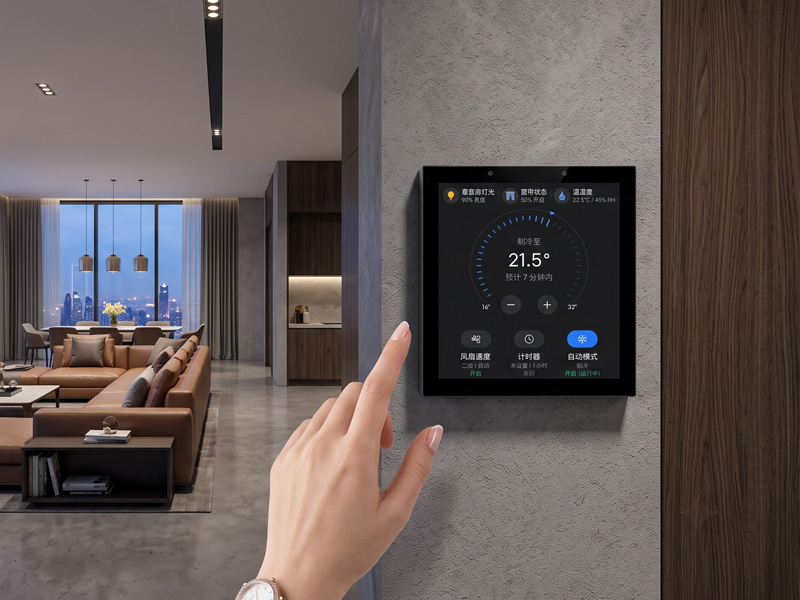
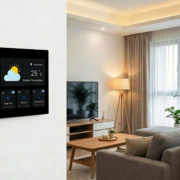
Smart Home Touch Control Panel
The Importance of OTA Updates in Embedded Linux Systems
In embedded Linux systems based on Yocto, devices are frequently situated in locations where physical access is either challenging or costly.
For instance:
- Smart home control panels embedded within walls
- Automation systems for hotel rooms
- Interfaces for industrial control
- Terminals for smart building management
In such scenarios, performing manual updates is impractical. Over-the-Air (OTA) updates enable manufacturers and system integrators to manage and enhance devices remotely.
This approach minimizes maintenance expenses and guarantees the long-term reliability of the system.
Understanding Dual-Partition OTA in Yocto Linux
In a Yocto-based embedded Linux environment, the OTA update process generally adheres to a defined workflow.
Initially, the system retrieves the new firmware image while the device operates on the active partition.
Subsequently, the firmware is installed onto the inactive partition, ensuring that the existing system remains unaffected throughout the update.
Following the installation, a verification process is conducted to validate the integrity of the new system image.
Once the verification is completed successfully, the bootloader changes the boot target to the newly updated partition.
In the event that the system fails to boot or experiences a crash during startup, the bootloader automatically reverts to the previous partition.
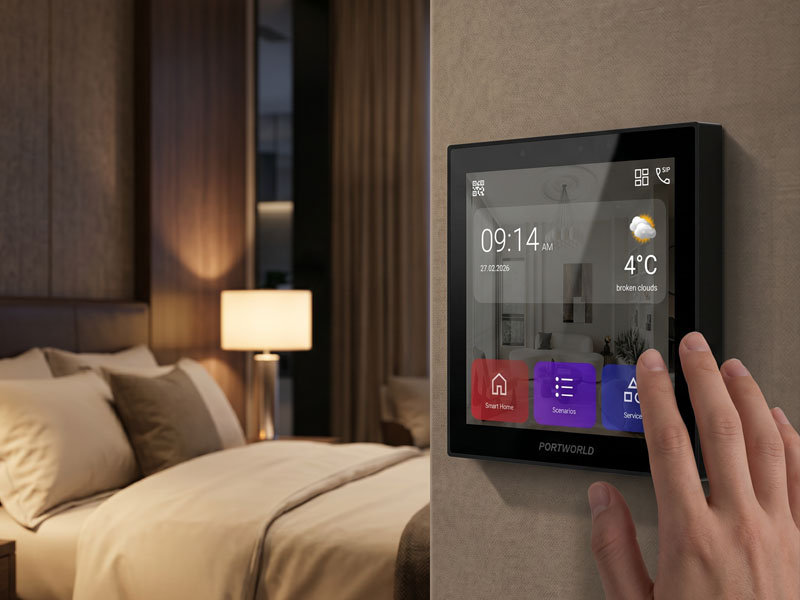
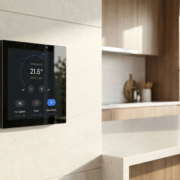
YC-SM41P-KNX
4″ KNX Smart Touch Control Panel
This process guarantees safe and dependable firmware upgrades.
The dual-partition OTA architecture offers significant advantages, particularly in terms of system safety.
In the event of an update being interrupted by power loss or network issues, the original system remains fully operational and unaffected.
Another important advantage is the rollback capability, which enables devices to automatically revert to a previous state following a failed update, eliminating the need for manual intervention.
This architecture also facilitates the seamless deployment of upgrades across extensive fleets of devices, a crucial factor in commercial smart building settings.
Moreover, it enhances maintenance efficiency by removing the necessity for physical service visits.
Integration of Yocto Linux with OTA
The Yocto Project offers a versatile framework for creating custom embedded Linux distributions, making it particularly suitable for OTA implementations.
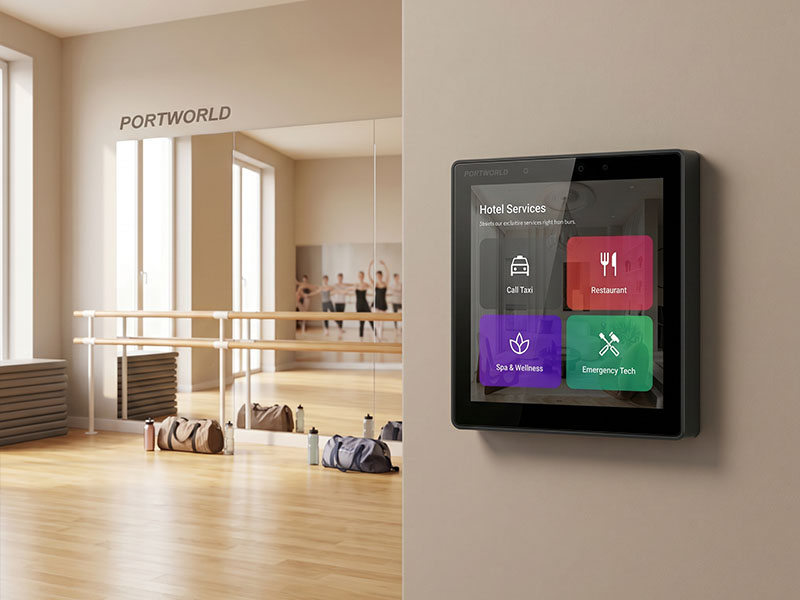
4″ KNX Smart Touch Control Panel
Developers can incorporate OTA functionalities using various tools, including:
- RAUC (Robust Auto-Update Controller)
- Mender
- SWUpdate
- Custom A/B partition scripts
These tools collaborate with the bootloader and partition configuration to ensure safe management of system updates.
The modular architecture of Yocto provides comprehensive control over the update process, encompassing everything from image creation to deployment strategies.
Common Applications of Smart Control Panels
The dual-partition OTA is extensively utilized in smart control panel systems where uninterrupted operation is essential.
In residential settings, it guarantees that wall-mounted control panels can obtain new functionalities and security updates without requiring user action.
In hospitality, it facilitates centralized updates for numerous guest room control units.
In corporate buildings, it aids in the long-term upkeep of meeting room panels and environmental management systems.
In industrial settings, it ensures that HMI panels and monitoring systems maintain stability even amidst frequent software updates.
Hardware Requirements for OTA Systems
To enable dual-partition OTA, the embedded hardware must offer adequate storage capacity and dependable flash memory.
Most systems utilize eMMC or NAND flash with partitioned configurations.
The bootloader (for instance, U-Boot) is crucial in overseeing partition switching and recovery processes.
A stable power design is also vital to avert update corruption during unforeseen shutdowns.
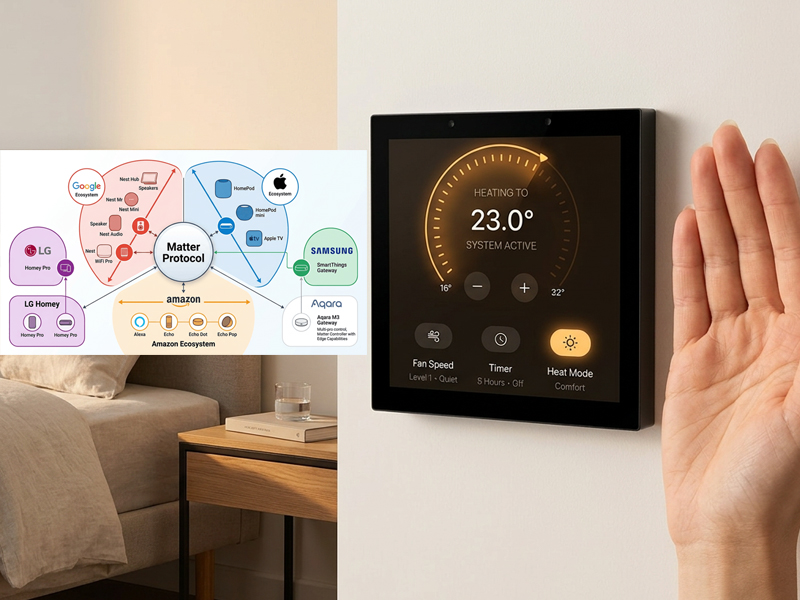
smart home control panel
Portworld Embedded Linux OTA Solutions
In practical applications, manufacturers like Portworld offer embedded smart control panel solutions that utilize Yocto Linux and feature OTA update capabilities.
These systems are tailored for smart home, hotel, and building automation scenarios where remote maintenance is crucial.
Typically, Portworld solutions encompass:
Firmware based on Yocto Linux with a customizable system architecture, Dual-partition OTA update support to facilitate secure firmware upgrades, Integration with smart control panel hardware platforms, Rockchip-based embedded systems optimized for enhanced performance, OEM/ODM customization for hardware, software, and update strategy design.
This enables system integrators to implement extensive smart control networks with minimal maintenance requirements.
OEM/ODM Role in OTA System Design
The OTA functionality transcends being merely a software feature; it is integral to the product architecture.
OEM/ODM manufacturers are responsible for designing both the hardware partition layouts and the software update frameworks to guarantee compatibility and reliability.
This process includes establishing partition structures, configuring bootloaders, implementing recovery mechanisms, and developing update validation logic.
Additionally, it entails customizing update servers, integrating with cloud services, and managing version control systems for enterprise-level deployments.