Custom BSP Development for Rockchip Smart Control Panels
In the embedded smart control panel sector, merely having robust hardware performance does not guarantee a stable and responsive user experience. The true foundation is the BSP (Board Support Package), which serves as the link between the operating system and the underlying hardware.
For devices utilizing Rockchip platforms, the development of a custom BSP for smart control panels is crucial to attain optimized performance, ensure stable operation, and achieve complete hardware integration across smart home, hotel, and building automation systems.
What Is a BSP in Smart Control Panels?
A Board Support Package (BSP) comprises a set of low-level software components that facilitate the operation of an operating system, such as Android or Linux, on specific hardware.
In smart control panels based on Rockchip, the BSP generally encompasses:
- Bootloader configuration (U-Boot)
- Linux kernel or Android kernel
- Hardware drivers (display, touch, audio, WiFi, Bluetooth)
- Peripheral interfaces (RS485, GPIO, UART, I2C, SPI)
- GPU and multimedia acceleration support
- Power management and system initialization
In essence, the BSP acts as the intermediary between hardware and software.
The Importance of BSP Development for Rockchip Smart Panels
Rockchip processors, including the RK3566, RK3568, and RK3588, are extensively utilized in smart control panels due to their effective combination of performance and energy efficiency.
Nevertheless, without a well-tailored BSP, even the most advanced hardware may fail to function reliably in practical applications.
The development of a custom BSP guarantees:
- A stable system boot and operation
- Comprehensive hardware compatibility
- Enhanced touch and display performance
- communication with external devices
- Long-term system stability in continuous 24/7 environments
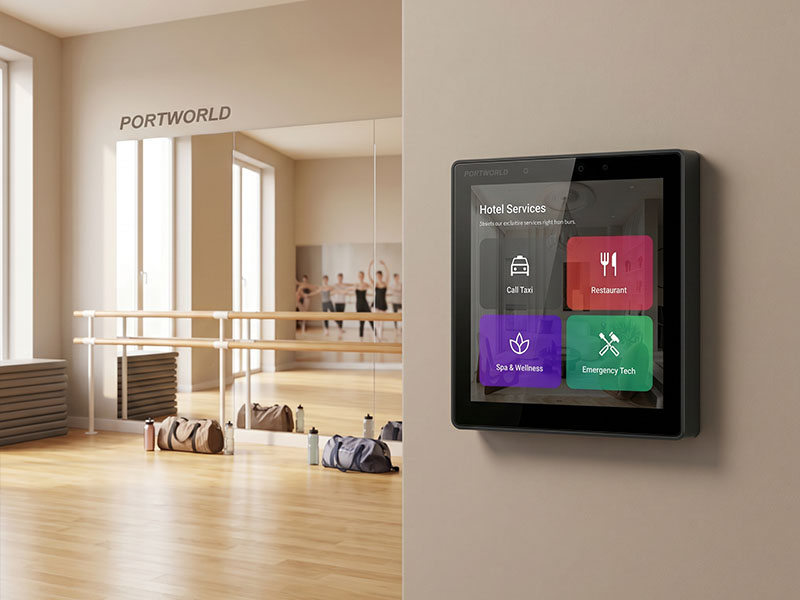
4″ KNX Smart Touch Control Panel
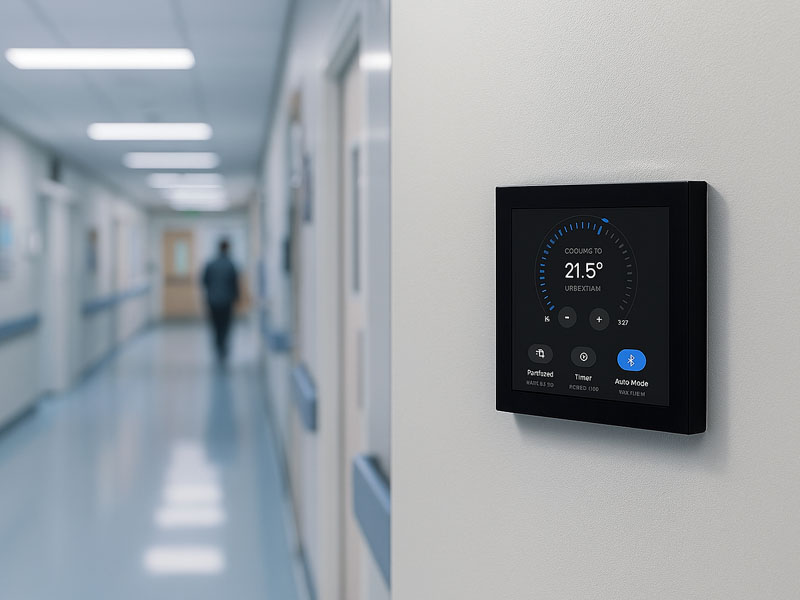
This aspect is particularly crucial for wall-mounted control panels found in smart homes, hotels, and commercial establishments.
Key Elements of Rockchip BSP Development
The development of custom BSP for Rockchip platforms encompasses several essential components.
The initial component is the bootloader, responsible for initializing the hardware and loading the operating system. In the majority of Rockchip systems, this is derived from a tailored U-Boot configuration.
The subsequent component is the kernel layer, which oversees memory management, CPU scheduling, and device drivers. This layer is frequently customized to accommodate specific touchscreen controllers, display resolutions, and communication interfaces.
The third component is the hardware abstraction layer (HAL), which guarantees that Android or Linux applications can consistently interact with hardware devices.
Lastly, the driver layer integrates all peripheral devices, such as touch panels, LCD displays, cameras, and networking modules.
Rockchip Platforms in Smart Control Panels
Rockchip SoCs are extensively utilized in embedded smart control panels due to their robust multimedia and user interface processing capabilities.
Common platforms include:
- RK3566 for mid-range smart control panels
- RK3568 for a balance of performance and industrial applications
- RK3588 for high-performance AI and multi-display systems
YC-SM10P
10.1 inch Smart Home Control Panel
These processors are compatible with both Android and Linux systems, rendering them appropriate for a diverse array of smart home and building automation applications.
Custom BSP vs Standard Firmware
Utilizing a standard firmware image may suffice for basic applications; however, it frequently lacks the necessary optimization for particular hardware configurations.
The development of a Custom BSP allows for enhanced system integration and enables manufacturers to customize performance for specific applications.
For instance, the latency of touch response can be minimized by refining kernel input drivers, while display performance can be improved through the tuning of GPU acceleration.
Additionally, power consumption can be optimized for devices that are always on and wall-mounted.
This degree of control is vital for commercial deployments where reliability is of utmost importance.
Integration with Smart Control Panel Features
A well-developed BSP facilitates the complete integration of smart control panel features, including:
- Capacitive multi-touch input
- High-resolution LCD or IPS displays
- WiFi, Bluetooth, and Ethernet connectivity
- RS485 and KNX building automation interfaces
- Audio and microphone systems for intercom functionality
- Sensor integration for temperature, humidity, or motion detection
In the absence of a stable BSP, these features cannot function reliably in production settings.
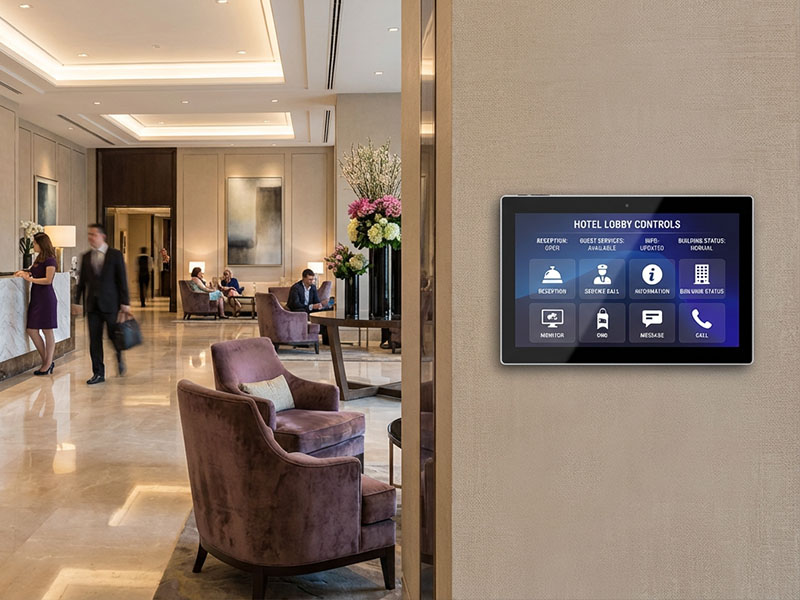
YC-SM10P
10.1 inch Smart Home Control Panel
Android and Linux BSP Development Approaches
Rockchip BSP development generally accommodates both Android and Linux operating systems.
In systems based on Android, BSP development emphasizes HAL integration, optimization of UI performance, and multimedia acceleration.
Conversely, in Linux-based systems, development is typically grounded in frameworks such as Buildroot or Yocto, concentrating on lightweight system design, protocol integration, and industrial stability.
Both methodologies necessitate extensive hardware-level customization to guarantee consistent performance.
Challenges in BSP Development for Embedded Systems
The development of a Custom BSP is intricate and demands substantial embedded engineering expertise.
A primary challenge is ensuring hardware compatibility, particularly when integrating various communication interfaces and display configurations.
Another significant challenge is system optimization, which involves achieving rapid boot times and maintaining stable long-term operation.
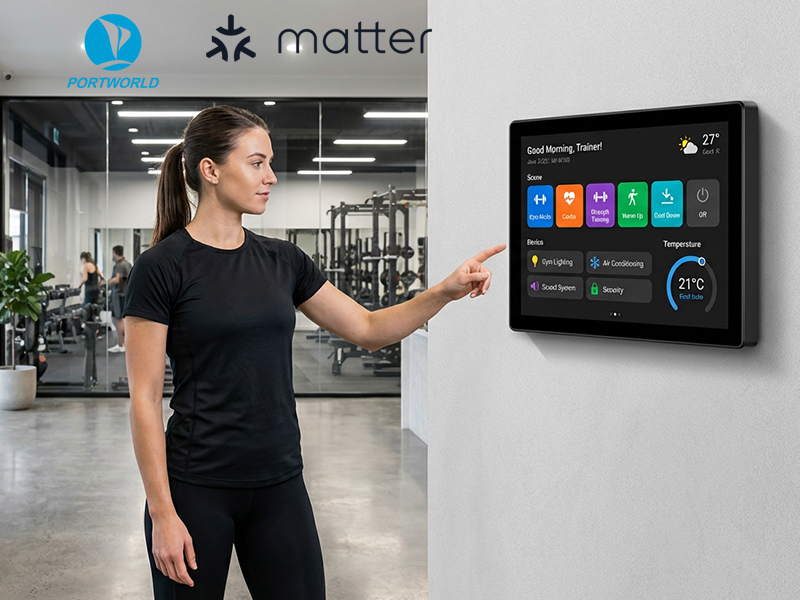
smart home control panel
Portworld Rockchip BSP Development Solutions
In practical applications, manufacturers like Portworld offer tailored BSP development services specifically for Rockchip-based smart control panels.
These solutions cater to smart home, hotel, and building automation systems that necessitate reliable embedded performance and comprehensive system integration.
Portworld generally provides:
- Tailored BSP development for RK3566, RK3568, and RK3588 platforms
- Integration of Android and Linux systems with optimized drivers
- Customization of touchscreen and display drivers
- Integration of RS485, KNX, and MQTT protocols
- OEM/ODM hardware and firmware development services
These offerings empower system integrators to create fully customized smart control solutions for international markets.
The Significance of OEM/ODM in BSP Customization
BSP development is intricately linked to OEM/ODM manufacturing, as both hardware and software must be developed in tandem.
OEM/ODM services guarantee that the hardware design aligns with firmware specifications, encompassing memory allocation, interface configuration, and power management design.
This cohesive strategy minimizes compatibility challenges and enhances product reliability in extensive deployments.