
Can ESP32 Support a 7-Inch Smart Control Panel?
The ESP32 has emerged as one of the most widely adopted microcontroller platforms for Internet of Things and embedded systems applications, primarily due to its minimal power requirements, integrated WiFi and Bluetooth capabilities, and adaptable development framework.
Given the rising popularity of intelligent home automation systems, numerous developers frequently inquire whether an ESP32 possesses the capability to interface with larger display units, such as a 7-inch intelligent control interface.
The affirmative response is that ESP32 can indeed accommodate a 7-inch display; however, the implementation specifications are contingent upon the display’s resolution, the sophistication of the user interface design, and the scope of application functionalities.
How Does the ESP32 Interface with a 7-Inch Intelligent Control Interface?
An ESP32-based intelligent control interface typically incorporates the following components:
7-Inch Touch Display
↓
Touch Controller
↓
ESP32 / ESP32-S3 Processor
↓
WiFi / Bluetooth / Internet of Things Network
↓
Intelligent Devices
The ESP32 interprets touch input, executes the graphical user interface, and facilitates communication with interconnected intelligent devices utilizing various communication protocols.
For illustrative purposes:
A user activates the “Living Room Light ON” function on the 7-inch touchscreen interface.
The ESP32 captures the touch command, interprets the directive, and transmits the control signal via WiFi or Bluetooth to the intelligent lighting infrastructure.
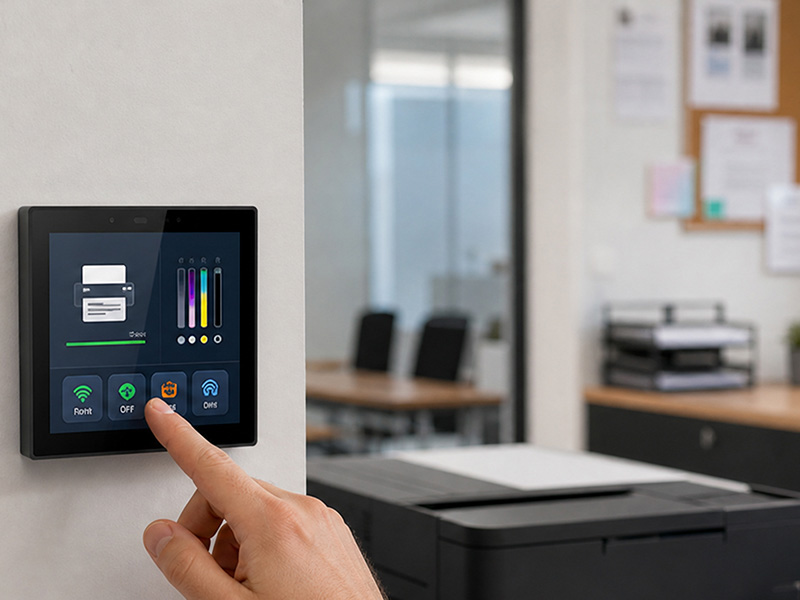
ESP32 4″ Smart Touch Panel
Which ESP32 Microcontroller Is Appropriate for a 7-Inch Display Panel?
When working with larger displays, selecting the correct ESP32 variant becomes critical.
ESP32-S3 for Extended Touch Display Applications
The ESP32-S3 demonstrates superior suitability for touchscreen implementations due to its provision of:
- Dual-core Xtensa LX7 processing architecture
- Operating frequency reaching 240MHz
- Expanded memory capacity support
- Enhanced graphical rendering capabilities
- Integrated USB functionality
- Machine learning acceleration capabilities
In comparison to the standard ESP32 model, the ESP32-S3 delivers enhanced performance for:
- Extended display dimensions
- Touch-responsive interfaces
- LVGL-based graphical user interfaces
Display Interface Technical Requirements
A 7-inch touchscreen necessitates substantially greater computational and memory resources relative to compact displays.
Primary interface options encompass:
RGB Interface Protocol
Implemented in high-resolution display applications.
Key benefits include:
- Accelerated image refresh rates
- Optimized graphical performance delivery
- Compatibility with larger display formats
Serial Peripheral Interface (SPI)
Appropriate for less demanding applications.
Benefits:
- Reduced hardware requirements
- Streamlined development process
Nevertheless, constraints may emerge when executing sophisticated animations or high-resolution graphical interfaces.
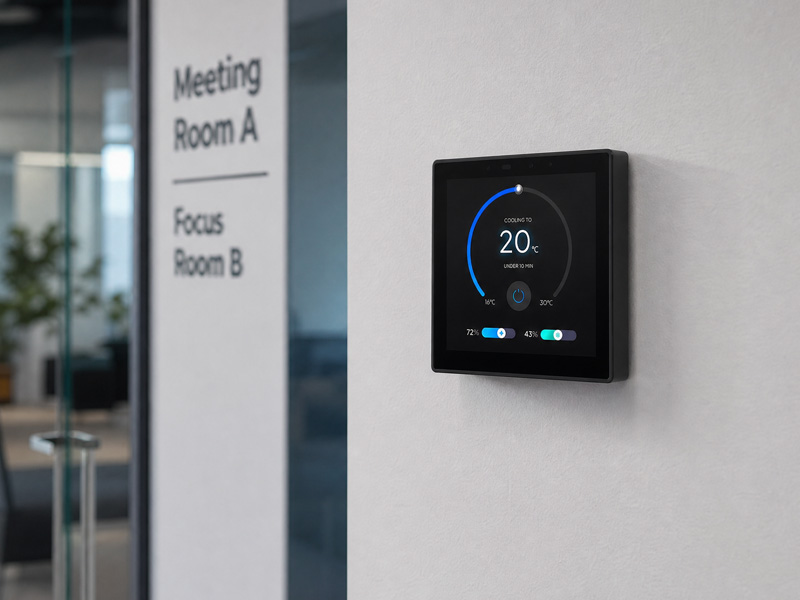
smart home control panel
Capability of ESP32 to Operate a 7-Inch Touch User Interface?
Affirmative, particularly when employing lightweight graphics libraries such as LVGL.
LVGL facilitates the development of:
- Interactive touch-based buttons
- Operational device dashboards
- Temperature monitoring displays
- Illumination management controls
- Automated home environment configurations
- Bespoke motion graphics
A 7-inch display panel can present:
- Multiple residential space management functions
- Power consumption analysis
- Safety system status
- Heating, ventilation, and air conditioning specifications
while preserving an intuitive user experience.
Connectivity Solutions for ESP32 7-Inch Intelligent Control Panels
A 7-inch ESP32 intelligent control interface can establish connections with smart home equipment via:
Wireless Fidelity (WiFi)
Utilized for:
- Intelligent home automation frameworks
- Cloud-based infrastructure
- Internet of Things apparatus
- Bluetooth / Bluetooth Low Energy (BLE)
Utilized for:
- Data collection instruments
- Secure access mechanisms
- Peripheral devices
- Message Queuing Telemetry Transport (MQTT)
Utilized for:
- Internet of Things device interfacing
- Instantaneous condition notifications
- Intelligent home network servers
- RS485 Protocol
Utilized for:
- Climate control systems
- Structural automation infrastructure
- Commercial-grade apparatus
Seven-Inch ESP32 Intelligent Control Panel Utilization
Smart Home Automation
A seven-inch ESP32 panel facilitates comprehensive household management through the following capabilities:
- Illumination systems
- Automated window coverings
- Climate control systems
- Security infrastructure
- Connected household devices
The expanded display dimensions deliver an enhanced user interface suitable for integrated residential management.
Hotel Room Automation
Implementation encompasses:
- Guest accommodation management
- Customizable illumination configurations
- Thermal environment regulation
- Automated window treatment operation
Intelligent Building Control
A seven-inch interactive display enables deployment for:
- Facility automation systems
- Conference space management
- Operational efficiency optimization
ESP32 vs Android for 7-Inch Smart Control Panels
| Feature | ESP32-S3 Panel | Android Panel |
|---|---|---|
| Power Consumption | Lower | Higher |
| Cost | Lower | Higher |
| UI Complexity | Medium | Advanced |
| Development | Embedded firmware | Android applications |
| Best Applications | IoT control, HMI | Multimedia, complex systems |
| Connectivity | WiFi/BLE | WiFi/BLE/Ethernet |
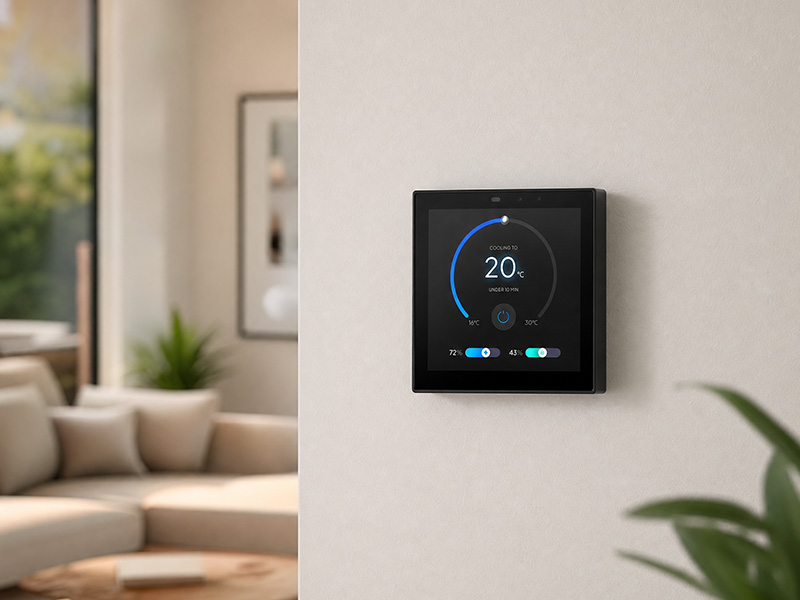
smart home control panel
ESP32 is suitable for smart control panels focused on IoT control and automation, while Android is better for applications requiring advanced apps, video, or powerful computing.
The Portworld YC-SM43P represents an ESP32-S3-based intelligent touch panel solution engineered for the following applications:
- Smart home automation
- Internet of Things control
- Industrial human-machine interface applications
This device incorporates the following technical specifications:
- ESP32-S3 dual-core microprocessor
- Capacitive touch-sensitive display
- WiFi and Bluetooth wireless protocols
- Ethernet connectivity
- RS485 serial communication interface
- LVGL user interface framework support
For applications demanding larger display formats, such as seven-inch panels, the ESP32-S3 platform can be adapted through appropriate display interface selection, memory architecture optimization, and refined user interface design methodologies.
The ESP32 microcontroller is capable of supporting a seven-inch intelligent control panel, particularly when implemented with the ESP32-S3 variant in conjunction with optimized display driver software and the LVGL graphics rendering framework.
This solution demonstrates suitability for the following use cases:
- Residential automation control systems
- Internet of Things terminal devices
- Hospitality industry automation interfaces
- Embedded human-machine interface systems
For implementations necessitating energy-efficient, low-power consumption, and highly customizable intelligent control solutions, an ESP32-based seven-inch capacitive touchscreen panel delivers a practical and cost-effective alternative to conventional Android-based control interface systems.

