Android vs. ESP32 Smart Home Control Panels: How to Choose
When designing a smart home control panel, selecting the appropriate hardware platform is an early and important decision. Android and ESP32 are both widely used, but they are suited to different needs.
An Android-powered panel offers a familiar app-based environment, making it a good fit for projects that need an advanced graphical interface, third-party apps, and a range of software capabilities. An ESP32-powered panel is intended for embedded use, providing direct control of hardware, wireless connectivity, and adaptable firmware development.
Neither platform is the best choice in every situation. The right option depends on the product’s features, display needs, communication protocols, development budget, and plans for ongoing maintenance.
This article compares Android and ESP32 smart home control panels and outlines how to choose the right solution for different smart home projects.
1. Understanding Android and ESP32 Smart Home Control Panels
Before comparing the performance of these two platforms, it is essential to understand how they differ at a fundamental level.
Android Smart Home Control Panels
Android is an operating system built for interactive devices, including smartphones, tablets, and embedded touchscreen terminals.
An Android smart home control panel typically features an application processor, such as the Rockchip RK3566 or RK3568. It runs the Android operating system and enables application development using Android frameworks.
This gives manufacturers the flexibility to create touchscreen interfaces with features such as:
- Centralized lighting and curtain control
- HVAC and temperature management
- Smart home dashboards
- Video intercom applications
- Voice assistant interfaces
- Third-party Android applications
- Web-based control interfaces
Android is especially well suited to smart home panels that need to operate as versatile touchscreen terminals rather than as simple embedded controllers.
ESP32 Smart Home Control Panels
ESP32 is a family of microcontrollers and system-on-chip platforms created by Espressif. Unlike Android-based application processors, ESP32 devices generally operate embedded firmware developed with frameworks such as ESP-IDF or ESPHome.
For touchscreen projects, the ESP32-S3 is a popular option, offering dual-core processing, Wi-Fi, Bluetooth LE, and compatibility with external PSRAM configurations.
Developers can pair ESP32 hardware with LVGL to create tailored graphical interfaces.
Common applications include:
- Smart lighting control panels
- Temperature and humidity displays
- Touchscreen scene controllers
- Sensor monitoring terminals
- Embedded automation interfaces
- Customized smart home control devices
ESP32 works well for projects requiring dedicated control functions, compact hardware, and custom embedded software rather than a full Android application environment.
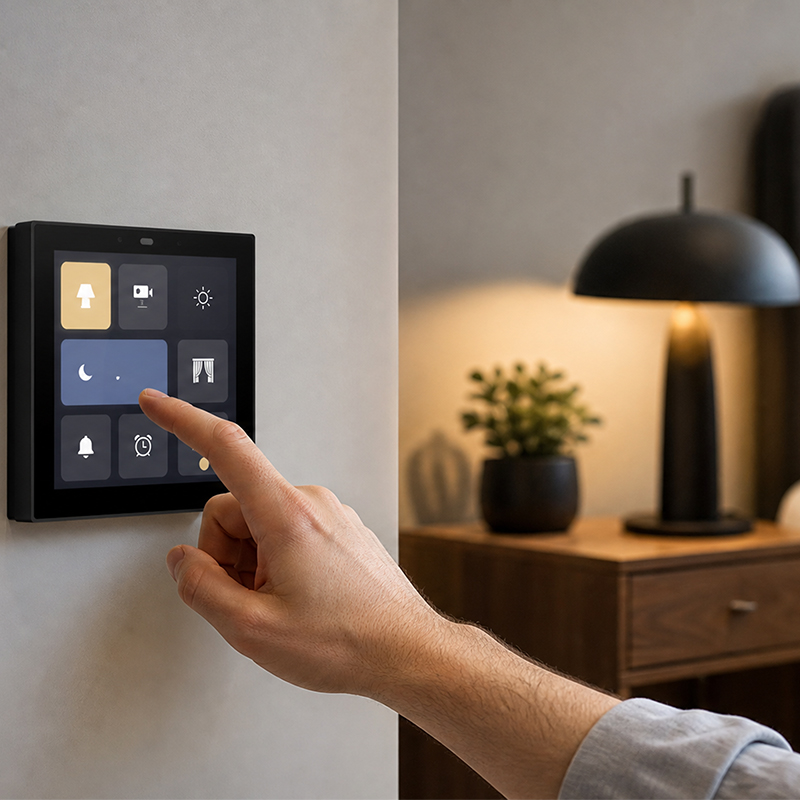
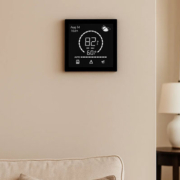
YC-SM43P ESP32 4″ Smart Touch Panel
2. Android vs. ESP32: Key Technical Differences
The primary distinction lies in their system architectures. Android is a complete operating system supported by an application ecosystem, whereas ESP32 is an embedded computing platform built to perform specific firmware-driven tasks.
| Comparison | Android Control Panel | ESP32 Control Panel |
|---|---|---|
| Computing platform | Application processor, such as RK3566 | Microcontroller/SoC, such as ESP32-S3 |
| Operating environment | Android OS | ESP-IDF, FreeRTOS, ESPHome or other embedded firmware |
| Application development | Java, Kotlin, C/C++ | C/C++, ESPHome YAML and supported embedded frameworks |
| User interface | Android UI frameworks and applications | LVGL and customized embedded interfaces |
| Display capability | Suitable for larger and more complex touchscreen applications | Suitable for compact embedded graphical interfaces |
| Third-party applications | Supports compatible Android applications | Cannot directly install Android APK applications |
| Connectivity | Depends on the hardware configuration | Wi-Fi and Bluetooth on ESP32-S3; additional interfaces depend on hardware |
| Hardware control | Through drivers, services and external interfaces | Direct integration through GPIO, UART, I²C, SPI and other supported peripherals |
| Development approach | Application and system customization | Firmware and embedded application development |
| Typical applications | Centralized touchscreen terminals | Dedicated smart home controllers and embedded devices |
The table explains why these platforms should not be considered direct hardware substitutes: each is designed to meet different computing requirements.
3. User Interface and Touchscreen Experience
The user interface is among the most noticeable differences between Android and ESP32 control panels.
Android: Better Suited to Complex Applications
Android is a practical option when a control panel requires multiple application functions and a more sophisticated touchscreen experience.
Developers can create interfaces with Android application frameworks and integrate compatible third-party apps.
For instance, a centralized smart home panel could provide:
- A home dashboard
- Room-by-room device controls
- Video intercom
- Security monitoring
- Weather updates
- Multimedia apps
- Building management interfaces
- Android also simplifies the reuse of existing application development resources.
For projects that need large displays, multiple screens, detailed animations, or complex application workflows, an Android-based platform is often a more appropriate starting point.
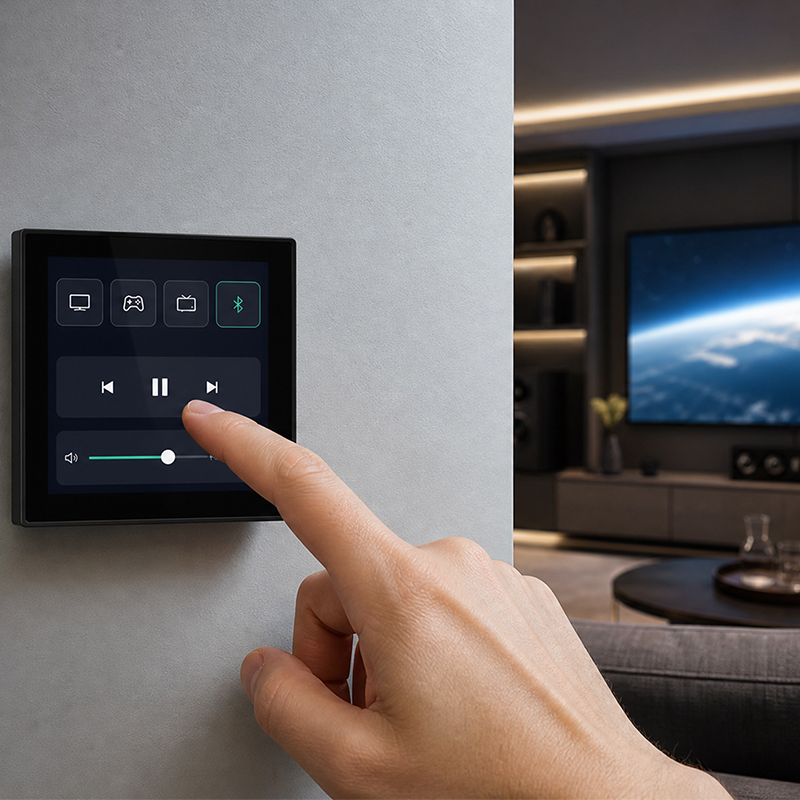
YC-SM43P ESP32 4″ Smart Touch Panel
ESP32: A Strong Choice for Dedicated Embedded Interfaces
ESP32-based panels typically feature streamlined graphical interfaces.
Using LVGL, developers can build buttons, sliders, labels, charts, icons, and navigation screens, then arrange them into tailored smart home dashboards.
For instance, a 4-inch ESP32 touchscreen could show:
- Indoor temperature
- Lighting status
- Brightness controls
- Curtain position
- HVAC operating mode
- Smart home scene shortcuts
- The interface can be customized to match the product’s specific functions.
Accordingly, ESP32 is well suited to projects requiring a dedicated touchscreen controller instead of a general-purpose Android terminal.
4. Smart Home Connectivity and Protocol Integration
Connectivity is another key factor. Both Android and ESP32 platforms can communicate with smart home systems, although they use different implementation approaches.
Android Connectivity
Android control panels can connect via Wi-Fi, Ethernet, Bluetooth, and other interfaces supported by their hardware.
At the software level, developers can integrate communication technologies such as:
- MQTT
- HTTP and REST APIs
- WebSocket
- Modbus using suitable interfaces or gateways
- KNX using compatible hardware and software
- Matter through a supported implementation or compatible application architecture
For instance, an Android panel can communicate with a Home Assistant server through a browser, a compatible application, or a customized interface.
ESP32 Connectivity
ESP32-based panels can support a range of communication methods, depending on the chip and hardware configuration.
An ESP32-S3-based panel may support:
- Wi-Fi
- Bluetooth Low Energy
- MQTT
- HTTP
- UART and RS485, with suitable hardware
- ESPHome native API
- Home Assistant integration
For instance, an ESP32 panel can connect to Home Assistant through ESPHome to display sensor readings and interact with compatible smart home entities.
Protocol support, however, depends on the firmware, software implementation, and available hardware interfaces. A Wi-Fi connection by itself does not provide MQTT, KNX, Zigbee, or Matter functionality.
The choice of ESP32 chip is also important for Matter projects. The ESP32-S3 supports Wi-Fi and Bluetooth LE but lacks native IEEE 802.15.4 connectivity for Thread. For development requiring native Wi-Fi and Thread support, a platform such as the ESP32-C6 may be more suitable.
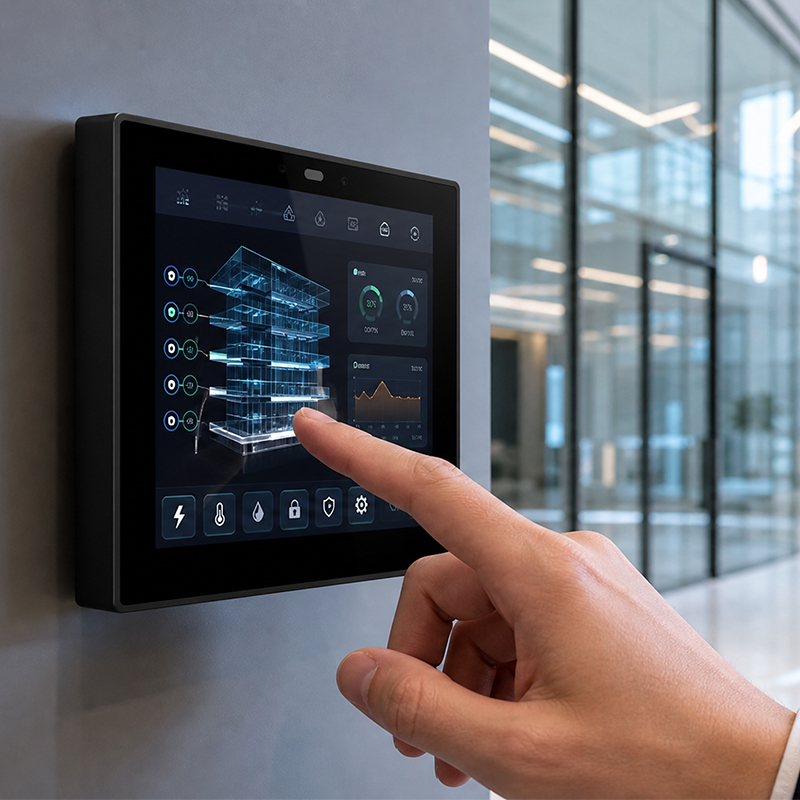
YC-SM43P ESP32 4″ Smart Touch Panel
5. Development Cost and Project Complexity
The processor is only one factor in development costs. Software requirements, screen size, hardware interfaces, certification needs, and production volume also affect the overall project budget.
Android Development
Android projects may involve:
- Android BSP and firmware configuration
- Application development
- UI/UX design
- Hardware driver adaptation
- System customization
- Application installation and update management
- Ongoing operating system maintenance
One key advantage is access to an established application ecosystem and extensive development resources.
However, projects involving substantial system customization may require additional engineering effort.
ESP32 Development
ESP32 projects often benefit from a streamlined embedded software architecture.
Depending on the project requirements, developers may use ESPHome for supported features, ESP-IDF for custom firmware, and LVGL to build touchscreen interfaces.
Development work may involve:
- GPIO and peripheral configuration
- Display and touchscreen driver development
- Wi-Fi and Bluetooth setup
- Sensor integration
- MQTT or Home Assistant connectivity
- LVGL interface development
- Firmware optimization and over-the-air (OTA) updates
For a dedicated control panel with a limited feature set, this approach can avoid unnecessary software complexity.
However, developing for the ESP32 is not inherently less expensive. Complex graphics, custom protocols, specialized hardware drivers, and advanced application logic can demand substantial embedded engineering effort.
6. Which Platform Is Best for Different Smart Home Applications?
The right platform depends on the functions the control panel must perform.
Choose Android for Centralized Smart Home Control
Android is well suited to projects that require a touchscreen terminal with a broad range of features.
Common applications include:
- Whole-home smart control hubs
- Large wall-mounted touchscreen panels
- Video intercom terminals
- Security and monitoring dashboards
- Building management interfaces
- Products that run third-party Android applications
When a panel must run multiple applications or offer a familiar tablet-style experience, Android is usually the more suitable option.
Choose ESP32 for Compact Embedded Control Panels
ESP32 works well for products with specific functions and a relatively streamlined user interface.
Common applications include:
- Room-level lighting controllers
- Touchscreen smart switches
- Temperature and humidity panels
- Curtain controllers
- Sensor monitoring terminals
- Compact smart home scene panels
For projects that prioritize direct hardware interaction, a compact form factor, and custom embedded firmware, ESP32 may be the better choice.
Consider Both Platforms for Different Product Tiers
Some manufacturers may choose to develop a range of smart home products instead of relying on a single platform.
For example:
- ESP32 panels can provide basic room-level controls.
- Android panels can function as centralized home control terminals.
- Dedicated gateways can manage communication between different smart home networks.
- This strategy helps manufacturers align hardware resources and development costs with each product’s intended functions.
- 7. Portworld Android and ESP32 Smart Home Control Panel Solutions
Portworld offers smart home touchscreen hardware built on a variety of processor platforms, including Rockchip application processors and ESP32 embedded platforms.
This gives customers the flexibility to choose a suitable hardware architecture based on their application requirements.
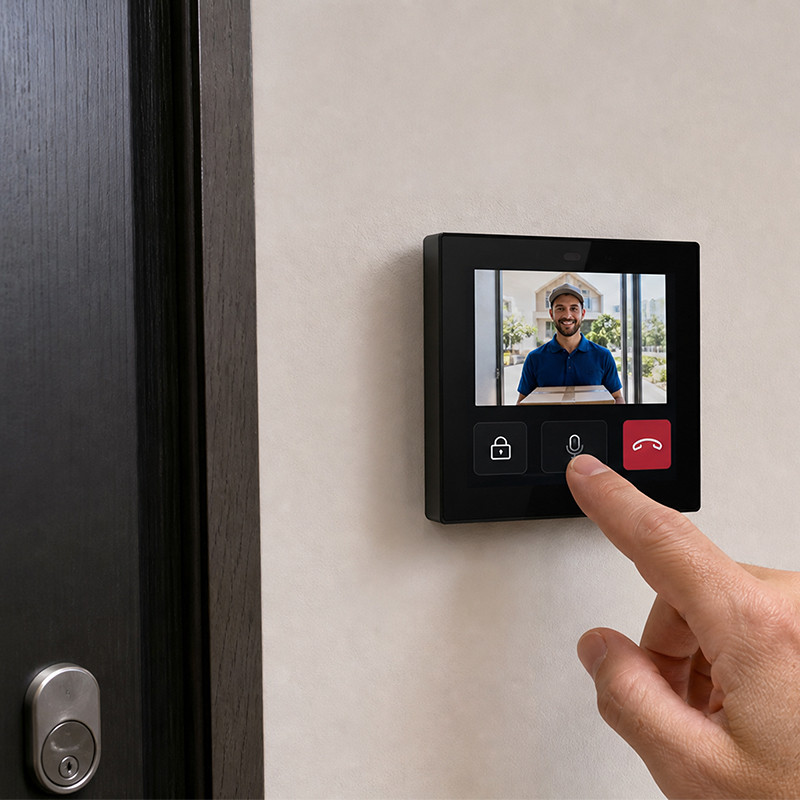
YC-SM43P ESP32 4″ Smart Touch Panel
Android-Based Control Panels
YC-SM41P
The YC-SM41P is a compact, 4-inch smart home control panel powered by the Rockchip RK3566 platform.
Key specifications include:
- 4-inch touchscreen
- 480 × 480 resolution
- RK3566 processor
- 2GB RAM and 32GB storage
- Android 11 or Debian 11, depending on the selected version
- Optional PoE and RS485
The panel is well suited to room-level smart home control, wall-mounted interfaces, and building automation applications.
YC-SM10P
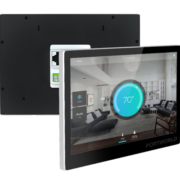
Designed for projects that need a larger touchscreen, the YC-SM10P offers:
- 10-inch touchscreen
- 1280 × 800 resolution
- RK3566 processor
- Android 11
- 500-nit brightness
- 10-point capacitive touch
- 2GB RAM and 32GB storage
- PoE connectivity
Its larger display accommodates centralized dashboards, lighting management, HVAC controls, and other smart home applications.
ESP32-Based Control Panel
YC-SM43P
The YC-SM43P is a smart home control panel built around the ESP32-S3, intended for embedded touchscreen applications.
Key specifications include:
- ESP32-S3 dual-core processor running at up to 240 MHz
- 4-inch capacitive touchscreen
- 480 × 480 display resolution
- 8MB PSRAM and 16MB Flash
- Support for the LVGL graphical interface
- Wi-Fi and Bluetooth 5 connectivity
- Ethernet connectivity
- PoE and 12V DC power options
- RS485 interface
- FreeRTOS support
The YC-SM43P is well suited to projects that require a compact touchscreen interface, custom firmware, and dedicated smart home control features.
Note that the ESP32-S3 cannot run Android applications or install Android APK files. Software must instead be developed using a compatible embedded framework and firmware architecture.
For ESPHome projects, developers should confirm that the display and touchscreen drivers are compatible with the specific hardware configuration.
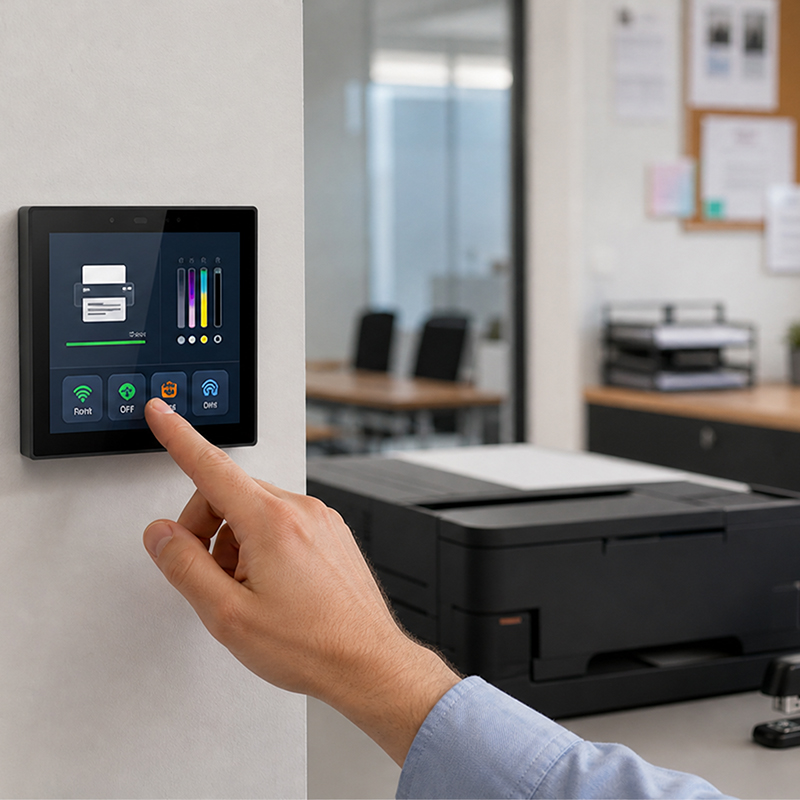
YC-SM43P ESP32 4″ Smart Touch Panel
8. OEM/ODM Customization: Android or ESP32?
For smart home manufacturers, choosing a processor platform is just one aspect of product development. A finished product may also need customized hardware and software, communication interfaces, industrial design, and production support.
Portworld offers OEM/ODM services for a range of smart home control panel architectures.
Android customization options may include:
- Android BSP and firmware customization
- Custom boot logos and startup animations
- Branded launchers and home screens
- Pre-installed applications
- Automatic application launch
- UI/UX design and application development
Integration with KNX, Zigbee, MQTT, and other protocols through compatible hardware and software
ESP32 customization options may include:
- ESP32-S3 hardware configuration
- LVGL interface development
- ESP-IDF and FreeRTOS firmware customization
- ESPHome-based development where supported
- Wi-Fi, Bluetooth, Ethernet, and RS485 integration
- MQTT and Home Assistant connectivity
- Sensor and peripheral integration
Portworld can also assist with PCB and PCBA design, motherboard customization, display selection, enclosure development, logo and packaging customization, SDK documentation, and mass production.
With more than 18 years of experience in touchscreen and embedded hardware development, Portworld supports customers from initial platform selection and prototyping through customized production.
9. Android vs. ESP32: Final Recommendation
Android and ESP32 are both suitable for smart home control panels, but each serves a different set of application needs.
Choose Android for projects requiring a rich touchscreen experience, support for multiple applications and third-party software, and centralized smart home management.
Choose ESP32 for projects that call for a compact embedded controller, dedicated hardware functions, a customized LVGL interface, and focused smart home communication.
Manufacturers should first define the product’s required functions, then select the processor and software architecture that best meet those requirements.
Portworld provides Android- and ESP32-based smart home control panel solutions, along with hardware design, firmware customization, interface development, and OEM/ODM production support. This enables the development of distinct control panel products for different smart home applications without requiring every project to use the same hardware platform.