What ESP32 Platform Is Suitable for Matter Smart Home Applications?
Matter is emerging as a key connectivity standard for smart home development. It allows devices made by different manufacturers to communicate using a shared application-layer protocol, simplifying the creation of interoperable smart home products. For manufacturers designing smart switches, sensors, lighting controllers, gateways, and touchscreen control panels, selecting an appropriate ESP32 platform is an important early step.
Not all ESP32 chips support the same wireless technologies. Some models target Wi-Fi and Bluetooth applications, while others offer IEEE 802.15.4 connectivity for Thread-based Matter devices. The best option depends on the product’s function, communication needs, power consumption, and user interface.
This article compares the principal ESP32 platforms for Matter-enabled smart home applications and explains how to choose suitable hardware for various product designs.
1. Understanding Matter Connectivity Requirements
Matter is an application-layer protocol that enables smart home devices to communicate across compatible ecosystems. It operates over supported IP-based network technologies, primarily Wi-Fi, Thread, and Ethernet.
For ESP32-based products, Wi-Fi and Thread are especially relevant.
Matter over Wi-Fi
Matter over Wi-Fi works well for devices that require a direct network connection, including smart plugs, lighting controllers, and touchscreen control panels. Wi-Fi connects these devices to the home IP network, enabling communication with compatible Matter controllers.
Matter over Thread
Thread is a low-power mesh networking technology built on IEEE 802.15.4. It is well suited to battery-powered sensors, switches, and other smart home accessories. Thread devices communicate over a mesh network, which typically uses a Thread Border Router to link the Thread network to the wider IP network.
Bluetooth Low Energy (BLE) is commonly used during Matter commissioning. It enables a compatible controller to discover and configure a device before the device joins a Wi-Fi or Thread network. BLE is not typically used as the transport for ongoing Matter communication.
Understanding these distinctions is essential when choosing an ESP32 chip.
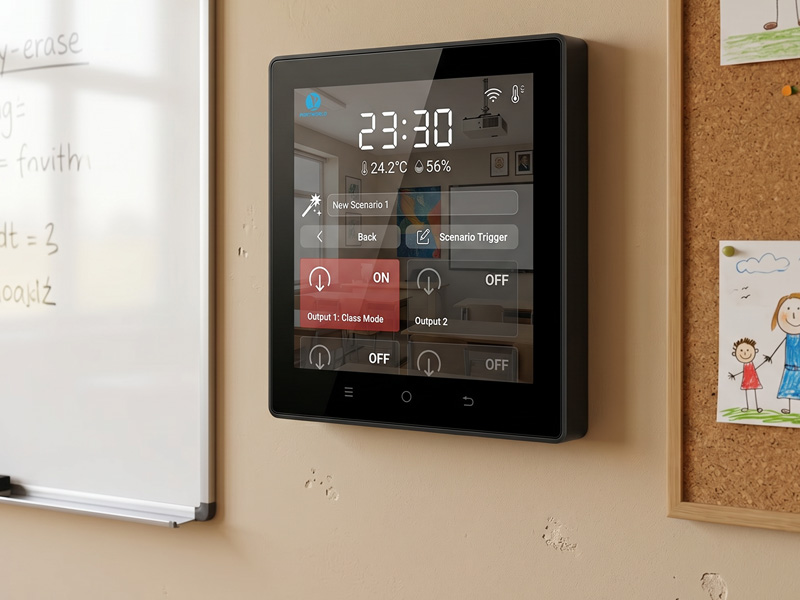
smart home control panel-1
2. Which ESP32 Platform Is Suitable for Matter?
Espressif offers several ESP32 families with distinct wireless capabilities. Three platforms to consider for Matter smart home development are the ESP32-C6, ESP32-H2, and ESP32-S3.
ESP32-C6: A Flexible Option for Wi-Fi and Thread Matter Devices
The ESP32-C6 is a strong choice for developers building smart home products that require both Wi-Fi and Thread connectivity.
Its wireless capabilities include:
- 2.4 GHz Wi-Fi 6
- Bluetooth Low Energy
- IEEE 802.15.4 for Thread and Zigbee
- Integrated security features
- Support for ESP-IDF development
By combining Wi-Fi and 802.15.4 connectivity in a single chip, the ESP32-C6 supports a range of Matter product architectures. Depending on the firmware and network configuration, it can power Matter-over-Wi-Fi devices or Matter-over-Thread end devices.
Typical applications include smart lighting controllers, smart plugs, environmental sensors, wireless switches, and other connected home accessories.
For manufacturers planning a new Matter product family, the ESP32-C6 is a practical starting point when both Wi-Fi and Thread connectivity may be needed.
ESP32-H2: Built for Thread-Based Smart Home Devices
The ESP32-H2 is intended for low-power wireless applications using Bluetooth LE and IEEE 802.15.4.
Unlike the ESP32-C6, it does not support Wi-Fi. As a result, it is better suited to products designed specifically for Thread communication than to devices that need a direct Wi-Fi connection.
Potential applications include:
- Battery-powered temperature and humidity sensors
- Smart door and window sensors
- Wireless switches
- Low-power lighting accessories
- Thread-based Matter end devices
The ESP32-H2 may be a strong option when low power consumption and Thread connectivity are the primary design goals.
However, Thread-based products require a suitable Thread network and a Thread Border Router to connect with the broader home network. Developers should factor in this requirement when designing the complete system.
ESP32-S3: Well Suited to Wi-Fi Matter Devices and Touchscreen Interfaces
The ESP32-S3 is especially valuable in smart home products that need a more advanced user interface.
It offers dual-core processing, Wi-Fi, Bluetooth LE, and support for graphical user interface development. In combination with LVGL, it can power touchscreen interfaces for smart home control panels, wall-mounted controllers, and embedded displays.
Common applications include:
- Wi-Fi smart home controllers
- Touchscreen panels for lighting and scene control
- Environmental monitoring displays
- Custom smart home interfaces
- Embedded control terminals
The ESP32-S3 does not include a native IEEE 802.15.4 radio, so it cannot provide native Thread connectivity on its own. Products requiring Matter over Thread need additional compatible hardware or a different ESP32 platform.
For products focused on touchscreen operation, customized interfaces, and Wi-Fi connectivity, the ESP32-S3 remains a practical choice.
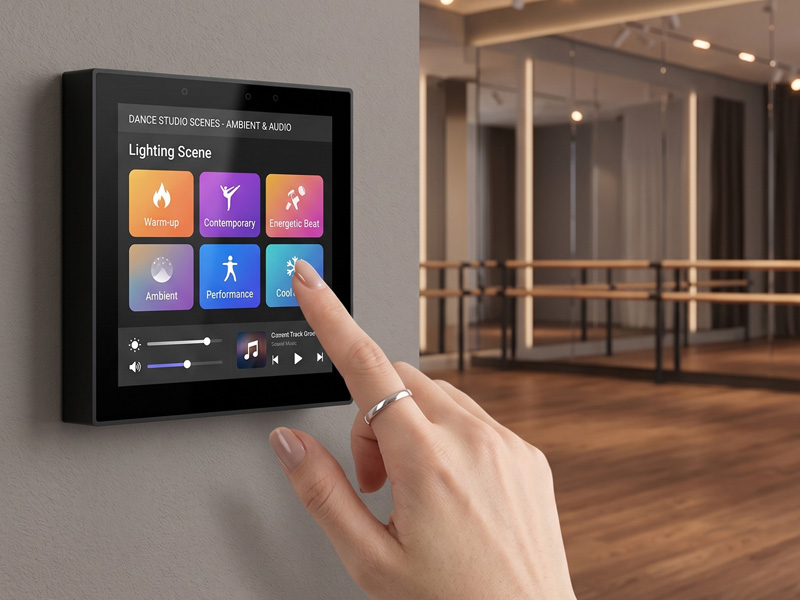
smart cotnrol panel6-1
3. ESP32-C6 vs. ESP32-H2 vs. ESP32-S3
The following comparison summarizes the main differences.
| Feature | ESP32-C6 | ESP32-H2 | ESP32-S3 |
|---|---|---|---|
| Wi-Fi | Wi-Fi 6, 2.4 GHz | Not supported | 2.4 GHz Wi-Fi |
| Bluetooth LE | Supported | Supported | Supported |
| IEEE 802.15.4 | Supported | Supported | Not supported |
| Thread | Supported | Supported | Requires additional hardware |
| Matter over Wi-Fi | Suitable | Not supported directly | Suitable |
| Matter over Thread | Suitable | Suitable | Requires additional hardware |
| Typical applications | Wi-Fi and Thread devices | Low-power Thread devices | Touchscreen and Wi-Fi devices |
The appropriate choice depends on the product’s intended purpose:
- Select ESP32-C6 for flexible Matter development that uses Wi-Fi and Thread.
- Select ESP32-H2 for low-power Matter accessories built around Thread.
- Select ESP32-S3 for touchscreen control panels and smart home interfaces that use Wi-Fi.
Note that wireless capabilities at the chip level do not, by themselves, make a product Matter-compatible. Developers must also implement the Matter software stack and device functions, support commissioning and security, and conduct interoperability testing.
4. What Software Is Required for ESP32 Matter Development?
Choosing the right chip is just one aspect of developing a Matter product. Firmware and software integration are also essential.
Espressif offers ESP-Matter, a development framework based on the Matter SDK. It includes resources for implementing Matter features on supported ESP32 platforms.
A typical development environment includes these components.
ESP-IDF
ESP-IDF is Espressif’s official development framework. It provides the tools, drivers, networking capabilities, and firmware development environment needed for ESP32 products.
ESP-Matter
ESP-Matter supplies the Matter software framework and APIs. Developers use it to implement device functions, specify supported device types, configure commissioning, and connect products to Matter-compatible ecosystems.
FreeRTOS
FreeRTOS provides multitasking and resource management. It is useful for products that need to manage communications, sensors, display updates, and application logic concurrently.
LVGL
For touchscreen smart home products, LVGL can provide the graphical interface. Developers can build pages for lighting control, temperature monitoring, scene selection, and device status.
LVGL is an optional user-interface framework rather than a requirement of Matter itself. The Matter application and the touchscreen interface need to exchange data through the product’s firmware architecture.
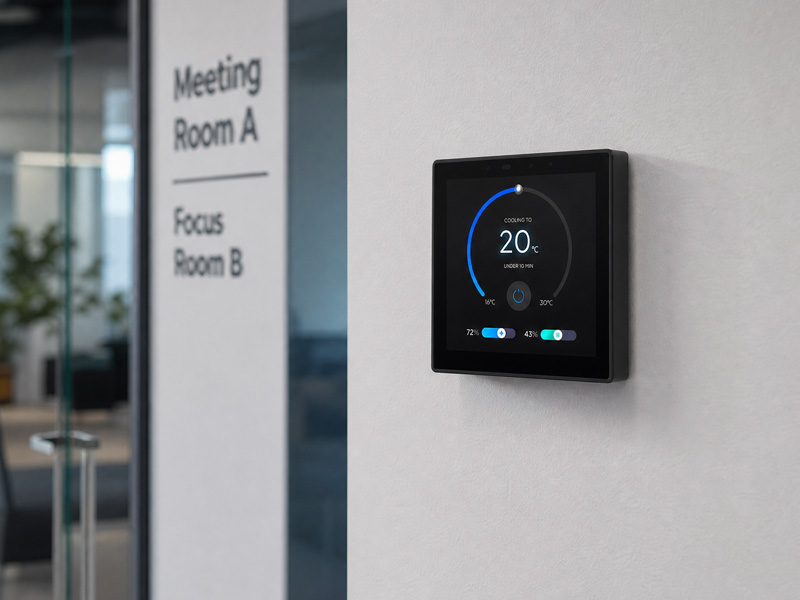
smart home control panel
5. Choosing an ESP32 Platform for Different Smart Home Products
The best platform depends on a product’s communication method, power requirements, and interface design.
Smart Sensors and Battery-Powered Accessories
For temperature sensors, door sensors, and other low-power accessories, consider the ESP32-H2 when the product uses Thread. Because it does not support Wi-Fi, it can simplify designs that do not require direct Wi-Fi connectivity.
The ESP32-C6 is another option for products that need greater flexibility between Wi-Fi and Thread.
Smart Switches and Lighting Controllers
For smart switches and lighting controllers, the right choice depends on how the device connects to the home network.
The ESP32-C6 is suitable when development for both Wi-Fi and Thread is relevant. The ESP32-S3 can also power Wi-Fi-based controllers, particularly when they require a larger display or a customized user interface.
Smart Home Touchscreen Control Panels
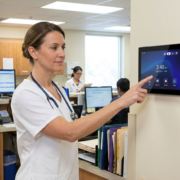
Touchscreen control panels have different needs from small wireless sensors. They require enough processing capacity to render the display, handle touch input and communications, and run application logic.
The ESP32-S3 is a practical platform for this type of product. Using LVGL, developers can build a tailored interface for lighting, curtains, HVAC, environmental data, and smart home scenes.
If a panel needs to interact with Matter devices, its firmware architecture must include a suitable Matter communication strategy. Depending on the design, the panel can function as a Matter controller, operate as a compatible device, or serve as an interface connected to another Matter-capable system. Each role has distinct hardware and software requirements.
6. Portworld ESP32-S3 Smart Home Control Panel for Custom Projects
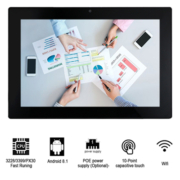
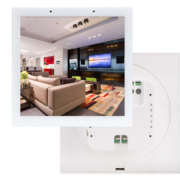
Portworld offers ESP32-based touchscreen hardware for manufacturers creating customized smart home interfaces. These devices provide a platform for embedded control applications.
The YC-SM43P is one example of an ESP32-S3 smart home control panel.
Its key specifications include:
ESP32-S3 dual-core processor running at up to 240 MHz
- 4-inch capacitive touchscreen
- 480 × 480 display resolution
- 8 MB PSRAM and 16 MB Flash
- Support for the LVGL graphical interface
- Wi-Fi and Bluetooth 5 connectivity
- Ethernet connectivity
- Optional PoE and RS485
- FreeRTOS-based embedded development
The YC-SM43P suits projects that need a compact touchscreen interface, customized firmware, and smart home control capabilities.
For Matter-related projects, it is essential to distinguish the panel’s existing hardware capabilities from any additional software development. The ESP32-S3 has no built-in 802.15.4 radio; therefore, the YC-SM43P should not be considered a standalone Thread device or Thread Border Router. Matter over Wi-Fi also depends on implementing and validating the necessary firmware.
Depending on project requirements, Portworld can provide customization in areas including:
- Hardware and interface configuration
- Customized LVGL user interface design
- Firmware and embedded software development
- RS485 and external device integration
- Network communication and smart home application integration
- Product appearance, logo, and packaging customization
- OEM/ODM development and production support
For projects that require native Thread connectivity, a hardware design based on the ESP32-C6 or ESP32-H2 may be a better fit. The final platform should be chosen based on the intended Matter device role and the product’s complete requirements.
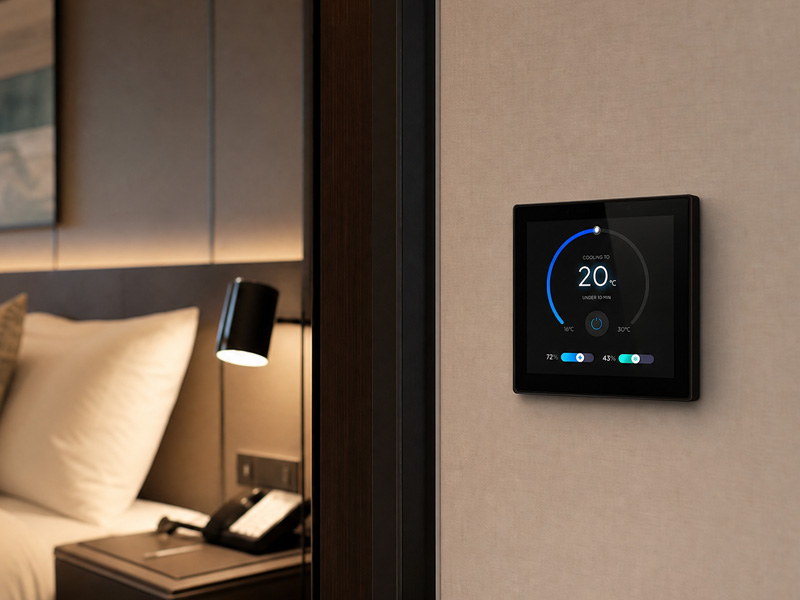
smart home control panel
7. Key Considerations Before Developing an ESP32 Matter Product
Before development begins, manufacturers should assess several technical considerations.
Define the Matter device role. Identify whether the product will operate as a Matter end device, a controller, or a component of a gateway or Border Router architecture. Each role requires a distinct software and network design.
Choose the appropriate transport. Determine whether the product will use Matter over Wi-Fi or Thread, as this choice directly influences the wireless hardware selection.
Assess memory and processing needs. Matter firmware, networking, security, and user-interface features all use system resources. Products with displays may require additional memory for graphics and application data.
Plan commissioning and security. Matter products require an appropriate commissioning process, device credentials, and secure communications. These requirements should be addressed from the outset, rather than added late in development.
Test interoperability. Evaluate the product with the intended Matter controllers and ecosystems, under relevant network conditions, and across its supported device functions. Verify compatibility using the final hardware and firmware configuration.
ESP32-C6, ESP32-H2, and ESP32-S3 can all be useful in Matter-related smart home development, but they serve different purposes.
ESP32-C6 is a versatile choice for Wi-Fi and Thread Matter devices. ESP32-H2 is suitable for low-power Thread accessories, while ESP32-S3 is particularly useful for Wi-Fi-based smart home products with touchscreen interfaces.