IP65 Outdoor Digital Signage Display for Advertising: How to Choose the Right Solution
Outdoor advertising is evolving as companies seek more adaptable and engaging methods to connect with their customers. While traditional printed posters and static signs can convey fundamental information, updating campaigns often necessitates further printing, installation, and maintenance. In contrast, an outdoor digital signage display provides a more dynamic option, enabling businesses to showcase promotional videos, product images, real-time announcements, and brand messages on digital screens.
Nonetheless, outdoor advertising presents challenges that indoor displays generally do not encounter. Factors such as dust, rain, water exposure, temperature variations, and extended operating hours can all impact the reliability of displays. For projects that demand consistent performance in challenging environments, an IP65 outdoor digital signage display for advertising can play a crucial role in the solution.
The Importance of IP65 Protection for Outdoor Digital Signage
When choosing a digital signage display for outdoor applications, the protection rating of the enclosure is one of the primary specifications to consider. IP65 is an ingress protection rating that signifies the enclosure is completely dust-tight and safeguarded against water jets from any direction under defined test conditions.
This level of protection minimizes the likelihood of dust and water infiltrating the protected enclosure, rendering IP65-rated equipment appropriate for a variety of outdoor and semi-outdoor advertising uses.
However, an IP65 rating does not inherently imply that a display can endure all outdoor conditions. It does not guarantee protection against prolonged submersion, extreme temperatures, direct sunlight, condensation, or vandalism on its own. It is essential for buyers to verify the complete environmental specifications and installation requirements of the product prior to outdoor deployment.
In commercial advertising initiatives, the protection rating must be evaluated in conjunction with screen brightness, thermal management, operating temperature, and the overall enclosure’s durability.
Key Considerations When Selecting an Outdoor Digital Signage Display for Advertising
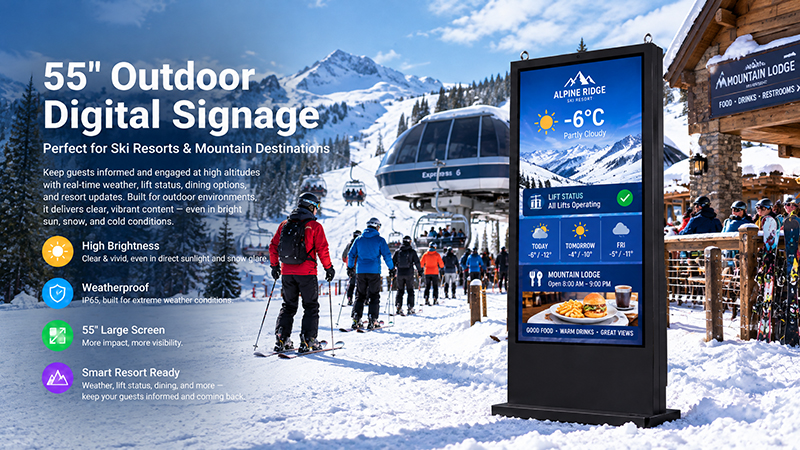
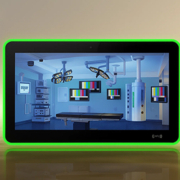
55 digital signage display
1. Screen Brightness and Sunlight Visibility
A significant challenge in outdoor advertising is ensuring visibility under varying lighting conditions. A display that appears clear indoors may seem washed out when subjected to direct sunlight.
Before selecting an outdoor digital signage display, it is crucial to ascertain the installation location of the screen. A display situated beneath a sheltered entrance may have different brightness requirements compared to one that is exposed to direct sunlight throughout the day.
Take into account the screen’s rated brightness, viewing angle, surface characteristics, and anticipated ambient light. For areas that receive intense sunlight, high-brightness panels and suitable optical treatments may be required. Brightness should be assessed in relation to the actual installation environment rather than being determined solely by screen size.
2. Weather Protection and Enclosure Design
An effective outdoor advertising display requires more than merely a screen housed within a metal cabinet. Its design must take into consideration factors such as dust, rain, water exposure, and the environmental conditions anticipated at the installation location.
An enclosure rated IP65 can offer significant protection against dust and water jets when it is designed and installed correctly. Additionally, it is essential to factor in cable entries, connectors, mounting points, and service access as integral components of the overall system.
Thermal management is also crucial. Displays and the embedded computing hardware produce heat during their operation, necessitating that the enclosure effectively regulates internal temperatures while still providing the necessary protection. For projects intended to operate over extended durations, it is advisable for buyers to confirm the manufacturer’s specified operating temperature and continuous-operation capabilities.
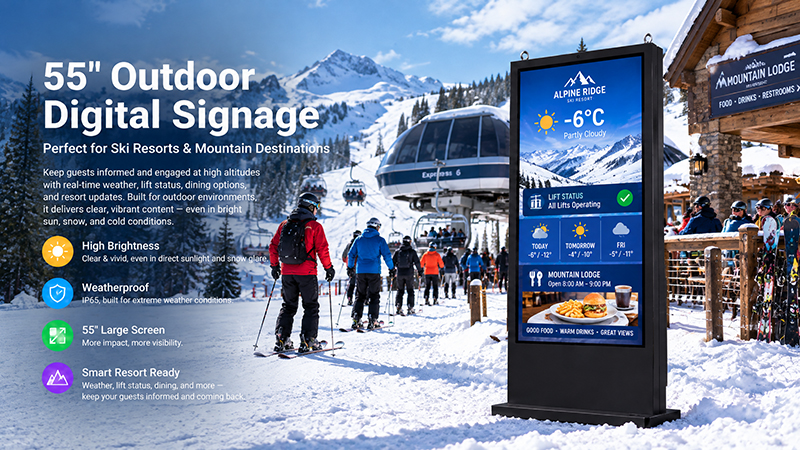
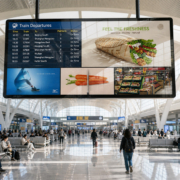
55 digital signage display
3. Reliable Performance for Extended Operating Hours
Digital advertising achieves optimal effectiveness when campaigns can operate continuously during necessary business hours. Retail areas, commercial entrances, transportation hubs, and other public-facing venues may necessitate displays that function for prolonged durations.
When assessing a display, it is essential to examine the operating system, processor architecture, memory, storage capacity, content playback specifications, and available connectivity options. These factors significantly affect how the system manages advertising videos, images, scheduling applications, and various digital signage functionalities.
Furthermore, it is crucial to differentiate between the capabilities of the display panel and those of the media player. The comprehensive solution must be tailored to the specific content, software, network environment, and operational timetable.
4. Screen Size, Installation, and Viewing Distance
Selecting the appropriate screen size is contingent upon the advertising environment. A display designed for a storefront to engage pedestrians has distinct requirements compared to a large-format screen situated in a commercial plaza.
It is essential to take into account the viewing distance, the available mounting space, pedestrian traffic, and the volume of information displayed simultaneously. The content must remain easily comprehensible from the anticipated viewing position.
Installation plays a crucial role in long-term performance. Factors such as the mounting structure, cable management, accessibility for maintenance, and exposure to environmental elements like sunlight and rain should be thoroughly evaluated prior to deployment. In the case of multi-screen installations, maintaining uniform display dimensions and standardized mounting specifications can facilitate both installation and maintenance.
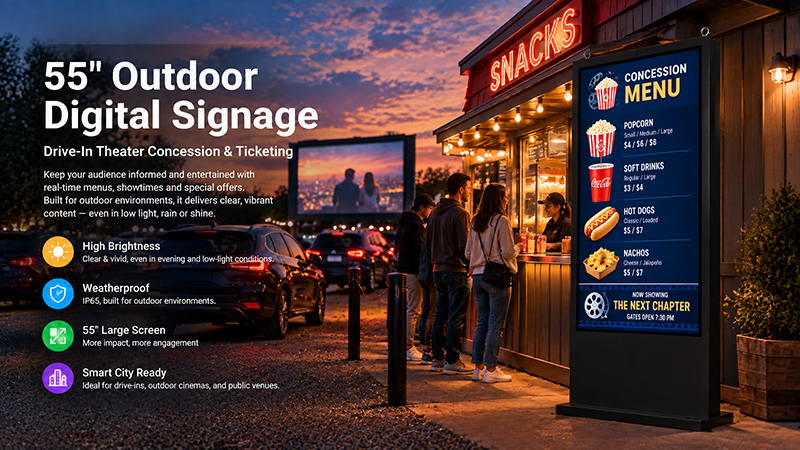
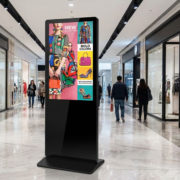
55 inch digital signage display
5. Connectivity and Content Management
A contemporary outdoor digital signage system requires an efficient method for delivering and updating advertising content. Depending on the specific project, connectivity needs may encompass Ethernet, Wi-Fi, HDMI, USB, or other interfaces compatible with the chosen hardware.
The suitable configuration is determined by whether content is updated locally, managed via a network, or transmitted by an independent media player. It is advisable for purchasers to verify compatibility with their content management system and advertising software prior to making a bulk purchase.
For projects that involve specialized software or established control platforms, tailored embedded hardware and operating system configurations can facilitate the alignment of the display system with the overall commercial deployment.
Where Can IP65 Outdoor Digital Signage Displays Be Utilized?
IP65 outdoor digital signage displays are suitable for a range of advertising and information-display initiatives, as long as the product’s brightness, temperature range, installation method, and other specifications are compatible with the site conditions.
Retail storefronts can utilize digital screens to showcase promotions, seasonal offers, and new products. Shopping centers and commercial complexes can present brand campaigns, event announcements, and tenant promotions in appropriate outdoor locations.
Hotels, restaurants, and entertainment venues can employ digital signage to convey special offers, schedules, and visitor information. Facilities related to transportation and public-facing commercial establishments may also implement digital displays for announcements and advertising, in accordance with local regulations and project specifications.
In semi-outdoor settings such as covered walkways, building entrances, and sheltered waiting areas, the necessary levels of protection and brightness may vary from those required for installations that are fully exposed. Thus, assessing the actual environment is crucial when choosing the display.
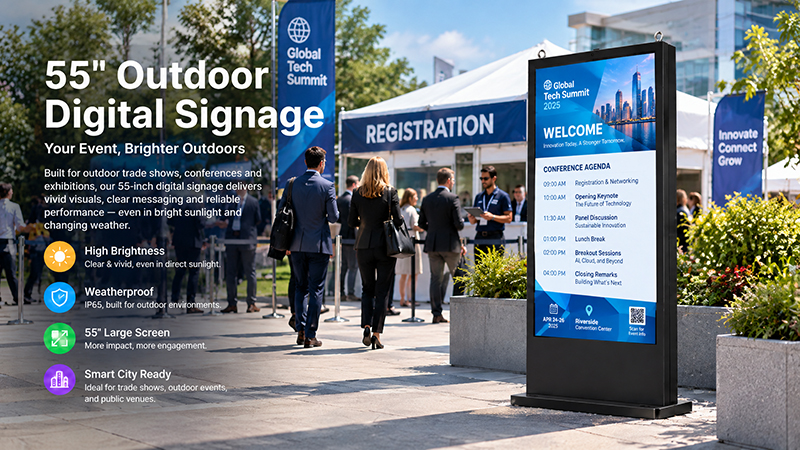
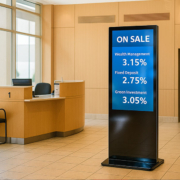
55寸 digital signage display
Custom Outdoor Digital Signage for Commercial Projects
Standard digital signage solutions may not fulfill the specific needs of every project. Advertising networks, retail chains, system integrators, and equipment manufacturers might require particular screen sizes, mounting structures, interfaces, computing platforms, or software setups.
This is where OEM and ODM customization proves to be advantageous. Rather than modifying an entire project to fit a standard product, businesses can collaborate with a manufacturer to specify the hardware and system configuration tailored to the application.
Portworld offers digital signage and embedded hardware solutions, along with OEM/ODM services for commercial projects. Depending on the project’s scope, customization can include hardware configuration, embedded motherboard selection, operating system adaptation, interface requirements, branding, and other integration necessities.
For an outdoor digital signage project, the first step is to define the intended installation environment. Screen size, required brightness, IP protection level, operating temperature, content playback method, connectivity, and daily operating hours should be confirmed before the final hardware configuration is selected.
Portworld can work with customers to evaluate these requirements and develop a digital signage solution aligned with their project specifications. The exact IP rating, environmental performance, and available customization options should be confirmed for the specific model before deployment.