Portworld RK3576 SoM – High-Performance AI Computing Module for Embedded Systems
Compact Design. Octa-Core Performance. Onboard AI Acceleration.
The Portworld RK3576 System on Module (SoM) is designed for embedded systems that require a balance of computing performance, AI processing, advanced multimedia capabilities, and compact hardware integration.
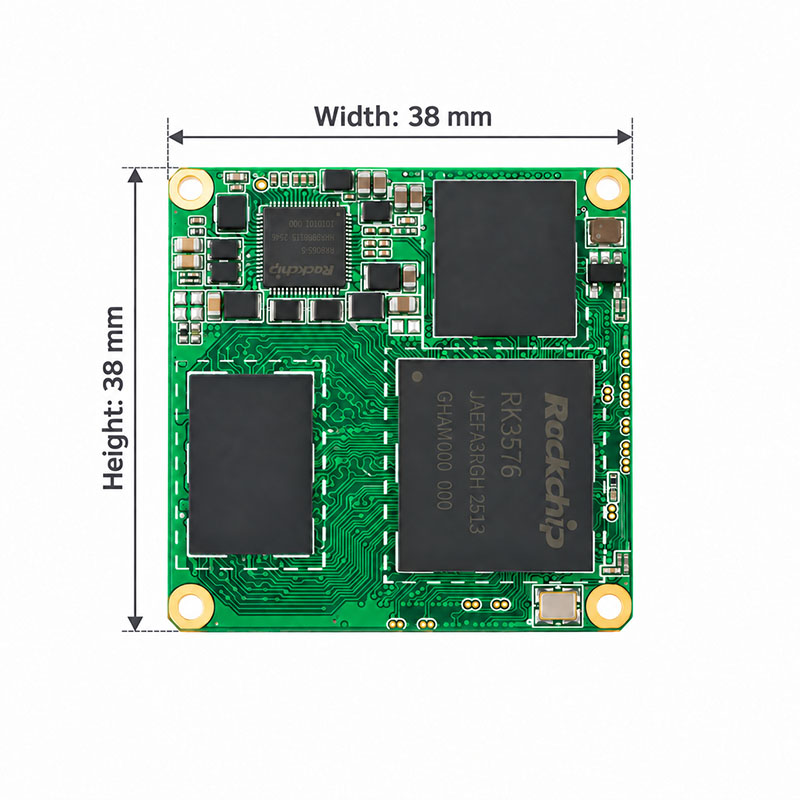
Powered by the Rockchip RK3576 64-bit octa-core processor, this 38 × 38 mm module combines a big.LITTLE CPU architecture, an integrated AI NPU, Mali-G52 MC3 graphics, and advanced image and video processing capabilities. With onboard 4GB LPDDR4 memory, a 240-pin board-to-board connector, and support for Linux, Ubuntu, and Android, it provides a flexible hardware foundation for industrial HMI systems, edge AI devices, smart terminals, robotics, and commercial display equipment.
Portworld also supports hardware customization, operating system adaptation, and embedded system integration to help businesses develop application-specific products from prototype to mass production.
Key Features of the RK3576 SoM
1. Octa-Core Processing Power with Big.LITTLE Architecture
The RK3576 SoM features a 64-bit octa-core processor with four Cortex-A72 cores running at up to 2.2GHz and four Cortex-A53 cores running at up to 1.8GHz. This big.LITTLE architecture combines high-performance computing with power-efficient processing, making it suitable for embedded applications with varying workload requirements.
From multitasking operating systems and responsive user interfaces to data processing and industrial control applications, the module provides a capable computing platform for demanding embedded products.
Key benefits:
- 4 × Cortex-A72 cores up to 2.2GHz
- 4 × Cortex-A53 cores up to 1.8GHz
- 64-bit ARM architecture
- Suitable for multitasking and performance-intensive embedded applications
2. Ultra-Compact 38 × 38 mm Form Factor
Space is often limited in embedded equipment, especially in handheld devices, compact control panels, and custom industrial terminals. Measuring just 38 × 38 mm, the RK3576 SoM provides a compact computing core that can be integrated into a project-specific carrier board.
This small footprint gives hardware developers more flexibility when planning enclosure dimensions, connector placement, peripheral layouts, and thermal management.
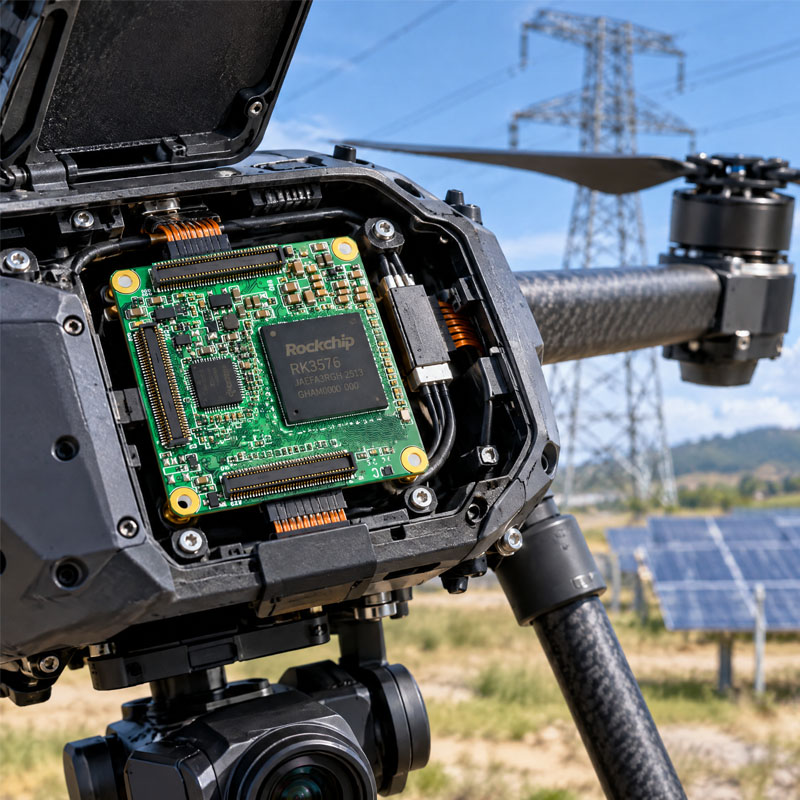
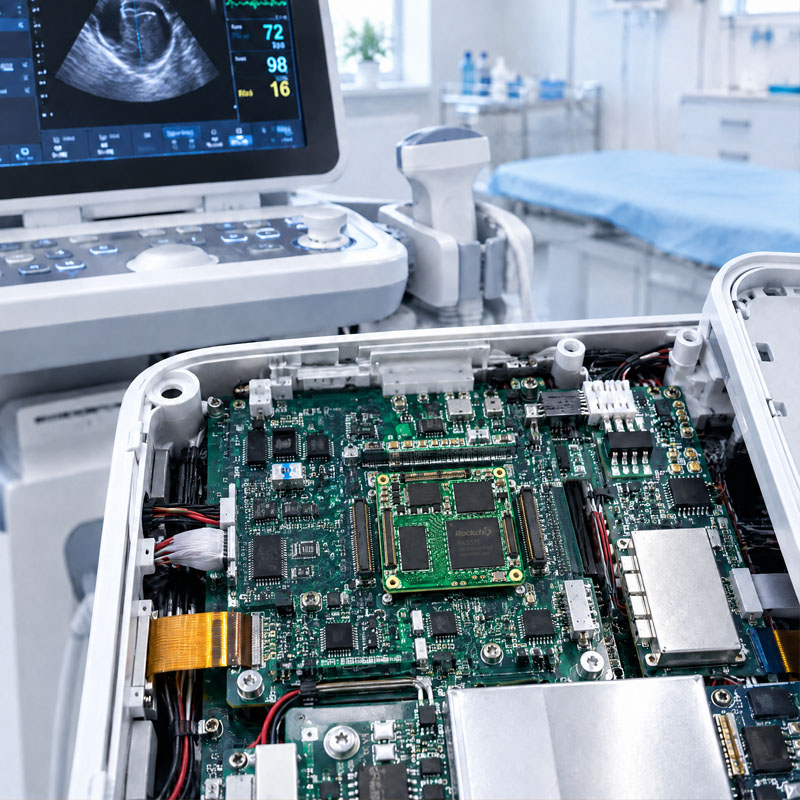
It is suitable for compact edge computing devices, industrial HMI panels, medical equipment, IoT gateways, and other embedded products where space optimization is important.
3. Integrated AI NPU for Edge Intelligence
The RK3576 platform integrates an AI neural processing unit with up to 6 TOPS of INT8 computing performance. Its supported mixed-precision formats include INT4, INT8, INT16, FP16, BF16, and TF32, providing options for different AI inference workloads.
With a compatible software runtime and optimized models, the module can support on-device AI tasks such as object detection, image classification, visual inspection, and sensor data analysis. Local inference can reduce dependence on cloud processing and help applications respond more quickly.
The platform supports AI development workflows involving frameworks such as TensorFlow, PyTorch, and ONNX, subject to model conversion, runtime compatibility, and the available SDK.
Potential applications include:
- AI-enabled industrial inspection
- Smart cameras and visual analytics
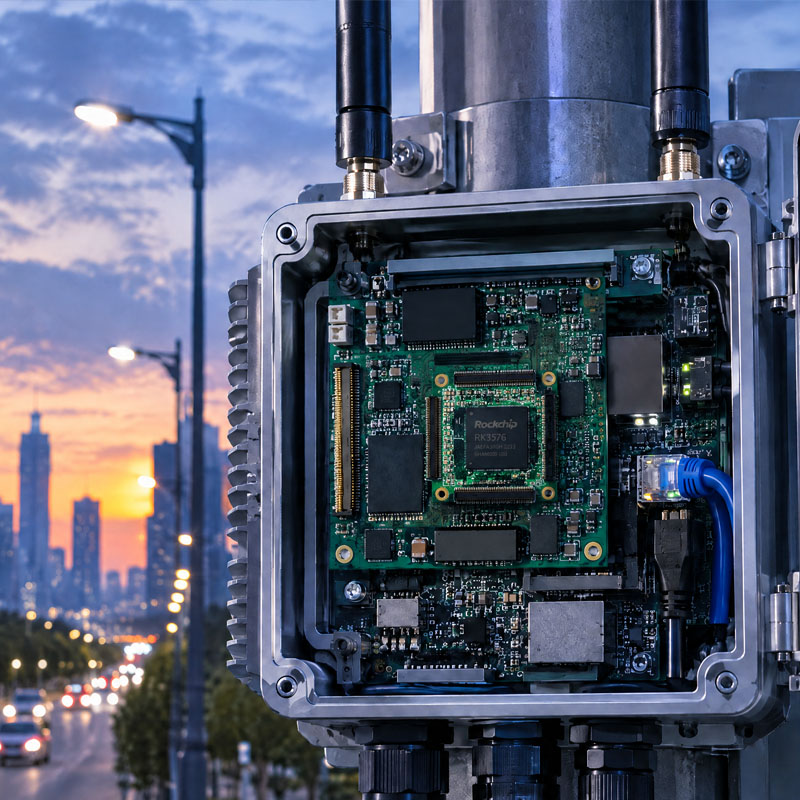
- Edge AI gateways
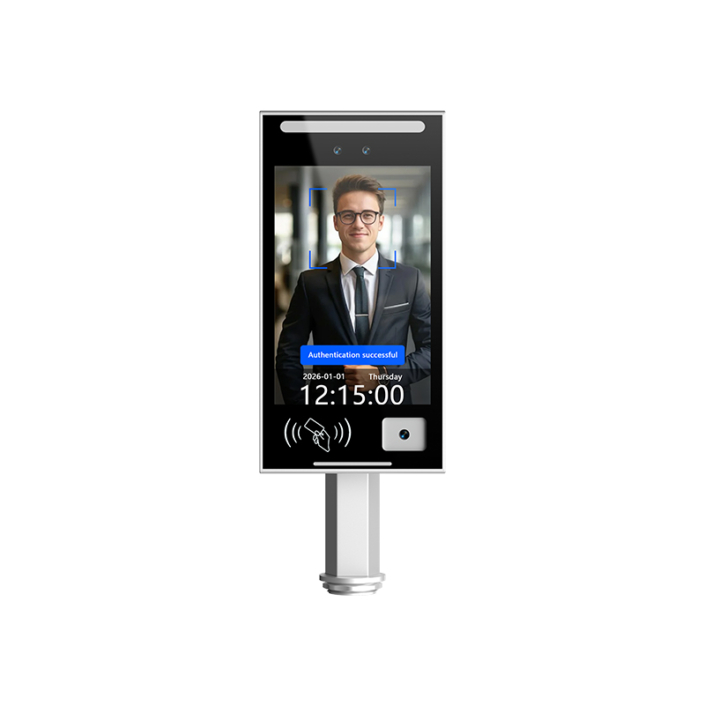
- Intelligent access control
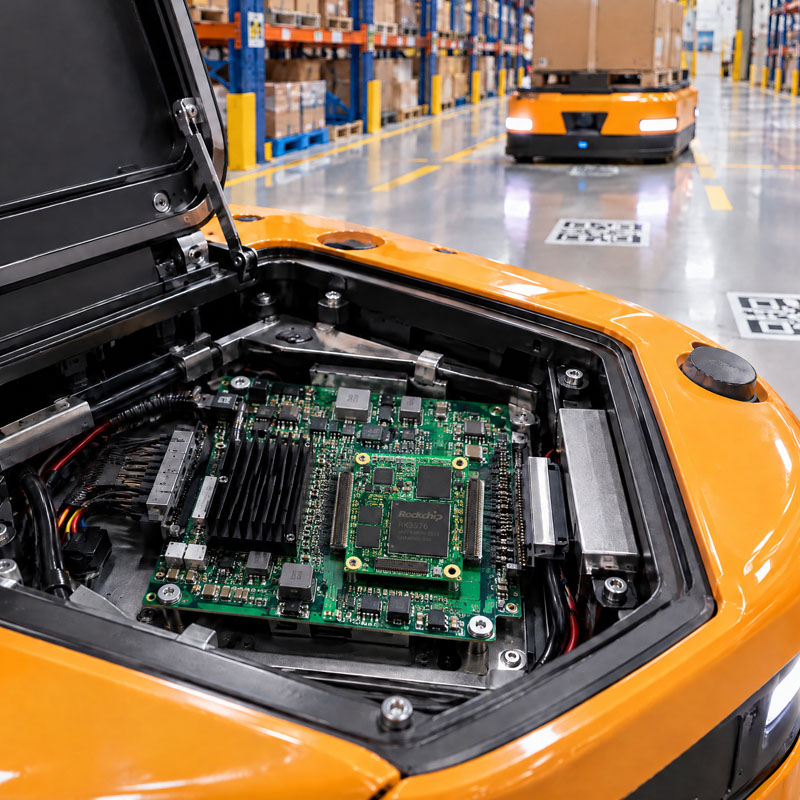
- Robotics and automated equipment
4. Advanced 4K Video Decoding and Encoding
For products that combine computing, visual analysis, and high-resolution content playback, video processing performance is an important consideration.
The RK3576 platform supports hardware decoding of H.265, VP9, AVS2, and AV1 video at resolutions up to 4K and frame rates up to 120fps under supported formats and configurations. H.264 decoding supports up to 4K at 60fps, while H.264/H.265 encoding supports up to 4K at 60fps.
Hardware-accelerated JPEG processing further supports imaging and multimedia workflows.
These capabilities make the module suitable for commercial display systems, smart terminals, multi-camera edge devices, and applications that combine video playback with local processing. Actual throughput depends on codec profiles, software support, memory bandwidth, and system configuration.
5. Integrated 16 MP ISP for Camera-Based Applications
The RK3576 includes a 16-megapixel Image Signal Processor (ISP) with image-processing capabilities such as HDR and 3D noise reduction. It also supports image sensor interfaces for camera-based system designs.
These capabilities help developers build embedded products that need to capture and process visual information in changing lighting conditions. Depending on the sensor, optics, software tuning, and final hardware design, ISP processing can improve image consistency and support downstream computer vision tasks.
Typical applications include machine vision, smart monitoring, robotic perception, and AI-enabled industrial equipment.
6. Mali-G52 MC3 GPU for Responsive Graphics and HMI
The integrated ARM Mali-G52 MC3 GPU supports graphics-intensive interfaces and visual applications. Combined with the platform’s dedicated 2D graphics engine, it provides a hardware foundation for interactive interfaces, visual dashboards, and multimedia applications.
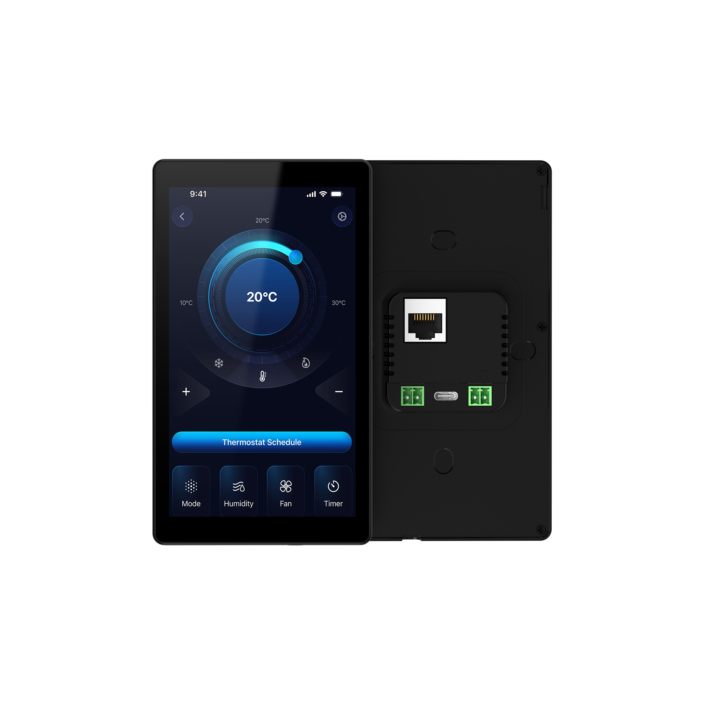
For industrial HMI development, this can support graphical equipment controls, real-time status displays, touch-based operation screens, and visual monitoring interfaces. It is also suitable for smart medical terminals, commercial displays, and embedded devices that require a polished user experience.
Graphics API support depends on the software stack and SDK version used in the final product.
7. 240-Pin Board-to-Board Connector for Flexible Integration
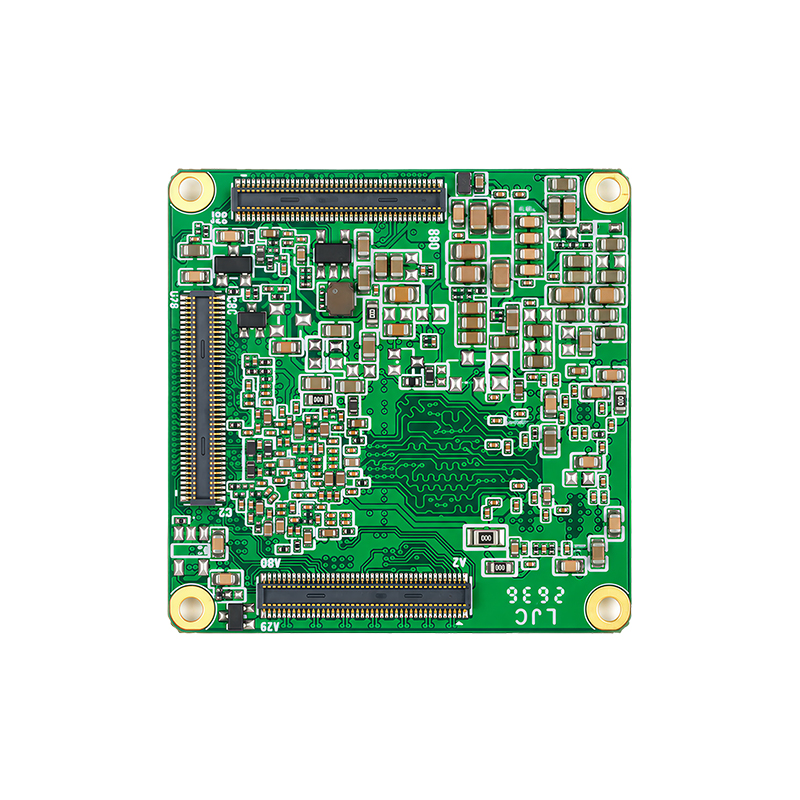
The RK3576 SoM uses a 240-pin board-to-board (BTB) connector to connect the computing module with a custom carrier board.
This architecture separates the main computing components from application-specific interfaces, allowing developers to design different carrier boards around a common processing platform. Depending on the module pinout and carrier-board design, available interfaces may include display connections, Ethernet, USB, PCIe, and GPIO, alongside other peripheral signals.
The connector and PCB layout should be designed with signal integrity, mechanical retention, vibration exposure, and thermal conditions in mind. Final interface availability depends on the module’s actual pin mapping and carrier-board implementation.
8. 12-Layer PCB Design for High-Density Integration
The module uses a 12-layer high-density PCB with a lead-free immersion-gold surface finish, according to the specified module configuration.
Multilayer PCB construction supports the routing of high-speed signals, memory connections, power distribution, and grounding within a compact footprint. A suitable stack-up and layout strategy are particularly important for systems combining high-speed processing, AI workloads, and multiple peripheral interfaces.
The PCB design can support the electrical and integration requirements of compact embedded products, while thermal performance and electromagnetic compatibility must be validated in the complete system under representative operating conditions.
9. Integrated RK806S-5 PMIC for Power Management
The specified module integrates an RK806S-5 power management IC (PMIC) to manage the power rails required by the processor and associated components.
The module is designed for a 5V DC input, simplifying power planning for the carrier board. The PMIC helps regulate the internal supply rails according to the platform’s power requirements, reducing the need to implement every processor power rail independently on the carrier board.
For product integration, developers should follow the module’s power specifications, startup sequence, connector pinout, and current requirements. The final power design should also account for peripherals, peak workloads, and the thermal characteristics of the complete device.
10. Multi-OS Support and Engineering Customization
The RK3576 SoM is designed for embedded products that require a flexible software environment. Linux, Ubuntu, and Android can be considered for supported module configurations, depending on BSP availability, driver integration, and project requirements.
Portworld can support software and hardware integration for commercial deployments, including operating system adaptation, driver configuration, interface development, and carrier-board customization.
For OEM and ODM projects, the development process can be aligned with the target application’s hardware requirements, user interface, connectivity, enclosure, and production plan.
The specified module operating temperature range is 0°C to 80°C. Final qualification should consider the exact module revision, workload, cooling solution, and intended installation environment.