Can a Smart Control Panel Be Customized for OEM Projects?
For intelligent home automation brands, building control enterprises, and Internet of Things solution developers, a smart control panel represents considerably more than a wall-mounted display interface. It functions as an integral component of the comprehensive user experience, facilitating seamless interaction between occupants and connected systems including illumination, climate regulation, window treatments, access control mechanisms, and additional networked devices.
Nevertheless, conventional control panels frequently prove inadequate for addressing the distinct requirements of individual projects. Certain manufacturers necessitate particular display dimensions to align with their proprietary design specifications. Others demand specific operating systems, communication protocols, bespoke interface design, or compatibility with proprietary smart home ecosystems.
This necessity underscores the significance of original equipment manufacturer smart control panel customization. Rather than engineering all components independently, organizations can collaborate with a qualified manufacturing partner to modify an established hardware framework or engineer a more tailored solution suited to their intended demographic.
What Modifications Are Available for an OEM Smart Control Panel?
The extent of possible modifications is contingent upon the chosen hardware framework, software infrastructure, financial allocation, and manufacturing specifications. Certain initiatives necessitate exclusively branding modifications and software refinements, whereas others demand alterations to circuit board architecture, physical housing design, or data transmission protocols.
For intelligent home automation brands, building control enterprises, and Internet of Things solution developers, a smart control panel represents considerably more than a wall-mounted display interface. It serves as a critical element of the overall user experience, enabling smooth communication between residents and interconnected systems encompassing lighting, temperature management, window coverings, entry systems, and other connected devices.
However, standard control panels often fall short in meeting the specialized needs of particular applications. Some manufacturers require specific screen sizes to conform to their exclusive design requirements. Others need particular software platforms, connectivity standards, proprietary user interfaces, or integration with their own smart home platforms.
This reality highlights the importance of original equipment manufacturer smart control panel customization. Rather than developing all components from scratch, companies can partner with an experienced manufacturing provider to adapt an existing hardware platform or develop a more specialized solution tailored to their target market.
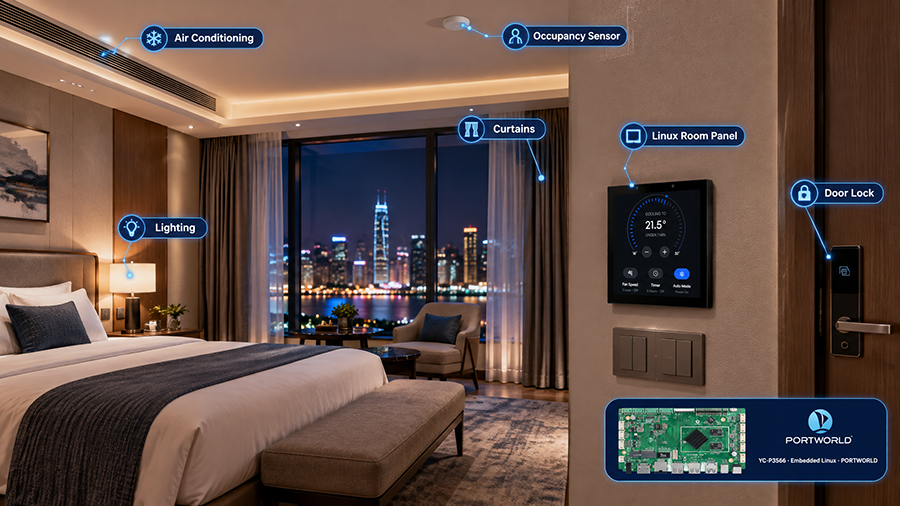
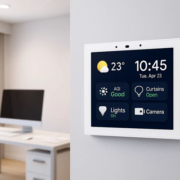
YC-P3566 Linux smart home control panel
What Customization Options Exist for an OEM Smart Control Panel?
The range of available customizations depends on the selected hardware platform, software framework, budget constraints, and production capabilities. Some projects require only cosmetic modifications and software updates, while others involve changes to circuit board configuration, external casing design, or communication standards.
The operating system exerts a significant influence on the capabilities and functionality that an OEM customer can develop and implement on the underlying hardware infrastructure.
Android-based panels may prove suitable for initiatives requiring bespoke applications, sophisticated graphical user interfaces, or seamless integration with an established Android software ecosystem. Linux-based platforms can serve as appropriate solutions for embedded control applications where the software configuration and computational resources must be tailored to fulfill a particular operational objective.
For streamlined, purpose-specific control interfaces, an ESP32-based panel may represent a viable option. As an illustration, the Portworld YC-SM43P incorporates an ESP32-S3 processor and provides support for the LVGL graphics framework, positioning it as a relevant solution for applications requiring a compact touchscreen interface in lieu of a comprehensive Android application environment.
Contingent upon the selected platform, OEM software implementation may encompass application deployment, initialization configuration, user interface customization, firmware modification, localization settings, and interoperability with proprietary customer software solutions.
Prior to platform selection, purchasers should verify which software components permit modification, ascertain the availability of SDK or API documentation, and establish accountability for application development responsibilities and long-term system maintenance.
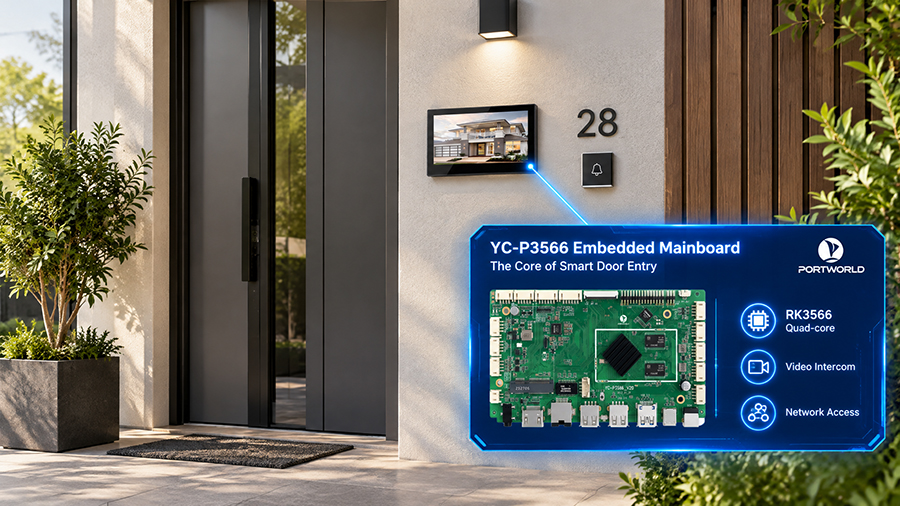
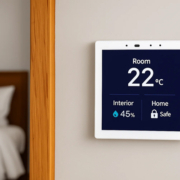
YC-P3566 Smart home control panel
Communication Interfaces and Smart Home Protocols
A smart control panel must establish communication with the devices and systems it is intended to manage. Consequently, communication specifications should be established during the initial phases of the OEM development process.
Based on the chosen platform, a project may necessitate Ethernet, Wi-Fi, Bluetooth, RS485, Zigbee, or alternative interfaces. Building automation initiatives may additionally require compatibility with protocols including KNX, Modbus, MQTT, or BACnet.
These technologies cannot be used interchangeably. RS485, for instance, represents a physical communication interface, whereas Modbus constitutes a communication protocol capable of functioning across RS485 or Ethernet through distinct implementations. Similarly, incorporating a wireless interface does not inherently ensure interoperability with all smart home platforms.
The manufacturer and software development team must therefore validate the comprehensive communication framework, encompassing hardware capabilities, protocol deployment, gateway infrastructure, and verification through compatibility assessments.
For applications requiring a compact control interface incorporating both wired and wireless connectivity options, the YC-SM43P can function as a reference platform for assessing an ESP32-S3-based implementation featuring Ethernet, RS485, Wi-Fi, and Bluetooth capabilities. The specific functionalities and integration prerequisites should be verified according to the planned deployment.
User Interface, Branding, and Product Appearance
Original Equipment Manufacturer (OEM) customization fundamentally involves developing a product that aligns with the customer’s brand identity.
While a standard interface may prove adequate for basic deployments, organizations establishing proprietary smart home ecosystems typically require a unified visual presentation across all connected devices. This encompasses custom iconography, color palettes, display configurations, boot screen logos, localization options, and branded applications.
The tangible product itself presents opportunities for branding and aesthetic modifications, including emblem positioning, exterior coloration, surface treatments, product nomenclature, and protective packaging.
More comprehensive customization may encompass the external casing, support framework, control panel, or spatial requirements. Such modifications necessitate engineering validation and may incur supplementary design or manufacturing expenses.
The critical distinction lies in recognizing which modifications represent software adjustments implementable within the current infrastructure versus structural alterations demanding entirely new product engineering.
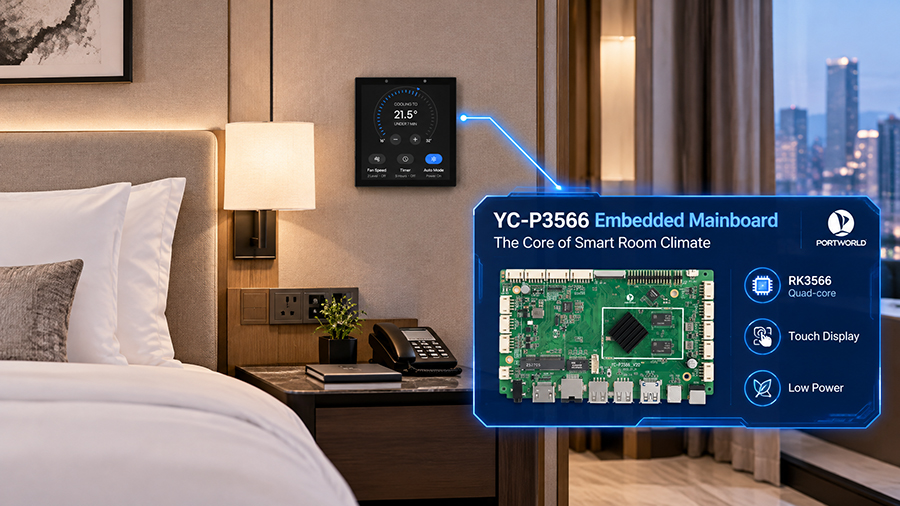
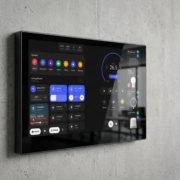
YC-P3566-smart home control panel
OEM versus ODM: Determining the Optimal Strategy for Your Initiative
OEM and ODM are two common approaches to developing a branded smart control panel. The right choice depends on how much of the existing product can be reused.
An OEM project generally starts with an existing product or hardware platform. The customer may customize the branding, configuration, user interface, software, or selected interfaces while retaining much of the original design.
An ODM project typically involves more extensive development. This may include a customized PCBA, a different interface configuration, a new enclosure, changes to the installation structure, or hardware and software developed around a specific application.
For example, a company that needs its logo, startup screen, and application installed on an existing Android control panel may be able to use an OEM approach. A company developing a specialized control panel with unique dimensions, communication requirements, and a dedicated embedded interface may need a more extensive ODM solution.
Not every project requires a completely new design. Starting with a suitable existing platform can reduce duplicated engineering work, while custom development is worth evaluating when standard products cannot meet essential requirements.
The OEM Customization Process: A Comprehensive Overview
A well-executed smart control panel initiative is founded upon well-defined technical specifications rather than aesthetic modifications alone.
The initial phase involves establishing the intended use case. A residential lighting control panel operates under different constraints than a hotel room management system, a commercial facility interface, or an industrial Internet of Things application. The specific application dictates the required computational resources, network connectivity, software framework, and deployment approach.
Following this, both the client and manufacturer must assess the hardware architecture. This evaluation encompasses display resolution, central processing unit, RAM capacity, storage capacity, firmware, power supply specifications, data communication protocols, and form factor dimensions. Should the initiative necessitate a standard such as KNX or Modbus, stakeholders must establish consensus regarding implementation methodology and integration accountability prior to commencing development activities.
Subsequently, software architecture and product design specifications warrant examination. The client must delineate which components it will furnish independently, including proprietary applications, interface design, or platform infrastructure, and which responsibilities it will delegate to the manufacturer.
Following confirmation of the technical parameters, a prototype or reference unit can be developed for assessment purposes. Validation procedures should encompass the operational application, device-to-device communication verification, interface responsiveness, electrical consumption analysis, installation framework compatibility, and supplementary project-dependent capabilities.
Only upon completion of prototype validation and specification approval should the initiative advance toward limited production and full-scale manufacturing. This methodical approach mitigates the possibility of encountering significant hardware or software conflicts following substantial order commitments.
Prior to submitting an order, OEM purchasers should verify several critical factors regarding customization and project specifications.
Customization flexibility represents a significant consideration; however, buyers must also comprehend the commercial and technical parameters governing the engagement.
Initially, inquire whether the manufacturer possesses the capability to execute the necessary modifications within their existing platform infrastructure. Certain adjustments prove relatively uncomplicated, whereas others necessitate new PCB design, specialized tooling, firmware development, or incorporation of third-party components.
Minimum order quantity requirements warrant discussion in conjunction with the scope of customization. Conventional products, prototype samples, moderately customized variants, and entirely bespoke designs typically entail distinct MOQ thresholds. Engineering expenses, tooling investments, sample fees, and manufacturing timelines require explicit clarification rather than presumption of inclusion within unit pricing.
Software licensing and ongoing support merit equivalent consideration. Should the control interface execute proprietary customer applications, stakeholders must establish maintenance responsibilities, update distribution mechanisms, and technical documentation provisions. Should the offering rely upon third-party infrastructure, platform compatibility and licensing obligations warrant thorough examination.
Conclusion requires verification of quality assurance protocols, validation procedures, pertinent regulatory certifications, shipment specifications, and subsequent production availability. For established product portfolios, standardization and sustained supply capacity prove equally consequential as initial manufacturing execution.
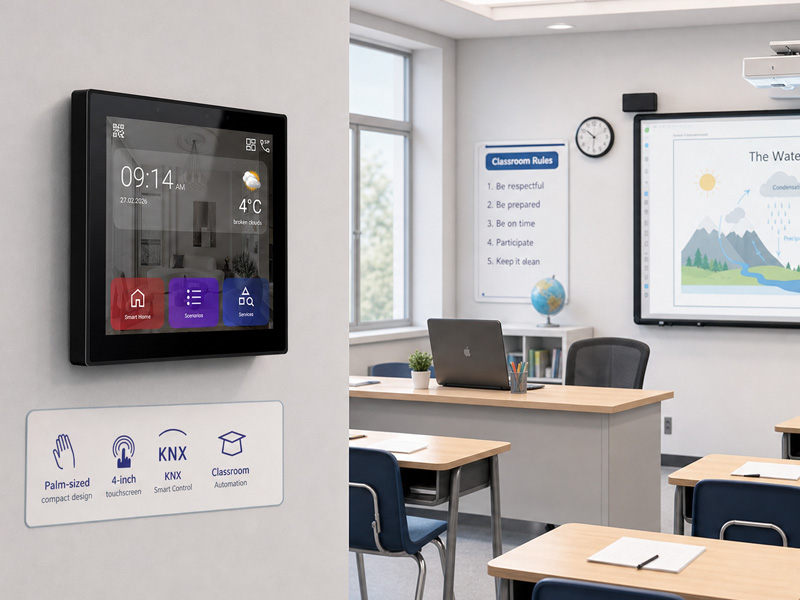
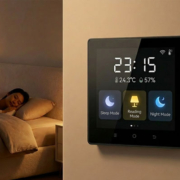
smart control panels-1
Portworld facilitates the development of custom smart control panel initiatives by delivering intelligent control panels and embedded hardware solutions tailored for enterprises creating smart home, building automation, and interconnected device applications.
For OEM clients, an existing panel serves as a foundation for assessing display dimensions, hardware specifications, software prerequisites, and connectivity protocols. Based on the chosen platform and project parameters, customization possibilities encompass brand identity, application connectivity, system setup, interface modification, and operational refinements.
Portworld’s product portfolio encompasses compact touchscreen interfaces including the YC-SM43P ESP32-S3 variant, alongside Android-powered smart control panels designed for initiatives demanding alternative software frameworks and computational capabilities.
For undertakings requiring substantial modifications, OEM/ODM consultations may address PCBA and embedded systems development, operating system adaptation, application integration, structural engineering, and production specifications.
The optimal strategy is contingent upon the particular initiative requirements. An organization designing a straightforward branded room management system may require different engineering resources compared to an enterprise constructing a comprehensive multi-protocol building management solution. Establishing specifications at the outset facilitates the identification of an appropriate platform and minimizes superfluous engineering efforts.
Yes, a smart control panel can be customized for OEM projects, but the available options depend on the hardware platform and the degree of customization required.
The best starting point is to identify the product’s purpose, target users, display size, operating system, communication protocols, software requirements, and expected production volume. With these details established, the manufacturer can assess whether a standard platform, an adapted OEM model, or a more extensive ODM design is the right fit.
For businesses building their own smart control panel product line, a well-defined customization plan helps connect product design, software integration, and manufacturing from the beginning.
Contact Portworld to discuss your smart control panel OEM/ODM requirements and evaluate a suitable hardware platform for your project.