Digital Signage Display with Customized Screen Size and Interfaces
As digital signage has become integral to retail advertising, self-service terminals, hospitality, healthcare, and industrial applications, organizations are seeking displays tailored to their specific products and operational environments—rather than relying solely on conventional off-the-shelf screens.
A display may require accommodation within a constrained installation area, compatibility with specialized peripherals, support for a designated operating system, or seamless integration with an established control infrastructure. In such implementations, display dimensions and interface specifications can substantially influence installation procedures, software interoperability, and the overall quality of user interaction.
For distributors, brand proprietors, and system integrators, selecting a digital signage display featuring customized screen dimensions and interface configurations can streamline the development of application-specific solutions and ensure uniform hardware standardization across large-scale deployments.
The Significance of Customized Screen Dimensions in Digital Signage
Screen dimension represents a foundational consideration in digital signage design; however, it should not be evaluated independently. Optimal dimensions are contingent upon viewing range, accessible installation area, content presentation structure, and the manner in which users engage with the display.
For instance, a compact touchscreen interface may prove appropriate for a countertop information terminal or a conference room display panel. A medium-scale display can function as a point-of-sale terminal or an interactive information interface, whereas larger displays are typically deployed for promotional content, public announcements, and commercial advertising applications.
Commercial applications frequently encounter supplementary requirements. A display may be required to accommodate an existing kiosk framework, substitute an outdated unit while preserving the current installation configuration, or conform to the proportions of a proprietary offering.
Under such circumstances, customization may encompass identifying an appropriate existing option, modifying the enclosure specifications, or assessing an alternative display arrangement. The range of feasible alternatives is contingent upon the panel characteristics, structural considerations, manufacturing specifications, and anticipated production volume.
For enterprises establishing proprietary product portfolios, establishing display dimensions at an early stage facilitates coordination of display procurement, enclosure engineering, attachment locations, and internal component positioning.
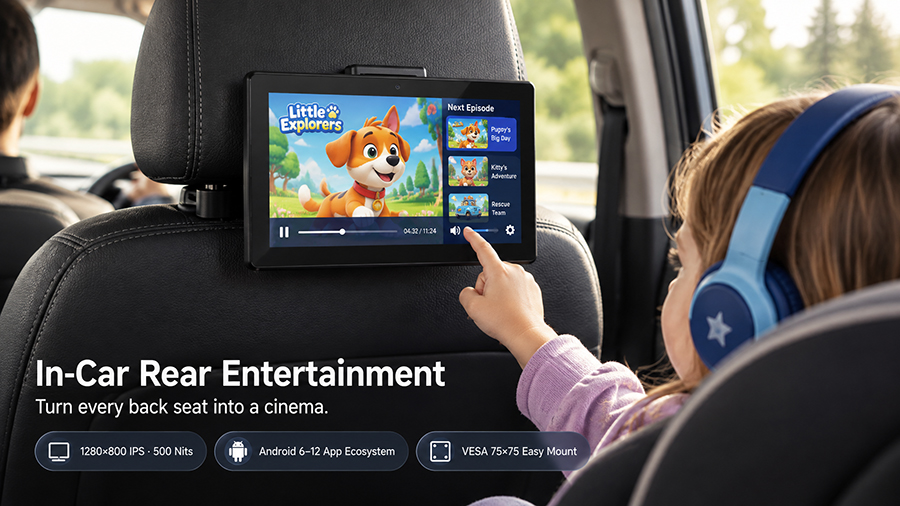
YC-102P digital signage display
Interface Customization: Establishing Display Connectivity with the Appropriate Infrastructure
A digital signage display functions seldom as an independent element. It typically requires interfacing with a computational system, touch-sensitive interface controller, communication network, or peripheral apparatus. Consequently, selecting appropriate interfaces holds equivalent significance to determining the display dimensions.
Display interfaces
The interface linking the processing unit and display panel must accommodate the specified resolution and panel requirements. Contingent upon the system design, interfaces may encompass HDMI, LVDS, eDP, or MIPI DSI. These interfaces demonstrate limited interchangeability across various implementations, necessitating verification of compatibility prior to finalizing the motherboard and panel selections.
Network connectivity
Ethernet and Wi-Fi facilitate distinct deployment scenarios. Hardwired Ethernet may be advantageous for permanent installations demanding dependable network performance, whereas Wi-Fi can streamline deployment in situations where cable installation presents logistical challenges. Certain implementations may additionally necessitate Bluetooth or supplementary wireless communication protocols.
Peripheral Interfaces
Self-service kiosks, point-of-sale terminals, and interactive displays may require USB connections, serial ports, audio interfaces, or connectivity options for scanners, card readers, printers, and additional peripheral devices. The specific requirements are determined by the intended application and the particular devices being integrated.
Power and Control
Power supply specifications, power management systems, and control signaling must be coordinated with the interface configuration strategy. Should the display incorporate Power over Ethernet (PoE) technology, the chosen hardware components must be compatible with the applicable PoE standard and satisfy the power consumption requirements. PoE functionality should not be presumed to be available on all displays or motherboards.
When these specifications are established during the initial planning phase, the manufacturer can evaluate whether an existing product offering meets the requirements or if specialized hardware modifications are required.
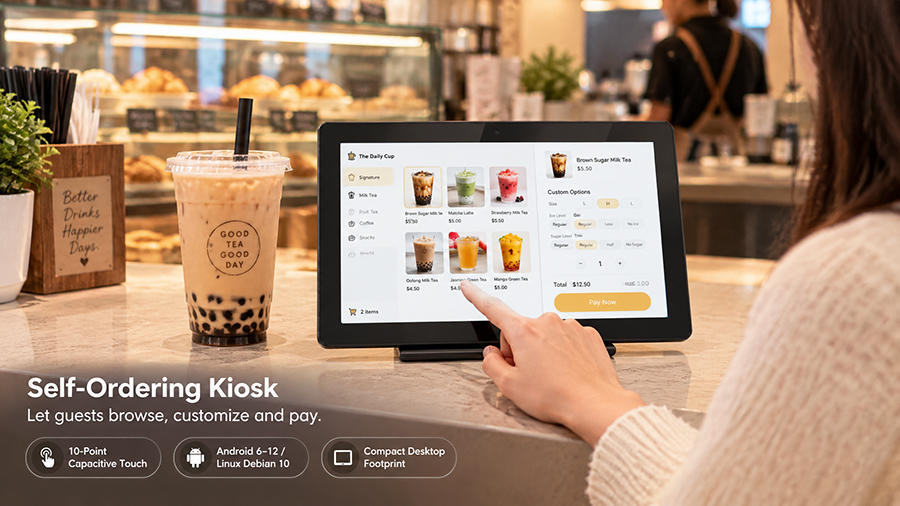
YC-102P digital signage display
Aligning the Display with the Embedded Motherboard
In numerous commercial digital signage applications, the display panel operates in conjunction with an embedded motherboard that executes the operating system and manages application software.
The motherboard establishes critical system characteristics, encompassing computational capability, RAM capacity, data storage, operating system support, communication protocols, and accessible connection options. The display panel, conversely, maintains distinct specifications regarding image resolution, signal transmission interface, electrical power requirements, and form factor dimensions.
These components must be assessed collectively as an integrated system. A motherboard may possess adequate processing capacity to execute an advertising application; however, it may prove inadequate if it lacks support for the necessary display output specifications. Similarly, a panel may feature the desired physical dimensions yet demand an interface that the chosen board cannot accommodate.
For implementations utilizing Android or Linux operating systems, purchasers should additionally confirm driver support, display configuration options, touch-controller compatibility, and the software platform’s technical prerequisites.
Portworld’s embedded hardware collection encompasses Rockchip-based platforms including the YC-P3566 and P3576. Based on the specific application requirements and technical parameters, these platforms can be assessed for suitability in embedded display projects. The ultimate configuration must be validated against the target panel specifications, operating system requirements, interface compatibility, and application performance demands.
Applications That Benefit from Customized Screen Sizes and Interfaces
Customized digital signage solutions provide significant value when conventional products cannot adequately satisfy the physical, electrical, or software requirements of a particular application.
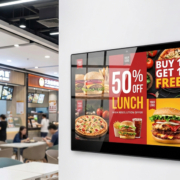
Retail and advertising
Retail establishments may necessitate particular screen dimensions to accommodate display cases, promotional enclosures, or corporate-branded installations. Network integration capabilities and interoperability with content distribution platforms are equally critical for coordinating visual displays across numerous facilities.
POS terminals and self-service kiosks
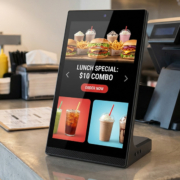
Point-of-sale and kiosk implementations frequently integrate a touch-responsive display with proprietary applications and supplementary hardware components. Display proportions, USB connectivity options, network infrastructure, and structural mounting configurations should be engineered with consideration for the entire system architecture rather than the display component in isolation.
Meeting rooms and office environments
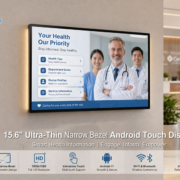
Conference room displays and informational panels may demand space-efficient proportions, seamless wall-mounted installation, network connectivity via Ethernet, and integration with calendar management or facility administration systems.
Industrial and embedded equipment
Displays incorporated into machinery or control systems may require precise dimensional specifications, designated mounting locations, specialized communication protocols, and particular environmental performance requirements. In such applications, synchronized coordination among the display unit, integrated processing hardware, and the primary equipment infrastructure proves essential.
Outdoor Digital Signage Solutions
Outdoor installations demand considerably more than simply selecting a customized screen dimension. Critical factors including luminosity levels, environmental resilience, heat dissipation mechanisms, operational temperature ranges, and structural enclosure specifications must be thoroughly assessed. Connectivity interfaces and electrical power requirements should be confirmed for the entire system prior to manufacturing commencement.
Across these diverse applications, the objective is to establish a display arrangement that aligns with the actual operational setting while minimizing superfluous hardware components.
Progressing from Customization Specifications to Large-Scale Manufacturing
A dependable customization initiative commences with comprehensive technical documentation. Prior to soliciting pricing information, purchasers must compile the fundamental specifications for their desired product.
These specifications customarily encompass display dimensions, pixel density, luminosity intensity, interactive capabilities, software platform, data transmission protocols, network integration, supplementary connection ports, electrical power configuration, installation methodology, and projected procurement volume.
Should the initiative incorporate an established application or data administration framework, software interoperability must be evaluated concurrently with hardware requirements. This concurrent evaluation facilitates the detection of compatibility challenges before the protective housing and manufacturing parameters are established.
A comprehensive development process typically encompasses the following key phases:
Requirement Specification: Establish comprehensive documentation detailing the application parameters, display dimensions, interface requirements, installation prerequisites, and software specifications.
Hardware Selection: Evaluate and select an appropriate display panel and embedded computing platform, subsequently validating their electrical and mechanical compatibility.
Prototype Assessment: Conduct thorough testing of display functionality, touch sensitivity, peripheral connectivity, software performance, power consumption, and thermal characteristics.
Configuration Finalization: Establish final specifications for hardware components, software configuration, enclosure design, branding elements, and packaging requirements.
Production Manufacturing: Execute full-scale manufacturing operations in accordance with the finalized configuration and established quality standards.
The project duration, minimum order quantities, and financial investment are contingent upon the extent of customization required, component accessibility, tooling specifications, and intended production scale. Early clarification of these parameters enables stakeholders to develop more strategic planning approaches.
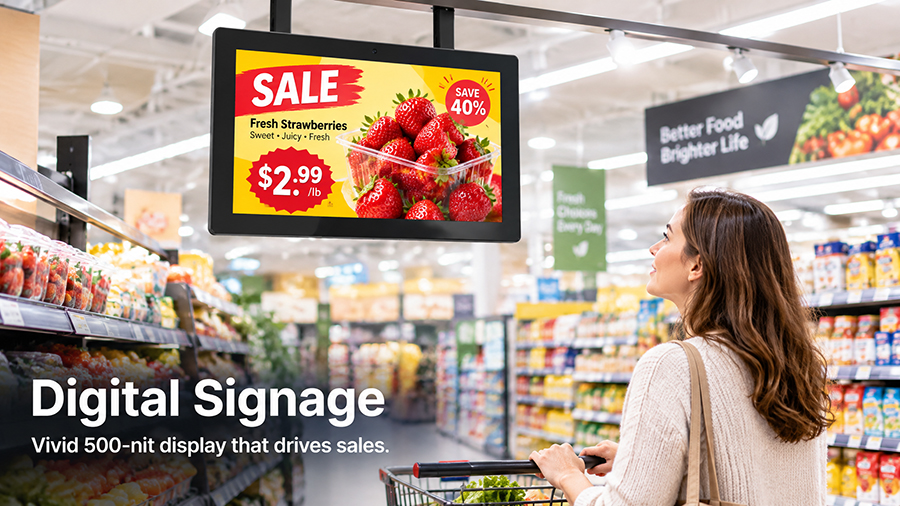
YC-102P digital signage display
Portworld: Specialized Digital Signage Display Solutions
Portworld, a division of Sunworld Technology Limited, brings over 18 years of specialized expertise in touchscreen and embedded hardware technologies. The organization’s comprehensive product range encompasses digital signage displays, point-of-sale touch interfaces, optically bonded display systems, collaborative meeting room panels, outdoor display solutions, and embedded computing hardware platforms.
For clients requiring tailored screen dimensions, interface arrangements, or application-specific hardware solutions, Portworld facilitates OEM/ODM project consultations contingent upon the chosen product and technical specifications.
Customization efforts may encompass assessing an existing display unit, arranging accessible interfaces, modifying enclosure or installation specifications, incorporating a suitable embedded motherboard, and establishing software parameters aligned with the intended application.
Portworld’s digital signage portfolio encompasses offerings including the YC-3201T 32-inch wall-mounted interactive digital signage, the YC-215OB and YC-27OB optical bonding display variants, and point-of-sale-focused displays such as the YC-1561T and YC-2151T. These offerings serve as foundational references for examining diverse commercial display applications. The appropriateness of each model is contingent upon its technical attributes and the customer’s specific project objectives.
For undertakings demanding extensive customization, the preliminary phase involves examining the intended screen dimensions, necessary interfaces, operating system requirements, peripheral integration needs, and projected manufacturing volume. This examination enables the technical team to determine the most fitting configuration and ascertain any engineering initiatives required preceding full-scale manufacturing.
Develop a Digital Signage Display Tailored to Your Specifications
A properly engineered digital signage display must be constructed according to the specific application requirements rather than adapting the application to conform to existing standard offerings. Screen proportions, display connectivity options, communication infrastructure, device connections, software platforms, and protective housing architecture must function cohesively.
For brand proprietors, distribution partners, and implementation specialists, thorough specification development and prototype assessment can minimize deployment complications and facilitate standardized product configurations suitable for widespread implementation.
Should you require a digital signage display featuring non-standard screen dimensions and specialized connectivity solutions, Portworld welcomes the opportunity to evaluate your application, technical specifications, and manufacturing requirements. Establishing a comprehensive technical specification represents the foundational phase in creating a display system that aligns with your organizational objectives and market positioning.