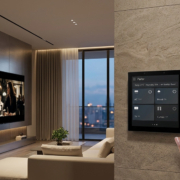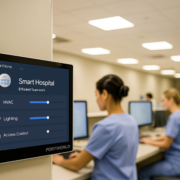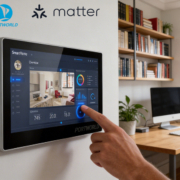
Smart Control Panel for Senior Apartment Automation
As the global population of elderly individuals continues to expand, senior residential facilities and assisted living establishments are increasingly implementing intelligent home automation technologies to establish safer, more comfortable, and more autonomous residential settings. An intelligent control interface designed for senior apartment automation delivers a user-friendly touchscreen display that enables both residents and their caregivers to regulate illumination, climate control, security measures, and emergency protocols through a single consolidated device.
Developed with an emphasis on user-friendliness and universal accessibility, intelligent control interfaces facilitate seniors’ engagement with smart devices while eliminating the necessity for multiple switches or intricate operational systems.
What Constitutes an Intelligent Control Interface for Senior Apartments?
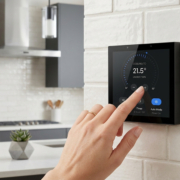
An intelligent control interface is a wall-affixed touchscreen apparatus that consolidates various smart apartment systems into a singular, cohesive platform.
Characteristic system configuration:
Touchscreen Control Interface
↓
Intelligent Home Gateway / Building Infrastructure
↓
Intelligent Devices & Monitoring Sensors
Residents are able to utilize the interface to regulate:
- Intelligent illumination systems
- Air conditioning and heating mechanisms
- Motorized window coverings
- Electronic door access mechanisms
- Security monitoring sensors
- Emergency notification systems
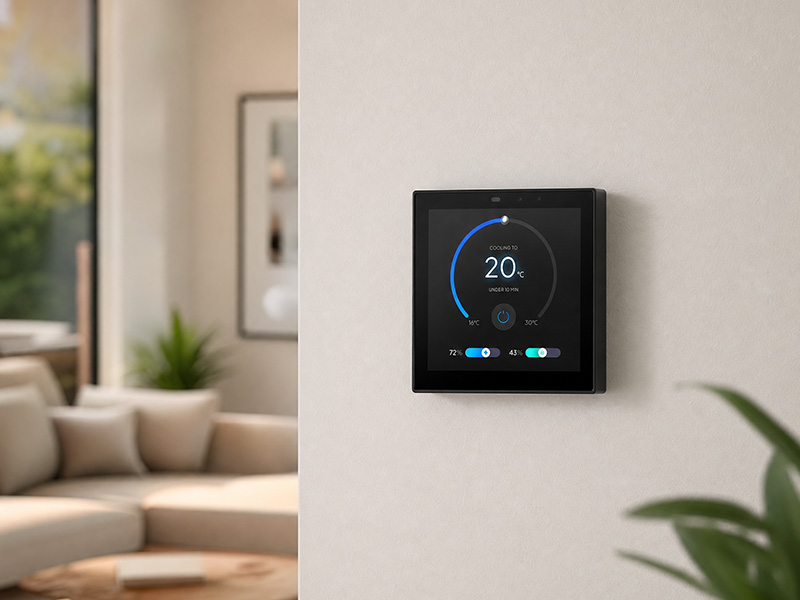
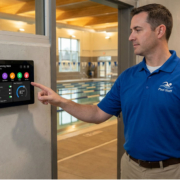
smart home control panel
Principal Applications in Senior Residential Automation
1. Straightforward Intelligent Lighting Management
For elderly residents, user-friendly lighting management is vital for both comfort and security.
An intelligent control interface can deliver:
- Expanded tactile buttons
- Pre-configured lighting arrangements
- Programmed timing sequences
- Low-light evening settings
Illustration:
Evening Mode
A single activation can:
- Illuminate corridor passages
- Dim bedroom illumination
- Engage protective monitoring systems
This mitigates the likelihood of injuries resulting from inadequate illumination.
2. Climate Control and Thermal Regulation
Establishing an agreeable interior climate is fundamental to senior residential environments.
An intelligent interface can regulate:
- Cooling apparatus
- Heating mechanisms
- Air circulation systems
Occupants can conveniently modify:
- Thermal settings
- Air circulation velocity
- Functional configurations
For extensive senior housing installations, interfaces can integrate with climate systems via:
- RS485
- Modbus
- Structural automation frameworks
3. Smart Security and Safety Monitoring
Senior apartments often require additional safety features.
A smart control panel can integrate with:
- Door sensors
- Motion sensors
- Smart locks
- Smoke detectors
- Emergency buttons
The panel can display:
- Security status
- Alarm notifications
- Sensor information
Caregivers can also connect smart apartment systems to centralized management platforms.
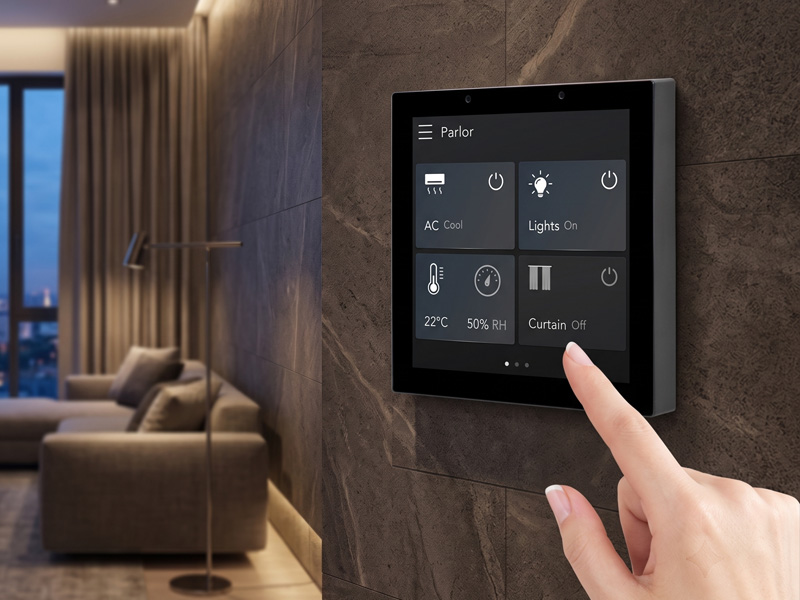
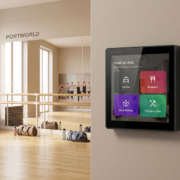
Smart Home Touch Control Panel
4. Emergency Assistance Integration
A smart control panel can work together with emergency systems.
Possible functions include:
- Emergency call button
- Voice communication
- Caregiver notification
- Health monitoring integration
When an emergency event occurs:
Sensor / Button → Smart Panel → Care System
This enables faster response and improved resident safety.
5. Voice and Mobile Control Support
Certain seniors may find voice-activated controls more convenient than touchscreen interfaces.
Intelligent control panels can be integrated with:
- Voice recognition systems
- Mobile applications
- Remote administration platforms
Devices can be operated through:
- Touchscreen interaction
- Voice-based commands
- Remote supervision by caregivers
Recommended Features for Senior Apartment Smart Panels
User-Friendly Touchscreen Interface
An appropriate panel should incorporate:
- Distinct visual icons
- Generously sized control buttons
- Intuitive navigation menus
- High-contrast visual display
Appropriate Screen Dimensions
Ideal for:
- Bedroom automation
- Fundamental lighting and climate regulation
Key Benefits:
- Space-efficient design
- Simplified wall mounting
A 7-inch panel proves particularly advantageous for senior residential settings because it delivers:
- Expanded button dimensions
- Improved visual clarity
- Extended control capabilities
Ideal for:
- Living spaces
- Entryway locations
- Shared community spaces
- 10 Inch Smart Control Panel
Ideal for:
- Senior care institutions
- Premium residential units
- Centralized operational areas
Enables:
- Comprehensive system dashboards
- Audio-visual communication features
- Integrated multi-system management
Communication Protocols for Senior Apartment Automation
An intelligent control panel must facilitate dependable communication across a diverse range of connected devices.
WiFi
Applications include:
- Cloud-based platforms
- Intelligent devices
- Remote operational management
Bluetooth / BLE
Optimal applications:
- Sensory equipment
- Portable electronic devices
- Proximity-based connectivity
Ethernet / PoE
Applicable to:
- Senior living communities
- Institutional senior housing environments
Advantages:
- Consistent network stability
- Simplified deployment procedures
RS485 / Modbus
Frequently implemented in:
- Heating, ventilation, and air conditioning systems
- Automated building management infrastructure
Zigbee / Matter
Applicable to:
- Automated sensing systems
- Wireless control mechanisms
- Energy-efficient connected devices
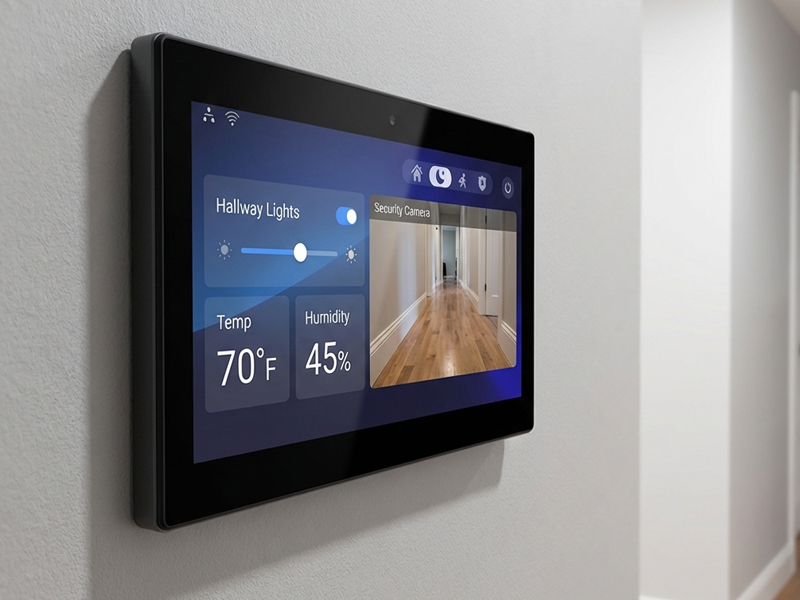
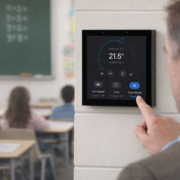
smart home control panel-1
Android vs ESP32 Smart Panels for Senior Apartments
| Feature | Android Smart Panel | ESP32 Smart Panel |
|---|---|---|
| Interface | Advanced touchscreen UI | Simple IoT interface |
| Performance | Higher | Low power |
| Applications | Video, apps, dashboards | Device control |
| Cost | Higher | Lower |
| Suitable For | Advanced senior systems | Basic automation |
For senior apartments requiring video calls, healthcare applications, and complex interfaces, Android-based panels are often more suitable. For simple device control, ESP32-based panels provide an efficient solution.
Portworld Smart Control Panel Solutions
Portworld delivers adaptable intelligent touch panel systems engineered for both residential and commercial automation environments.
YC-SM43P ESP32-S3 Intelligent Touch Panel
Applications:
- Residential apartment management
- Internet of Things terminal devices
- Streamlined automation control interfaces
Technical Specifications:
- ESP32-S3 microprocessor
- Capacitive touchscreen display
- Wireless connectivity via WiFi and Bluetooth
- Optional Ethernet and RS485 connectivity
- LVGL graphical user interface framework support
YC-SM51P 5.5-Inch Intelligent Touch Panel
Applications:
- Residential unit automation systems
- Hospitality and facility management control
Technical Specifications:
- Android and Linux operating system compatibility
- RK3566 or RK3506 processor configurations
- WiFi connectivity
- Bluetooth 5.2 technology
- Power over Ethernet support
Advantages of Intelligent Control Panels for Senior Living Communities
- Simplified operational procedures
- Enhanced resident autonomy and self-sufficiency
- Strengthened security and health monitoring capabilities
- Unified management of connected devices
- Optimized caregiver coordination and oversight
- Scalable integration with smart home ecosystems
An intelligent control interface designed for senior residential automation facilitates the establishment of safer, more comfortable, and more accessible living spaces.
Through the integration of touchscreen technology, intelligent sensor systems, heating and cooling management, security infrastructure, and Internet of Things connectivity, such interfaces enable senior residents to exercise straightforward management of their residential environments while simultaneously enabling caregivers and facility administrators to enhance their capacity for oversight and assistance.