How Does an ESP32 Smart Control Panel Work?
Comprehending ESP32-Based Touch Control Solutions for Smart Home and IoT Applications
Following the expansion of smart home and IoT technology, conventional switches are progressively being supplanted by sophisticated touchscreen control mechanisms. An ESP32 intelligent control panel integrates a touchscreen interface, wireless communication capabilities, and integrated processing functions to deliver an efficient solution for managing smart devices.
In contrast to conventional smart panels that depend on advanced processors, ESP32-based control panels prioritize energy efficiency, adaptable development frameworks, and economical IoT connectivity, positioning them as optimal selections for residential automation, industrial human-machine interfaces, and specialized embedded systems.
What Constitutes an ESP32 Smart Control Panel?
An ESP32 smart control panel represents a touchscreen apparatus operated by an ESP32 microcontroller.
It characteristically encompasses:
- ESP32 or ESP32-S3 processing unit
- Touchscreen display technology
- WiFi and Bluetooth communication protocols
- GPIO connection points
- Supplementary communication interfaces including RS485 or Ethernet connectivity
The ESP32 functions as the primary control unit, executing user directives, facilitating communication with IoT devices, and refreshing the display presentation.
A representative system configuration comprises:
Touchscreen Interface
↓
ESP32 Processor
↓
Communication Module
↓
Smart Devices
smart home control panel
How Does an ESP32 Smart Control Panel Operate?
1. User Interaction Through Touchscreen
The operational sequence commences when users engage with the touchscreen interface.
For illustration:
A user selects:
“Turn on living room light”
The touch controller recognizes the input and transmits the command to the ESP32 processor.
The ESP32 subsequently processes the instruction and identifies which device should receive the command.
2. ESP32 Processes the Command
The ESP32 functions as the primary control center of the panel.
It manages:
- Touch input processing
- User interface operation
- Device communication
- Data processing
- System management
For sophisticated ESP32-S3 implementations, the processor can execute graphical interfaces utilizing LVGL, facilitating customized dashboards and interactive controls.
3. Communication With Smart Devices
Following command processing, the ESP32 transmits instructions to connected devices via various communication protocols.
Prevalent communication options encompass:
WiFi
Utilized for:
- Cloud platforms
- Smart home applications
- IoT networks
Illustration:
ESP32 Panel → WiFi → Smart Home Server → Smart Device
Bluetooth and Bluetooth Low Energy (BLE)
Applications:
- Sensory devices
- Intelligent accessories
- Proximity-based device management
Key Benefits:
- Minimal energy requirements
- Rapid connection establishment
- RS485 Protocol
Applications:
- Industrial automation equipment
- Heating, ventilation, and air conditioning systems
- Building management infrastructure
Implementation Example:
ESP32 Control Panel → RS485 Interface → HVAC Management System
Ethernet Connectivity
Certain ESP32 intelligent panels incorporate Ethernet capabilities to facilitate:
- Dependable network connectivity
- Industrial-grade operations
- Enterprise-level automation solutions
ESP32 Intelligent Control Panel Software Framework
An ESP32 control panel typically executes embedded firmware constructed through:
- ESP-IDF
- Arduino Framework
- PlatformIO
The software architecture comprises:
Presentation Interface Layer
Functionality includes:
- Button inputs
- Graphical icons
- Navigational menus
- Touch-based interactions
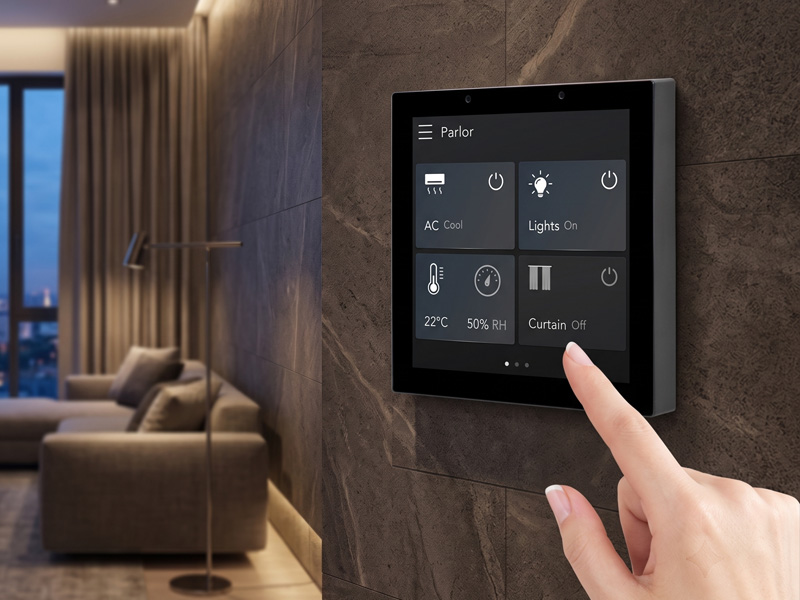
Smart Home Touch Control Panel
Numerous ESP32 intelligent panels leverage the LVGL graphics library to develop tailored user interfaces.
Automation and Processing Layer
Facilitates:
- Automation protocols
- Device operation commands
- Sensor information analysis
Illustrative scenario:
“When temperature exceeds 28°C, activate the air conditioning system.”
Connectivity Management Layer
Facilitates:
- WiFi network connectivity
- Bluetooth protocol communication
- MQTT message transmission
- RS485 serial communication standards
ESP32 Intelligent Control Panel Implementations
Residential Home Automation Systems
An ESP32 touchscreen interface is capable of managing:
Illumination systems
- Automated window coverings
- Climate control mechanisms
- Access and safety systems
- Connected household devices
Illustrative Application:
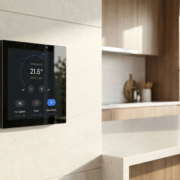
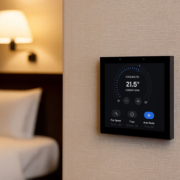
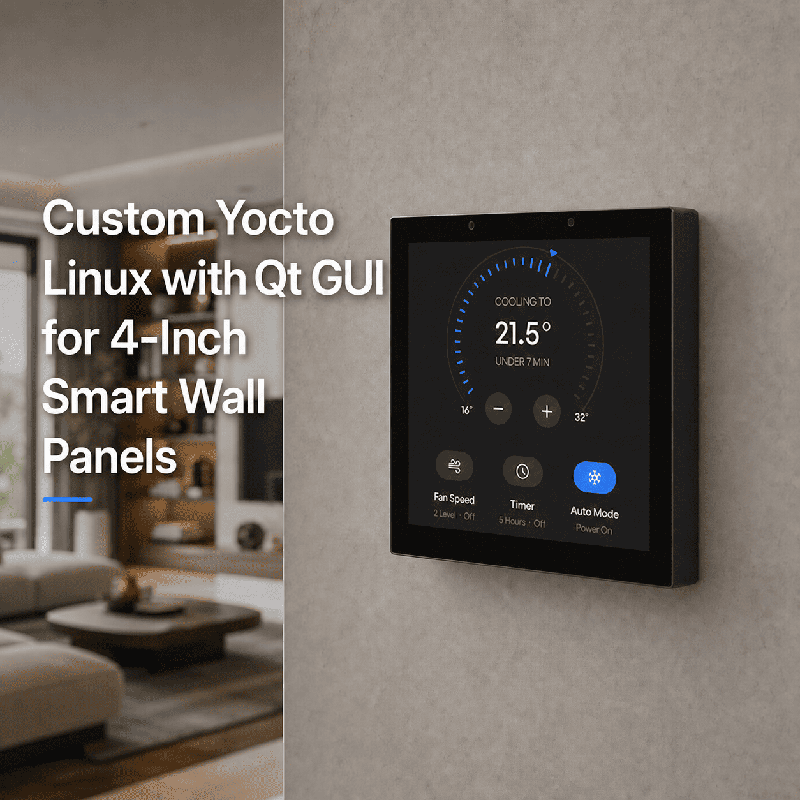
A fixed ESP32 interface mounted on a wall consolidates numerous conventional switching mechanisms into a unified intelligent control system.
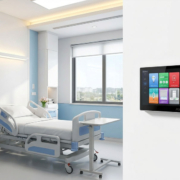
Hospitality Sector Applications
Hotel establishments can implement ESP32 intelligent interfaces to regulate:
- Accommodation unit illumination
- Environmental temperature regulation
- Automated window treatment systems
- Operational efficiency optimization
The streamlined form factor renders these systems appropriate for contemporary hospitality environments.
Manufacturing Control Interface Solutions
ESP32 interfaces serve operational purposes including:
- Asset performance observation
- Data collection and visualization systems
- Automated equipment command systems
These systems deliver economical alternatives for fundamental manufacturing automation requirements.
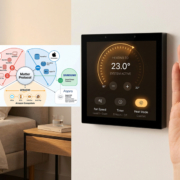
Portworld YC-SM43P ESP32-S3 Smart Touch Panel
The Portworld YC-SM43P represents an ESP32-S3-based intelligent touch panel engineered for Internet of Things and automation applications.
It incorporates the following specifications:
- ESP32-S3 dual-core Xtensa LX7 microprocessor
- 4-inch capacitive touch display
- 480×480 pixel resolution
- WiFi and Bluetooth 5.0 connectivity
- Ethernet interface capability
- RS485 serial communication
- LVGL graphical user interface compatibility
Utilizing its streamlined wall-mounted configuration, the YC-SM43P demonstrates adaptability for:
- Residential automation systems
- Hospitality facility management
- Internet of Things interface terminals
- Industrial human-machine interface platforms
- Benefits of ESP32 Intelligent Control Panels
Energy Efficiency
The ESP32 architecture demonstrates reduced power consumption relative to conventional embedded processing systems, rendering it appropriate for Internet of Things implementations.
Adaptable Programming Capabilities
Engineers possess the capacity to modify:
- User interface aesthetics
- System firmware
- Data transmission methodologies
- Automation procedures
Economically Viable Implementation
The ESP32 platform delivers sophisticated Internet of Things functionality at reduced expense, positioning it favorably for widespread commercial applications.
Robust Communication Infrastructure
Incorporated features encompass:
- Wireless networking
- Bluetooth technology
plus supplementary connection options facilitate seamless system interoperability.
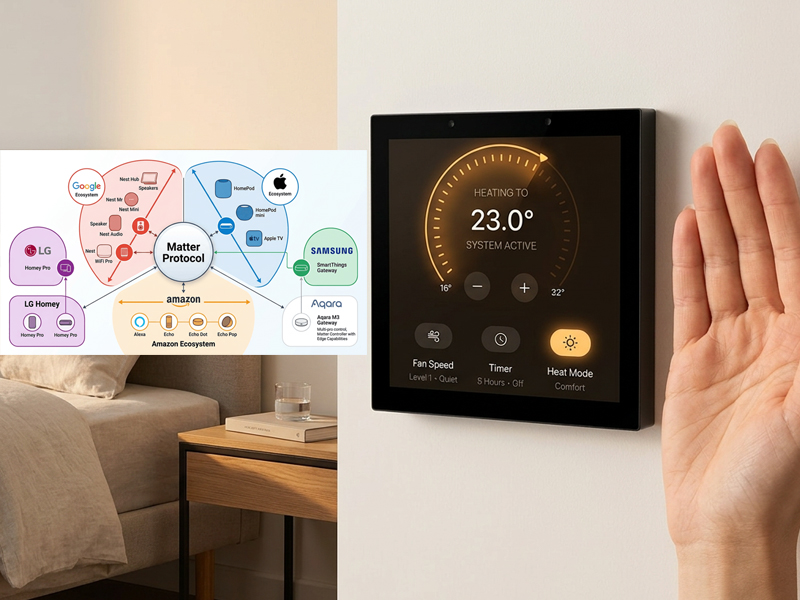
smart home control panel
ESP32 Smart Control Panel vs Android Smart Control Panel
| Feature | ESP32 Panel | Android Panel |
|---|---|---|
| Power Consumption | Low | Higher |
| Cost | Lower | Higher |
| Development | Embedded firmware | Android applications |
| Best For | IoT, simple HMI | Advanced applications |
| Connectivity | WiFi/BLE | WiFi/BLE/Ethernet |
| Graphics | Lightweight UI | Complex UI |
ESP32 is ideal for compact IoT control systems, while Android panels are better suited for applications requiring powerful computing and rich applications.
An ESP32 smart control panel works by combining touchscreen interaction, embedded processing, and IoT communication technologies into one compact device.
The ESP32 processor receives user commands, processes automation logic, communicates with smart devices, and displays real-time information through the touchscreen interface.
With advantages such as low power consumption, flexible development, and strong connectivity, ESP32 smart control panels are becoming an important solution for:
- Smart homes
- Hotels
- IoT systems
- Industrial automation