How to Choose an Industrial Digital Signage Display
Industrial settings necessitate more sophisticated solutions than conventional commercial displays. Within manufacturing plants, storage facilities, transport hubs, and open-air industrial zones, visual display systems must function consistently under severe environmental stressors including particulate matter, mechanical stress, thermal fluctuations, and uninterrupted usage.
Selecting an appropriate industrial digital signage solution demands evaluation of robustness, operational capability, system integration options, and adaptability features to guarantee sustained dependability.
1. Evaluate the Operational Setting
The initial consideration involves determining the specific location for display deployment.
Varying locations demand distinct levels of environmental protection:
Internal Industrial Operations
Typical installations:
- Manufacturing assembly operations
- Monitoring and command centers
- Storage and inventory facilities
- Supply chain management centers
Critical specifications:
- Uninterrupted round-the-clock functionality
- Optimal image clarity and legibility
- Seamless infrastructure connectivity
- Professional-grade technical components
External Industrial Operations
Typical installations:
- Advanced manufacturing complexes
- Transit and distribution terminals
- Utility and power generation sites
- Public-facing interactive terminals
Essential characteristics:
- Enhanced luminosity output
- Weather-resistant construction
- Particulate filtration systems
- Extended temperature tolerance specifications

55 inch Wall-Mounted Signage Display | YC-55MT Series
2. Selecting Appropriate Display Brightness Levels
Readability is substantially influenced by brightness specifications.
For industrial applications, the following brightness ranges are recommended:
- 300–500 nits: Controlled indoor lighting environments
- 700–1000 nits: High-intensity industrial workshop settings
- 1500+ nits: Direct outdoor sunlight exposure conditions
Implementing a high-brightness industrial display guarantees that critical information remains legible across varying illumination conditions.
3. Evaluating Industrial Protection Mechanisms
Industrial digital signage displays must incorporate features that support extended operational longevity.
Essential protection mechanisms encompass:
Dust and Water Resistance
Recommended specifications include:
- IP65 certification standards
- Completely sealed enclosure construction
- Dust-resistant internal components
- Impact Resistance
In demanding public or harsh operational environments:
- Tempered glass construction
- IK-rated impact protection
- Robust metal housing materials
- Thermal Resistance
Industrial displays may require functionality in:
- Refrigerated storage facilities
- Exterior equipment installations
- Elevated-temperature operational zones
An expansive operating temperature range substantially enhances system reliability.
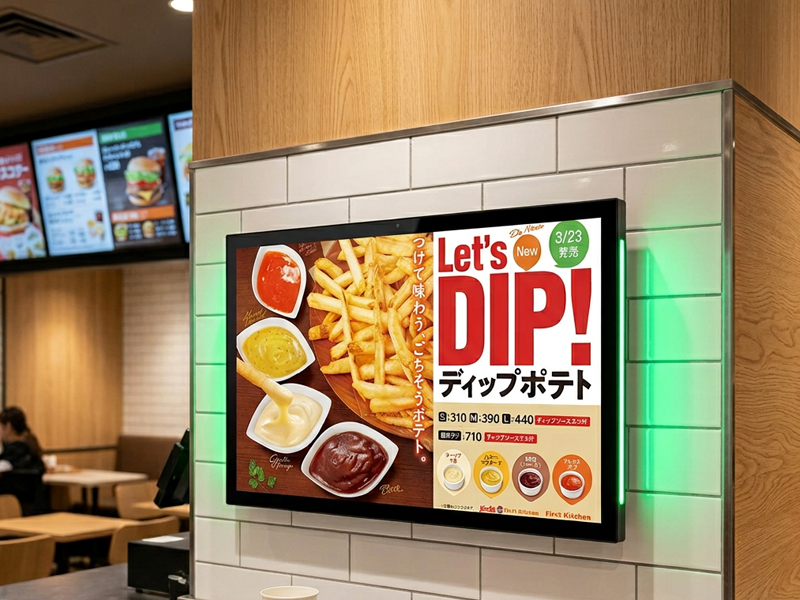
digital signage display
4. Choose the Suitable Processor and Operating System
The hardware platform establishes the level of performance achieved.
Frequently utilized processor alternatives encompass:
Rockchip Processors
Applicable to:
- Digital signage
- Industrial HMI
- IoT terminals
- Edge applications
- Common models:
- RK3566
- RK3568
- RK3576
- RK3588
Operating systems may encompass:
- Android
- Linux Debian
- Ubuntu
- Buildroot
- Yocto Linux
The optimal OS selection depends on application specifications, software interoperability, and customization requirements.
5. Assess Connectivity Alternatives
Industrial settings frequently necessitate diverse communication protocols.
Standard connection interfaces include:
- Ethernet
- WiFi
- Bluetooth
- USB
- HDMI
- RS232/RS485
- CAN
- GPIO
For advanced industrial systems, implementation of protocol standards including:
- Modbus
- MQTT
- BACnet
facilitates the integration of display systems with industrial machinery and Internet of Things infrastructure.
6. Evaluate Touchscreen Specifications
Touch functionality requirements vary based on the intended application.
Capacitive Touch Technology
Optimal for:
- Indoor control panels
- Smart factories
- Interactive terminals
Key Benefits:
- Fluid operation
- Multi-touch capability
- Contemporary user interface
- Robust Touch Solutions
For demanding operational conditions:
- Gloved hand compatibility
- Anti-reflective glass coating
- Water-resistant touch mechanisms
7. Select an Appropriate Installation Approach
Industrial display systems necessitate adaptable mounting configurations.
Standard installation approaches:
- Wall-mounted installation
- Panel-integrated mounting
- VESA-compliant mounting
- Integrated installation
- Direct machine integration
A flexible architectural design facilitates straightforward implementation across diverse industrial applications.
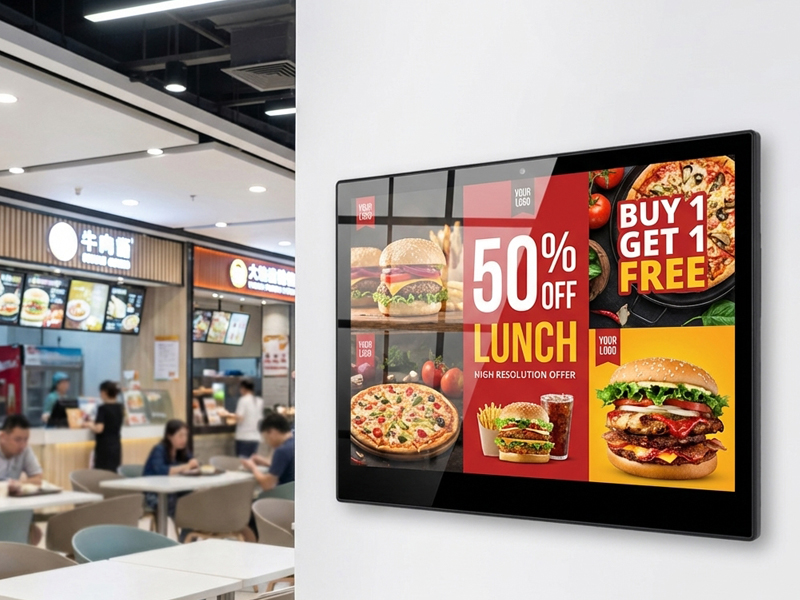
digital signage display
Portworld Industrial Digital Signage Solutions
Portworld delivers tailored industrial display systems designed for manufacturing facilities, process automation, and Internet of Things applications.
Primary capabilities encompass:
- Industrial-specification touchscreen displays
- Android/Linux/Ubuntu operating system compatibility
- RK3566/RK3568/RK3576/RK3588 processor architectures
- Diverse communication protocol interfaces
- Power over Ethernet capability options
- Specialized hardware and software engineering
- Original Equipment Manufacturer and Original Design Manufacturer production services
Implementation areas encompass:
- Manufacturing performance dashboards
- Industrial operational control systems
- Automated warehouse management
- Power consumption monitoring systems
- Public transportation notification platforms
OEM/ODM Customization Capability
Industrial undertakings frequently necessitate specialized design solutions.
Portworld delivers comprehensive support for:
- Adaptable display dimensions
- Tailored housing configurations
- Circuit board and processing unit engineering
- Operating system modification
- User interface software incorporation
- Integration of imaging, near-field communication, radio-frequency identification, and detection technologies
- Complete and semi-complete manufacturing production options
The selection of an industrial digital signage solution demands thorough assessment of operational conditions, luminosity specifications, durability classifications, computational capabilities, data transmission infrastructure, and bespoke modification needs.
An effective industrial display system must serve not merely as an information presentation tool but also function as an integrated component within automated processes, Internet of Things ecosystems, and intelligent management frameworks.