STM32 vs ESP32: What Is the Difference and How to Choose the Right MCU for Your Project?
In the realm of embedded electronics, STM32 and ESP32 stand out as two of the most prevalent microcontroller platforms. Their popularity among developers, engineers, and product manufacturers stems from their robust performance, versatile peripherals, and extensive ecosystem support.
Nonetheless, these microcontrollers are engineered with distinct objectives in mind.
STM32 is primarily oriented towards industrial control, real-time processing, motor control, and high-reliability embedded applications, whereas ESP32 is predominantly utilized for IoT devices, wireless communication, smart home products, and connected applications.
The decision to select either STM32 or ESP32 hinges on your specific application requirements, which include:
- Processing performance
- Wireless connectivity
- Power consumption
- Real-time control needs
- Development costs
- Product deployment environment
This article aims to compare STM32 and ESP32 from the perspectives of hardware architecture, performance, connectivity, applications, and product development.
What Is STM32?
STM32 refers to a family of 32-bit microcontrollers created by STMicroelectronics.
Built on the ARM Cortex-M architecture, STM32 encompasses a broad spectrum of MCU products, ranging from entry-level controllers to high-performance microcontrollers.
Notable STM32 series include:
- STM32F Series: General-purpose MCU applications
- STM32G Series: Cost-effective control applications
- STM32H Series: High-performance embedded systems
- STM32L Series: Low-power applications
- STM32WB Series: Wireless applications
STM32 finds extensive application in:
- Industrial automation
- Motor control systems
- Medical devices
- Automotive electronics
- Robotics
- Consumer electronics
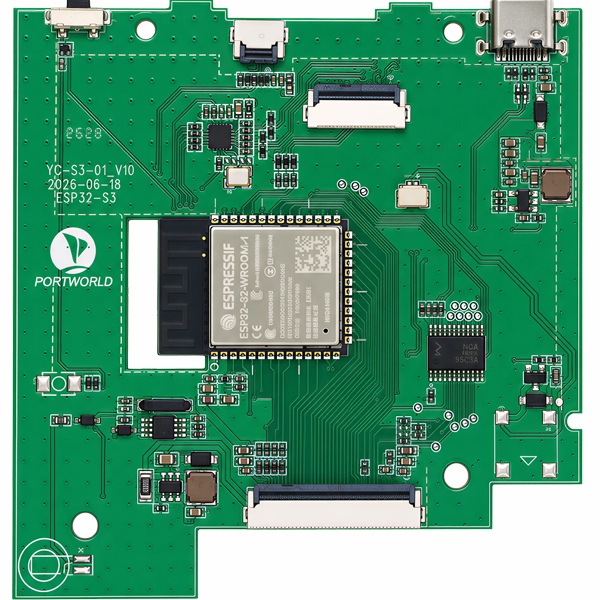
esp32 motherboard
What is the ESP32?
The ESP32 is a collection of microcontrollers created by Espressif Systems.
In contrast to conventional microcontrollers, the ESP32 incorporates wireless communication features directly within the chip, which include:
- Wi-Fi
- Bluetooth / BLE
This integration renders the ESP32 particularly well-suited for Internet of Things (IoT) applications and connected devices.
Typical applications of the ESP32 encompass:
- Smart home devices
- IoT sensors
- Wearable technology
- Smart controllers
- Wireless monitoring systems
Notable variants of the ESP32 include:
- ESP32
- ESP32-S2
- ESP32-S3
- ESP32-C3
- ESP32-C6
STM32 vs ESP32: Hardware Comparison
| Feature | STM32 | ESP32 |
|---|---|---|
| Architecture | ARM Cortex-M | Xtensa / RISC-V |
| Main Focus | Embedded control | IoT connectivity |
| CPU | Cortex-M0/M3/M4/M7/M33 | Dual-core Xtensa or RISC-V |
| Wireless | Usually requires external module | Built-in Wi-Fi/Bluetooth |
| Real-time Control | Excellent | Good |
| AI Capability | Limited MCU AI support | Basic TinyML support |
| Peripheral Support | Very rich | Rich |
| Development Cost | Medium | Low |
Processing Performance Comparison
STM32 Performance
The STM32 series offers a diverse array of processing capabilities.
High-end STM32 microcontrollers (MCUs) can deliver:
- Elevated clock frequencies
- Floating-point computation
- Digital Signal Processing (DSP) instructions
- Sophisticated timer functionalities
For applications that demand accurate timing and deterministic control, STM32 presents significant advantages.
Common applications include:
- Motor control
- Robotics control systems
- Industrial controllers
ESP32 Performance
The ESP32 is designed to provide robust processing power for Internet of Things (IoT) applications.
Key benefits include:
- Dual-core processors
- Elevated clock frequency
- Built-in wireless communication
The ESP32 is adept at managing:
- Network communication
- Sensor data processing
- Cloud connectivity
- Smart device management
Nevertheless, for applications requiring highly accurate real-time industrial control, STM32 is frequently the preferred choice.
- Connectivity: The ESP32 Offers a Significant Advantage
One of the primary benefits of the ESP32 is its integrated wireless communication capabilities.
The ESP32 includes:
Wi-Fi
Ideal for:
- Cloud-connected devices
- Smart home applications
- Remote monitoring
- Bluetooth / BLE
Ideal for:
- Connecting mobile devices
- Wearable technology
- Short-range communication
In contrast, the STM32 typically necessitates additional modules to enable wireless functionalities.
For IoT applications that demand rapid connectivity, the ESP32 presents a more straightforward solution.
Peripheral and Interface Comparison
Both platforms accommodate standard interfaces:
- UART
- SPI
- I2C
- PWM
- ADC
- GPIO
Nevertheless, the STM32 generally offers more sophisticated control peripherals.
Advantages of STM32:
- Advanced timers
- Motor control interfaces
- CAN communication
- Support for industrial communication
Advantages of ESP32:
- Seamless wireless integration
- Interfaces tailored for IoT
- Cost-effective development
Comparison of Applications: STM32 vs ESP32
Applications Appropriate for STM32
Industrial Automation
The STM32 microcontroller is frequently utilized in:
- PLC controllers
- Motor drivers
- Industrial sensors
- Machine control systems
- Robotics
The STM32 is well-suited for:
- Servo control
- Motion control
- Robot controllers
- Automotive Electronics
Applications encompass:
- Vehicle control modules
- Battery management systems
- Sensor controllers
Applications Appropriate for ESP32
Smart Home
The ESP32 microcontroller is extensively employed in:
- Smart switches
- Smart lighting
- Environmental sensors
- IoT Devices
Examples include:
- Smart meters
- Remote monitoring devices
- Cloud-connected sensors
- Consumer Electronics
Applications consist of:
- Wearables
- Smart gadgets
- Wireless controllers
The STM32 and ESP32 can collaborate effectively.
In numerous sophisticated embedded applications, STM32 and ESP32 serve complementary roles rather than competing against each other.
They can be integrated into a hybrid architecture.
For instance:
Smart Robot System
STM32:
- Motor control
- Sensor data acquisition
- Real-time movement management
ESP32:
- Wi-Fi connectivity
- Bluetooth communication
- Cloud integration
This synergy offers:
- Dependable control
- Wireless communication
- Versatile IoT integration
Which Option Should You Select?
Choose STM32 If You Require:
- Accurate real-time control
- Dependable industrial performance
- Management of motors and motion
- Advanced peripheral handling
- Extended embedded usage
Illustrations:
- Industrial machinery
- Robotics
- Automotive applications
Choose ESP32 If You Require:
- Integrated Wi-Fi/Bluetooth
- Affordable IoT solutions
- Rapid product development
- Connection to the cloud
Illustrations:
- Smart home gadgets
- IoT devices
- Wireless controllers
Portworld Embedded Hardware Solutions
For organizations engaged in the development of smart devices, industrial machinery, and advanced control systems, selecting the appropriate MCU platform is merely the initial step.
Portworld offers tailored embedded hardware solutions, which encompass MCU-based control boards, industrial motherboards, and OEM/ODM development services.
Our offerings include support for:
- Custom PCB design
- Embedded hardware development
- Firmware integration
- Prototype development
- Mass production assistance
Regardless of whether your project necessitates:
- ESP32-based IoT controllers
- STM32 industrial control boards
- ARM-based AI edge computing platforms
Portworld is dedicated to assisting clients in creating dependable embedded products from the initial concept through to production.