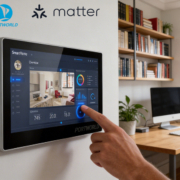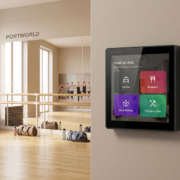
Can a Linux Smart Control Panel Support Touchscreen Applications?
Linux Smart Control Panels for Contemporary Touchscreen Applications
As smart homes, industrial automation, and intelligent buildings continue to expand, Linux-based smart control panels are increasingly favored by developers and system integrators. A frequently asked question is whether these Linux smart control panels can accommodate touchscreen applications.
The response is affirmative. Linux offers a versatile and robust platform for the development of touchscreen interfaces, enabling manufacturers to design tailored control panels for smart homes, hotels, offices, industrial machinery, and IoT applications.
In contrast to traditional embedded systems that possess limited capabilities, modern Linux smart panels are capable of executing sophisticated graphical interfaces, supporting multi-touch interactions, and integrating with a variety of hardware and communication protocols.
How Linux Facilitates Touchscreen Interfaces
A Linux smart control panel generally integrates embedded hardware, touchscreen drivers, graphical frameworks, and bespoke applications to form a comprehensive user interface.
The touchscreen hardware interacts with the Linux operating system via touch drivers, enabling the system to detect user inputs such as:
- Tap
- Swipe
- Multi-touch gestures
- Zoom
- Drag operations
With appropriate driver integration, Linux accommodates various touchscreen technologies, including:
- Capacitive touchscreens
- Resistive touchscreens
- Multi-point touch panels
This adaptability renders Linux suitable for both consumer-oriented smart panels and industrial HMI applications.
YC-SM43P ESP32 4″ Smart Touch Panel
Linux GUI Frameworks for Smart Touchscreen Applications
One of the primary benefits of Linux is its versatility in graphical development. Developers have the option to select various UI frameworks based on the specific needs of their applications.
Qt/QML
Qt is among the most popular frameworks for developing touchscreen applications on Linux. It allows developers to design contemporary interfaces featuring:
- Fluid animations
- Customizable layouts
- Touch-optimized controls
- Support for hardware acceleration
Qt/QML is frequently utilized in:
- Smart home control systems
- Industrial Human-Machine Interfaces (HMIs)
- Medical device interfaces
- Commercial point-of-sale terminals
LVGL
For lightweight embedded applications, LVGL offers an effective graphical framework that requires minimal resources. It is ideal for:
- IoT touchscreen panels
- Embedded control units
- Compact HMI devices
Web-based Interfaces
Linux smart panels are also capable of supporting browser-based interfaces through technologies like HTML5 and JavaScript, facilitating easier integration with cloud services and web applications.
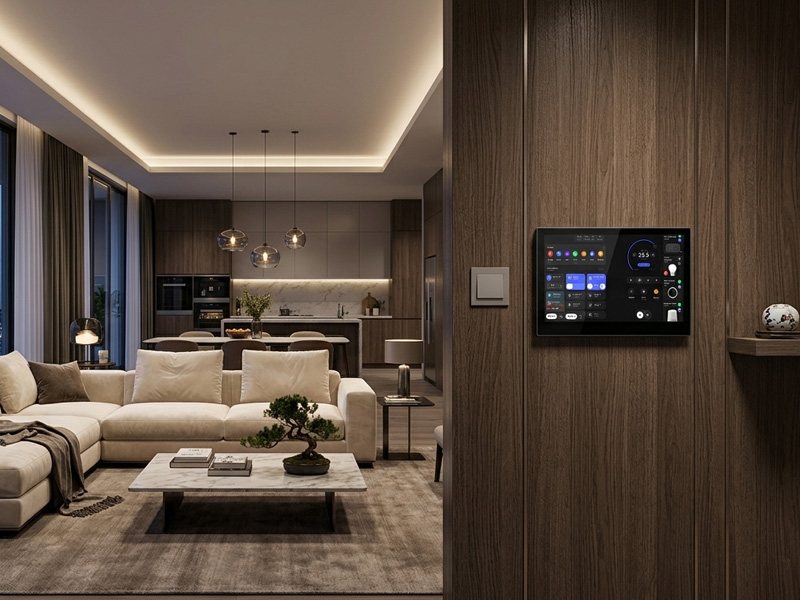
smart home control panel-1
The advantages of Linux Touchscreen Smart Panels
Linux-based smart control panels present numerous benefits for professional applications.
The primary advantage is the flexibility of customization. Developers have the ability to tailor the Linux system, kernel, drivers, and applications to meet specific project needs. This is particularly crucial for companies that are creating their own smart automation products.
Additionally, Linux offers remarkable long-term stability. In commercial projects such as hotels, offices, and industrial systems, devices often require continuous operation for many years. A customized Linux system can be fine-tuned for dependable 24/7 functionality.
Another significant benefit is hardware integration. Linux accommodates a variety of communication interfaces, including:
- Ethernet
- RS485
- CAN bus
- UART
- GPIO
- USB
This capability enables Linux smart panels to connect seamlessly with PLC systems, sensors, smart home devices, and building automation platforms.
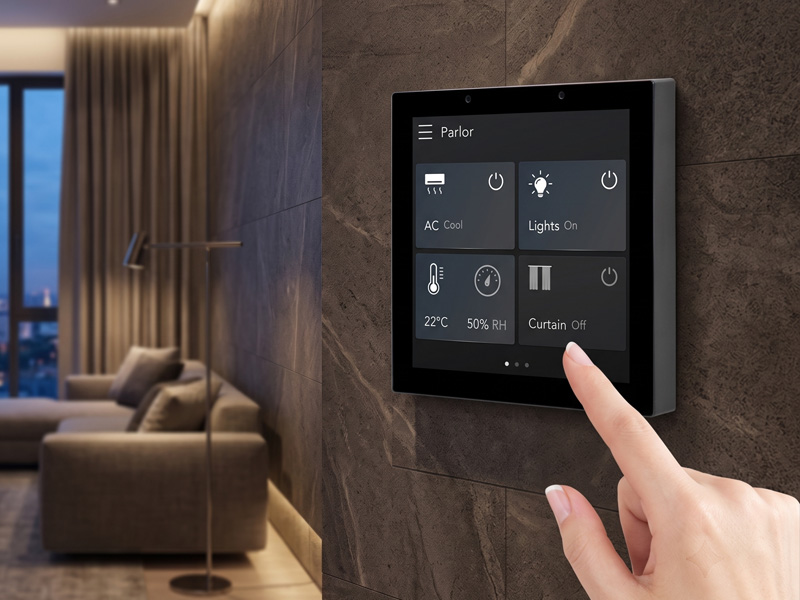
Smart Home Touch Control Panel
Applications of Linux Smart Touch Control Panels
Linux touchscreen panels are extensively utilized across various industries.
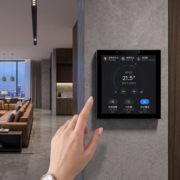
In the realm of smart home automation, Linux panels can manage lighting, HVAC, curtains, security systems, and IoT devices through tailored interfaces.
In the hospitality sector, Linux smart panels deliver dependable room control solutions for lighting, temperature, and guest services.
In industrial automation, Linux touchscreen HMIs are employed for:
- Machine operation
- Equipment monitoring
- Production data visualization
- Process control
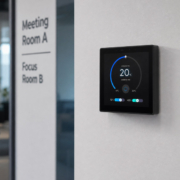
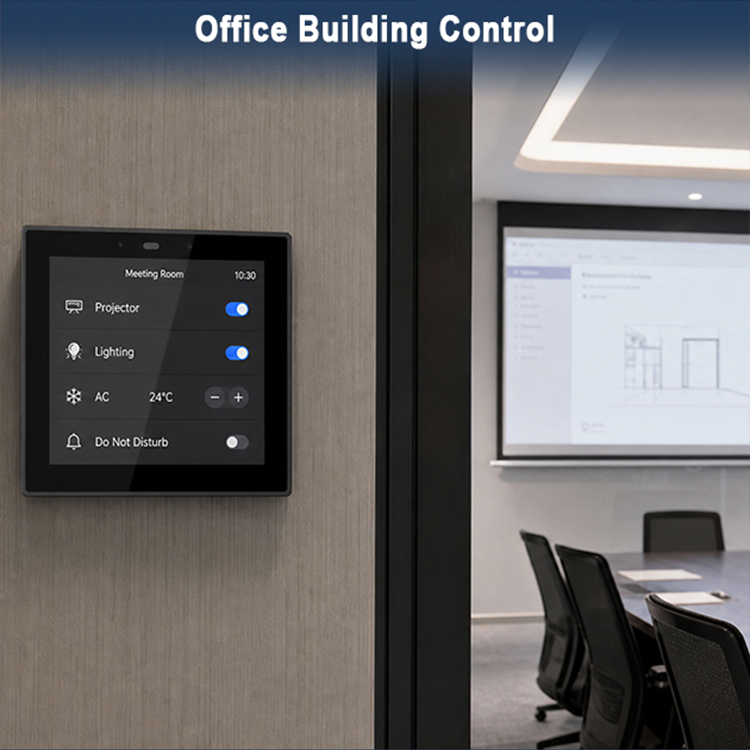
For commercial buildings, Linux smart panels can integrate with meeting rooms, energy management systems, and building automation platforms.
Portworld Linux Smart Control Panel Solutions
Portworld offers Linux-compatible smart touch control panels tailored for smart home, industrial HMI, IoT, and commercial automation uses.
The YC-SM41P smart touch control panel is designed for Linux-based development, featuring a compact 4-inch touchscreen platform ideal for embedded control applications. It includes Ethernet, RS485 communication, and PoE options, making it appropriate for smart switches, IoT terminals, and automation systems.
The YC-SM43P ESP32-S3 smart HMI panel delivers a lightweight embedded solution with support for the LVGL graphical interface, along with WiFi, Bluetooth 5.0, Ethernet, and RS485 communication. It is specifically crafted for customized HMI applications that require efficient touchscreen interaction.
For larger-scale applications, Portworld offers RK3566/RK3568-based smart panels such as the YC-SM08P and YC-1011, which support Linux systems including Debian. These platforms deliver enhanced processing capabilities for advanced touchscreen applications, smart building control, and industrial interfaces.
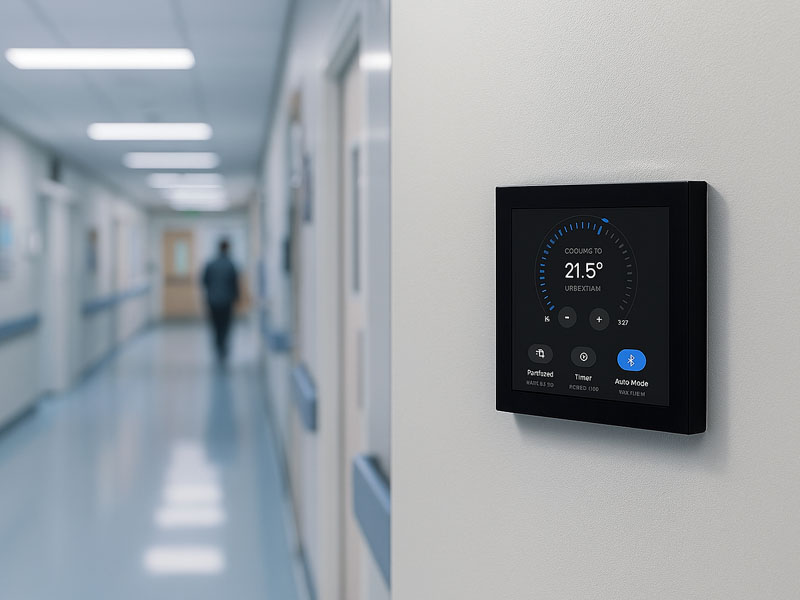
YC-SM10P
10.1 inch Smart Home Control Panel
OEM/ODM Linux Touch Panel Customization
For businesses developing tailored automation products, Portworld provides comprehensive Linux smart panel customization services.
These services encompass:
- Linux firmware customization
- Yocto Linux BSP development
- Kernel and driver customization
- Qt/QML interface development
- Custom application integration
- PCBA hardware design
- Enclosure and branding customization
This enables customers to create their own Linux touchscreen products with optimized hardware and software configurations.
A Linux smart control panel is fully capable of supporting touchscreen applications and offers a robust platform for developing customized automation interfaces. With support for advanced GUI frameworks, multi-touch interaction, and industrial communication protocols, Linux smart panels are well-suited for smart homes, commercial buildings, and industrial applications.