Yocto Linux Image with Qt/QML Support for Touch Panels
In contemporary embedded systems and intelligent control devices, the architecture of software is crucial for performance, stability, and user experience. For industrial-grade smart control panels, a highly effective combination is a Yocto Linux image paired with Qt/QML support for touch interfaces.
This approach is extensively utilized in smart home control systems, building automation interfaces, industrial HMIs, and commercial touchscreen devices that demand both reliability and advanced UI performance.
What Is a Yocto Linux Image for Touch Panels?
The Yocto Project is a versatile open-source framework designed for creating custom Linux distributions tailored for embedded systems.
Rather than relying on a general-purpose operating system, Yocto empowers developers to construct a fully customized Linux image specifically designed for hardware such as smart control panels.
In the context of touch panel applications, this translates to:
- Lightweight and optimized system performance
- Rapid boot time
- Minimal extraneous components
- Comprehensive hardware control
- Stable long-term operation
Yocto is particularly favored in industrial and commercial settings where reliability takes precedence over consumer-oriented features.
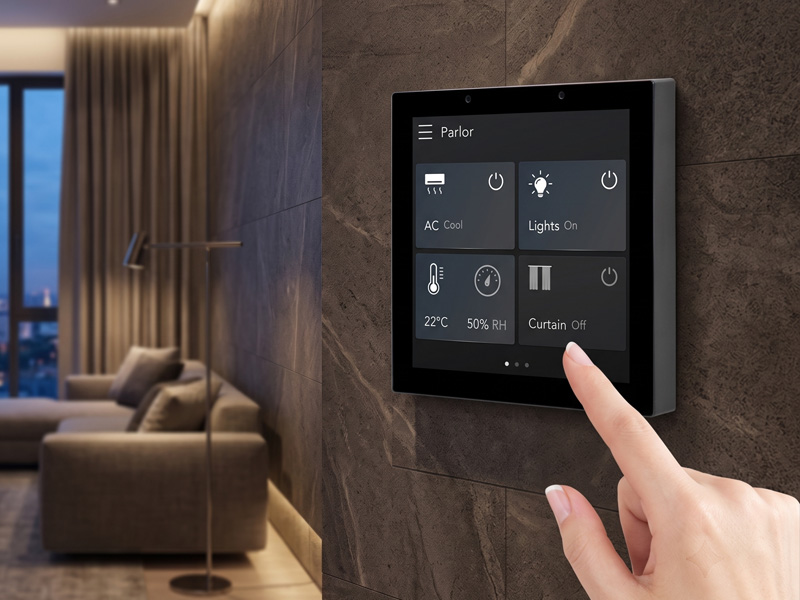
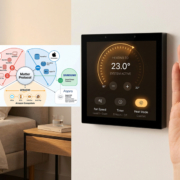
Smart Home Touch Control Panel
Why Integrate Yocto Linux with Qt/QML?
Qt/QML serves as a robust framework for developing contemporary graphical user interfaces (GUI) tailored for embedded systems.
When paired with Yocto Linux, it forms a comprehensive stack:
Yocto Linux manages system-level functions, while Qt/QML focuses on the touch interface and visual presentation.
This integration is widely embraced due to its provision of both exceptional performance and extensive UI capabilities.
Qt/QML empowers developers to create smooth, animated, and responsive interfaces that offer a modern and intuitive experience on touchscreens.
Benefits of Qt/QML for Smart Touch Panels
A significant benefit of Qt/QML is its capacity to provide fluid user interfaces, even on embedded hardware.
It features hardware-accelerated rendering, ensuring seamless animations and quick response times on touch panels.
Additionally, Qt/QML facilitates rapid UI development through declarative programming, simplifying the design of dashboards for smart home or building automation systems.
Another notable advantage is its cross-platform compatibility, allowing the same UI design to be adapted across various hardware configurations.
In contemporary embedded systems and intelligent control devices, the architecture of software is crucial for performance, stability, and user experience. For industrial-grade smart control panels, a highly effective combination is a Yocto Linux image paired with Qt/QML support for touch interfaces.
This approach is extensively utilized in smart home control systems, building automation interfaces, industrial HMIs, and commercial touchscreen devices that demand both reliability and advanced UI performance.
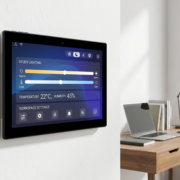
Smart Home Touch Control Panel
What Is a Yocto Linux Image for Touch Panels?
The Yocto Project is a versatile open-source framework designed for creating custom Linux distributions tailored for embedded systems.
Rather than relying on a general-purpose operating system, Yocto empowers developers to construct a fully customized Linux image specifically designed for hardware such as smart control panels.
In the context of touch panel applications, this translates to:
- Lightweight and optimized system performance
- Rapid boot time
- Minimal extraneous components
- Comprehensive hardware control
- Stable long-term operation
Yocto is particularly favored in industrial and commercial settings where reliability takes precedence over consumer-oriented features.
Integration with Smart Control Panel Hardware
Yocto Linux, in conjunction with Qt/QML, is frequently utilized on embedded hardware platforms, including those based on Rockchip processors or comparable ARM architectures.
These systems generally feature:
- Capacitive multi-touch displays
- Ethernet and WiFi connectivity
- RS485 or CAN interfaces
- Optional PoE power input
- GPU acceleration for UI rendering
This combination of hardware and software is particularly well-suited for wall-mounted smart control panels in practical environments.
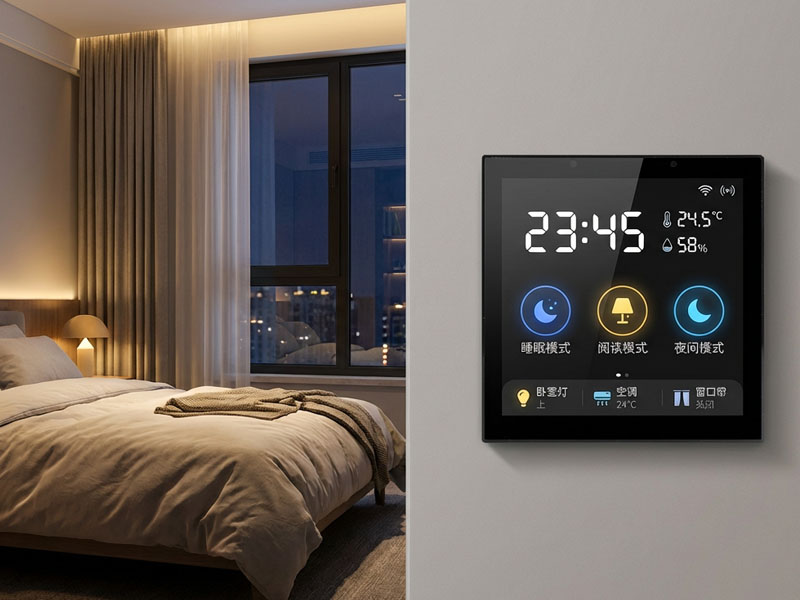
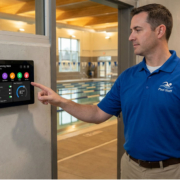
4″ KNX Smart Touch Control Panel
Applications in Smart Home and Building Automation
The combination of Yocto and Qt/QML touch panels is extensively employed in professional automation systems.
In smart homes, they facilitate centralized management of lighting, HVAC, curtains, and security systems.
In smart hotels, they function as control interfaces for guest rooms, managing temperature, lighting scenes, and service requests.
In office settings, they are utilized for scheduling meeting rooms, controlling environmental conditions, and managing access.
In industrial environments, they serve as monitoring dashboards for machinery and energy systems.
Performance Benefits in Embedded Systems
A primary reason for selecting Yocto Linux for touch panels is its performance optimization capabilities.
As the system is tailored to specific needs, extraneous processes are eliminated, leading to quicker boot times and reduced memory consumption.
Qt/QML further boosts performance by utilizing GPU acceleration for rendering intricate user interfaces.
This guarantees seamless interaction, even on embedded devices with limited resources.
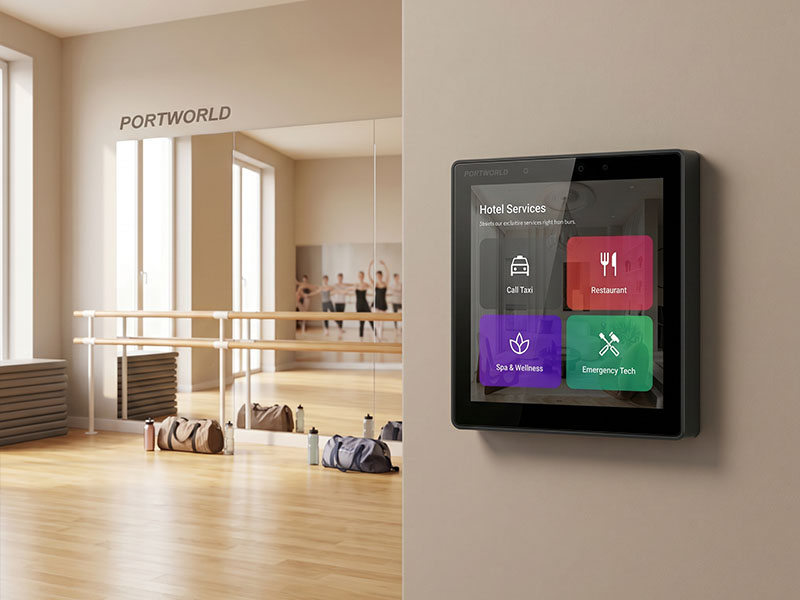
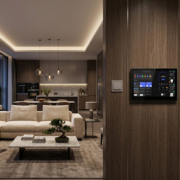
4″ KNX Smart Touch Control Panel
Portworld Yocto + Qt/QML Smart Control Panel Solutions
In practical applications, manufacturers like Portworld offer embedded smart control panel solutions that leverage Yocto Linux and Qt/QML frameworks.
These solutions are tailored for smart home, hotel, and building automation applications, providing extensive customization and industrial-grade reliability.
Portworld typically offers support for:
- Customization of Yocto-based Linux systems for embedded control panels
- Development of Qt/QML user interfaces for smart touch interactions
- Rockchip-based hardware platforms to ensure stable performance.