Why Choose Yocto Linux Over Ubuntu for Mass Production AIoT Devices
In the rapidly expanding AIoT (Artificial Intelligence of Things) sector, manufacturers are increasingly prioritizing scalable, stable, and highly optimized operating systems for embedded products. Although Ubuntu is well-known and user-friendly, many OEMs and ODMs ultimately opt for Yocto Linux for mass production of AIoT devices due to its flexibility and industrial-grade control.
This article examines the key distinctions and elucidates why Yocto Linux is frequently the preferred option for commercial deployment in smart control panels, edge AI devices, and embedded systems.
What Is Yocto Linux in AIoT Devices?
Yocto Linux is not a conventional operating system. Rather, it serves as a build framework for developing custom Linux distributions specifically designed for embedded hardware.
In AIoT devices, Yocto enables developers to create a lightweight, purpose-built system that incorporates only the necessary components for the product.
This makes it particularly suitable for:
- Smart control panels
- Edge AI gateways
- Industrial automation devices
- Smart building controllers
- Embedded touchscreen systems
Ubuntu in AIoT Development: Advantages and Disadvantages
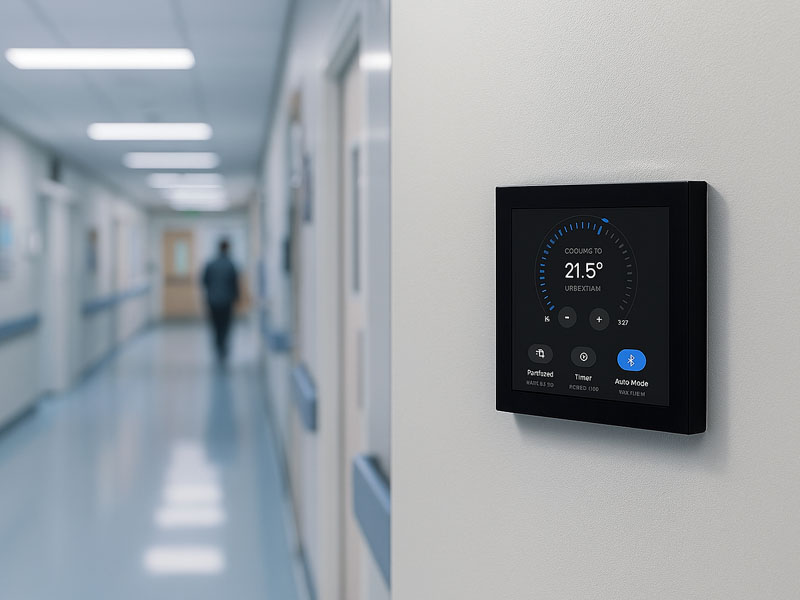
YC-SM10P
10.1 inch Smart Home Control Panel
Ubuntu is extensively utilized in development environments due to its:
- Ease of installation
- Abundance of software packages
- Developer-friendly nature
- Strong community support
However, regarding mass production AIoT devices, Ubuntu presents certain limitations:
- Larger system footprint
- Increased background services
- Reduced control over system components
- Longer boot time compared to embedded builds
- Limited optimization for specific hardware
While Ubuntu excels in prototyping, it is not always the most suitable choice for production-level embedded deployments.
Ubuntu in AIoT Development: Advantages and Disadvantages
Ubuntu is a popular choice in development settings due to its:
- Simple installation process
- Abundance of software packages
- User-friendly for developers
- Strong community support
Nonetheless, when considering mass production of AIoT devices, Ubuntu presents certain drawbacks:
- Larger system footprint
- Increased background services
- Reduced control over system components
- Longer boot times compared to embedded systems
- Limited optimization for specific hardware
Although Ubuntu excels in prototyping, it may not be the best fit for production-level embedded applications.

YC-SM10P
10.1 inch Smart Home Control Panel
Why Yocto Linux Is Superior for Mass Production
1. Completely Customizable System Build
Yocto provides manufacturers the capability to create a minimal Linux image that contains only essential components.
This approach minimizes system size, enhances performance, and removes unnecessary processes.
2. Enhanced Performance for Embedded Hardware
AIoT devices frequently utilize ARM-based processors such as Rockchip, NXP, or Amlogic.
Yocto facilitates extensive hardware optimization, which includes:
- Kernel adjustments
- Driver-level modifications
- GPU acceleration enhancements
- Power management optimization
This guarantees efficient performance even on devices with limited resources.
3. Accelerated Boot Time for Industrial Applications
In commercial settings such as smart panels or kiosks, rapid startup is crucial.
Yocto Linux can be fine-tuned to achieve boot times of just a few seconds, which is vital for devices that are always on in hotels, offices, and public spaces.
In contrast, Ubuntu typically necessitates longer boot sequences.
4. Extended Stability and Maintenance
Mass-produced AIoT devices frequently demand lifecycle support spanning 5 to 10 years.
Yocto offers:
- Controlled versioning
- Long-term maintainability
- Stable release pipelines
- Predictable system behavior
This makes it particularly suitable for industrial and commercial applications.

10 inch smart home control panel
5. Enhanced Security and Minimized Attack Surface
By constructing a minimal system, Yocto significantly limits unnecessary packages and services.
This results in:
- Fewer vulnerabilities
- A reduced attack surface
- More secure embedded systems
Security is of utmost importance in smart buildings, industrial IoT, and connected infrastructure.
6. Versatile Hardware Integration
Yocto Linux is extensively utilized in AIoT devices due to its support for deep integration with hardware components such as:
- Touchscreens and LCD controllers
- RS485 / Modbus interfaces
- KNX building automation systems
- MQTT IoT communication stacks
- AI accelerators and NPU chips
This versatility is crucial for tailored embedded products.
Ubuntu vs Yocto Linux: A Comprehensive Comparison
Ubuntu is primarily tailored for development, testing, and rapid prototyping. It boasts a robust ecosystem; however, it does not offer the level of fine-grained control that some projects may require.
Conversely, Yocto Linux is specifically crafted for production settings where performance, stability, and customization are of utmost importance.
In summary:
Ubuntu = Development & Prototyping
Yocto = Mass Production & Embedded Deployment
AIoT Applications Where Yocto Excels
Yocto Linux finds extensive application in:
- Smart home control panels featuring always-on touch interfaces
- AI edge computing gateways that require real-time processing
- Smart hotel room control systems
- Industrial automation and HMI panels
- Smart building energy management systems
In these scenarios, the emphasis is placed on system reliability and optimization rather than general-purpose flexibility.
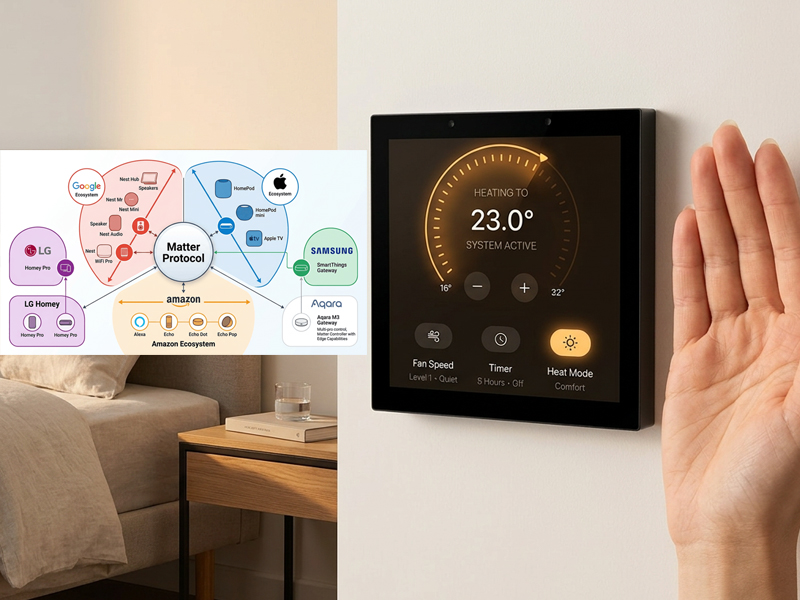
smart home control panel
Portworld AIoT Yocto Linux Solutions
In practical production environments, manufacturers like Portworld offer Yocto-based embedded Linux solutions tailored for AIoT devices and smart control panels.
These solutions generally encompass:
- Custom development of Yocto Linux images for Rockchip platforms
- Optimized BSP and driver integration for embedded hardware
- AIoT-ready system architecture that supports edge computing
- Integration with MQTT, KNX, RS485, and various industrial protocols
- OEM/ODM customization for both hardware and software platforms
- This approach enables system integrators and brands to transition from prototype to large-scale production with efficiency.
OEM/ODM Benefits in Yocto-Based Systems
Yocto Linux is particularly well-suited for OEM/ODM manufacturing as it facilitates:
- OS builds tailored to specific hardware
- Custom user interfaces and system integration
- Pre-installed application environments
- Brand-specific system customization
This capability ensures that each product line can be distinctly optimized for its intended market.
Choosing between Yocto Linux and Ubuntu depends on the stage of development and the target use case.
While Ubuntu is excellent for development and testing, Yocto Linux is the clear choice for mass production AIoT devices due to its performance, flexibility, and industrial-grade stability.
For smart control panels, edge AI devices, and embedded systems, Yocto provides the foundation needed for long-term success in commercial deployments.
With OEM/ODM support from companies like Portworld, businesses can accelerate the transition from prototype to scalable production while maintaining full control over system performance and customization.