Why an Embedded Wall Mount Digital Signage Monitor is the Ultimate Choice for 24/7 Commercial Environments
In today’s fast-paced commercial landscapes, static posters no longer cut it. Whether it is a bustling airport terminal, a modern hospital lobby, or a high-traffic retail space, businesses need dynamic, eye-catching ways to communicate.
Enter the embedded wall mount digital signage monitor.
Unlike consumer-grade televisions or standard monitors, commercial-grade embedded displays are built from the ground up to solve modern business challenges: space efficiency, hardware durability, and uninterrupted performance.
If you are a system integrator, IT manager, or business owner looking to upgrade your facility’s visual infrastructure, here is everything you need to know about choosing the right embedded wall-mount solution.
1. What Makes an “Embedded” Signage Monitor Different?
When we talk about an embedded wall mount digital signage monitor, we mean the computing hardware (the CPU, memory, and storage) is built directly inside the display chassis itself.
By eliminating the external media box, you eliminate the single biggest failure point in digital signage: loose cables, external power supply issues, and mounting headaches. Everything is contained within a single, secure, streamlined enclosure.
2. Engineered for 24/7 Reliability: The Metal Case Advantage
Consumer electronics are designed to run for a few hours a day. Commercial environments demand 24/7 continuous operation.
An industrial-grade monitor like the Portworld YC-55MT Series uses a heavy-duty sheet-metal casing. This isn’t just for a premium, sleek aesthetic—metal enclosures act as a massive passive heat sink. They draw heat away from the internal processing units without relying on loud, dust-trapping cooling fans. This ensures the monitor runs cool, safely preventing performance lag or screen burn-in during round-the-clock use.
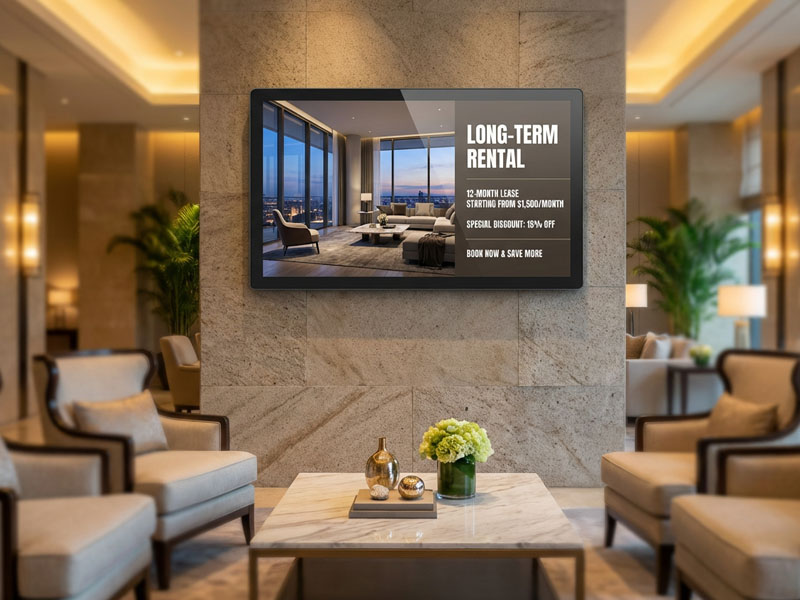
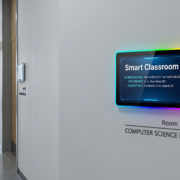
Wall-Mounted Digital Signage display
3. The Power Under the Hood: Choosing the Right Rockchip SoC
Not all digital signage tasks require the same computing power. A static menu board doesn’t need the same processor as an interactive AI wayfinding kiosk.
An embedded Android or Linux monitor offers scalable performance depending on your software architecture. For instance, the YC-55MT Series features a highly customizable board design that supports a wide range of Rockchip system-on-chips (SoCs):
- Standard Efficiency (RK3566 / RK3568): Perfect for standard 4K/HD video loops, HTML5 widgets, and smooth content streaming.
- Cost-Effective Entry (RK3128 / PX30): Ideal for smaller, single-purpose informational screens.
- High-Performance Heavyweights (RK3399 / RK3588): Designed for multi-display outputs, heavy 3D graphics, edge-AI computing, and instant touch responsiveness.
4. Versatility in Form Factor and Orientation
Commercial spaces require flexibility. A banking hall might need a massive 65-inch landscape display for interest rates, while a retail clothing store might require a sleek, vertical 21.5-inch portrait display next to a dressing room.
Feature Capabilities & OptionsAvailable SizesUltra-wide range: 10.1”, 15.6”, 21.5”, 32”, 43”, 55”, up to 65”Screen Orientation Seamless native rotation supporting both Landscape (Horizontal) and Portrait (Vertical) layouts.InteractivityStandard display (Non-Touch) for simple viewing, or upgraded with high-accuracy Capacitive Touch for interactive kiosks.
Rich Connectivity for Seamless Integration
A truly commercial embedded monitor needs to play nice with your existing network infrastructure and external peripherals. When evaluating an embedded wall-mount monitor, ensure the physical I/O layout includes:
- Solid Networking: An RJ45 Ethernet port for stable wired connections alongside robust dual-band Wi-Fi.
- Peripheral Support: Multiple USB ports for barcode scanners, webcams, or external keyboards.
- Expansion & Failover: A TF card slot for local content storage caching (so your sign keeps playing even if the internet drops) and an HDMI output for daisy-chaining secondary screens.

Wall-Mounted Digital Signage
Real-World Application Scenarios
Where do these displays make the biggest impact?
- Healthcare & Hospitals: Displaying clinic schedules, outpatient check-in queues, and clean, clear wayfinding maps.
- Transit Hubs & Airports: Real-time arrival/departure schedules and bright commercial advertisements in high-traffic concourses.
- Government & Bank Halls: Securing public trust with real-time news, public announcements, and financial promotional media.
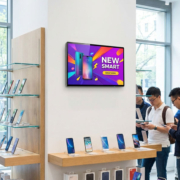
- Retail & Supermarkets: Point-of-Purchase (POP) dynamic pricing boards and interactive product information hubs.
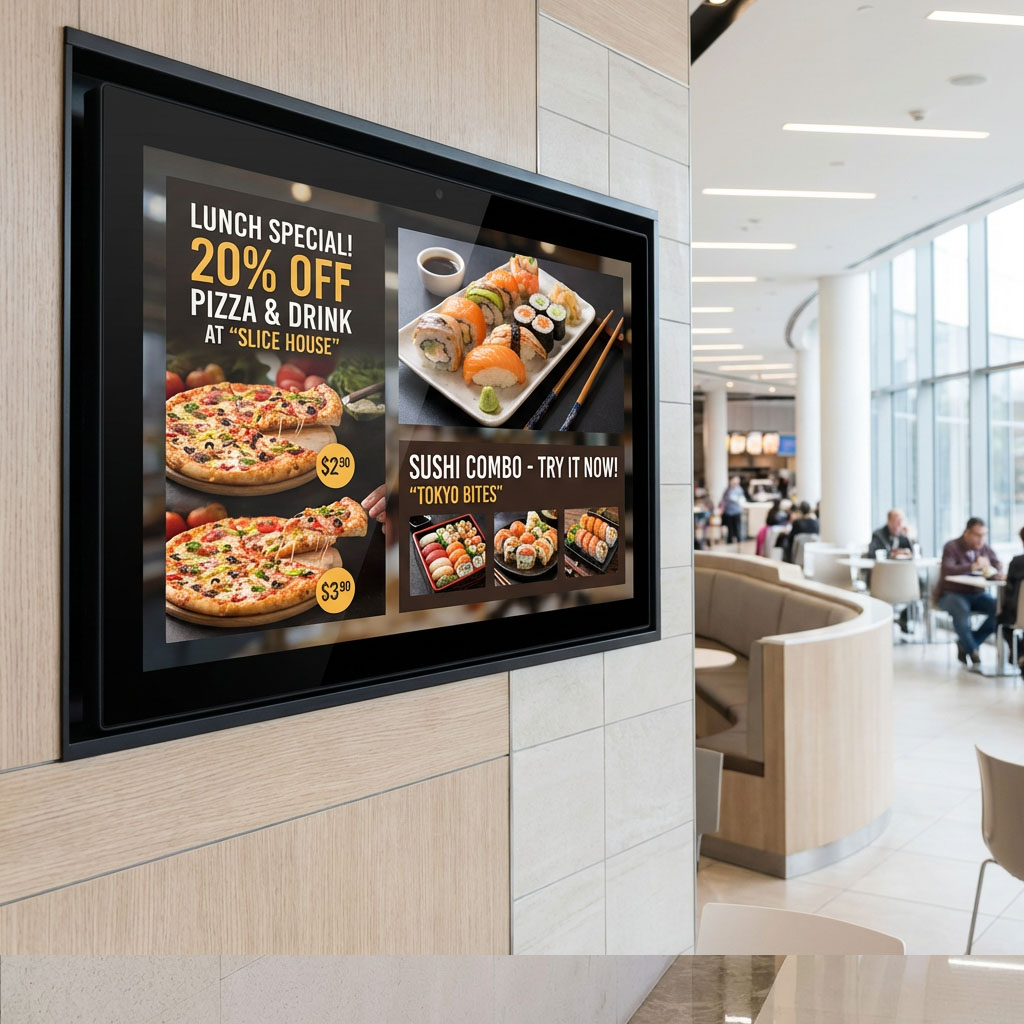
Wall-Mounted Digital Signage
Partnering with the Right Hardware Manufacturer
Choosing an embedded wall mount digital signage monitor comes down to finding a balance between robust durability and hardware flexibility. With 18 years of specialized R&D experience, Portworld (Sunworld) Technology delivers turnkey OEM/ODM customization—allowing you to pick the exact screen size, processing power (from RK3128 to the flagship RK3588), and OS platform (Android 11, Linux, or Debian) your project demands.