Wall-mounted Central Heating and Underfloor Cooling Smart Control Panel
In contemporary smart buildings, comfort is no longer managed through individual thermostats or manual switches. Rather, centralized digital systems are becoming the norm. A highly effective solution is the wall-mounted central heating and underfloor cooling smart control panel, which consolidates temperature regulation, HVAC automation, and energy management into a single touchscreen interface.
This type of smart control panel is commonly utilized in residential villas, hotels, office buildings, and luxury apartments where accurate climate control and energy efficiency are paramount.
What Is a Wall-mounted Heating and Cooling Smart Control Panel?
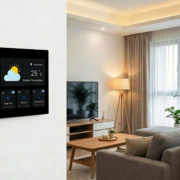
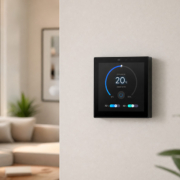
A wall-mounted heating and underfloor cooling smart control panel is a touchscreen device embedded directly into the wall, enabling users to manage indoor climate systems.
It connects with heating and cooling infrastructure such as:
- Underfloor heating systems
- Central HVAC systems
- Heat pumps
- Fan coil units (FCU)
- Chillers and boilers
Through a unified interface, users can control temperature zones, establish schedules, and modify comfort levels in real time.
How Underfloor Heating and Cooling Control Works
Underfloor systems manage temperature by circulating warm or cool water through pipes installed beneath the floor.
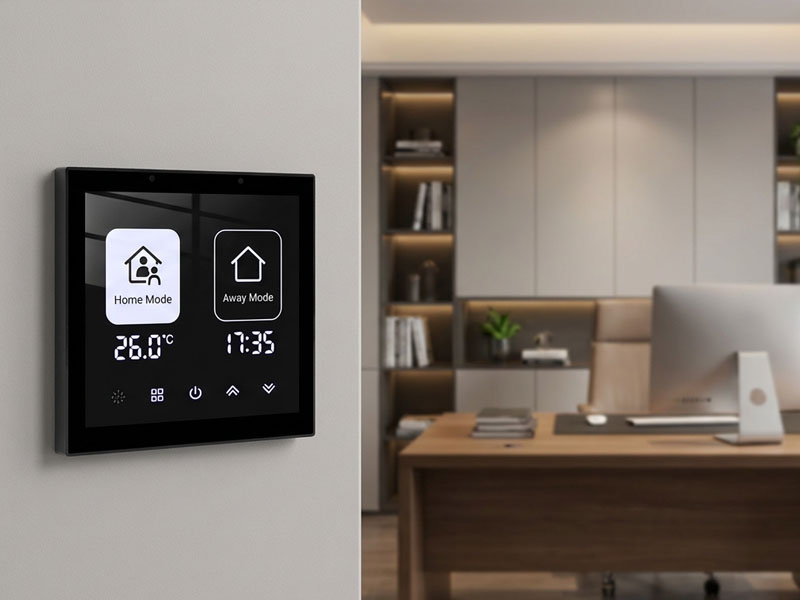
4″ KNX Smart Touch Control Panel
A smart control panel serves as the central brain of the system, transmitting commands to thermostats, valves, and controllers.
Key functions include:
- Zone-based temperature control
- Real-time temperature monitoring
- Heating and cooling mode switching
- Energy-saving scheduling
- Automatic comfort optimization
This enables each room or zone to sustain a consistent and efficient temperature.
Why Opt for a Smart Control Panel Over Traditional Thermostats?
Traditional thermostats are restricted to controlling a single room and require manual adjustments.
In contrast, a smart control panel offers a more sophisticated and centralized solution.
The primary benefits include:
- Centralized management of multiple rooms and zones
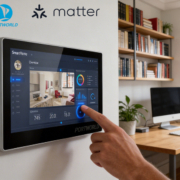
- User-friendly touchscreen interface
- Seamless integration with HVAC and building automation systems
- Remote access through mobile applications or cloud services
- Energy efficiency through intelligent scheduling
This makes it particularly suitable for contemporary smart homes and commercial properties.
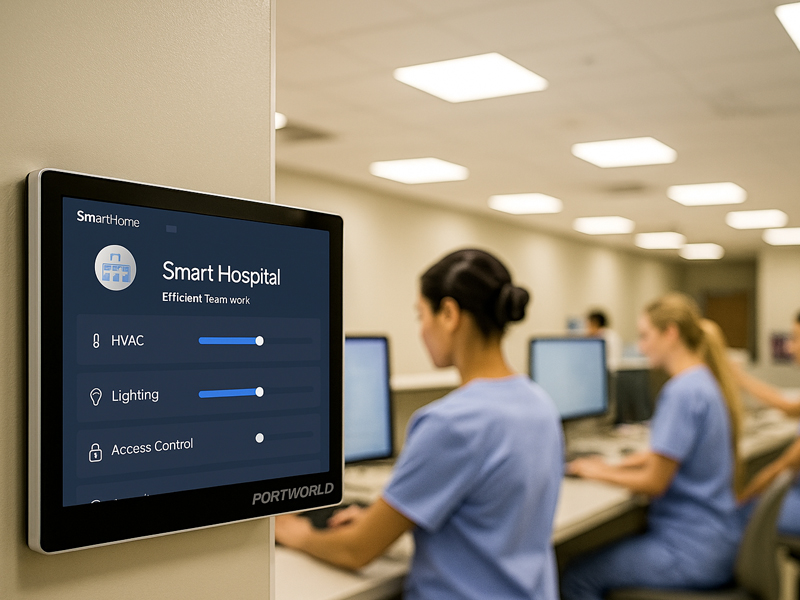
smart touch control panel8
Key Characteristics of Heating and Cooling Smart Panels
Contemporary wall-mounted HVAC control panels are crafted for both functionality and visual appeal.
Common features encompass:
- Capacitive touchscreen display
- Real-time monitoring of temperature and humidity
- Multi-zone HVAC control interface
- Compatibility with underfloor heating systems
- WiFi, Ethernet, and optional RS485 connectivity
- Support for automation protocols like KNX or Modbus
- Continuous operation for building environments, 24/7
These attributes guarantee both user-friendliness and system dependability.
Integration with Smart Building Systems
Heating and cooling control panels frequently form part of a broader smart building framework.
They can connect with:
- Lighting control systems
- Automated curtain and shading solutions
- Access control and security systems
- Energy management platforms
- IoT sensors and environmental monitoring systems
This facilitates comprehensive building automation from a unified interface.
Energy Efficiency and Intelligent Climate Management
One of the primary benefits of smart HVAC panels is their energy efficiency.
By examining usage patterns and environmental data, the system can automatically enhance heating and cooling performance.
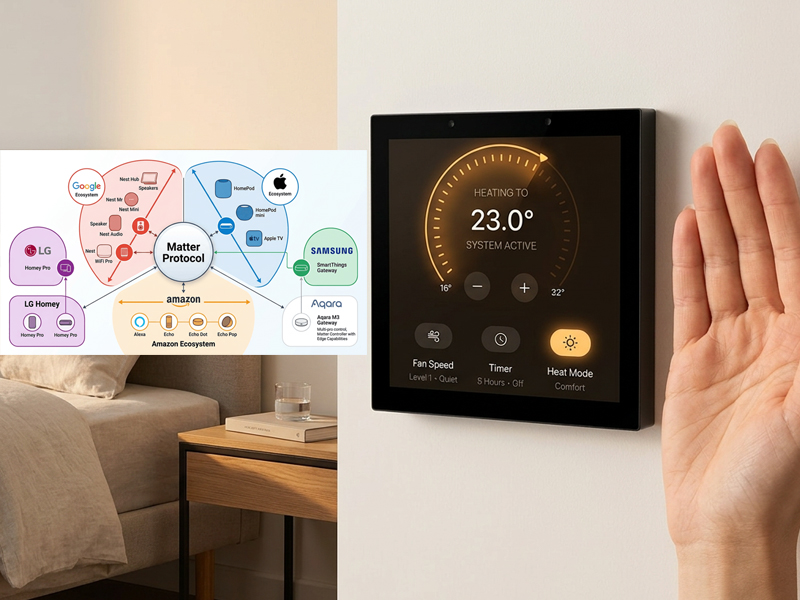
smart home control panel
Features that contribute to energy savings include:
- Scheduled temperature adjustments
- Occupancy-based control
- Intelligent learning algorithms
- Eco-mode functionality
- Remote monitoring and optimization
This approach minimizes energy consumption while ensuring comfort.
Hardware Specifications for HVAC Control Panels
To guarantee stable performance in building environments, these panels are generally constructed with industrial-grade hardware.
Typical specifications encompass:
- Embedded ARM processors (such as Rockchip or similar platforms)
- High-resolution IPS touch displays
- Power over Ethernet (PoE) or DC power input options
- RS485 communication interface for HVAC systems
- Robust wall-mount enclosure design
- Reliable Linux or Android operating system
These components provide long-term dependability in environments with continuous use.
Application Scenarios
Wall-mounted smart control panels for heating and cooling are extensively utilized in:
- Luxury residential villas for zoned temperature management
- Smart hotels for guest room climate automation
- Office buildings for centralized HVAC oversight
- Smart apartments featuring underfloor heating systems
- Commercial spaces that require energy-efficient climate control
In every scenario, the system enhances comfort, efficiency, and user satisfaction.
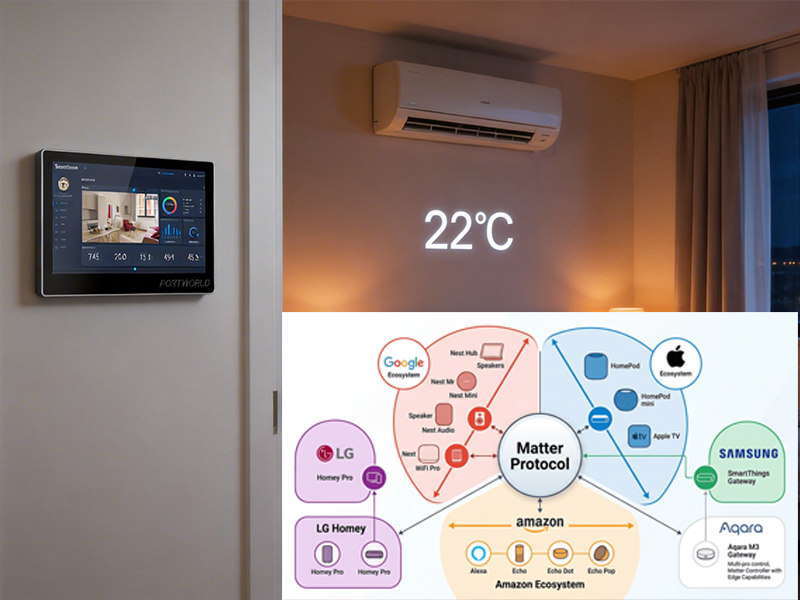
smart control panel
Portworld Smart HVAC Control Panel Solutions
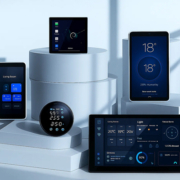
In practical applications, manufacturers like Portworld offer wall-mounted smart control panels tailored for central heating and underfloor cooling systems.
Portworld’s solutions generally include:
- Android and Linux-based smart control panels optimized for HVAC automation
- RS485 and Modbus integration for heating and cooling systems
- KNX-compatible building automation support
- Flush-mount and wall-embedded designs suitable for contemporary architecture
- OEM/ODM customization options for hardware, software, and user interface design
These solutions are extensively implemented in smart homes, hotels, and commercial establishments.