
RS485/RS232 Serial Port to MIPI Control Board for Industrial IoT
The Internet of Things (IoT) is transforming industries by enabling smart, connected devices to communicate with each other and provide valuable insights. In industrial environments, where legacy systems like RS485 and RS232 are still widely used, integrating these systems with modern technologies like MIPI (Mobile Industry Processor Interface) can be a challenging yet crucial task. MIPI is a high-speed, low-power interface typically used in smartphones, tablets, and consumer electronics. By bridging the gap between older serial communication protocols (RS485/RS232) and modern MIPI control boards, industries can unlock the potential of IoT while leveraging their existing infrastructure.
1. Understanding RS485/RS232 and MIPI
RS485 and RS232: Legacy Communication Protocols
RS485 and RS232 are both serial communication standards that have been widely used for industrial communication. They are designed for transmitting data over long distances, typically in environments with industrial automation systems, sensors, and other legacy equipment. Both RS485 and RS232 provide reliable communication but are limited by factors such as low data transfer rates and limited compatibility with newer technologies.
- RS485: Known for its ability to support multi-point communication over long distances (up to 4,000 feet), RS485 is often used for connecting multiple devices in industrial control systems. It is commonly used in environments where noise immunity and long-range communication are essential.
- RS232: This is a simpler, point-to-point communication standard often used in older devices, including industrial machines, legacy equipment, and automation systems. While it has a shorter range (up to 50 feet) and lower data transfer rates compared to RS485, it remains a staple in many industrial applications.
MIPI: A High-Speed, Low-Power Interface
MIPI, primarily used in consumer electronics such as smartphones and tablets, provides a high-speed interface for transferring data between processors and peripherals (displays, cameras, sensors). The MIPI standard is designed to handle the large amounts of data generated by modern devices while ensuring minimal power consumption, making it an ideal choice for next-generation industrial IoT systems.
- MIPI DSI (Display Serial Interface): Used to drive displays and provides high data transfer rates for video and image transmission. MIPI DSI allows efficient data communication for devices like smart panels, cameras, and other high-resolution output devices.
- MIPI CSI (Camera Serial Interface): Used for connecting cameras to processors, offering fast data transfer rates and low power consumption for industrial and IoT applications.
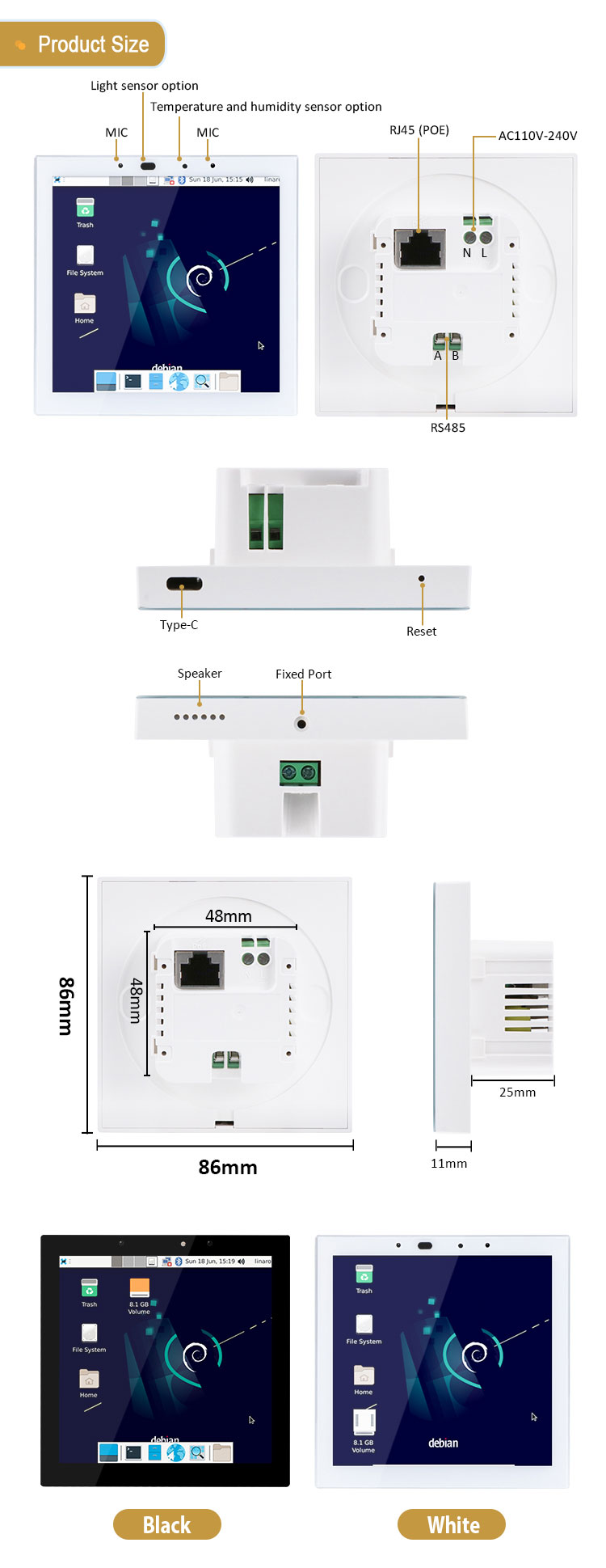
YC-SM41P
4″ Smart Control Panel
2. RS485/RS232 to MIPI Control Board: The Need for Integration
As industries increasingly embrace IoT for automation, monitoring, and control, there is a growing need to connect legacy industrial equipment to modern, high-performance IoT systems. However, legacy systems using RS485 and RS232 communication protocols are not compatible with newer IoT systems that rely on MIPI interfaces. This creates a gap that needs to be bridged.
The integration of RS485/RS232 serial ports to MIPI control boards allows for seamless communication between old and new technologies, facilitating a smooth transition to modern IoT systems. It also allows manufacturers to extend the life of their legacy equipment, integrate new IoT-enabled features, and achieve better performance without needing a complete system overhaul.
3. Key Benefits of RS485/RS232 to MIPI Control Boards
a) Seamless Integration with Legacy Equipment
Many industrial systems, especially in manufacturing, have been built around RS485 and RS232 communication protocols. These systems often include sensors, actuators, PLCs (Programmable Logic Controllers), and other equipment that is crucial to production. Bridging the gap between RS485/RS232 devices and MIPI control boards allows for easier integration with modern IoT systems, enabling these legacy devices to communicate with newer sensors, displays, and processing units.
b) High Data Transfer Speeds
While RS485 and RS232 offer reliable communication, they are relatively slow compared to modern standards. MIPI control boards, on the other hand, offer high-speed data transfer capabilities, enabling faster communication between devices and improving the overall performance of industrial IoT systems. For applications involving video surveillance, real-time monitoring, and large data processing, integrating RS485/RS232 with MIPI allows for efficient data exchange.
c) Low Power Consumption
MIPI interfaces are known for their low power consumption, which is essential for energy-efficient industrial IoT applications. Integrating RS485/RS232 communication with MIPI control boards reduces power usage, which is particularly important for battery-operated IoT devices or those that require continuous operation.
d) Simplified Design and Reduced Costs
By using a control board that integrates RS485/RS232 to MIPI, manufacturers can simplify their system design. Rather than replacing legacy equipment with expensive new systems, they can extend the life of their existing infrastructure and integrate it with modern MIPI technology. This reduces the overall cost of system upgrades and allows for more cost-effective solutions in industrial environments.
e) Improved Flexibility and Scalability
MIPI control boards allow for the easy addition of new IoT devices, sensors, and displays. As businesses scale their IoT systems, they can continue to use their legacy equipment without worrying about compatibility issues. The flexibility of integrating RS485/RS232 with MIPI ensures that the system can grow as needed without significant changes to the underlying infrastructure.
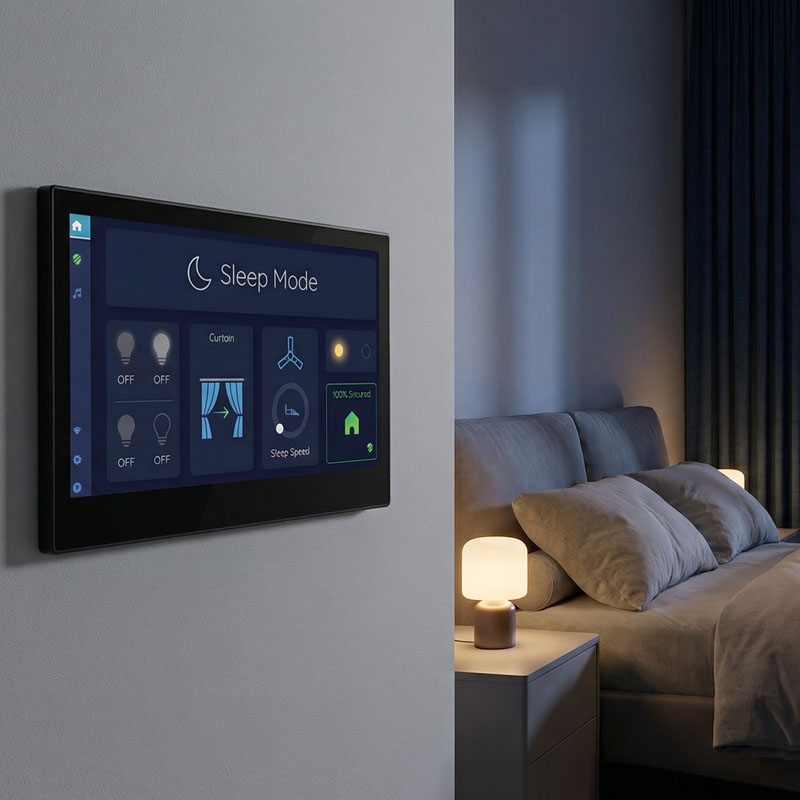
YC-SM1011 10.1 inch Smart Home Touch Control Panel
4. Portworld’s RS485/RS232 to MIPI Control Board Solutions
Portworld offers custom solutions for bridging the gap between RS485/RS232 communication protocols and MIPI control boards. With years of experience in industrial automation and smart device manufacturing, Portworld provides the following benefits:
a) Custom PCBA Design
Portworld offers custom PCBAs (Printed Circuit Board Assemblies) that can integrate RS485/RS232 to MIPI control functions, tailored to the specific needs of your industrial IoT systems. These PCBAs ensure compatibility with various communication standards and allow for optimal data transfer speeds.
b) OEM/ODM Services
Portworld provides OEM/ODM services for the design and manufacturing of RS485/RS232 to MIPI control boards, allowing businesses to develop custom solutions that fit their unique requirements. Whether you need specific I/O ports, sensor integration, or additional functionality, Portworld’s engineering team can create a solution tailored to your needs.
c) Versatile Applications
Portworld’s solutions are ideal for industries such as:
- Smart Manufacturing: Enabling real-time monitoring and control of industrial machines and equipment.
- Smart Agriculture: Connecting sensors, weather stations, and environmental monitoring systems for IoT-based farming solutions.
- Building Automation: Connecting legacy building management systems with modern IoT technologies.
- Security and Surveillance: Integrating legacy CCTV systems with modern video processing and analytics tools.
d) Full Integration Support
Portworld ensures that their RS485/RS232 to MIPI control board solutions integrate seamlessly with your existing systems. They offer full support for hardware, software, and firmware customization, allowing businesses to smoothly transition to a next-generation IoT ecosystem.
Integrating RS485/RS232 serial ports with MIPI control boards is a powerful solution for businesses looking to modernize their industrial IoT systems without replacing their entire infrastructure. With the ability to bridge legacy equipment with high-performance IoT technology, companies can improve data transfer speeds, reduce power consumption, and enhance system flexibility.

