PoE powered smart touch panel deployment project
As intelligent buildings, hotels, and contemporary offices increasingly implement integrated automation systems, PoE-powered smart touch panels are emerging as a favored option for centralized management. By merging power and data via a single Ethernet cable, Power over Ethernet (PoE) streamlines installation while facilitating dependable, continuous smart control interfaces.
This article outlines the deployment process of PoE smart touch panels, their benefits, architectural design, and practical application scenarios in both smart home and commercial automation initiatives.
A PoE smart touch panel is a wall-mounted control unit that obtains both power and network data via a single Ethernet cable, adhering to IEEE 802.3af/at standards.
This device generally serves as a central interface for:
- Smart lighting control
- HVAC and temperature management
- Automation of curtains and blinds
- Monitoring of security systems
- Scene control and automation
- Dashboards for building management
By eliminating the need for separate power adapters and network connections, PoE streamlines the entire installation process.
The Significance of PoE in Smart Building Initiatives
In conventional smart control systems, installers are required to install:
- Power cables
- Network cables
- Occasionally, extra control wiring
This leads to increased costs, complexity, and longer installation times.
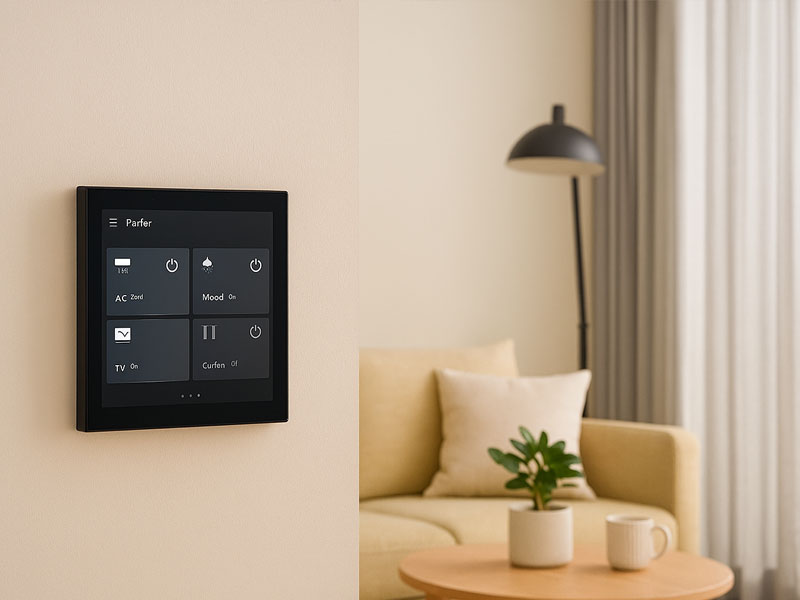
4″ Smart Home Touch Control Panel
Power over Ethernet (PoE) addresses these challenges by facilitating:
1. Installation with a Single Cable
A single Ethernet cable delivers:
- Power supply
- Data communication
- Network connectivity
This greatly simplifies the wiring process.
2. Centralized Power Management
PoE switches allow centralized control of all panels:
- Easy system reboot
- Remote power management
- Simplified maintenance
3. Higher Reliability
Compared to local adapters:
- Fewer failure points
- Stable 24/7 operation
- Industrial-grade power delivery
4. Flexible Deployment
PoE allows panels to be installed anywhere network cables can reach:
- Walls
- Meeting rooms
- Hotel rooms
- Commercial spaces
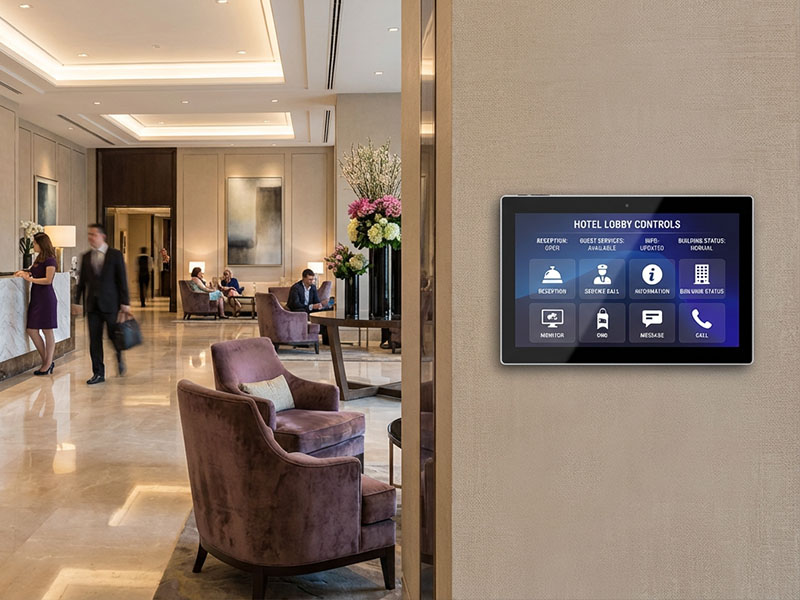
YC-SM10P
10.1 inch Smart Home Control Panel
Typical PoE Smart Touch Panel Deployment Architecture
A standard deployment project usually follows this structure:
PoE Switch → Ethernet Cable → Smart Touch Panel → KNX / HVAC / IoT Devices
Or in a smart building system:
- PoE switch powers multiple panels
- Panels act as user interface nodes
- Backend systems handle automation logic
This architecture is widely used in:
- Smart homes
- Hotels
- Office buildings
- Commercial automation systems
Essential Features Needed in a PoE Smart Panel
A high-quality PoE smart touch panel must include:
1. IEEE 802.3af/at PoE Standard
This guarantees compatibility with:
- Enterprise PoE switches
- Network infrastructure systems
2. Embedded Operating System
The majority of panels operate on:
- Android OS (for applications with rich user interfaces)
- Linux OS (for enhanced industrial reliability)
3. Touchscreen Interface
Typical specifications consist of:
- Capacitive multi-touch
- IPS display
- Wall-mounted configuration
- Various size options (4”, 5”, 7”, 10.1”, 11.6”)
4. Multi-Protocol Connectivity
Sophisticated smart panels accommodate:
- KNX integration
- RS485 / Modbus
- Zigbee / Bluetooth / WiFi
- IP-based control systems
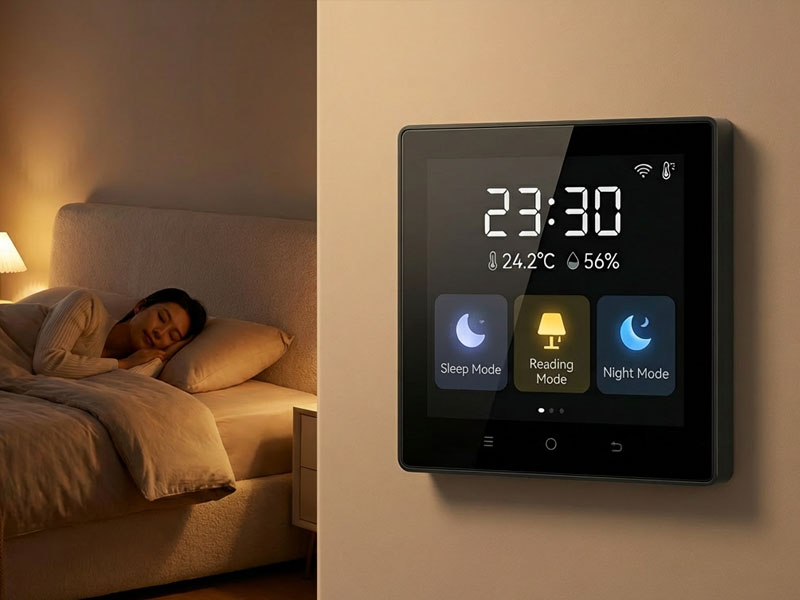
YC-SM41P-KNX
4″ KNX Smart Touch Control Panel
Deployment of PoE Smart Panels in Actual Projects
Smart Homes
In residential settings, PoE panels serve the following purposes:
- Centralized lighting management
- HVAC system adjustments
- Automated curtain control
- Activation of smart scenes
These panels are typically installed in:
- Living areas
- Bedrooms
- Corridors
- Smart Hotels
Hotels greatly benefit from the implementation of PoE smart panels:
- Control of room climate
- Management of lighting and curtains
- Automation for energy efficiency
- Interfaces to enhance guest experiences
Each hotel room can be equipped with a standardized PoE panel connected to a central network switch.
Smart Offices
In office settings, PoE panels are utilized for:
- Systems for booking meeting rooms
- Control of lighting and HVAC systems
- Integration of access control
- Dashboards for workplace automation
Commercial Buildings
Extensive deployments encompass:
- Automation across multiple zones in buildings
- Centralized monitoring systems
- Dashboards for energy optimization
- Interfaces for facility management
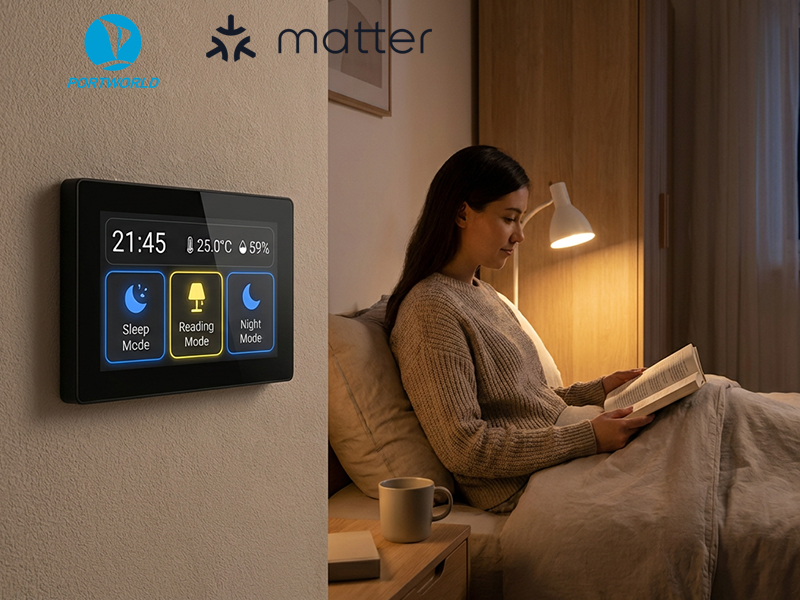
smart home control panel
Example: Portworld PoE Smart Touch Panel Solutions
In practical deployment scenarios, manufacturers such as Portworld offer PoE-enabled smart control panels tailored for scalable automation systems.
Typical Product Features:
- PoE (IEEE 802.3af/at) compatibility
- Android/Linux operating systems
- Capacitive multi-touch displays
- Wall-mounted embedded installation
- Integration options for KNX / RS485 / IoT
- Example Product Applications
- 4-inch compact smart control panels for room-level management
- 10.1-inch central control dashboards for intelligent buildings
- Custom OEM/ODM PoE panels for hospitality and corporate environments
These solutions are extensively utilized in smart home, hospitality, and commercial automation initiatives.
OEM/ODM Advantages for PoE Smart Panels
For system integrators and brands, the customization offered by OEM/ODM is essential.
Deploying a PoE powered smart touch panel project provides a highly efficient, scalable, and cost-effective solution for contemporary smart buildings.
By merging power and data into a single cable, PoE streamlines installation while enhancing system reliability and maintenance efficiency.
From smart homes to hotels and commercial properties, PoE smart panels are increasingly becoming a crucial component.