
How Interactive Museum Wayfinding Kiosks Deliver Immersive 3D Historical Exhibits
Museums have evolved beyond the confines of traditional display cases, printed descriptions, and static exhibition boards. With the ongoing influence of digital technology on cultural experiences, museums are actively seeking innovative methods to enhance visitors’ understanding of history, facilitate exploration of collections, and promote interaction with exhibits.
One of the most impactful solutions is the interactive museum wayfinding kiosk. By integrating touchscreen interaction, digital navigation, multimedia content, and 3D visualization, these kiosks are revolutionizing conventional museum visits into more engaging and immersive experiences.
From assisting visitors in locating exhibition areas to showcasing detailed historical scenes through 3D models, interactive kiosks are increasingly becoming a vital component of contemporary museums, heritage sites, and cultural centers.
The Evolving Role of Technology in Modern Museums
Today’s visitors anticipate more than merely reading information panels. They seek to delve into stories, comprehend historical contexts, and engage with content in a more intuitive manner.
Conventional museum layouts often present several challenges:
- Navigating large exhibition spaces can be challenging.
- Visitors might overlook significant collections.
- Historical information may seem disjointed.
- Diverse language needs add to the complexity.
- Younger audiences demand more interactive experiences.
Digital wayfinding systems assist museums in addressing these challenges by establishing a link between physical exhibits and digital information.
An interactive kiosk can direct visitors throughout the museum while offering supplementary context regarding the exhibits they are observing.
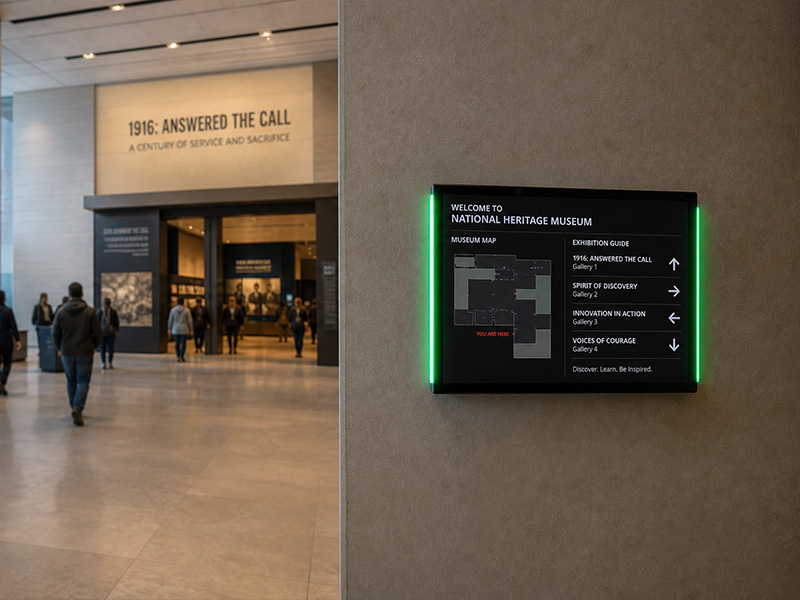
Museum Exhibit Interactive Touch Digital Signage Screen
Transitioning from Digital Maps to Engaging 3D Exploration
Contemporary museum kiosks are advancing beyond mere navigation interfaces.
Previously, digital directories primarily showcased:
- Floor layouts
- Locations of exhibitions
- Information for visitors
The current generation of interactive kiosks offers significantly enhanced experiences through:
- 3D representations of museum layouts
- Previews of virtual exhibitions
- Models of historical reconstructions
- Interactive timelines
- Digital narratives
For instance, guests can investigate a 3D model of an ancient structure prior to entering the physical exhibition space. They have the ability to rotate artifacts, observe historical scenes from various perspectives, and access information via interactive touch features.
This methodology facilitates the transformation of passive viewing into engaging learning.
Enhancing Visitor Navigation via Interactive Wayfinding
Major museums, science centers, and heritage sites typically feature numerous exhibition halls, temporary displays, dining options, and visitor amenities.
Identifying the correct destination can prove difficult, particularly for those visiting for the first time.
Interactive wayfinding kiosks offer a more effective navigation experience by enabling visitors to:
- Search for exhibition locations
- Examine interactive maps
- Plan their visiting routes
- Identify facilities
- Receive guidance in multiple languages
In contrast to conventional signage, digital navigation systems can be updated in real-time when exhibition layouts are modified.
This adaptability is particularly beneficial for museums that regularly host temporary exhibitions or special events.
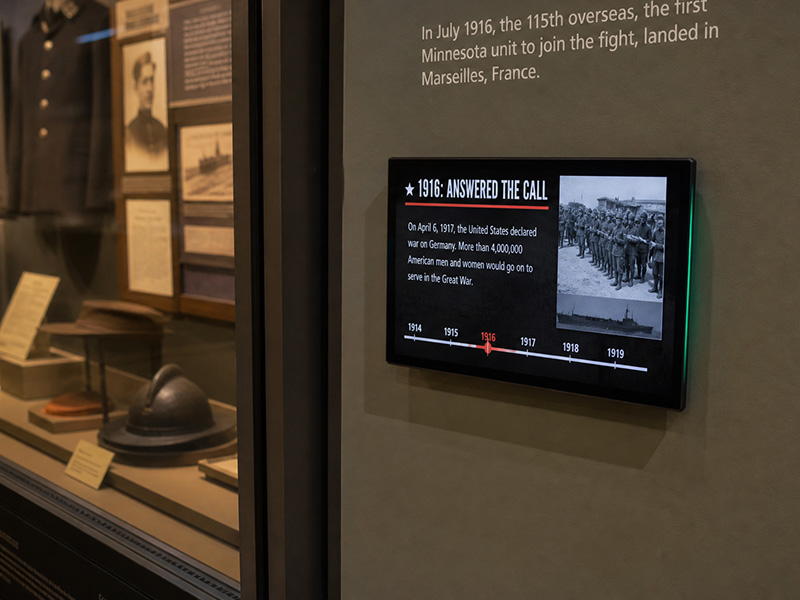
Museum Exhibit Interactive Touch Digital Signage Screen
Creating Engaging Historical Learning Experiences
One of the primary benefits of interactive museum kiosks is their capacity to merge education with entertainment.
A historical artifact encased in glass can convey only a limited amount of information. In contrast, a digital interface can unveil the narrative behind the object.
For instance:
A visitor examining an ancient artifact can utilize a touchscreen kiosk to explore:
- Its original setting
- Historical context
- Production methods
- Associated cultural narratives
- 3D visualizations
This fosters a more profound comprehension of history and promotes extended visitor interaction.
Hardware Specifications for Museum Interactive Kiosks
Museum settings necessitate dependable and visually appealing interactive devices.
Unlike typical commercial displays, museum kiosks must accommodate:
- Extended operating hours
- Seamless multimedia playback
- Responsive touch functionality
- Consistent network connectivity
- Professional aesthetics
Depending on the installation context, museums may opt for various kiosk formats:
- Indoor freestanding kiosks
- Wall-mounted touch screens
- Desktop interactive units
- Large-scale information kiosks
High-resolution screens and robust processors are particularly crucial for executing 3D content, animations, and multimedia applications.
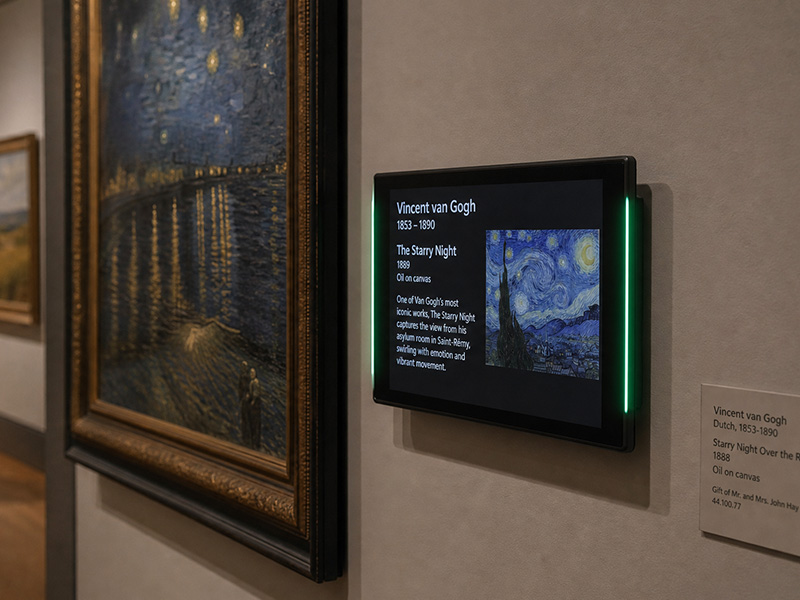
Museum Exhibit Interactive Touch Digital Signage Screen
Portworld Interactive Museum Kiosk Solutions
Portworld specializes in creating tailored touchscreen hardware solutions for interactive public applications, which encompass museums, exhibitions, tourism, and smart city initiatives.
The interactive kiosk platforms provided by Portworld feature:
- High-resolution touchscreen displays
- Android/Linux operating systems
- Robust embedded processors
- Network connectivity
- Integration with CMS and content management systems
- Custom enclosure designs
For museums and cultural institutions, Portworld offers the ability to customize solutions according to specific project needs, including screen dimensions, installation methods, and interactive functionalities.
The hardware platform is capable of supporting various applications such as:
- Museum navigation systems
- Digital exhibition guides
- Interactive historical displays
- Visitor information terminals
- Cultural tourism kiosks
- OEM/ODM Customization for Cultural Technology Projects
Each museum project presents unique requirements based on exhibition themes, visitor traffic, and software platforms.


