How Does a Smart Control Panel Work in a Hospital Room?
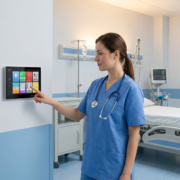
Modern hospitals are progressively incorporating intelligent technologies to enhance patient comfort, operational efficiency, and healthcare management. A smart control panel situated in a hospital room serves as a centralized touchscreen interface, enabling patients, nurses, and healthcare personnel to manage room devices and access vital services.
By incorporating IoT connectivity, building automation systems, and interfaces for medical equipment, smart control panels contribute to the establishment of safer and more efficient patient environments.
1. Centralized Management of Hospital Room Devices
A smart control panel functions as the primary interaction point between users and connected devices.
Patients and staff can control:
- Room lighting
- Bedside lights
- Air conditioning and temperature
- Motorized curtains or blinds
- Entertainment systems
- Nurse call functions
- Room status information
Rather than relying on multiple switches, patients can oversee essential room functions through a single, user-friendly touchscreen.
2. Patient Comfort and Room Environment Control
A conducive environment plays a crucial role in the recovery of patients.
Smart control panels empower patients to modify:
Lighting Control
Patients have the ability to:
- Switch lights on/off
- Modify brightness levels
- Choose reading light settings
- Establish night-time lighting scenarios
HVAC Control
The panel facilitates control over:
- Room temperature
- Cooling and heating modes
- Fan speed adjustments
- Ventilation configurations
This capability enables patients to customize their surroundings while minimizing unnecessary energy usage.
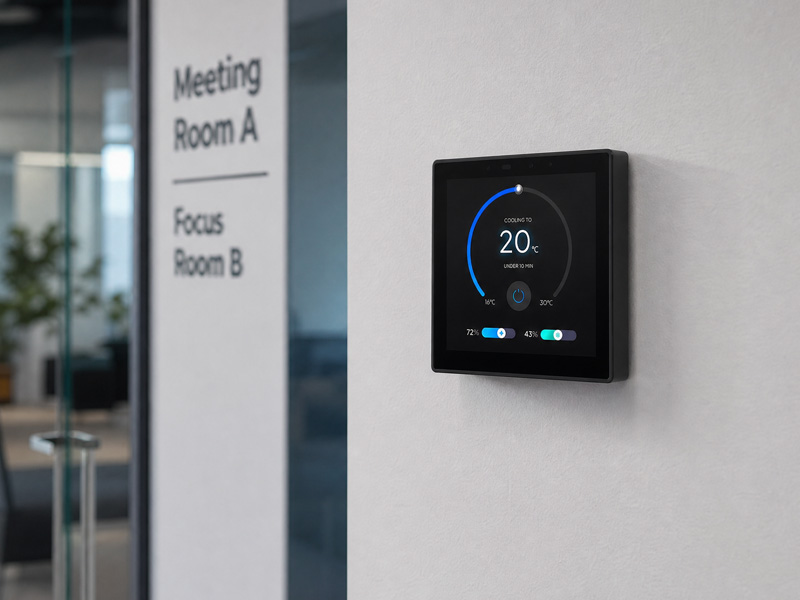
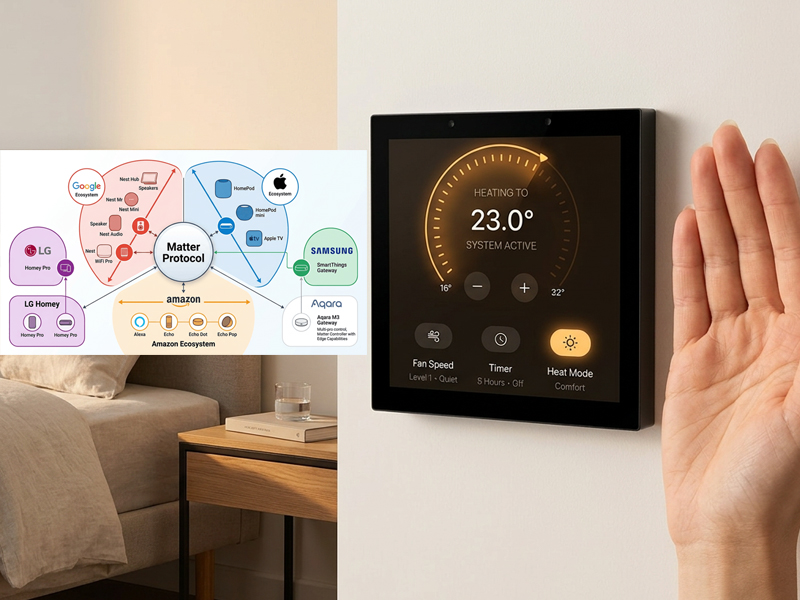
smart home control panel
3. Nurse Call and Emergency Assistance Integration
Effective communication with medical personnel is one of the most vital functions in hospital rooms.
A smart control panel can seamlessly integrate with nurse call systems to offer:
- One-touch assistance requests
- Emergency notifications
- Patient status updates
- Staff communication channels
When a patient activates the assistance button, the system can promptly send an alert to the nursing station or to mobile devices.
4. Integration with Hospital IoT Systems
Smart hospital rooms necessitate the interaction of various systems.
Smart control panels can interface with:
- Building Management Systems (BMS)
- Nurse call systems
- Access control systems
- Medical monitoring devices
- Smart sensors
Common communication protocols include:
- Ethernet
- PoE
- WiFi
- Bluetooth
- RS485
- Modbus
PoE-enabled smart panels are particularly advantageous for hospitals as they deliver both power and network connectivity through a single cable.
5. Patient Information and Digital Services
Android-based smart control panels can offer supplementary healthcare services via applications.
Potential functionalities encompass:
- Hospital information display
- Appointment details
- Meal ordering
- Video communication
- Entertainment services
- Digital patient guides
The touchscreen serves not only as a control interface but also as an interactive healthcare terminal.
smart home control panel
6. Intelligent Room Automation and Energy Management
Hospitals function continuously, making energy efficiency a critical concern.
Smart control panels can enhance the following aspects:
- Lighting schedules
- HVAC operations
- Management of room occupancy
- Energy monitoring
For instance:
- Lighting can automatically dim during nighttime hours.
- HVAC systems can adjust according to room occupancy.
- Unused rooms can switch to energy-saving mode.
7. Hygiene-Conscious and User-Friendly Operation
Healthcare settings necessitate straightforward and dependable interactions.
Smart hospital room panels can facilitate:
- Flat touchscreen surfaces for effortless cleaning.
- Large interface buttons for ease of use.
- Custom patient-friendly user interfaces.
- Multi-language options for accessibility.
This design enhances usability for elderly patients and individuals with limited mobility.
Smart Control Panel Hardware Requirements for Hospitals
A smart control panel in a hospital setting generally necessitates:
Reliable Processing
- ARM-based processors
- Stable Linux or Android operating systems
- Support for long-term operation
Communication Interfaces
- Ethernet
- Power over Ethernet (PoE)
- RS485
- WiFi
- Bluetooth
Custom Software
- User interface for medical rooms
- Integration with nurse call systems
- Connection to hospital management systems
- Remote maintenance capabilities
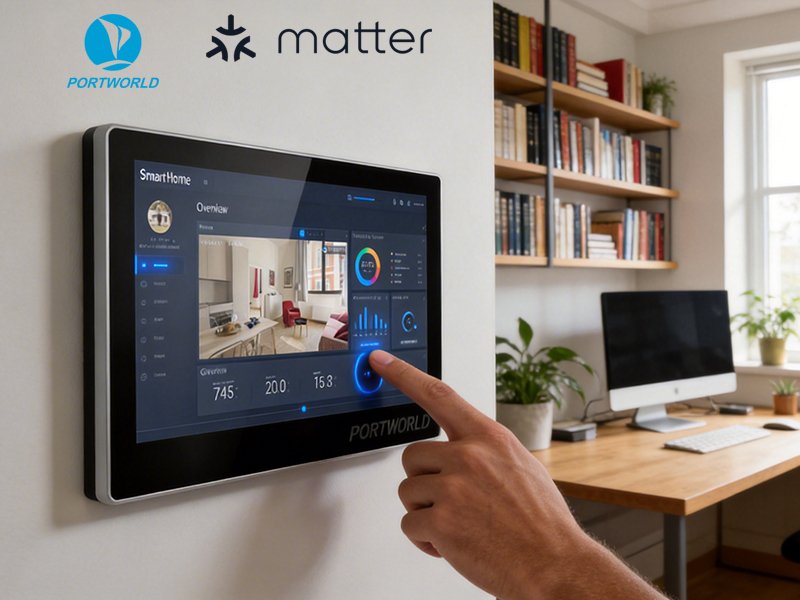
smart home control panel
Portworld Smart Touch Control Panel Solutions for Healthcare
Portworld offers customizable smart touch panels designed for healthcare and medical automation applications.
YC-SM43P ESP32-S3 Smart HMI Panel
Features:
- 4-inch touchscreen
- LVGL graphical interface
- RS485 communication
- Support for Ethernet and PoE
- Compact design for wall mounting
Suitable for:
- Room control interfaces
- IoT healthcare terminals
- Smart building systems
RK3566/RK3568 Android/Linux Smart Panels
Features:
- Support for Android/Linux
- High-performance processors
- Options for large touchscreens
- Connectivity through Ethernet, PoE, and RS485
- Development of custom software
Suitable for:
- Automation in hospital rooms
- Terminals for patient interaction
- Healthcare IoT systems
Customization of OEM/ODM Healthcare Control Panels
Medical projects frequently necessitate tailored solutions. Portworld offers support for:
- Custom Android/Linux firmware
- Healthcare user interface design
- Integration of communication protocols
- Customization of hardware interfaces
- Design of enclosures and mounting solutions
- Logo and branding personalization
A smart control panel situated in a hospital room serves as an advanced interface that connects patients, medical personnel, and building systems.
By integrating touchscreen controls, IoT connectivity, nurse call systems, and room automation, these smart panels enhance patient comfort, streamline hospital management, and foster the creation of more intelligent healthcare environments.