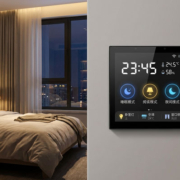
What Is Matter Protocol in Smart Home Automation?
Smart home technology is advancing quickly. Lighting, door locks, thermostats, curtains, and security systems are among the growing number of devices connecting to the internet. Yet ensuring that products from different manufacturers work together remains a widespread challenge.
Matter was created to address this issue by establishing a shared communication standard for smart home devices. It enables products from different brands to work across compatible smart home ecosystems, simplifying integration for consumers and manufacturers alike.
For smart home developers, Matter also opens up new opportunities to create compatible control panels, gateways, sensors, and automation systems.
What is Matter, how does it work, and why does it matter to the future of smart home automation?
1. What Is the Matter Protocol?
Matter is an open standard for smart home connectivity created by the Connectivity Standards Alliance (CSA). Formerly called Project CHIP (Connected Home over IP), Matter is designed to improve interoperability among smart home devices made by different manufacturers.
Matter is not simply a wireless technology like Wi-Fi, Bluetooth, or Zigbee. It is an application-layer protocol that runs on IP-based networks and specifies how compatible smart home devices communicate and exchange commands and information.
For instance, a Matter-enabled smart light, switch, and thermostat can work with supported smart home platforms without requiring a separate integration for each ecosystem.
Matter’s primary goals include:
- Cross-platform compatibility: Enable compatible devices to work across supported smart home ecosystems.
- Simplified setup: Let users commission devices with QR codes or numeric setup codes.
- Local communication: Enable local device control without routing every command through a cloud service.
- Secure connectivity: Provide standardized authentication and encrypted communications.
- Multi-Admin support: Let users share compatible devices across multiple supported smart home platforms.
Matter does not replace smart home platforms. Rather, it provides a shared communication standard for connecting compatible devices within those platforms.
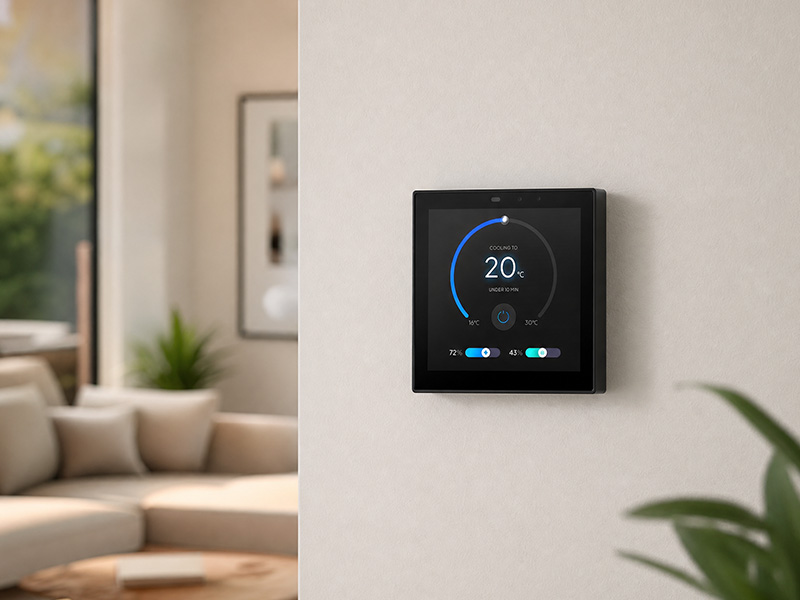
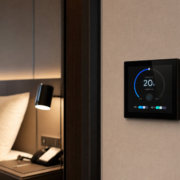
smart home control panel
2. How Does Matter Work in Smart Home Automation?
Matter relies on IP-based networking to let smart home devices communicate with controllers.
A typical Matter-enabled smart home system consists of three main components.
Matter-Compatible Devices
These are the connected products people use every day, such as:
- Smart lights and switches
- Smart plugs
- Door locks
- Thermostats
- Temperature and humidity sensors
- Curtain controllers
- Smart appliances
Each device must have compatible hardware and software to support the Matter standard.
Matter Controller
A Matter Controller manages compatible devices within a smart home ecosystem. It can commission devices, issue commands, and oversee communication among them.
The controller may be built into a smart speaker, home hub, or another supported smart home product.
Network Infrastructure
Matter devices communicate using supported networking technologies, including Wi-Fi, Thread, and Ethernet.
A typical setup process includes:
- Turning on a Matter-compatible device.
- Opening a compatible smart home app.
- Scanning the device’s QR code or entering its setup code.
- Completing the commissioning process.
- Connecting the device to the appropriate network.
- Controlling it through a compatible app or controller.
After connecting their devices, users can create automation routines that involve multiple products.
For example, activating a “leaving home” scene could automatically switch off the lights, close the curtains, and adjust the thermostat.
3. Which Communication Technologies Does Matter Use?
It is important to note that Matter does not replace Wi-Fi, Thread, or Ethernet. Rather, it operates on top of these networking technologies.
Matter over Wi-Fi
Wi-Fi is well suited to smart home devices that need relatively high data throughput or already support Wi-Fi connectivity.
Common applications include:
- Smart home control panels
- Smart appliances
- Connected lighting products
- Home automation displays
Devices that require regular access to an IP network
Matter over Wi-Fi enables compatible products to communicate over an existing wireless network.
Matter over Thread
Thread is a low-power, IPv6-based wireless mesh networking technology built for connected devices.
It is especially suitable for battery-powered sensors, smart locks, switches, and other low-power products.
Key benefits include:
- Low power consumption
- Mesh networking
- IPv6-based communication
- Flexible device connectivity
A Thread Border Router is typically needed to connect Thread devices to the broader home IP network, including devices using Wi-Fi or Ethernet.
Matter over Ethernet
Ethernet provides a wired network connection for Matter-compatible products.
It is well suited to fixed installations that need reliable network connectivity, including smart home gateways, control systems, and some building automation products.
Bluetooth Low Energy for Device Commissioning
Bluetooth Low Energy (BLE) is commonly used to set up Matter devices.
It enables a smartphone or setup device to communicate with a new Matter product and provide the information required to join a Wi-Fi or Thread network.
BLE is generally used for initial commissioning, rather than for routine Matter communication after setup.
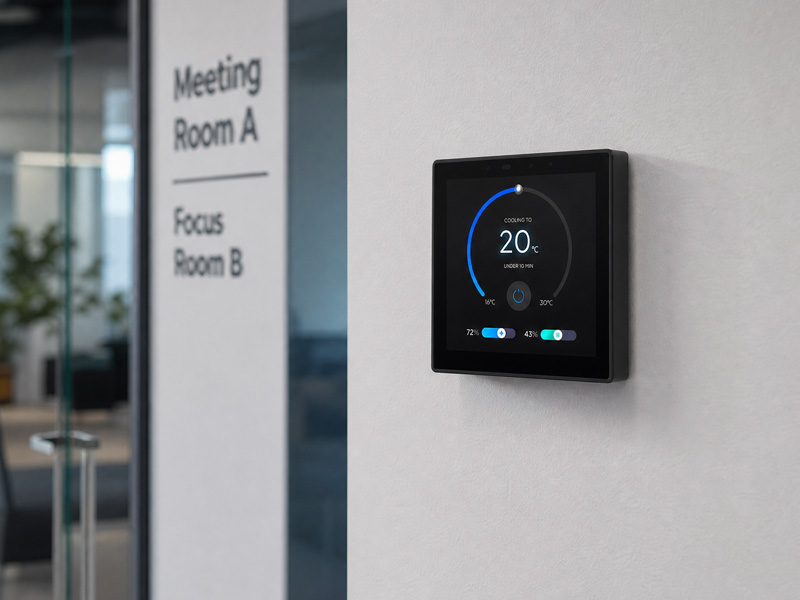
smart home control panel
4. Matter vs. Zigbee: What Is the Difference?
Matter and Zigbee are both important technologies in smart home automation, but they operate differently.
Zigbee is a wireless communication protocol based on IEEE 802.15.4 technology. Matter is an application-layer standard that operates over IP networking technologies, including Wi-Fi, Ethernet, and Thread.
| Feature | Matter | Zigbee |
|---|---|---|
| Protocol layer | Application layer | Network and application stack |
| Networking | IPv6-based | IEEE 802.15.4-based |
| Connectivity | Wi-Fi, Thread, Ethernet | IEEE 802.15.4 radio |
| Device integration | Matter controllers | Zigbee coordinators and gateways |
| Cross-platform support | Designed for interoperability across supported ecosystems | Depends on coordinator, gateway, and platform |
| Existing device support | Can integrate through compatible Matter Bridges | Works through compatible Zigbee networks |
Does Matter Replace Zigbee?
Not necessarily. Existing Zigbee devices can continue to work through their original coordinators and gateways. Compatible Matter Bridges can also make these devices available within Matter ecosystems.
For manufacturers, this creates opportunities to build gateways that connect existing Zigbee products to newer Matter-compatible systems.
5. What Are the Benefits of Matter for Smart Home Automation?
Better Compatibility Across Brands
One of Matter’s key advantages is its ability to reduce compatibility barriers between manufacturers.
Users can select compatible products from different brands without depending entirely on separate, proprietary integrations.
More Flexible Smart Home Ecosystems
Matter’s Multi-Admin feature lets users share compatible devices across multiple supported smart home platforms.
For example, a user may connect a Matter-compatible smart light to more than one smart home ecosystem, as long as the necessary controllers and platform support are available.
Local Device Communication
Matter supports local, IP-based communication, which reduces reliance on cloud services for supported device-control operations.
This can improve responsiveness and help preserve local control when the internet is unavailable. However, remote access and cloud-based features may still require an internet connection.
Simpler Product Integration
For manufacturers, adopting a shared standard can reduce the need to create separate integrations for multiple smart home ecosystems.
It also offers opportunities to develop products that can work with a wider range of compatible platforms.
6. Which Smart Home Devices Can Use Matter?
Matter supports an expanding range of smart home device categories.
Common examples include:
- Smart lights and switches
- Smart plugs and electrical devices
- Smart door locks
- Thermostats and HVAC controls
- Temperature and environmental sensors
- Window-covering controllers
- Smart home bridges and controllers
- Supported media and entertainment devices
The categories a device supports depend on the Matter specification version and the capabilities built into the product.
For developers, hardware choices should reflect the device’s intended purpose.
For instance, a smart sensor may prioritize low power use and Thread connectivity. A wall-mounted smart home control panel, by contrast, may need a touchscreen, Wi-Fi or Ethernet, and enough processing capacity to run its user interface.
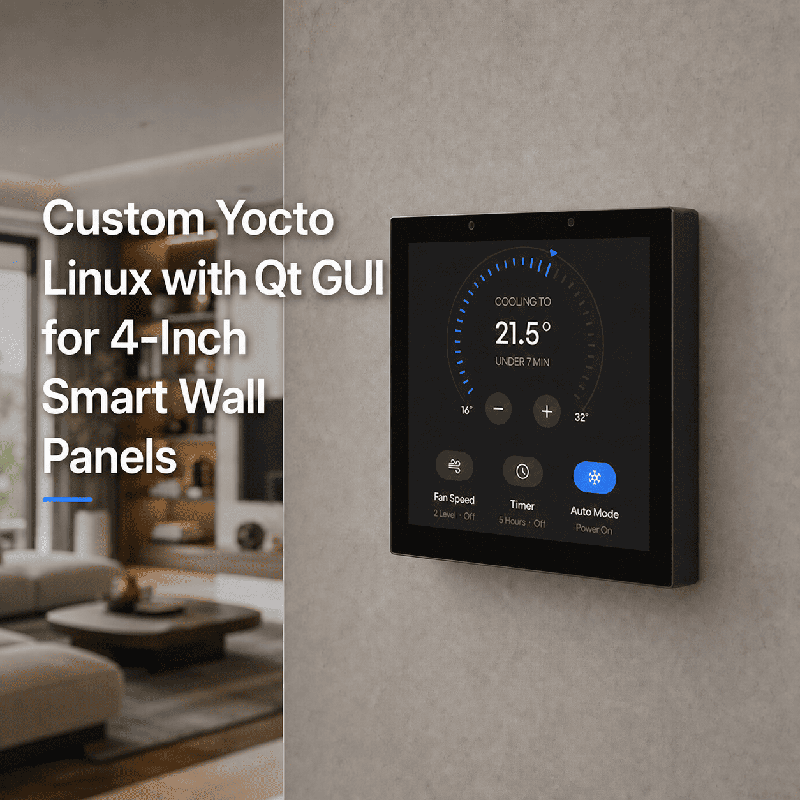
smart home control panel
7. What Hardware Is Required to Develop Matter-Compatible Smart Home Products?
Choosing the right hardware is a key part of developing Matter-compatible devices.
Requirements vary according to the communication protocol, device type, operating system, and software architecture.
ESP32-Based Embedded Platforms
ESP32 platforms may suit compact smart home products such as switches, sensors, and control interfaces.
Wireless capabilities vary across ESP32 chip models.
ESP32-S3
The ESP32-S3 supports Wi-Fi and Bluetooth LE. With the appropriate software implementation, it can support suitable Matter-over-Wi-Fi development. It does not, however, have a built-in IEEE 802.15.4 radio for Thread.
ESP32-C6
The ESP32-C6 supports Wi-Fi 6, Bluetooth LE, and IEEE 802.15.4. Depending on its software configuration, it is suitable for developing devices that use Matter over Wi-Fi or Thread.
ESP32-H2
The ESP32-H2 supports Bluetooth LE and IEEE 802.15.4, but not Wi-Fi. With a suitable network architecture, it can be used to develop Thread-based Matter devices.
ARM-Based Smart Home Control Panels
For touchscreen products, ARM-based platforms provide additional processing capacity for graphical interfaces, system applications, and communication services.
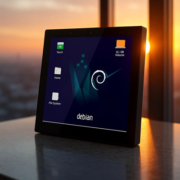
Portworld offers smart home control panels built on Rockchip platforms, including models intended for Android and Linux environments.
For instance, the YC-SM41P-KNX combines a touchscreen interface with options for KNX and Zigbee gateway integration. It can function as a central user interface in smart home and building automation projects.
Integrating Matter into this type of product requires suitable hardware, software development, and compatibility testing. Having a KNX or Zigbee interface alone does not make a device Matter-compatible.
Custom Motherboards and Embedded Solutions
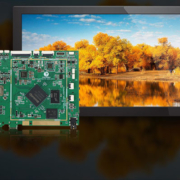
Manufacturers creating their own Matter-compatible products may need a custom motherboard.
Key considerations include:
- Wi-Fi, Ethernet, or Thread connectivity
- Processor performance and memory capacity
- Compatibility with the operating system and SDK
- Antenna and RF design
- Secure device provisioning
- Firmware updates and ongoing maintenance
- Matter certification requirements
Selecting appropriate hardware from the outset can simplify development and help prevent costly redesigns.
8. How Can Portworld Support Matter-Based Smart Home Development?
Portworld offers smart home control panels, embedded motherboards, and customized hardware solutions for smart home and building automation projects.
For manufacturers developing Matter-compatible products, Portworld can assist at various stages of product development.
Hardware Customization
Portworld provides customized motherboard and PCBA solutions, with options for processors, memory, storage, display interfaces, Ethernet, Wi-Fi, RS485, and other peripheral connections.
Embedded Software Development
Based on the selected hardware platform, Portworld can customize Android, Linux, and embedded firmware to meet project requirements.
Smart Home Protocol Integration
Portworld has experience with smart home technologies, including KNX, Zigbee, Modbus, and other communication protocols.
Matter integration can be assessed based on the required device architecture, radio hardware, software stack, and certification plan.
OEM/ODM Manufacturing
From prototype development to PCBA supply, CKD/SKD manufacturing, and finished-product customization, Portworld supports customers developing smart home terminals and embedded automation products.
The final Matter implementation and certification must be validated for the specific product configuration.
9. Is Matter the Future of Smart Home Automation?
Matter is an important step toward a more interoperable smart home industry.
As more manufacturers adopt the standard and more device categories become supported, Matter can simplify product integration and give users greater flexibility when choosing smart home devices.
However, Matter does not eliminate the need for good hardware design, reliable wireless connectivity, compatible controllers, or platform-specific software development.
For manufacturers, the opportunity is to build products with the right combination of hardware, connectivity, and software from the beginning.