How to Evaluate Industrial Touchscreen Monitor Manufacturers in China
China serves as a significant sourcing hub for industrial touchscreen monitors, embedded touch panel PCs, and tailored display hardware. For international equipment manufacturers, distributors, and system integrators, suppliers from China provide a blend of product variety, engineering assistance, and OEM/ODM manufacturing services.
Nonetheless, not all suppliers possess the same degree of technical expertise. Some may concentrate on assembling standard displays, while others are capable of developing bespoke hardware, integrating embedded computing platforms, and facilitating long-term production. To identify the appropriate manufacturer, it is essential to look beyond mere catalog specifications and unit pricing.
1. Assess the Manufacturer’s Engineering and Production Capabilities
The initial step is to comprehend what the supplier actually produces. A company might market industrial touch monitors without having control over the essential engineering and production processes. While this may not inherently be an issue, it can influence customization, quality assurance, lead times, and accountability when technical challenges arise.
Inquire whether the supplier has its own engineering team, product development capabilities, assembly facilities, and quality inspection protocols. If the project necessitates customized hardware, ascertain who is accountable for PCB design, enclosure development, touch integration, and software adaptation.
Factory images and presentations can be beneficial; however, more compelling evidence consists of a live factory tour, documentation of the production process, records of sample inspections, and a detailed account of which operations are conducted in-house versus those that are outsourced.
In the context of OEM projects, the manufacturer’s capability to manage mechanical, electronic, and software development often holds greater significance than the breadth of its product catalog.
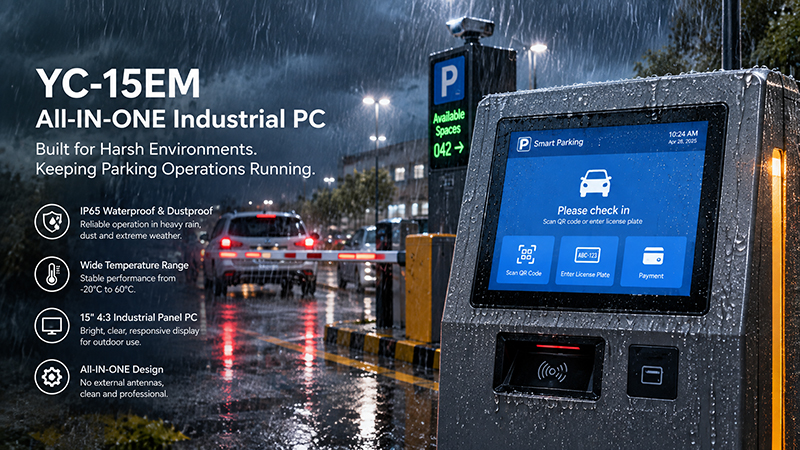
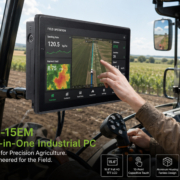
YC-15EM touch screen solutions
2. Assess Product Quality and Reliability Testing
Industrial touchscreen monitors may function for extended durations in conditions characterized by heat, vibration, dust, moisture, or electrical interference. Consequently, product quality is contingent upon the selection of components, consistency in assembly, functional testing, and appropriateness for the designated environment.
Inquire with the manufacturer regarding their methods for inspecting incoming components, evaluating display performance, confirming touch accuracy, testing interfaces, and managing defective units. Depending on the application, pertinent validation may encompass prolonged operation, temperature assessments, vibration evaluations, ingress protection testing, or electromagnetic compatibility assessments.
Avoid relying on vague assertions such as “industrial grade” or “high reliability.” Instead, request the relevant test reports and acceptance criteria specific to the model and configuration in question.
Additionally, it is crucial to verify whether environmental ratings pertain to the entire monitor or merely a portion of it. For instance, an IP65 rating for the front panel does not necessarily imply that the entire device is safeguarded against water ingress.
3. Verify Certifications and Market Compliance
The certifications necessary for an industrial touchscreen monitor are contingent upon the target market, product design, power configuration, and intended use.
Prior to placing an order, request the pertinent certificates and test reports, ensuring they pertain to the specific product model and configuration. Typical requirements may encompass CE-related conformity documentation for applicable European standards, FCC compliance for relevant products in the United States, and RoHS documentation where necessary. Additional approvals may be required for other markets or applications.
ISO 9001 can serve as evidence that a company maintains a formal quality management system; however, company-level certification does not imply that every product automatically complies with all regulatory requirements.
If the monitor is intended for use in a hazardous industrial environment, it is essential to verify the necessary hazardous-area approval separately. It should not be assumed that standard industrial touchscreens are suitable for explosive atmospheres without the appropriate certification.
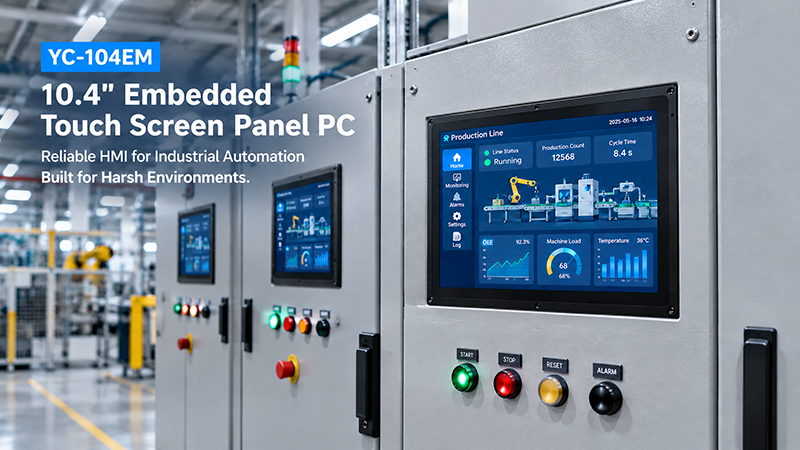
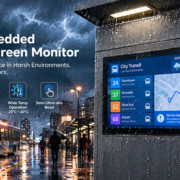
YC-104EM touch screen solutions
4. Evaluate OEM/ODM and Hardware Customization Capabilities
For companies creating their own industrial equipment, the ability to customize is a significant consideration when selecting a Chinese manufacturer.
An effective OEM/ODM partner should be capable of evaluating requirements such as:
- Screen dimensions, resolution, brightness, and touch technology.
- Housing specifications, mounting hole placements, enclosure materials, and connector arrangements.
- Display and communication interfaces, including HDMI, USB, Ethernet, or serial connections where applicable.
- PCB/PCBA development and integration of embedded motherboards.
- Configuration of the operating system and software support as permitted by the chosen hardware.
- Custom branding, product labeling, packaging, and documentation.
- Request the supplier to clarify which options are already available with a standard model and which modifications will necessitate new engineering or tooling. This clarification aids in establishing realistic development costs, minimum order quantities, and sample lead times.
- For a new design, seek an engineering review prior to committing to production. A validated prototype should be evaluated against the agreed specifications before commencing mass production.
5. Verify Technical Compatibility and Software Support
An industrial touchscreen monitor constitutes only one component of a broader system. The display may need to interface with a PLC, industrial computer, embedded motherboard, or HMI application.
Prior to selecting a supplier, ascertain whether a standalone monitor or a complete industrial panel PC is required. A standalone monitor typically relies on an external computer, whereas a panel PC incorporates computing hardware and executes the necessary software directly.
Examine the supported interfaces, signal types, operating systems, drivers, power requirements, and any essential software development resources. If the project utilizes Windows, Linux, Ubuntu, Debian, or Android, confirm compatibility with the specific hardware configuration instead of depending on a general platform list.
For tailored embedded products, having access to technical documentation, BSP/SDK support, and engineering communication can significantly facilitate integration.
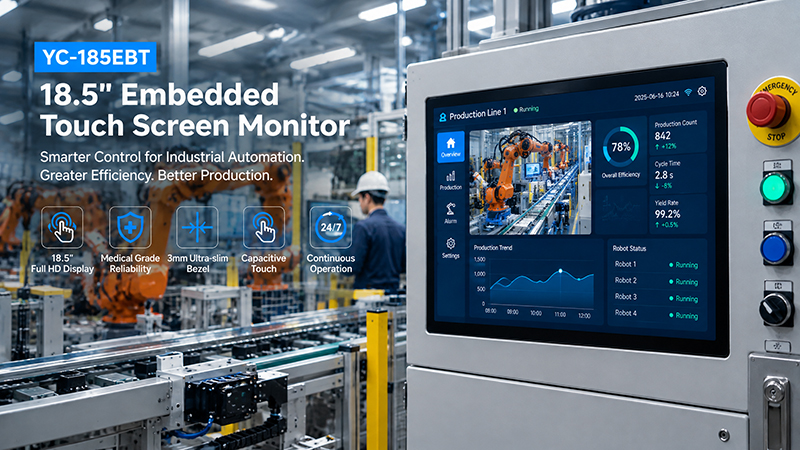
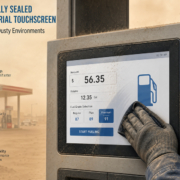
YC-185EBT industrial touch screen solution
6. Evaluate Production Capacity and Long-Term Supply
A manufacturer capable of producing a successful prototype must also ensure consistent quality in subsequent orders.
Inquire about production planning, sourcing of components, inspection protocols, lead times, and the management of engineering modifications. If the project is expected to extend over several years, it is essential to discuss component lifecycle management, availability of replacement parts, and the approval process for substitutions.
While a low minimum order quantity may be advantageous during the product development phase, stable bulk production capacity becomes increasingly critical post-deployment. The supplier should be prepared to articulate how it navigates the transition from prototype to pilot production and subsequently to mass manufacturing.
For international buyers, it is also important to clarify details regarding export packaging, shipping logistics, warranty provisions, technical assistance, and the procedures for addressing defective products.
7. Evaluate Total Expenses, Not Merely Unit Pricing
The lowest bid does not necessarily represent the most cost-effective choice. A comprehensive project budget should take into account:
- Unit pricing along with shipping expenses.
- Engineering and tooling charges.
- Prototype creation and validation processes.
- Certification or any additional testing costs as necessary.
- Installation and system integration services.
- Warranty provisions, replacement components, and technical assistance.
- Possible expenses related to product modifications or production delays.
A supplier offering superior engineering support may mitigate integration issues and rework, even if their initial unit price is elevated.
To ensure a fair comparison among suppliers, provide each manufacturer with identical technical specifications and request a quotation that distinctly outlines standard product costs alongside customization, tooling, testing, and other project-related expenses.
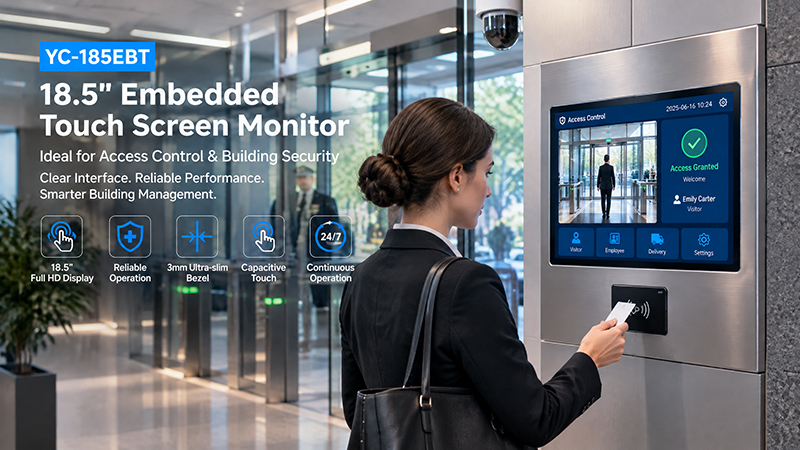
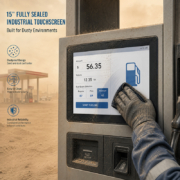
YC-185EBT industrial touch screen solution5
Portworld: Industrial Touchscreen Solutions and OEM/ODM Services
Portworld, also known as Sunworld Technology Limited, is a provider of touchscreen and embedded hardware solutions established in 2008. Its range of products encompasses industrial touch monitors, embedded touch panel PCs, industrial mini PCs, digital signage, and embedded motherboards. Additionally, the company offers OEM/ODM services tailored for businesses seeking to develop customized industrial display and embedded hardware solutions.
Key product offerings include:
Industrial touch monitors: Models such as YC-215EBT and various other embedded display options designed for industrial machinery and operator interfaces.
Embedded touch panel PCs: The YC-104EM, YC-17EM, and YC-215EM series cater to applications that necessitate touchscreen functionality combined with integrated computing capabilities.
Industrial mini PCs: The YC-I720, YC-T620, and YC-T621 models are suitable for projects that require a distinct computing platform.
Embedded motherboards and SoMs: The YC-P3566, YC-P3576, YC-P6802, and YC-Core3588 are available for the development of customized embedded systems and equipment integration.
Portworld’s OEM/ODM services encompass hardware and mechanical customization, PCB/PCBA development, integration of embedded motherboards, operating system personalization, BSP/SDK support, branding, and packaging solutions. Furthermore, the company provides CKD/SKD options for projects that necessitate component-level or partial assembly along with localized integration.
These features can be advantageous for purchasers who require more than a conventional monitor, especially when it is necessary to synchronize display hardware, embedded computing, and software specifications within a single project.
The specifications and customization options available are contingent upon the chosen model. Buyers are advised to verify the precise configuration, relevant certifications, testing prerequisites, production timeline, and long-term supply agreements with Portworld prior to placing an order.
For additional details, please refer to the Portworld product portfolio or investigate its industrial and OEM/ODM solutions.
A Practical Checklist Before Selecting a Chinese Manufacturer
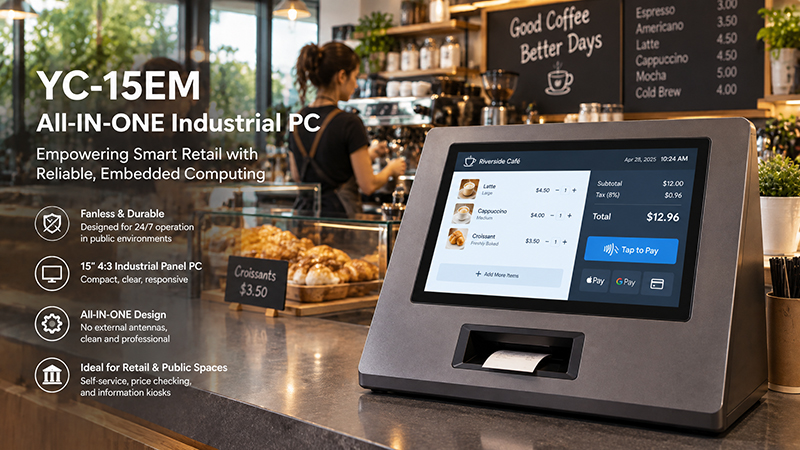
YC-15EM touch screen solution
Prior to approving a supplier, ensure that you can satisfactorily address the following inquiries:
- Can the supplier showcase its engineering and manufacturing capabilities?
- Can it furnish a functional sample along with pertinent testing documentation?
- Do the necessary certifications encompass the specific product configuration?
- Is it possible to customize the display, casing, interfaces, or embedded hardware?
- Is the suggested hardware compatible with your operating system and host equipment?
- Are the minimum order quantities, tooling costs, lead times, and payment conditions clearly defined?
- Does the supplier have a structured warranty and after-sales support system?
- Can it ensure product uniformity and component availability for subsequent orders?
Evaluating industrial touchscreen monitor manufacturers in China is ultimately about verifying technical capability, product quality, customization support, and long-term supply reliability. By comparing suppliers against the same requirements and validating a sample before bulk production, buyers can make more informed sourcing decisions and reduce the risk of costly problems after deployment.