How Does OEM Manufacturing Work for Smart Home Control Panels?
For smart home brands, distributors, and building automation companies, OEM manufacturing provides an opportunity to introduce products under their own brand identity without establishing a complete manufacturing infrastructure. Rather than making substantial independent investments in hardware engineering, component procurement, assembly operations, and production quality assurance, organizations can collaborate with a qualified manufacturer to create or manufacture smart home control panels tailored to their specific needs.
Nevertheless, OEM manufacturing encompasses considerably more than applying a brand logo to a touchscreen interface. The comprehensive process may encompass product specification development, hardware evaluation and selection, software customization, mechanical design modifications, prototype assessment, manufacturing execution, and quality control procedures. Examining each component of this process enables organizations to optimize expenditures, mitigate development uncertainties, and establish readiness for sustained product availability.
1. Establish Product Specifications
Every effective OEM initiative commences with comprehensive clarity regarding the intended use case.
A smart home control panel designated for illumination and window covering management may require only a space-efficient display, an appropriate embedded processing unit, and fundamental network communication capabilities. A panel engineered for hospitality environments, high-end residential properties, or integrated building systems may demand a more sophisticated interface design, video communication features, KNX protocol compatibility, Power over Ethernet support, or purpose-built applications.
Prior to engaging with a manufacturing partner, organizations must determine critical product specifications, encompassing display dimensions, computational capacity, software platform, storage capacity, connectivity options, physical footprint requirements, and budgeted manufacturing cost.
Equally significant is the specification of the intended customer segment, anticipated production volume, mandatory compliance standards, and expected product longevity. These considerations directly impact component decisions, development requirements, manufacturing logistics, and ongoing service delivery.
The more thorough the preliminary specification documentation, the more effectively the manufacturer can propose an existing solution framework or evaluate whether custom engineering efforts are warranted.
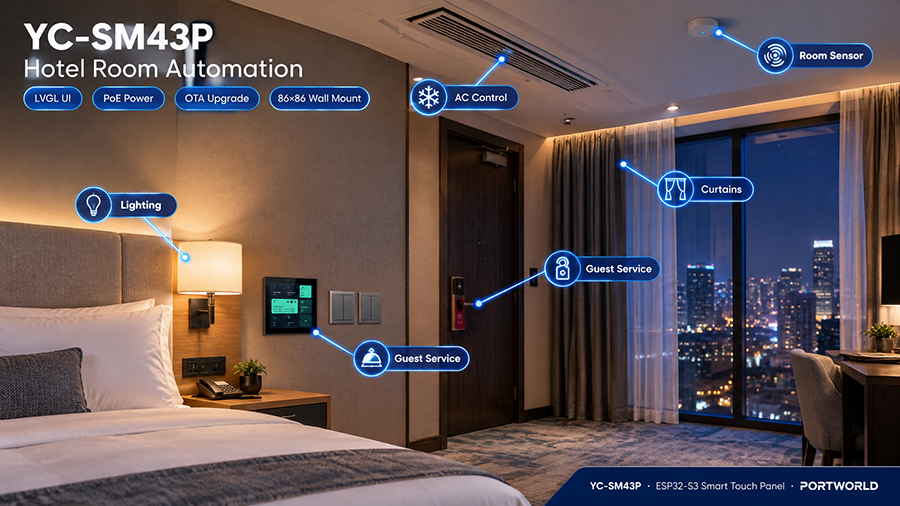
YC-SM43P ESP32 4″ Smart Touch Panel
2. Selecting Between an Established Platform and Bespoke Development
OEM initiatives do not invariably necessitate the creation of an entirely new product.
Should an existing smart home control panel satisfy the primary technical specifications, the purchaser may require only modifications to visual identity, packaging, localization settings, startup animation, or system configuration. This methodology can minimize engineering efforts and facilitate faster market entry.
When conventional hardware proves inadequate for meeting specifications, a more comprehensive undertaking may be warranted. Enhancement efforts may encompass an alternative processor, revised PCBA design, supplementary connectivity options, reimagined housing, or a novel software framework.
For instance, a smart home manufacturer may seek a 5-inch panel featuring a specific enclosure aesthetic and customized Android interface. An existing panel could serve as the hardware base, with the manufacturer refining designated components according to brand requirements.
For more intricate applications, including a control panel demanding particular hardware configuration or compatibility with building management infrastructure, the technical team must evaluate both hardware and software components prior to design approval.
Purchasers should differentiate between OEM manufacturing utilizing an established design and ODM engineering wherein the manufacturer assumes expanded responsibility for product design. The specific obligations are contingent upon the contractual arrangement.
3. Establish the Hardware and PCBA Configuration
Following confirmation of product requirements, the hardware configuration can be established.
The PCBA may integrate the primary processor, RAM, storage, power management circuits, display and touch interfaces, Ethernet, Wi-Fi, Bluetooth, and additional communication interfaces. Depending on the application requirements, the design may also necessitate RS485, PoE circuitry, audio components, or protocol-specific hardware.
These components must function cohesively within the available enclosure and power budget constraints. A processor adequate for a basic room controller may prove insufficient for a panel executing complex graphics, video intercom software, and multiple concurrent background applications.
The engineering team should additionally validate display compatibility, connector placement, thermal performance, power consumption specifications, and the designated operating system.
For OEM purchasers, it is essential to obtain approval of the technical specification and establish clear delineation of responsibility for hardware design, component selection, engineering modifications, and technical documentation prior to advancing to the subsequent stage.
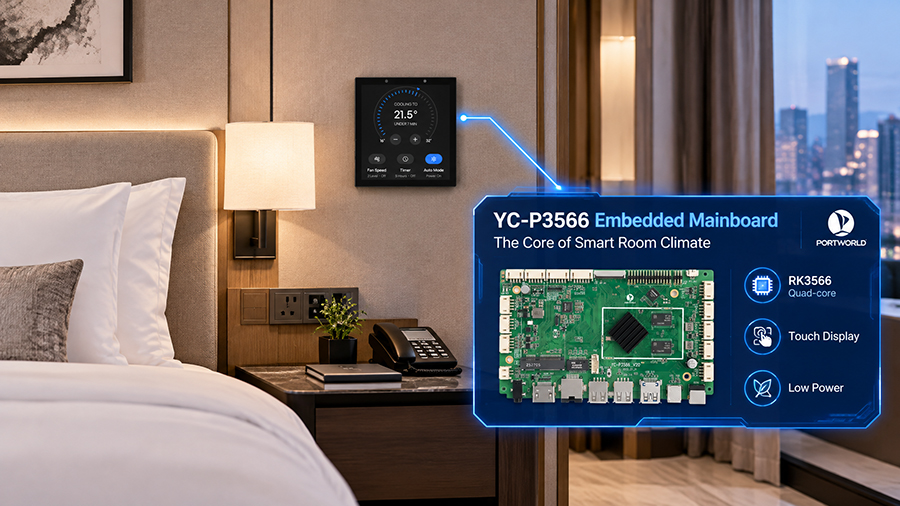
YC-P3566-smart home control panel
4. Customize the Operating System and Software
Hardware specifications alone do not establish the complete user experience. The software configuration must correspondingly align with the product’s designated purposes.
Based on the chosen platform, software implementation may encompass operating system setup, driver configuration, branded initialization screens, pre-loaded applications, scheduled application launches, regional language adaptation, and tailored graphical interfaces.
Interoperability with external intelligent home automation systems represents a critical factor. Connectivity may require KNX, Zigbee, Modbus, MQTT, BACnet, Matter, or proprietary solutions, contingent upon the specific project framework.
The manufacturer and purchaser must establish consensus regarding which capabilities fall within the development mandate and which are furnished by the purchaser or an external software vendor.
This consideration becomes especially significant when the control interface must execute a client’s proprietary software. Establish clarity on the necessary SDK, system distribution, technical specifications, software rights management, and technical assistance prior to finalizing the design.
5. Construct and Assess Engineering Prototypes
Following completion of the preliminary hardware and software setup, engineering prototypes may be manufactured for assessment purposes.
This phase aims to validate that the proposed solution functions appropriately within the designated application prior to initiating large-scale manufacturing.
Procurement teams should evaluate the physical touchscreen interface, visual display performance, software functionality, wireless and wired connectivity, communication protocols, physical installation specifications, and integration compatibility with the designated smart home infrastructure.
Should the panel incorporate Power over Ethernet technology, confirm that the power delivery mechanism aligns with the specified network infrastructure. In cases where integration with a building management system is required, conduct functional testing using actual system components or control gateways whenever feasible.
All identified deficiencies must be systematically documented and remedied prior to authorization of the production-ready configuration. For initiatives involving novel mechanical architectures or substantial hardware modifications, supplementary prototype development cycles may be warranted.
A functional prototype represents a critical achievement; however, it must not be presumed to automatically demonstrate readiness for high-volume production.
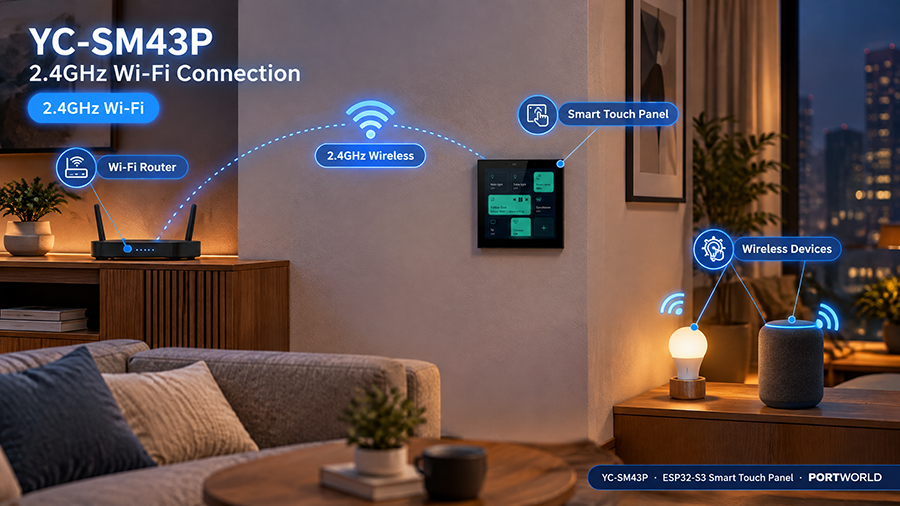
YC-SM43P smart home control panel
6. Validate the Design and Prepare for Production
Prior to initiating mass production, both the manufacturer and buyer must verify that the product satisfies all agreed-upon technical specifications and quality standards.
The scope of validation may encompass functional performance, power stability, thermal characteristics, wireless connectivity, electromagnetic compatibility, electrical safety, and any other pertinent requirements.
Certification obligations are contingent upon the target market and product specifications. Buyers should establish early which party will assume responsibility for testing, documentation, and certification expenses.
The manufacturer must additionally prepare the production framework, encompassing approved component specifications, assembly procedures, functional testing protocols, packaging specifications, and quality assurance inspection benchmarks.
For a bespoke product, this phase holds particular significance because modifications to the display, wireless module, power supply, enclosure, or any other component may influence compatibility or regulatory compliance.
7. Transition to Pilot Production and Full-Scale Manufacturing
Following design approval, the initiative progresses into the production preparation phase.
Where applicable, a pilot production run serves to validate that the approved product can be reliably manufactured and evaluated through the designated manufacturing methodology. This phase can identify potential complications related to component procurement, assembly procedures, software configuration, quality assurance protocols, or complete product assembly.
Upon resolution of any identified concerns, the manufacturing partner may commence mass production in accordance with the negotiated order volume and delivery timeline.
Production quality assurance protocols may encompass supplier material verification, printed circuit board assembly inspection, firmware installation, performance validation, housing examination, complete assembly confirmation, and final delivery inspections.
Procurement teams should verify which quality assessments are encompassed and establish the performance benchmarks to be applied. They should additionally establish protocols for defect documentation and remediation, manage product modification procedures, and determine whether quality documentation or representative test samples will be furnished.
8. Branding, Packaging, and Delivery
The concluding phase encompasses the preparation of the intelligent home control panel for market introduction and distribution network placement.
Project-specific customization may encompass logo application, proprietary packaging design, product identification labels, instructional documentation, region-specific materials, and supplementary components.
Purchasers must authorize design elements, product designations, identification markings, packaging parameters, and logistics coordination prior to finalizing the manufacturing order.
For cross-border initiatives, it remains essential to establish the applicable transportation conditions, regulatory compliance documentation, delivery timeline, and accountability regarding location-specific obligations.
A comprehensive packaging and delivery specification framework facilitates the assurance that the completed product achieves distribution-ready status, thereby eliminating the necessity for supplementary processing upon receipt.
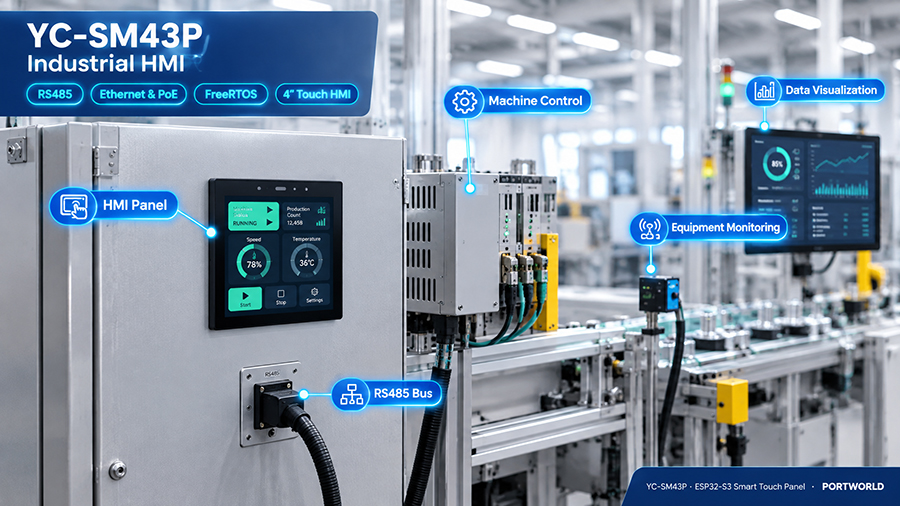
YC-SM43P ESP32 4″ Smart Touch Panel
9. Strategy for Recurring Orders and Sustained Manufacturer Partnership
OEM manufacturing extends beyond the initial product delivery from the manufacturing facility. Smart home control panels frequently serve multiple residential communities, hospitality establishments, or commercial facilities, making product uniformity and sustained component availability critical considerations.
Procurement teams should establish clear communication with manufacturers regarding component sourcing, replacement components, software enhancements, product modifications, and anticipated timelines for subsequent orders.
Documenting the validated hardware specifications, component inventory list, software version designation, and quality assurance protocols proves beneficial for verifying whether subsequent orders maintain consistency with the original product or incorporate approved modifications.
For initiatives requiring proprietary software or hardware development, contractual agreements must address ownership of intellectual property, access to programming code where relevant, data protection obligations, manufacturing equipment ownership, and accountability for ongoing technical advancement.
YC-P3566-smart home control panel
These contractual frameworks facilitate a more stable and predictable manufacturing partnership as the buyer’s enterprise expands.
Portworld specializes in the manufacture and distribution of smart home control panels, offering comprehensive OEM/ODM customization services tailored to qualifying projects. Depending on the chosen platform and specific requirements, engagements may encompass hardware configuration, PCBA development, operating system customization, UI/UX design, communication interfaces, mechanical customization, and production support.
The available product portfolio includes multiple screen sizes and configurations, including the 4-inch YC-SM41P, circular 5-inch YC-P5, 5.5-inch YC-SM55P, and 10-inch YC-SM10P. Specifications and customization capabilities differ across models and configurations; therefore, purchasers should verify the particular details necessary for their intended application.
For organizations initiating a new project, the optimal strategy involves submitting a comprehensive written specification and determining which requirements can be fulfilled by an existing platform. The manufacturer can subsequently evaluate the extent of customization required, prototype development, validation procedures, minimum order quantity, production expenses, and projected delivery timeline.
OEM manufacturing achieves optimal results when product specifications, engineering responsibilities, quality assurance standards, and commercial conditions are established and agreed upon prior to commencing mass production. Through a well-structured framework, smart home brands can create distinctive products that embody their brand identity while leveraging an established manufacturing partner to facilitate production operations and ensure sustained supply chain continuity.