What Should an OEM Buyer Know Before Ordering Smart Home Control Panels?
Smart home control panels are becoming an important part of modern residential and commercial building automation. From lighting and curtain control to HVAC adjustment, security monitoring, and centralized device management, these panels provide users with a convenient interface for managing connected systems. For brands, system integrators, and smart home solution providers, choosing an OEM smart home control panel involves more than selecting a screen size or processor. Hardware compatibility, software customization, communication protocols, product design, and long-term supply all affect the success of the final product.
Before placing an OEM order, buyers should clarify their application requirements and confirm that the manufacturer can support both product customization and stable production.
1. Define the Application and User Requirements
The first step is to determine where the control panel will be installed and what it needs to control. A panel designed for a residential lighting system may have very different requirements from one used in a hotel room, apartment building, office, or integrated building automation project.
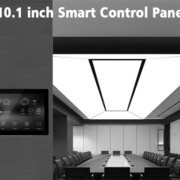
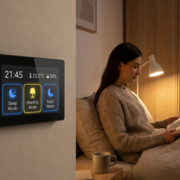
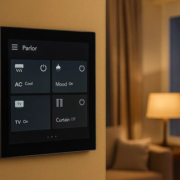
For example, a compact 4-inch or 5-inch panel may be suitable for bedside lighting, curtain control, or room-level automation. A larger 10-inch panel may be more appropriate for centralized control, scene selection, floor plans, and richer graphical interfaces.
Buyers should also consider the installation environment, expected operating hours, screen brightness, touch performance, mounting method, and whether the panel needs to operate continuously. Defining these requirements early helps the OEM manufacturer recommend an appropriate hardware platform rather than overdesigning or underconfiguring the product.
2. Select an Appropriate Processor, Memory Configuration, and Operating System
The underlying hardware infrastructure significantly influences the operational efficiency of a smart home control panel, including its user interface responsiveness, application performance, and service connectivity.
Android proves advantageous for applications demanding sophisticated graphical interfaces, integration with third-party applications, multimedia capabilities, or adaptable application development approaches. Linux may represent a more suitable option for particular embedded system implementations that emphasize a tailored software configuration, optimized resource allocation, or adherence to a particular development ecosystem. For basic control operations, microcontroller-based solutions warrant consideration as well.
Processor specifications, RAM capacity, and storage volume must be determined based on anticipated operational demands. A control panel executing straightforward lighting management functions operates under fundamentally different computational requirements than one executing video intercom systems, managing multiple information displays, or executing sophisticated automation protocols.
Original equipment manufacturers should validate the processor specification, memory and storage parameters, operating system release version, supported connectivity options, and manufacturer support availability prior to design authorization. Additionally, they should verify whether the manufacturer can furnish the requisite software development kit, system firmware images, comprehensive technical specifications, and implementation support services.
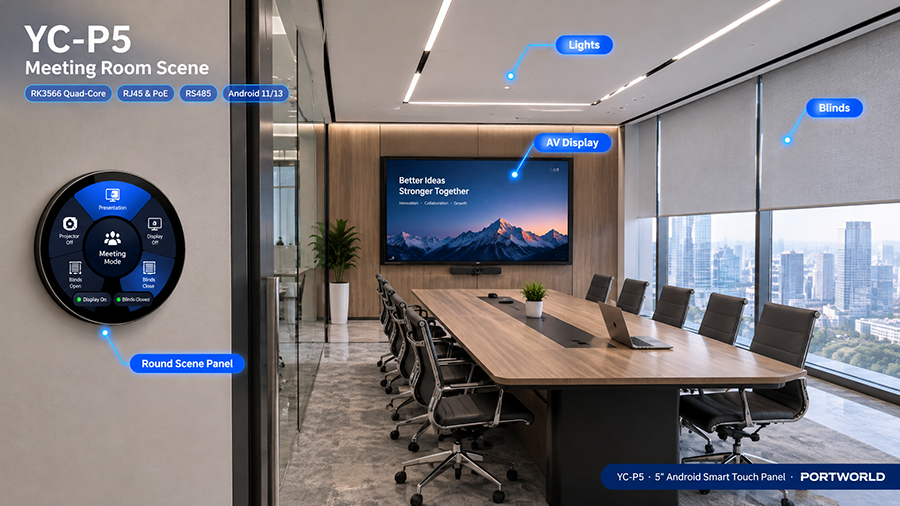
YC-P5 smart home control panelYC-P5 smart home control panel
3. Verify Communication Protocols and System Compatibility
A smart home control panel demonstrates value only when it can effectively interface with the devices and automation systems integrated into the project.
Based on the specific application requirements, necessary interfaces and protocols may encompass Wi-Fi, Bluetooth, Ethernet, RS485, KNX, Zigbee, Modbus, MQTT, BACnet, or Matter. Each of these technologies fulfills distinct functions, and not all panels inherently support every protocol as a standard feature.
For instance, a project employing KNX-based building automation may necessitate a compatible KNX interface or gateway. A system leveraging a cloud-connected smart home platform may require Wi-Fi or Ethernet connectivity alongside integration with the corresponding software services.
Procurement professionals should furnish the OEM manufacturer with comprehensive documentation detailing target devices, protocols, gateways, and third-party platforms. Furthermore, it remains essential to differentiate between possessing a physical interface and maintaining complete protocol support. The availability of an RS485 port, for example, does not inherently guarantee that the panel accommodates every RS485-based device or communication protocol.
Establishing compatibility and clarifying integration responsibilities prior to purchase can mitigate development timelines and prevent expensive system redesigns.
4. Coordinate Hardware and Software Customization Concurrently
Original Equipment Manufacturer (OEM) customization frequently extends considerably beyond incorporating a corporate brand mark. Subject to the manufacturer’s technical capabilities, purchasers have the opportunity to customize the physical housing, control panel interface, display dimensions, computational processor, storage capacity, connectivity ports, system platform, startup visual sequence, graphical user interface, factory-installed software packages, and initialization procedures.
Software specifications must be evaluated concurrently with hardware specifications. A tailored interface may require the capability to present illumination configurations, ambient temperature readings, window covering status, alarm system conditions, or consumption metrics. The control panel may additionally require automatic launching of a specific application upon system initialization or integration with a client’s proprietary smart home ecosystem.
Portworld delivers OEM/ODM customization services for intelligent home management interfaces, with available options contingent upon the chosen model and specific project parameters. Purchasers must establish which features constitute standard offerings, which necessitate specialized engineering work, and which modifications may influence manufacturing processes, regulatory approval, financial investment, or project timeline.
A comprehensive written specification document proves invaluable when designing multiple product configurations intended for distinct geographic markets or individual customer implementations.
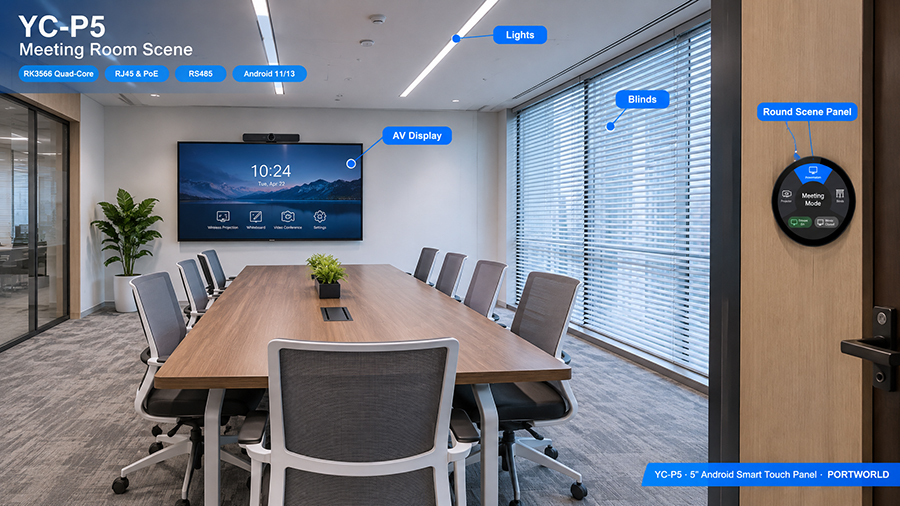
YC-P5 smart home control panel
5. Assess Display Dimensions, Visual Presentation, and Deployment Methodology
The screen configuration and housing framework significantly impact both the end-user experience and the comprehensive aesthetic of an intelligent residential system.
Display dimensions must be determined based on the accessible wall area, distance from which users will view the interface, layout of control functions, and the intended application. Circular displays may be appropriate for distinctive room-management interfaces, whereas traditional square or rectangular configurations can provide expanded area for comprehensive dashboards and numerous interactive controls.
Additional specifications requiring verification encompass pixel density, luminosity levels, tactile input methodology, angular visibility range, frame thickness and design, housing composition, finish options, attachment specifications, and connector positioning. For systems utilizing Power over Ethernet technology, stakeholders must confirm that both the display unit and telecommunications infrastructure are compatible with the necessary PoE specification and electrical capacity requirements.
Should the control interface require integration with an existing wall cavity, fastening apparatus, or structural framework, technical drawings and precise measurements must be furnished prior to the manufacturer’s design finalization. This consideration becomes particularly critical for bespoke display facings and implementations demanding visual uniformity throughout an entire product portfolio.
6. Evaluate Reliability, Testing, and Certification Requirements
Smart home control panels function as permanent installations and are designed to maintain continuous operation over extended timeframes. Consequently, purchasers must examine the manufacturer’s quality assurance protocols, manufacturing testing procedures, and environmental suitability support.
Pertinent inquiries should address whether the panel undergoes functional validation, display screen assessment, system interface evaluation, thermal stress testing where appropriate, and verification of network performance and electrical stability. Purchasers must additionally verify the specified operating temperature parameters and any pertinent environmental specifications.
Certification requirements warrant early discussion, particularly when products are distributed across multiple countries or regions. Based on the target market and product specifications, compliance may encompass electrical safety standards, electromagnetic compatibility, wireless transmission regulations, or other mandated certifications. Current certifications must be validated for applicability to the specific model and configuration; certification for a single variant does not necessarily extend to all customized iterations.
Evaluation of a prototype or pre-production sample facilitates design verification prior to initiating full-scale manufacturing.
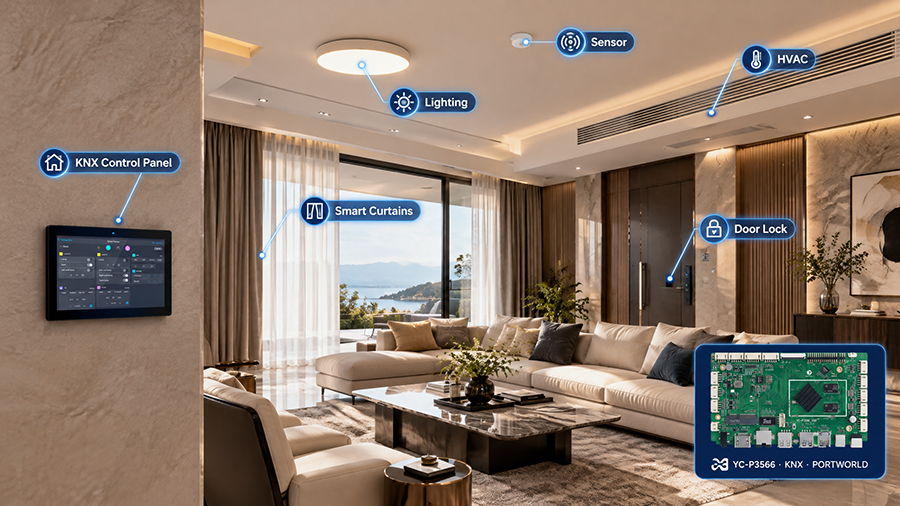
YC-P3566 KNX SMart home control panel
7. Comprehend Minimum Order Quantities, Sample Expenses, Production Timelines, and Manufacturing Capacity
OEM purchasers must establish commercial parameters prior to finalizing any purchase commitment. These parameters encompass the minimum order quantity (MOQ), sample pricing, tooling expenditures, engineering charges, payment conditions, production lead time, and delivery logistics.
A conventional product featuring a logo modification may necessitate a distinct MOQ and lead time compared to a panel requiring an innovative enclosure, bespoke PCBA, or comprehensive software engineering. Purchasers should request that the manufacturer differentiate between singular development expenditures and recurring per-unit expenses wherever feasible.
Additionally, it is prudent to evaluate the manufacturer’s capacity to accommodate subsequent orders, component replacements, and sustained product accessibility. For initiatives requiring deployment across numerous facilities or phased market introduction, uniformity across successive production runs proves particularly critical.
Rather than evaluating suppliers exclusively on per-unit pricing, purchasers should assess the comprehensive cost of ownership, encompassing engineering services, system integration, regulatory compliance, ongoing support, and prospective supply chain considerations.
8. Establish Clear Technical Support Parameters and Deliverable Ownership
Technical support becomes essential when the control panel must integrate with a customer’s proprietary application, gateway infrastructure, or building management system.
Prior to purchase, customers should define which engineering resources will be provided. Deliverables may encompass hardware specifications, mechanical drawings, SDKs, software images, interface documentation, sample code, or support with application integration, contingent upon the contractual terms.
For bespoke implementations, it is equally critical to establish agreements regarding intellectual property rights, software licensing terms, source-code access, confidentiality obligations, and accountability for ongoing maintenance. Such provisions should be formalized in writing rather than left to informal understanding.
A vendor capable of supporting both hardware development and software integration may streamline coordination efforts across multiple suppliers, particularly when the initiative necessitates modifications to both the PCBA and the application layer.
9. Obtain Approval of a Representative Sample Prior to Mass Production
A sample serves as an opportunity to authenticate the actual product rather than depending solely on specification documentation.
During the sample evaluation phase, purchasers should assess the display performance and tactile responsiveness, initialization duration, application execution speed, data transmission pathways, network reliability, assembly alignment, and interoperability with the designated smart home platform. Should the initiative necessitate a proprietary user interface, evaluate the functional application directly on the designated equipment.
Any identified deficiencies must be documented and remedied before authorizing the production version. Purchasers should additionally define the procedures through which modifications to hardware, firmware, constituent parts, or structural design will be examined and sanctioned in subsequent manufacturing cycles.
For intricate undertakings, it may prove advantageous to distinguish between technical validation and formal production sample authorization.
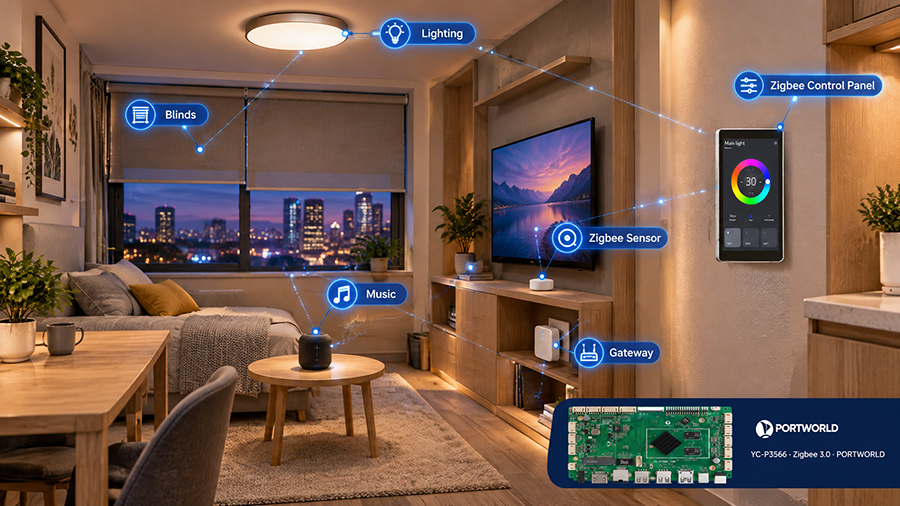
YC-P3566 Zigbee Smart home control panel
Selecting an Appropriate OEM Smart Home Control Panel Manufacturer
An optimal OEM partner should demonstrate comprehensive understanding of the entire project scope—extending beyond merely providing a touchscreen component. Organizations benefit significantly from collaborating with a manufacturer capable of assessing the processor architecture, display technology, communication protocols, housing design, operating system framework, and manufacturing specifications as a unified, integrated system.
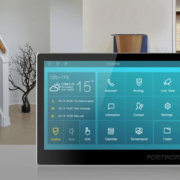
Portworld delivers smart home control panels across multiple dimensions and hardware specifications, offering OEM/ODM solutions tailored to qualifying initiatives. The available product portfolio encompasses space-efficient panels including the compact 4-inch YC-SM41P, the circular 5-inch YC-P5, the 5.5-inch YC-SM55P, and the larger 10-inch YC-SM10P. Product specifications, supported operating systems, connectivity options, and modification capabilities should be verified against the particular requirements established for each individual project.
For organizations designing a proprietary smart home control panel, the most efficient methodology involves establishing detailed technical documentation, evaluating a pilot unit sample, and establishing consensus regarding performance benchmarks and contractual manufacturing conditions prior to commencing large-scale production. This approach facilitates the transformation of preliminary hardware selection into a solution optimized for the designated use case and capable of supporting expansion in subsequent implementations.