Can an ODM Smart Home Control Panel Carry Your Brand Logo?
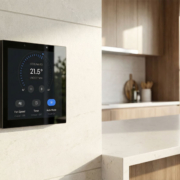
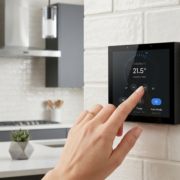
If you are developing your own smart home product line, you may be wondering whether an ODM smart home control panel can carry your company’s logo and reflect your brand identity.
The answer is affirmative; logo customization can be incorporated into an ODM smart home control panel project, contingent upon the manufacturer’s available services and the mutually agreed project scope.
For smart home brands, distributors, system integrators, and building automation companies, ODM manufacturing offers a pathway to develop branded products without engineering every hardware component independently.
However, branding extends beyond affixing a logo to the device’s front surface. The product casing, touchscreen interface, packaging, software environment, and installation accessories all contribute to the comprehensive brand experience.
This guide outlines how logo customization functions, which components of a smart home control panel may be customized, and which topics warrant discussion with your manufacturing partner prior to initiating a private-label project.
1. Can an ODM Smart Home Control Panel Display Your Brand Logo?
Yes. Numerous ODM projects incorporate branding options enabling a customer to market a product under its own brand, subject to the manufacturer’s technical capabilities and contractual terms.
For a smart home control panel, branding may encompass:
- Logo printing on the device casing
- Customized casing colors
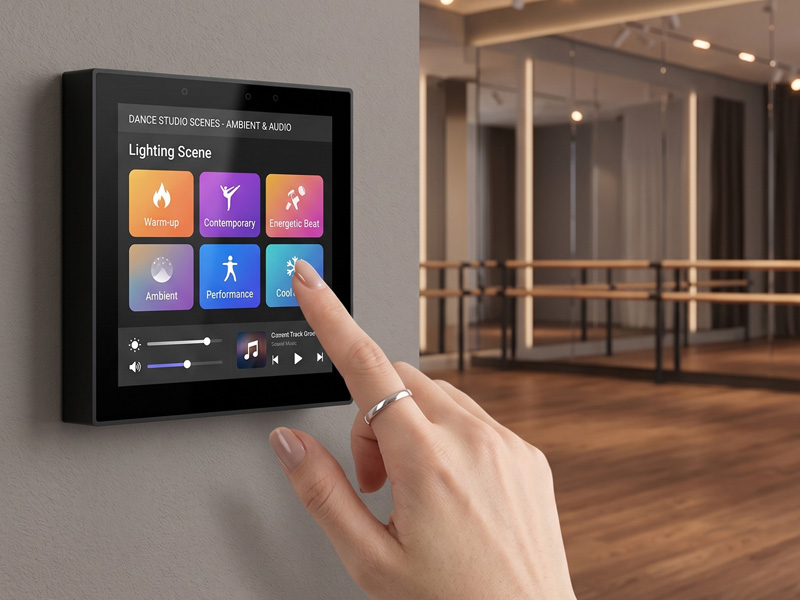
- A branded touchscreen user interface
- Customized product labels
- Branded retail or project packaging
Other mutually agreed appearance and presentation specifications
The precise options are determined by the selected hardware platform and customization requirements.
For instance, a company developing a smart home product line may desire a wall-mounted touchscreen featuring its logo on the front panel and its distinctive visual identity integrated into the interface.
A hotel automation provider may instead emphasize a minimalist aesthetic, a project-specific user interface, and packaging consistent with its product portfolio.
In both scenarios, the initial step involves confirming which branding options are accessible

YC-SM43P ESP32 4″ Smart Touch Panel
2. What Branding Options Are Available for Smart Home Control Panels?
Brand customization encompasses multiple dimensions of the product. Prior to soliciting a quotation, it is advisable to differentiate among physical branding, software branding, and packaging considerations.
2.1 Logo Printing on the Device
The device itself typically represents the most prominent element of a branded control panel.
Subject to the product design and the manufacturer’s technical capabilities, logo customization may encompass affixing a logo to the front casing or another appropriate location.
When addressing logo printing specifications, furnish your manufacturer with the following information:
- Your logo artwork in an appropriate file format
- Desired logo placement location
- Specified logo dimensions
- Brand color specifications, where relevant
- Any constraints affecting the visible front surface
It is equally important to examine a product sample or an approved design prior to commencing mass production. This examination ensures that the logo placement and visual presentation align with your requirements.
The applicable printing methodology and feasible logo placement options should be validated for the particular model in question.
2.2 Customized Casing Color and Appearance
A control panel must align with the visual identity of the brand and the environment in which it will be deployed.
For instance, a smart home brand may prioritize a minimalist aesthetic, whereas a hotel automation enterprise may require the panel to harmonize with the interior design of its installations.
Portworld provides appearance customization services encompassing casing design, material selection, size specifications, and color alternatives.
Contingent upon the selected platform and the agreed-upon scope of work, these options enable brands to establish greater visual consistency throughout their product portfolio.
Before finalizing a custom casing design, deliberate on the intended design concept, available material options, color specifications, installation requirements, and any supplementary engineering considerations.
2.3 A Branded Touchscreen User Interface
The physical logo represents merely one component of the overall user experience. The touchscreen interface similarly plays a significant role in establishing how customers recognize and engage with your product.
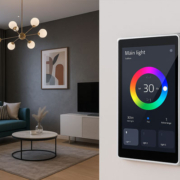
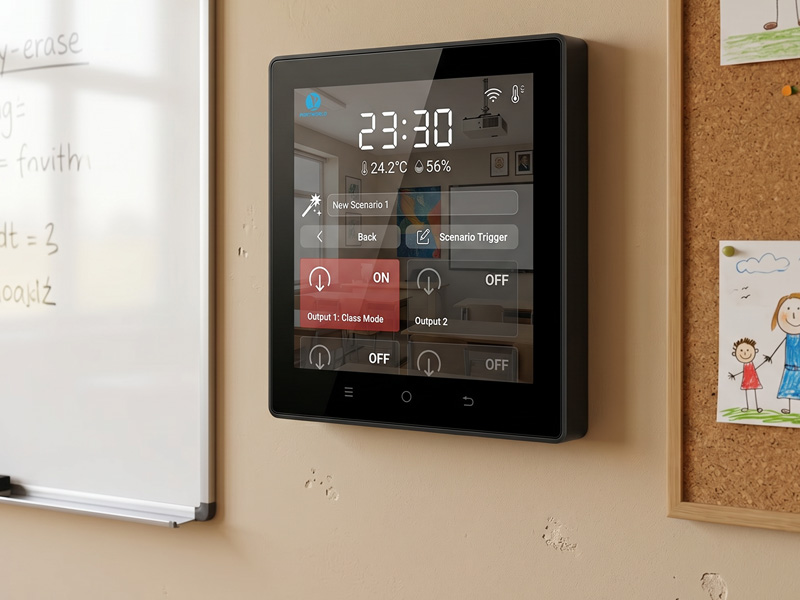
Subject to the software platform and project scope, UI customization may encompass brand colors, interface layouts, icons, screen elements, and additional visual characteristics.
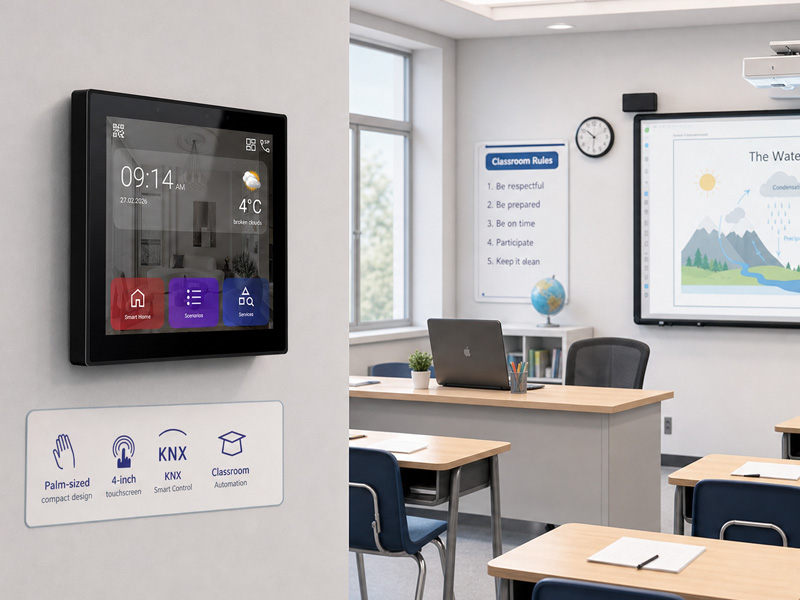
For smart home control panels, the interface may display supported functions including lighting, curtains, climate control, or other connected systems.
The range of available controls is contingent upon the software and the devices incorporated into the automation system.
Should you desire a branded interface, it is essential to discuss whether you will supply the UI design, whether the manufacturer can provide design or application development support, and which software components are subject to modification.
Additionally, clarify the party responsible for software maintenance following delivery.
smart home control panel-1
2.4 Customized Packaging and Product Labels
Packaging represents an additional consideration for organizations marketing products under their proprietary brand.
Depending on the project parameters, customization may encompass branded packaging, product labels, and associated presentation materials.
This consideration proves relevant for distributors, private-label product enterprises, and smart home brands seeking a unified identity across devices and accessories.
When establishing packaging customization plans, verify the available options, artwork specifications, packaging requirements, and any pertinent minimum order quantities.
Do not presume that packaging customization is inherently incorporated into the standard product price.
3. What Distinguishes Standard ODM from Private-Label ODM?
Although the concepts of ODM and private label are interconnected, they represent distinct dimensions of product development.
ODM denotes a manufacturing framework wherein the manufacturer furnishes either an original product design or an established platform capable of being tailored to meet the customer’s specifications.
Private label typically denotes the commercialization of a product under the customer’s proprietary brand identity.
Consequently, an organization may opt to acquire an existing ODM smart home control panel and evaluate branding alternatives for distribution under its own trademark.
The scope of available customization may encompass anything from straightforward branding modifications to comprehensive alterations affecting the enclosure, hardware specifications, or firmware.
Consider the following illustrations:
A distributor may require primarily a corporate emblem and branded packaging materials.
A smart home enterprise may seek a customized emblem, housing coloration, and display interface.
A systems integrator may necessitate a specific hardware arrangement and software framework in conjunction with branding elements.
These undertakings may present divergent technical and commercial considerations.
Prior to commencement, solicit from the manufacturer a comprehensive delineation of which components constitute standard offerings, which permit customization, and which necessitate supplementary engineering efforts.
smart cotnrol panel6-1
4. Is It Possible to Customize Both Hardware and Software in Addition to the Logo?
For certain projects, this is feasible. Nevertheless, hardware and software customization should be assessed independently from fundamental branding efforts.
Modifying a logo does not inherently necessitate alterations to the core hardware infrastructure. Conversely, adjusting the processor architecture, communication protocols, operating system, or software framework may demand supplementary technical resources.
Portworld provides OEM/ODM services encompassing aesthetic customization, hardware configuration, software customization, and branding solutions.
The organization’s documented customization offerings include:
Hardware: PCBA design, interface configuration, and integration of supported components such as cameras, microphones, and speakers.
Software: Android and Linux-based customization, user interface design, firmware development, application creation, and SDK/BSP development assistance, contingent upon project specifications.
Branding: Logo application, user interface design, and packaging modifications.
These offerings may prove valuable for organizations requiring solutions beyond a standard interface with logo placement.
Nonetheless, the scope of available options is contingent upon the chosen product platform and specific project parameters. It is advisable to clarify the precise customization scope with the manufacturer prior to establishing product commitments or delivery timelines with your clientele.
5. Which Smart Home Control Panel Should You Choose for Your Brand?
The optimal selection depends on the intended use case, display dimensions, software platform, deployment methodology, and degree of personalization required.
Portworld’s comprehensive product range encompasses both compact panels and expansive touchscreen solutions designed for smart home, hospitality, corporate, and industrial automation environments.
For illustration:
YC-SM41P: A Compact 4-Inch Control Panel
The YC-SM41P is presented as a 4-inch intelligent touch control panel featuring a PX30 quad-core Cortex-A35 processor, 2GB RAM, 8GB ROM, with an optional 16GB ROM variant.
Its documented connectivity options include Ethernet, Wi-Fi, Bluetooth 4.0, and RS485. The technical specifications additionally reference PoE capability.
For organizations seeking a compact wall-integrated control interface, this model represents a suitable foundation for evaluating hardware compatibility and customization possibilities.
YC-SM41P-KNX: A KNX-Oriented Control Panel
The YC-SM41P-KNX is documented with an RK3566 quad-core processor, 2GB RAM, 32GB storage capacity, Android 13 or Linux operating system options, and an integrated KNX interface.
For implementations utilizing compatible KNX automation frameworks, this model offers an alternative foundation compared to a general-purpose touch panel.
Any necessary system integration, firmware modifications, or customization requirements should be validated for the chosen specification.
YC-SM08M: An 8-Inch Smart Home Control Panel
The YC-SM08M features an 8-inch IPS capacitive touchscreen, Android 11 operating system, an RK3566 quad-core Cortex-A55 processor, 2GB of RAM, 16GB of internal storage, Wi-Fi connectivity, Bluetooth 5.2 technology, and Ethernet with Power over Ethernet (PoE) support.
A larger display may warrant consideration when your intended interface requires additional screen real estate.
The aforementioned examples represent various product configurations available within Portworld’s current portfolio. These examples do not indicate that all models offer the same customization capabilities. It is essential to verify the appropriate hardware specifications and available branding services directly with the supplier.
6. What Should You Prepare Before Requesting ODM Branding?
Developing a comprehensive project brief enables manufacturers to assess your specifications and deliver a more accurate and relevant quotation.
Prior to engaging with a supplier, you should consider assembling the following documentation.
Brand Assets
Submit your logo design, brand color palette, preferred font selections, and any established brand identity standards.
If custom packaging or product labeling is required, please include these specifications in your submission.
Product Requirements
Define the intended use case, preferred display dimensions, mounting approach, operating system preference, and necessary communication protocols.
If you have already identified a target product model, provide its model designation and specify which components you wish to customize.
Software Requirements
Specify whether you intend to implement proprietary applications, customize an existing user interface, or require custom software development services.
If the control panel must integrate with an existing home automation platform, document the required communication protocols and system integration specifications.
Order and Commercial Requirements
Communicate your projected order volume, intended geographic market, preferred implementation timeline, and extent of required modifications.
Request that the manufacturer provide detailed information regarding minimum purchase requirements, prototype expenses, technical development fees, manufacturing timelines, and all other pertinent commercial conditions.
Furnishing this documentation at an early stage enables both organizations to recognize potential technical limitations and prevent complications throughout the engagement.
smart control panels-1
7. Questions to Ask Before Choosing an ODM Manufacturer
Prior to finalizing your order, evaluate the following inquiries:
- Will the selected control panel accommodate our company branding?
- What are the available placement options for our branding, and which printing techniques are offered?
- Is it possible to modify the housing material or visual appearance?
- Can the user interface be tailored to align with our corporate identity?
- Does the manufacturer offer bespoke packaging solutions?
- Are modifications to the hardware configuration or software platform feasible?
- Which modifications are encompassed within the quotation, and which necessitate supplementary technical work?
- May we examine a prototype or authorize the specifications prior to commencing full-scale manufacturing?
Who retains ownership of the proprietary designs, code, and other project outputs?
What constitute the applicable purchase minimums, production schedules, and performance standards for quality assurance?
These inquiries serve to distinguish between conventional product branding and a more comprehensive tailored development engagement.
They additionally facilitate the establishment of accountability regarding product architecture, software support, proprietary rights, and manufacturing authorization.
8. ODM Smart Home Control Panel Branding with Portworld
Portworld delivers smart home touch panels and OEM/ODM customization services designed for residential, hotel, office, and commercial automation applications.
According to its documented service offerings, customization capabilities encompass product aesthetics, hardware components, software functionality, and brand identity elements.
For organizations seeking a private-label smart home control panel, the engagement process can commence with an established product platform followed by consultation regarding desired branding elements, enclosure design, user interface specifications, packaging materials, and technical specifications.
The optimal strategy depends on the selected panel model and the extent of customization modifications needed.
Certain initiatives may concentrate on applying branding to an existing product configuration. Other undertakings may necessitate supplementary hardware or software evaluations to ensure the product meets particular application requirements.
Rather than presuming that all modifications are compatible with every model variant, it is advisable to articulate your specifications and validate the available options prior to finalizing the design.
Develop a Control Panel That Embodies Your Brand Identity
A branded smart home control panel enables your organization to maintain a more unified product identity throughout its automation product portfolio.
The essential factor involves identifying an appropriate hardware foundation, establishing the intended visual presentation and software interface, and establishing clear customization parameters with your manufacturing collaborator.
Seeking an ODM smart home control panel featuring your company branding? Reach out to Portworld to examine your intended application, preferred panel model, logo positioning, enclosure alternatives, software specifications, and packaging customization possibilities.
Submit your project specifications to initiate a consultation regarding an appropriate smart control panel solution tailored to your brand requirements.
Frequently Asked Questions
Can an ODM smart home control panel display my brand logo?
Yes. Logo printing may be incorporated into an ODM project when the selected product supports this feature and the manufacturer agrees to it. Prior to placing an order, verify the suitable placement options and customization techniques available.
May I market an ODM smart home control panel under my own brand name?
Private-label branding may be feasible through an ODM arrangement. It is essential to clarify branding rights, product identification, intellectual property conditions, and the contractual terms with the manufacturer.
Is it possible to modify the casing color and packaging design?
Portworld provides appearance customization services, encompassing casing design and color modifications, as well as branding solutions including packaging customization. The scope of available options is contingent upon the specific product selected and the extent of the project.
Is touchscreen interface customization available?
UI customization is included in Portworld’s range of customization services. The degree of customization achievable is determined by the operating system, software framework, and the scope of development agreed upon.
smart control panel factory-1
Can I customize both hardware and software in addition to the logo?
Portworld provides hardware and software customization services, encompassing PCBA modifications and interface setup, Android/Linux-related customization, UI design, and application development assistance. Individual requirements should be evaluated for technical viability.
Must I develop an entirely new control panel to establish my brand?
No. An established product platform may serve as a foundation for a branded solution. Whether it satisfies your specifications depends on the available hardware capabilities, software options, appearance customization possibilities, and the customization scope permitted.
What information should I provide to a manufacturer when requesting a branding quotation?
Submit your logo design, preferred product model or display size, casing and UI specifications, software requirements, intended use case, anticipated order volume, and project timeline. If certain aspects remain undetermined, communicate your objectives so the manufacturer can evaluate feasible alternatives.
An Original Design Manufacturer (ODM) smart home control panel represents a viable foundation for enterprises seeking to establish their own branded control interface device. Contingent upon the manufacturer’s technical capabilities and the terms outlined in the project agreement, branding customization may encompass elements beyond corporate insignia, including the physical housing design, user interface presentation on the touchscreen, and product packaging materials.
The paramount consideration involves articulating your specifications with precision and verifying which customization capabilities are accessible for the chosen product offering.
Given an appropriate product foundation and a well-articulated project framework, your organization can assess a private-label smart control panel that corresponds with your brand identity and operational requirements.