What Is a Smart Home Control Panel? A Complete Guide
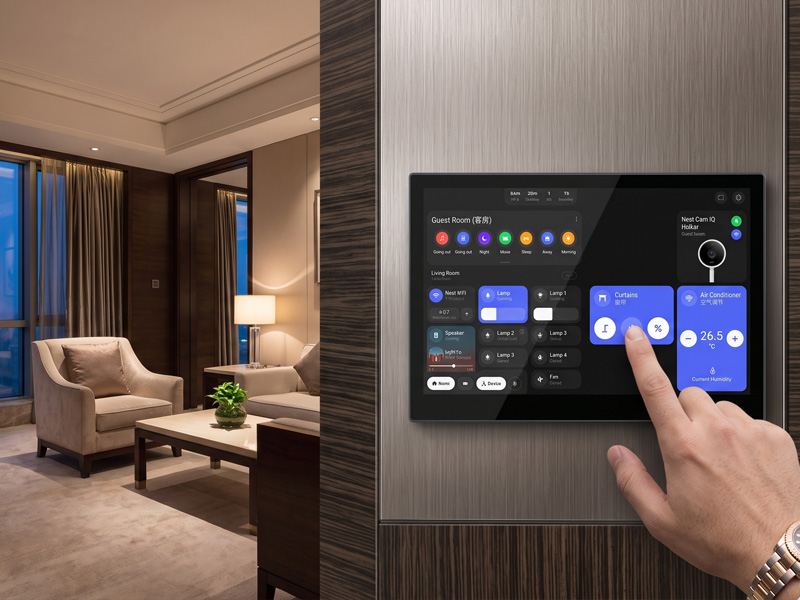
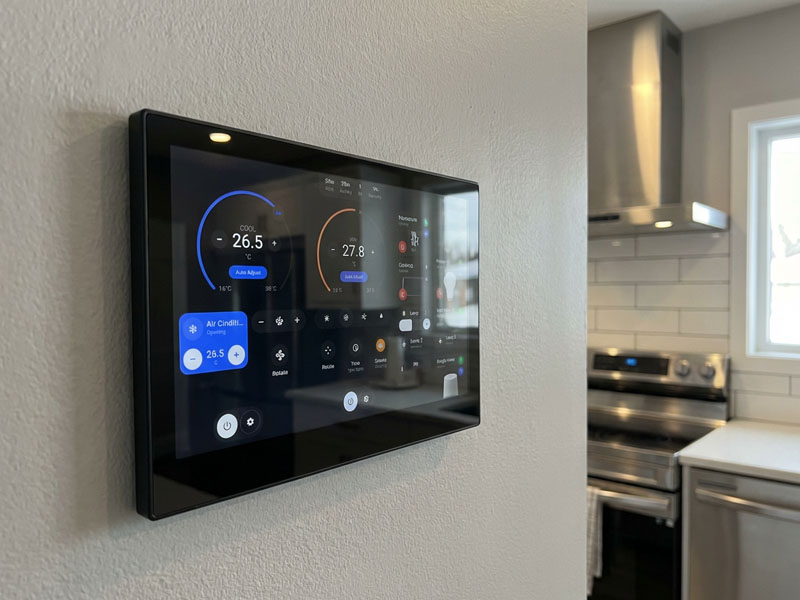
As intelligent residences and automated buildings increasingly incorporate interconnected technologies, operating numerous devices via distinct applications can prove cumbersome. A smart home control panel delivers a unified touchscreen platform that enables occupants to access and regulate connected infrastructure from a singular point.
Spanning residential illumination systems and automated window treatments to hospitality room management and enterprise facility automation, smart control panels function as a vital intermediary connecting users with their intelligent surroundings.
For system integrators, real estate developers, smart home manufacturers, and automation technology providers, identifying an appropriate panel requires consideration beyond mere display dimensions. Processing capabilities, software platform selections, communication protocols, deployment procedures, application interoperability, and personalization options all warrant thorough evaluation.
This comprehensive resource outlines the definition of a smart home control panel, its operational mechanisms, significant functionalities, and methodology for selecting an optimal solution across diverse automation implementations.
1. What Constitutes a Smart Home Control Panel?
A smart home control panel represents a touchscreen apparatus engineered to furnish a consolidated platform for overseeing networked apparatus and automated operations.
Contingent upon the technical specifications and software framework, a control panel may facilitate access to illumination management, window covering mechanisms, thermal regulation systems, protective installations, and supplementary networked apparatus.
Rather than necessitating users to engage with numerous independent systems, an appropriately configured panel can consolidate compatible capabilities into a unified operational interface.
Smart home control panels find typical application in:
- Residential intelligent home installations
- Hospitality environment management
- Corporate workspace and conference area oversight
- Enterprise infrastructure automation
- Combined environmental and thermal management initiatives
The precise capabilities accessible depend on the panel’s technical architecture, deployed software, accessible communication channels, and alignment with the designated automation framework.
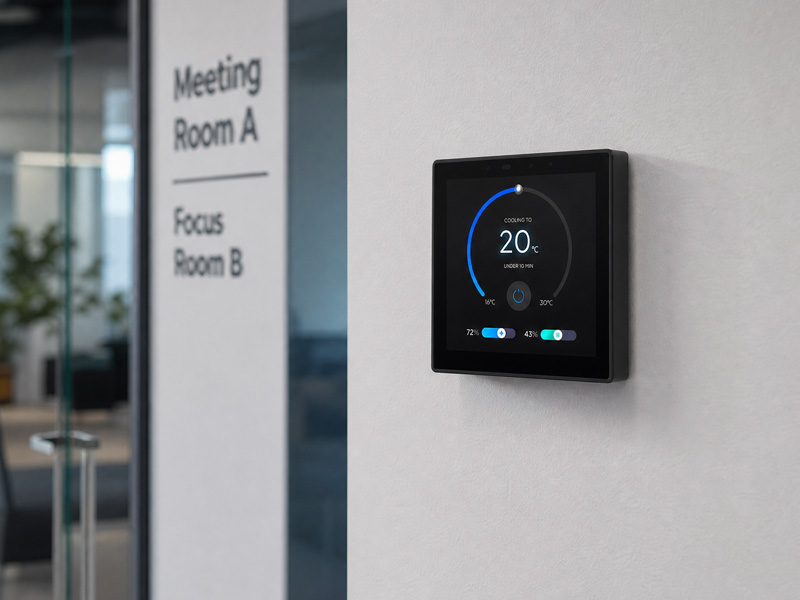
smart home control panel
A control panel should consequently be understood as constituent of a comprehensive
2. How Does a Smart Home Control Panel Work?
A smart home control panel generally integrates a touchscreen interface, an embedded computing system, an operating system, network connectivity capabilities, and purpose-built software for specific automation functions.
The touchscreen serves as the primary user interface. The processor and memory facilitate the operation of the operating system and applications, while integrated communication protocols enable the panel to communicate with compatible devices and network services.
A standard configuration comprises multiple components.
User Interface
The interface displays the controls accessible to the user. Depending on the specific application, these may encompass lighting control, window covering operation, temperature management, or connectivity with other integrated systems.
For manufacturers and system integrators, the interface represents a critical element of the overall user experience. Customized software development and interface design can ensure alignment with particular projects or organizational branding.
Embedded Hardware
The processor, RAM capacity, and storage capabilities establish which software platforms and applications a particular configuration can accommodate.
For instance, Portworld’s product range encompasses compact panels utilizing the PX30 and RK3566 architectures, alongside larger panel solutions employing the RK3568 architecture. Individual models provide varying combinations of display dimensions, memory capacity, storage options, and operating system selections.
These configurations warrant evaluation based on the specific requirements of the intended application rather than presuming that a single hardware platform serves all project needs.
Connectivity and Device Integration
A panel may utilize Ethernet, Wi-Fi, Bluetooth, RS485, or other supported interfaces, contingent upon the specific model.
These interfaces fulfill distinct functions. Ethernet facilitates a wired network connection, Wi-Fi provides wireless network access, Bluetooth enables compatible wireless connectivity, and RS485 permits connection to equipment configured for that interface.
The availability of a particular interface does not inherently ensure compatibility with all devices or automation protocols. System integrators must verify the necessary communication protocols, software compatibility, and integration methodology prior to hardware selection.
smart home control panel
3. Key Features to Consider in a Smart Home Control Panel
When evaluating smart control panels, purchasers should examine factors beyond aesthetic design and display dimensions. The following considerations can facilitate the selection process.
3.1 Touchscreen Size and Display
Screen dimensions determine the volume of information that can be displayed and how the panel integrates into the designated space.
Compact panels are suitable for wall-mounted installations where spatial constraints exist. Larger displays may prove more suitable when the user interface requires presentation of multiple controls or information simultaneously.
Portworld’s product portfolio encompasses various display sizes, ranging from 4-inch models to larger 10.1-inch, 11.6-inch, and 14-inch configurations, along with additional size options.
Display resolution, luminosity, touch responsiveness, and physical measurements warrant examination. These technical specifications differ across models, therefore purchasers should review the precise product specifications rather than making generalizations based on the complete product range.
3.2 Processor, Memory, and Storage
The embedded computing platform significantly influences application compatibility and overall system performance.
A control panel configured for straightforward management functions may have distinct requirements compared to one executing a sophisticated proprietary application. Purchasers should evaluate the anticipated software demands, necessary connectivity options, RAM requirements, storage capacity, and ongoing support obligations.
For instance, the Portworld YC-SM41P features a PX30 quad-core Cortex-A35 processor, 2GB RAM, and 8GB ROM, with an available 16GB ROM option.
The YC-SM41P-KNX incorporates an RK3566 quad-core processor, 2GB RAM, and 32GB storage capacity.
These instances demonstrate the importance of examining model-specific technical details when aligning hardware capabilities with application requirements.
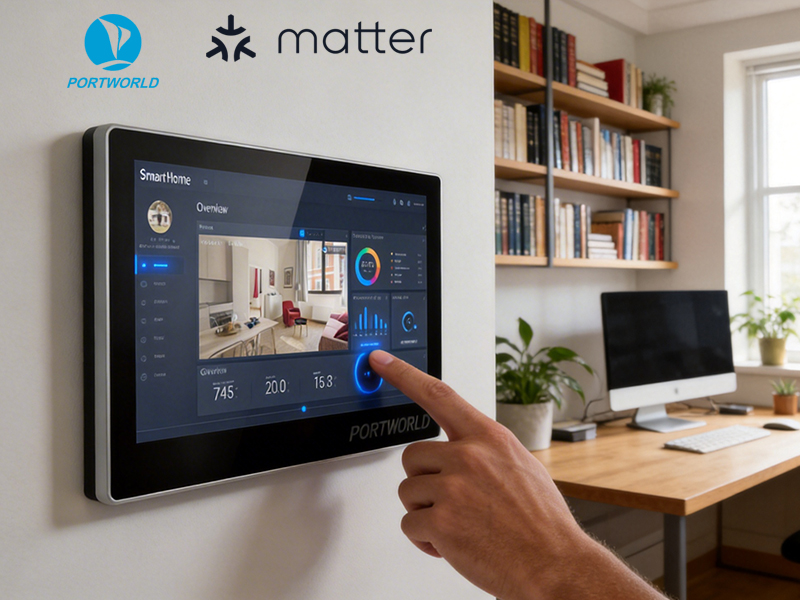
3.3 Operating System Options
The operating system determines application development methodology, software installation procedures, and system upkeep.
Portworld’s comprehensive control panel range encompasses Android and Linux-based solutions. Based on the specific model and implementation requirements, available selections include Android, Debian, Ubuntu, and additional embedded software platforms.
Android may be suitable for initiatives utilizing compatible Android software. Linux-based platforms may be appropriate for embedded solutions requiring a tailored software framework.
Nevertheless, operating system availability depends on the particular model. Purchasers must verify the specific operating system release, compatible development frameworks, software distribution package, and maintenance protocols for the intended product.
smart home control panel
3.4 Network and Communication Interfaces
Connectivity represents a critical factor in the selection process.
Depending on the specific model, Portworld panels may provide various combinations of the following:
- RJ45 Ethernet
- Wi-Fi
- Bluetooth
- RS485
- PoE support on designated configurations
The appropriate interface selection is determined by the project’s network architecture and the devices with which the panel must establish communication.
For instance, a project employing wired network infrastructure may emphasize Ethernet connectivity, whereas an installation necessitating integration with compatible serial devices may require RS485 functionality.
It is equally essential to differentiate between physical connectivity capabilities and protocol compatibility requirements. The project team must validate both aspects prior to finalizing a hardware configuration selection.
3.5 Power and Installation
Installation specifications can influence cabling requirements, wall preparation procedures, overall project expenditure, and ongoing maintenance considerations.
Certain Portworld models incorporate Power over Ethernet (PoE) support, which facilitates the transmission of both power and network data through a compatible Ethernet connection. The specific PoE standard and power consumption specifications must be confirmed for the chosen model and the designated power source.
Additional available configurations encompass DC power input options.
Wall mounting and recessed installation alternatives demonstrate considerable variation. Portworld’s technical documentation describes multiple mounting configurations, encompassing UK 86-type, EU-type, US-type, and specialized brackets for applicable models.
Prior to installation, verify the panel’s physical dimensions, mounting depth requirements, bracket compatibility specifications, power input methodology, and electrical wiring requirements.
4. Where Are Smart Home Control Panels Used?
Smart control panels facilitate various automation initiatives, with their functional scope determined by the underlying software and integrated systems.
Smart Homes
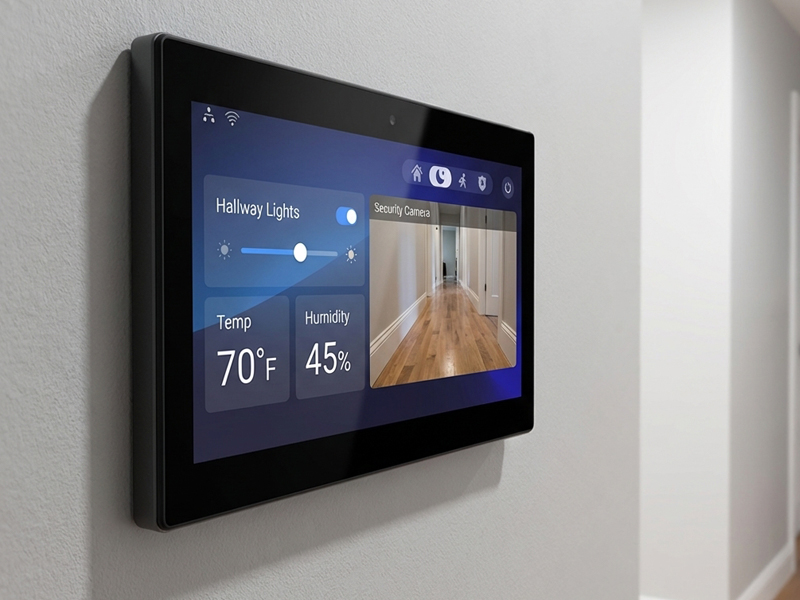
Within residential settings, a unified control panel delivers an accessible interface for enabled features including illumination, automated window treatments, temperature regulation, and security apparatus.
A wall-affixed touchscreen interface can establish a dedicated control location in conjunction with supplementary control alternatives, including smartphone applications or voice-activated systems.
The ultimate user satisfaction is contingent upon the selected automation framework and the integrations established within the residence.
Hotels and Hospitality
Hospitality establishments may implement room management interfaces to consolidate designated room capabilities. Contingent upon the system architecture, these capabilities may encompass illumination, window coverings, and environmental controls.
For hospitality management and implementation specialists, panel selection considerations encompass display dimensions, installation protocols, interface configuration, application distribution, and corporate identity representation.
Customization through OEM/ODM partnerships may prove valuable when a hospitality enterprise requires standardized aesthetics or application-specific interfaces throughout numerous guest rooms.
smart home control panel-1
Offices and Meeting Rooms
Within corporate environments, interactive touchscreen panels can deliver an interface for enabled room and facility functions.
Applicable implementations encompass conference room management and compatibility with integrated automation infrastructure. The necessary equipment and applications must be determined based on the operational requirements and the technological systems currently operational within the facility.
Commercial and Integrated Building Projects
Commercial undertakings frequently encompass an integrated array of systems, including illumination, climate control, entry management, surveillance infrastructure, and supplementary building technologies.
In such scenarios, the control panel functions as merely one component within a comprehensive solution framework. System integrators must conduct a thorough assessment of the entire system design, encompassing communication protocols, control mechanisms, applications, infrastructure topology, and activation procedures.
5. Android versus Linux Smart Home Control Panels
A prevalent consideration during the selection process concerns whether to implement an Android or Linux-based control panel.
No single optimal solution exists universally. The most appropriate choice is contingent upon the specific application, software specifications, available development capabilities, and system configuration parameters.
Android-based panels may prove advantageous when an application necessitates compatible Android software or an Android-centric development methodology.
Linux-based panels may prove advantageous for specialized applications requiring a tailored operating framework and a software infrastructure customized to the particular project requirements.
During the evaluation process, request the manufacturer to provide clarification on the following:
Which operating system releases are obtainable for the designated model?
Is the necessary SDK or BSP accessible?
- May the initialization interface and operational environment be modified?
- What development and diagnostic capabilities are accessible?
- In what manner will software revisions and ongoing support be administered?
- Are the essential data transmission interfaces compatible with the chosen configuration?
Portworld maintains both Android and Linux-based offerings throughout its product range, with accessibility determined by model specifications and modification possibilities. Purchasers should validate the precise configuration during the technical assessment phase.

smart home control panel4-9-1
6. Understanding PoE Smart Home Control Panels
PoE denotes Power over Ethernet technology. Under appropriate system conditions, this technology facilitates the simultaneous transmission of electrical power and network communications through a single Ethernet connection.
For particular ceiling-mounted or wall-mounted control panel deployments, this capability can streamline installation procedures by potentially eliminating the necessity for an independent power supply line.
Nonetheless, PoE does not constitute a singular standardized power delivery mechanism. Purchasers must verify the panel’s compatibility specifications
7. Selecting an Appropriate Smart Home Control Panel
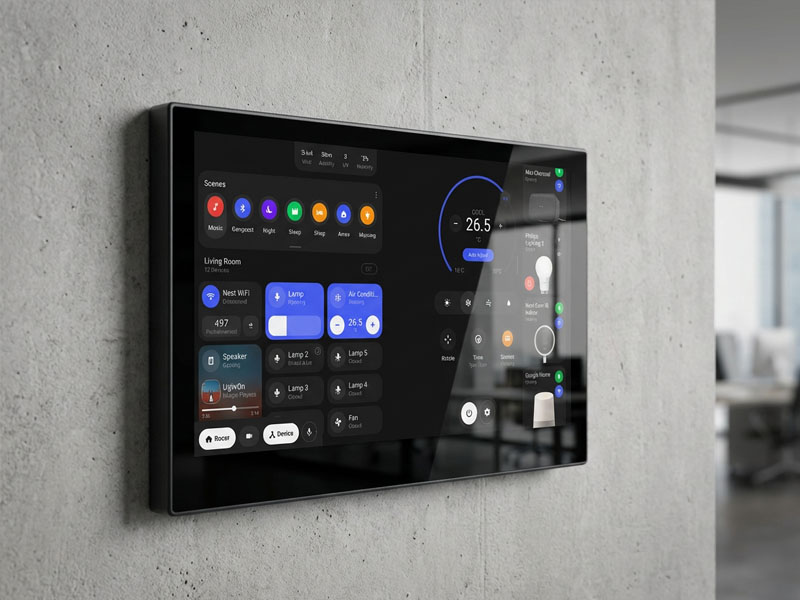
For B2B purchasers, implementing a systematic assessment methodology can mitigate the risk of selecting a panel that fails to satisfy project specifications.
Step 1: Establish the Application Context
Determine the intended deployment environment—whether residential, hospitality, corporate, or commercial—and enumerate the functional requirements users must access alongside the systems requiring integration.
Step 2: Determine the Display Dimensions
Evaluate the user interface design, sight line distance, available mounting surface, installation methodology, and operational setting.
Avoid basing the selection exclusively on screen size. Display resolution, luminosity output, and overall physical proportions are equally significant considerations.
Step 3: Assess the Technical Specifications
Examine the central processing unit, memory capacity, data storage, system software, and connectivity options. Validate that the technical framework accommodates the designated application and computational demands.
Step 4: Validate Compatibility Requirements
Catalog the necessary communication channels and technical standards. Authenticate alignment with the current automation infrastructure, control systems, and peripheral devices.
Step 5: Examine Installation and Electrical Specifications
Inspect mounting enclosure compliance, fastening hardware, cable routing, power supply specifications, and Power over Ethernet capability where pertinent.
Step 6: Assess Personalization Capabilities and Vendor Support
For proprietary solutions or extensive implementations, inquire regarding the vendor’s capacity to modify the exterior design, branding elements, interface layout, application code, technical components, and delivery packaging.
Additionally, establish clarity on implementation accountability, prototype assessment, manufacturing specifications, and continuous application updates prior to project commencement.
smart home control panel
8. Portworld Smart Home Control Panel Solutions
Portworld manufactures smart home touch panels and embedded touch solutions designed for residential, hospitality, office, and commercial automation applications.
The company’s product portfolio encompasses compact 4-inch panels, intermediate-sized options, and larger display units. Depending on the specific model, available configurations feature Android or Linux-based operating systems, Rockchip processors, Ethernet, Wi-Fi, Bluetooth, RS485, and PoE connectivity.
The following models demonstrate the scope of available configurations:
YC-SM41P: A 4-inch capacitive touchscreen panel equipped with a PX30 quad-core Cortex-A35 processor, 2GB RAM, 8GB ROM with optional 16GB ROM expansion, and integrated Ethernet, Wi-Fi, Bluetooth 4.0, and RS485 connectivity.
YC-SM41P-KNX: A 4-inch panel built on the RK3566 platform, featuring 2GB RAM, 32GB storage capacity, Android 13 or Linux operating system options, and an integrated KNX port.
YC-P5: A 5-inch panel constructed on the RK3566 platform, offering Android 11/13 operating system options, 2GB RAM, 32GB storage, Wi-Fi, Bluetooth, Ethernet, RS485, and specified power configurations.
YC-SM08M: An 8-inch IPS capacitive touchscreen panel featuring Android 11, an RK3566 quad-core Cortex-A55 processor, 2GB RAM, 16GB storage capacity, Wi-Fi, Bluetooth 5.2, and Ethernet connectivity with PoE support.
YC-1011: A 10.1-inch capacitive touchscreen panel based on the RK3568 platform, offering Android 11 or Debian operating system options, 2GB RAM, 32GB storage, Wi-Fi, Bluetooth 5.2, and Ethernet connectivity with PoE support.
These examples represent selections from the product portfolio and do not constitute a replacement for current model-specific datasheets. Prospective purchasers should verify all specifications, operating system availability, interface options, and power requirements applicable to their specific configuration requirements.
Original Equipment Manufacturer and Original Design Manufacturer Customization Services for Intelligent Control Panel Initiatives
Organizations engaged in the development of proprietary smart home solutions frequently encounter situations where conventional hardware configurations prove insufficient to satisfy specific project parameters.
Portworld’s comprehensive OEM/ODM service offerings encompass the following customization domains:
Physical appearance customization: Modifications to dimensions, substrate composition, enclosure architecture, finish options, and mounting hardware.
Hardware component customization: Printed circuit board assembly design, port and connector specifications, and incorporation of supplementary technologies including imaging sensors, audio capture devices, and audio output systems as project specifications dictate.
Software platform customization: Android or Linux-based system modifications, software development kit and board support package creation, graphical user interface development, embedded system programming, and custom application development, contingent upon project scope and complexity.
Identity and market positioning customization: Trademark application, user interface branding, and product packaging design.
These specialized capabilities serve the requirements of intelligent home technology manufacturers, system implementation partners, commercial resellers, and contract project organizations requiring a control panel solution customized to their particular product specifications or deployment circumstances.
The extent of available services, technical specifications, and manufacturing logistics should be thoroughly evaluated and negotiated with the service provider for each individual undertaking.
9. Frequently Asked Questions
What is the primary function of a smart home control panel?
Its primary function is to deliver a unified interface for managing compatible smart home or building automation capabilities. The range of available functions is contingent upon the panel’s software configuration and the systems it connects to.
Can a smart home control panel manage lighting and motorized curtains?
It can deliver management capabilities for lighting and motorized curtains provided that the necessary devices, controllers, software, and communication protocols are compatible and appropriately configured.
Do smart home control panels come with Android and Linux operating systems?
Yes. Portworld’s product range encompasses Android and Linux-based options. The specific operating systems and versions differ depending on the model and application.
What display dimensions does Portworld offer?
Portworld’s product range includes 4-inch, 5-inch, 5.5-inch, 7.6-inch, 8-inch, 10-inch, 10.1-inch, 11.6-inch, and 14-inch configurations, along with additional size alternatives. Product availability and technical specifications should be verified for your specific model requirements.
What benefit does PoE provide for a smart control panel?
On a suitable device and network infrastructure, PoE can transmit both electrical power and network data via a single Ethernet connection. Purchasers should validate the applicable PoE standard and electrical specifications for their particular panel.
Does Portworld provide customization services for smart home control panels intended for other manufacturers?
Portworld provides OEM/ODM services encompassing design, hardware components, software development, brand identity, and packaging solutions. The extent of customization available is determined by the specific project parameters and should be discussed directly with the provider.
smart touch control panel8
How should I select an appropriate control panel for a hospitality or commercial facility?
Begin by identifying the necessary capabilities, compatibility standards, operating system preference, screen dimensions, installation requirements, and electrical specifications. Subsequently, validate the precise hardware and software specifications with your supplier or systems integration partner.
An intelligent home automation control panel delivers a unified touchscreen interface for managing interconnected devices across residential properties, hospitality establishments, corporate offices, and commercial facilities. Identifying an appropriate solution necessitates thorough evaluation of screen dimensions, processing hardware, system software, connectivity protocols, deployment methodology, and platform interoperability.
For business-to-business applications, the capacity for customization holds equivalent significance. The flexibility to modify the physical enclosure, connectivity options, application software, and corporate identity may facilitate alignment of a control panel with a particular business strategy or integrated automation initiative.
Portworld provides an extensive portfolio of intelligent touch control panels alongside comprehensive OEM and ODM customization capabilities tailored to diverse operational requirements. Through articulating your integration specifications and validating precise technical parameters prior to acquisition, you can determine a control panel configuration that addresses your project requirements.