Smart Home Control Panel Product Development Factory
Creating a smart home control panel extends far beyond selecting a touchscreen and integrating WiFi connectivity. A commercially viable product must integrate hardware components, software systems, communication standards, industrial design principles, user experience design, and manufacturing processes into a cohesive and dependable solution.
For smart home manufacturers and system integrators, partnering with a smart home control panel product development factory can streamline operations. Rather than managing multiple vendors for printed circuit board assembly, display components, software development, housing design, and final assembly, a proficient OEM/ODM partner can oversee the entire development lifecycle from initial planning through large-scale production.
What Comprises Smart Home Control Panel Product Development?
A standard smart control panel initiative encompasses multiple development phases.
Product concept → Hardware design → Prototype → Software development → UI customization → Testing → Manufacturing
The specific methodology varies based on intended use. A compact 4-inch room controller may require a distinct hardware architecture compared to a 10-inch building automation interface.
For instance, a smart home system may require management of:
- Lighting systems
- HVAC equipment
- Motorized window treatments
- Smart access locks
- Sensor networks
- Security infrastructure
- Power consumption monitoring
Consequently, the control panel must be engineered to accommodate the customer’s complete automation infrastructure rather than functioning as an independent touchscreen device.
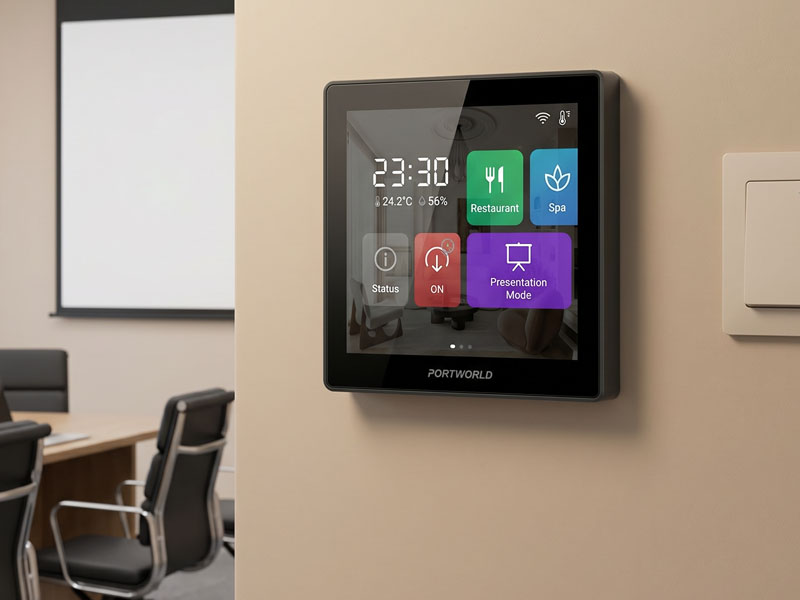
4″ KNX Smart Touch Control Panel
Step 1: Establish Control Panel Specifications
Product development typically commences with defining application specifications. Organizations must identify the following requirements:
- Display dimensions
- Touchscreen technology
- Processor architecture
- Operating system selection
- Memory and storage capacity
- Network connectivity options
- Communication interface standards
- Power supply specifications
- Installation methodology
- Smart home protocol compatibility
For instance, a residential bedroom controller may necessitate only WiFi and Bluetooth connectivity, whereas an enterprise building management system may require Ethernet, Power over Ethernet (PoE), RS485, Modbus, or additional industrial-grade interfaces. This preliminary phase proves critical because subsequent decisions regarding hardware architecture, physical enclosure design, and software framework are contingent upon these initial specifications.
Step 2: Choose the Appropriate Hardware Platform
The processor selection fundamentally influences the control panel’s performance capabilities and software functionality. Portworld offers multiple processor platforms tailored to diverse product requirements, encompassing Rockchip, MediaTek, Intel, AMD, Snapdragon, and Espressif architectures. Portworld’s existing product offerings include Rockchip RK3566, RK3576, RK3588 platforms, alongside ESP32-based solutions.
For instance:ESP32-Based Control Panels
Appropriate for:
- Internet of Things control
- Intelligent switching systems
- Sensor connection points
- Minimal-resource HMI solutions
Appropriate for:
- Android-based intelligent home panels
- Hospitality room management systems
- Facility management and control
- Advanced graphical display capabilities
High-Performance Computing Platforms
For applications requiring enhanced capabilities, advanced processors can facilitate:
- Sophisticated monitoring dashboards
- Video and audio content integration
- Machine learning implementations
- Comprehensive facility management user interfaces
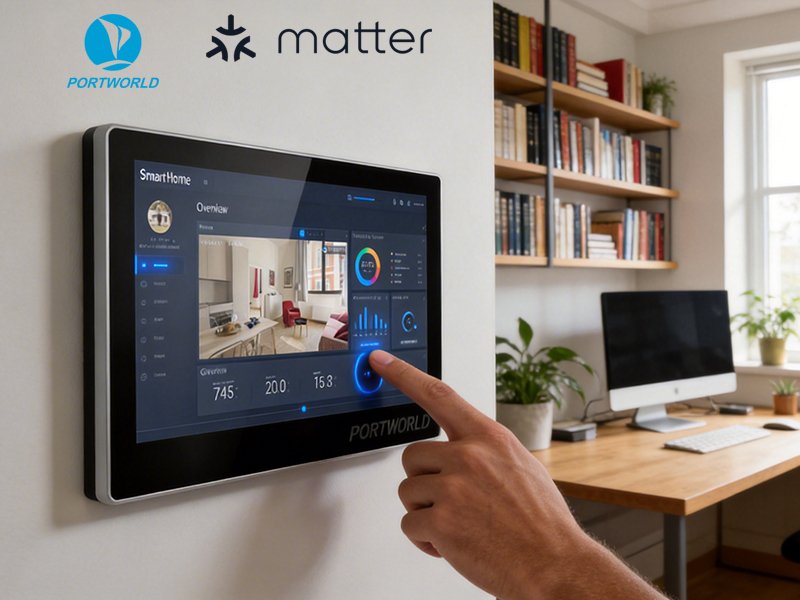
smart home control panel
Phase 3: Construct the PCBA
The PCBA functions as the foundational component of the intelligent control panel.
A purpose-built PCBA can incorporate:
- Central processing unit
- Memory capacity
- Data storage solutions
- Screen connectivity
- Input recognition capability
- Wireless connectivity
- Bluetooth communication
- Network connectivity
- Serial communication protocol
- Universal serial bus
- General-purpose input/output
- Sound processing
- Data acquisition interfaces
- Energy regulation systems
Portworld delivers PCB and PCBA engineering alongside hardware modification services, encompassing interface customization and incorporation of supplementary components including imaging devices, audio capture systems, and audio output devices as needed.
This capability proves invaluable when conventional panel solutions lack the connectivity options necessary for a client’s specific automation infrastructure.
Step 4: Select the Display and Touchscreen Interface
The dimensions of the display substantially influence both the end-user experience and the technical specifications required for installation.
Portworld’s comprehensive smart control panel collection encompasses space-efficient models including the YC-SM41P 4-inch variant, alongside 5-inch, 5.5-inch, 8-inch, and expanded touchscreen options.
Various display dimensions serve distinct operational purposes:
| Display Size | Typical Application |
|---|---|
| 4-inch | Room and wall control |
| 5–5.5-inch | Smart home and hotel control |
| 7–8-inch | Whole-home automation |
| 10-inch+ | Building and commercial control |
The touchscreen can be tailored to meet specific requirements regarding resolution, brightness, touch technology, and mechanical structure.
Step 5: Customize the Operating System
The operating system represents a critical consideration during product development.
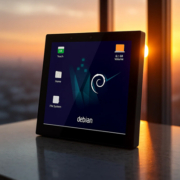
Portworld supports Android and Linux-based systems including Ubuntu, Debian, and Buildroot, contingent upon the hardware platform.
Android proves advantageous when the product necessitates:
- Comprehensive touchscreen applications
- Proprietary Android applications
- Multimedia capabilities
- Streamlined APK deployment
Linux
Linux is beneficial when the project demands:
- Extensive system customization
- Industrial protocol support
- Specialized embedded applications
- Building automation system integration
The operating system can be configured to align with customer hardware specifications and application requirements through BSP and SDK development.
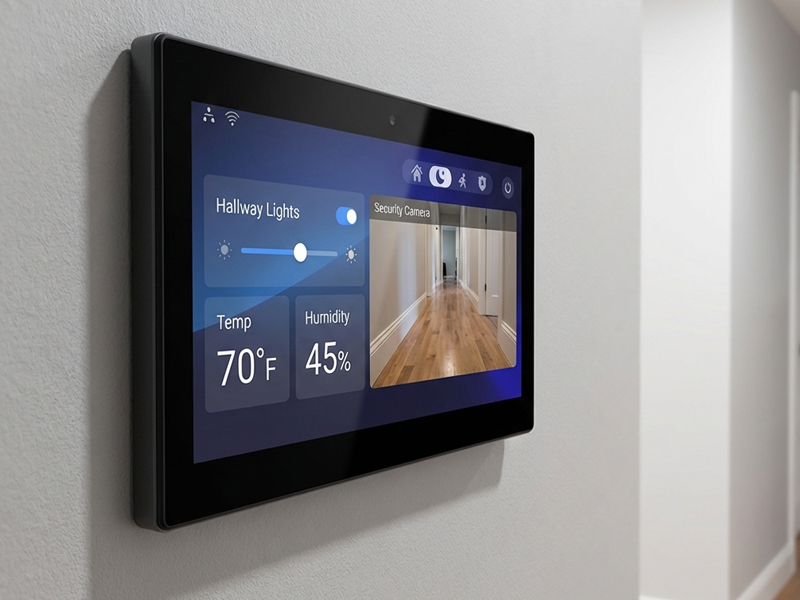
smart home control panel-1
Step 6: Integrate Smart Home Communication Protocols
A smart control panel typically requires communication with multiple interconnected systems.
Based on project specifications, Portworld can facilitate integration with the following technologies:
- KNX
- Zigbee
- Modbus
- MQTT
- BACnet
- Matter
- WiFi
- Bluetooth
- Ethernet
- RS485 Portworld
For instance, a hotel control panel might employ RS485/Modbus for HVAC systems, Ethernet for centralized network infrastructure, and WiFi or Bluetooth for wireless device connectivity.
For KNX-based implementations, Portworld additionally provides the YC-SM41P-KNX, a 4-inch panel featuring an integrated KNX transceiver with Ethernet, WiFi, Bluetooth, and PoE capabilities.
Step 7: Develop the User Interface and Smart Home Application
The touchscreen represents the primary interface through which users engage with the system on a daily basis.
A customized interface may incorporate:
- Illumination management
- Climate control settings
- Window covering operation
- Preset room configurations
- Security system status
- Power consumption tracking
- Multi-zone control panels
Portworld delivers UI/UX customization services as a component of its OEM/ODM offerings. Its Whole Series SDK OEM solution furnishes developers with comprehensive tools, APIs, and technical documentation to facilitate the creation of bespoke smart home applications compatible with its complete panel portfolio.
This capability enables smart home manufacturers to establish proprietary interfaces rather than depending on standard manufacturer-provided user interfaces.
Step 8: Customize the Enclosure and Installation Configuration
Mechanical design holds particular significance for wall-mounted control panels.
The manufacturing facility can modify:
- Exterior material composition
- Exterior finish color
- Physical dimensions
- Wall-mounting framework
- Fastening hardware
- Standard wall-box integration
- Brand identification positioning
As an illustration, Portworld accommodates various wall installation approaches, encompassing conventional wall boxes and specialized mounting arrangements. Portworld
The outcome is a control panel engineered to harmonize with the aesthetic preferences and installation specifications of a particular market segment.
Step 9: Prototype Development and Quality Assurance
Prior to commencing full-scale manufacturing, the prototype must undergo comprehensive system-level evaluation.
Standard quality assurance procedures encompass:
Hardware Evaluation
- Touchscreen functionality
- Display performance
- Power distribution system
- Network connectivity via Ethernet
- Wireless connectivity via WiFi
- Bluetooth communication capability
- RS485 serial communication
Software Evaluation
- User interface responsiveness
- Peripheral device interaction
- Programmed automation routines
- Network connectivity verification
- Operating system reliability
- System Integration Assessment
The control panel must be validated in conjunction with the intended smart home devices or automation infrastructure it will manage.
Portworld’s research and development personnel assess product viability and oversee OEM/ODM initiatives throughout its proprietary development framework.
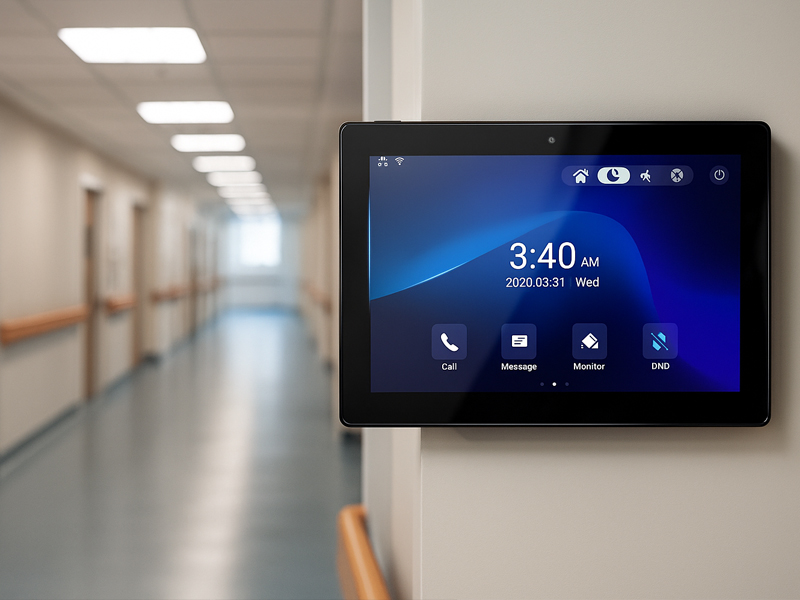
smart home control panel2
Portworld Smart Home Control Panel Product Portfolio
For clients seeking to avoid complete system redesign, leveraging an existing Portworld platform can substantially reduce development timelines.
The current smart home control panel product lineup encompasses:
YC-SM41P – 4-Inch Smart Home Control Panel
A space-efficient touchscreen interface suitable for:
- Residential smart homes
- Hospitality establishments
- Commercial offices
- Individual room automation systems
This model utilizes an RK3566 processor with Android 11/13 or Debian operating system options, complemented by WiFi, Bluetooth, Ethernet, and Power over Ethernet (PoE) connectivity. Portworld
YC-SM41P-KNX – 4-Inch KNX Control Panel
Purpose-built for KNX-protocol automation systems, featuring:
- RK3566 processor
- Android or Linux operating systems
- WiFi connectivity
- Bluetooth 5.2 technology
- Ethernet connection
- KNX protocol support
- Power over Ethernet (PoE) capability
YC-SM08P – 8-Inch PoE Smart Home Control Panel
An 8-inch display panel engineered for expansive smart home and automation control interfaces. Portworld
YC-SM08M – 8-Inch Smart Home Automation Panel
An RK3566-powered Android-based panel tailored for residential smart home, hospitality, corporate, and commercial automation deployments. Portworld
Portworld additionally offers 5-inch, 5.5-inch, 7-inch-class, 10-inch, and supplementary touchscreen platforms customized for diverse automation initiatives.
Portworld OEM/ODM Product Development Services
For clients undertaking the development of proprietary smart control panels, Portworld delivers comprehensive development services encompassing:
Portworld characterizes its OEM/ODM methodology as encompassing industrial design, PCB design, assembly operations, and mould fabrication, with a dedicated in-house engineering team providing oversight throughout the entire product development lifecycle.