How Can Digital Signage Displays Reduce the Need for Printed Menus?
The restaurant sector is undergoing significant digital transformation, with conventional paper-based menus being progressively supplanted by digital display systems. Spanning establishments ranging from quick-service restaurants and specialty cafes to hospitality venues and food service facilities, digital menu boards deliver enhanced adaptability, operational efficiency, and customer engagement through improved food presentation methodologies.
Through the implementation of digital display technology, establishments can diminish printing expenditures, modify menu offerings in real-time, and enhance the overall customer purchasing experience.
The Rationale for Transitioning from Printed Menus to Digital Signage
Conventional paper menus present numerous operational difficulties:
- Price modifications necessitate complete menu reprinting
- Promotional campaigns with seasonal variations are challenging to implement expeditiously
- Menu deterioration results in supplementary replacement expenses
- Visual presentation capacity is constrained by physical limitations
- Multi-location inventory management presents considerable complexity
Digital signage technology resolves these complications by facilitating remote content modifications and enabling the presentation of interactive visual materials.
Primary Advantages of Digital Menu Display Systems
1. Real-Time Menu Modifications
Flexibility represents one of the most significant advantages inherent in digital signage implementation.
Restaurants possess the capability to modify:
- Pricing structures
- Recently introduced menu items
- Seasonal product offerings
- Time-restricted promotional offerings
- Current product availability status
Modifications are executed instantaneously via a centralized content management platform (CMS), eliminating the necessity for physical material reproduction.
This functionality proves particularly advantageous for:
- Multi-unit restaurant operation
- Beverage and food service establishments
- Lodging and hospitality enterprises
- Shared food service environments
2. Minimize Printing and Operational Maintenance Expenditures
Paper-based menu systems necessitate continuous financial investment in:
- Graphic design revisions
- Production and manufacturing
- Logistics and distribution
- Inventory replacement and management
Digital display infrastructure substantially decreases these ongoing financial obligations by utilizing a sustainable, reusable presentation mechanism.
Organizations can administer numerous display terminals through a unified operational framework.
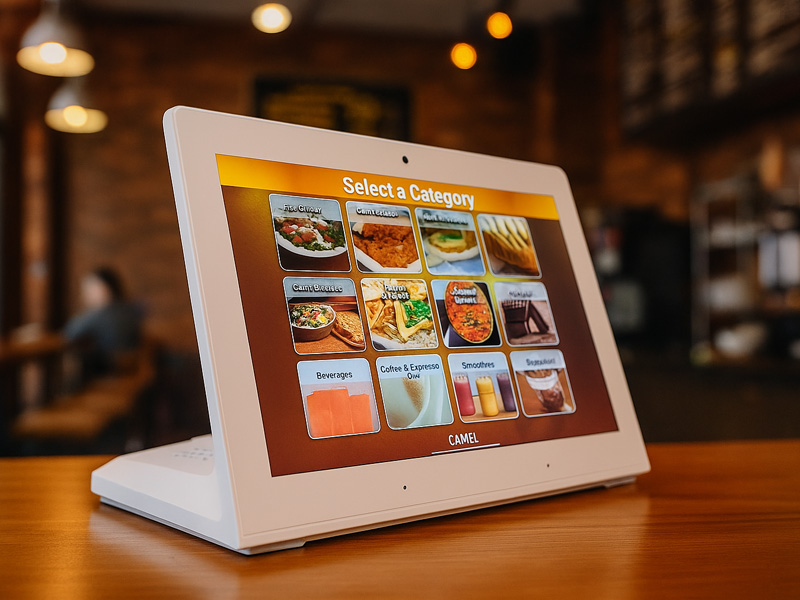
L-Shape Interactive Touch Screen Digital Signage
3. Enhance Customer Engagement
Digital displays offer a more compelling method for presenting culinary offerings.
In comparison to conventional printed menus, digital signage is capable of displaying:
- Premium-quality food imagery
- Advertising videos
- Dynamic promotional content
- Customer testimonials and ratings
- Bundle and pairing recommendations
- Visually striking content can motivate customers to discover additional menu items and boost revenue.
4. Facilitate Self-Service Ordering Solutions
Interactive touchscreen-based digital signage enables comprehensive self-service ordering capabilities.
Customers are able to:
- Review menu selections
- Personalize their orders
- Choose preferred options
- Process transactions
- Obtain order confirmation details
Implementation environments include:
- Quick-service restaurants
- Institutional cafeterias
- Hospitality establishments
- Advanced dining platforms
5. Provide Enhanced Multilingual Capabilities
Restaurants catering to diverse international clientele can seamlessly transition between multiple languages.
Digital menu platforms can accommodate:
- Numerous language options
- Varied pricing structures
- Location-specific promotional campaigns
This functionality enhances patron satisfaction in:
- Airport terminals
- High-traffic tourist destinations
Lodging facilities
- Globally-oriented dining establishments
- Implementation of Digital Menu Display Systems
- Quick-Service Restaurant Establishments
Utilized for:
- Primary menu presentations
- Customer self-ordering terminals
- Marketing and promotional content
Hospitality Venues
Utilizations:
- In-room dining order systems
- Dining establishment menus
- Visitor information platforms
- Coffee Shops and Pastry Outlets
Utilized for:
- Item showcase presentations
- Time-sensitive special offerings
- Electronic promotional initiatives
Food Court Environments
Advantages:
- Unified menu administration
- Consolidated vendor menu information
- Patron navigation and assistance
Characteristics of Digital Signage Solutions for Food Service Establishments
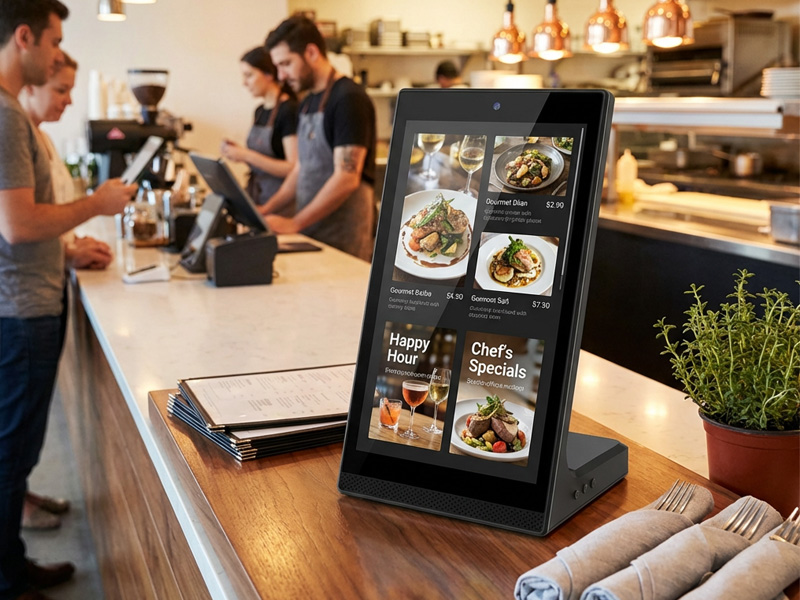
YC-L106 10.1-inch L-Shaped Digital Signage Display
Superior Visual Quality
Food service venues necessitate:
- Crisp and distinct imagery
- Expansive viewing perspectives
- Saturated and luminous color reproduction
Standard display dimensions:
- 21.5″
- 32″
- 43″
- 55″
- 65″
Interactive Touch Interface
Responsive display systems facilitate:
- Menu exploration
- Selection of items for purchase
- Patron engagement
Touch interface methodologies:
- Capacitive sensing technology
- Infrared detection technology
Centralized Remote Display Administration
Restaurant management teams can oversee and regulate displays from remote locations.
Operational capabilities encompass:
- Real-time menu modifications
- Time-based promotional campaigns
- Centralized control across multiple locations
- Digital promotional content distribution
Durable Commercial-Grade Equipment
- Food service establishments demand uninterrupted functionality.
- Essential operational specifications:
- Round-the-clock operational capability
- Dependable processing architecture
- Network connectivity via WiFi or Ethernet protocols
- Streamlined software deployment and compatibility
Portworld Digital Menu Board Solutions
Portworld delivers tailored digital signage solutions specifically designed for restaurants and hospitality establishments.
Key Capabilities:
- Android/Linux/Debian operating system compatibility
- RK3566/RK3568/RK3576/RK3588 processor platforms
- Interactive touchscreen menu interfaces
- WiFi and Ethernet network connectivity
- Centralized remote content management system
- Integrated camera and NFC technology options
- Proprietary motherboard engineering
- Comprehensive OEM/ODM customization services
Primary Use Cases:
- Digital menu board displays
- Self-service ordering kiosks
- Hotel guest service terminals
- Intelligent restaurant display systems
- Interactive customer engagement terminals
Comprehensive OEM/ODM Customization for Restaurant Enterprises
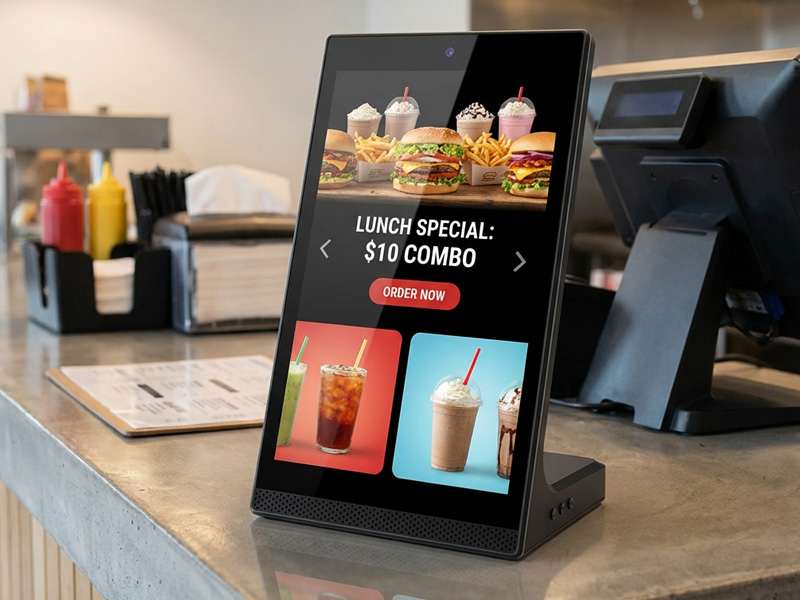
YC-L106 10.1-inch L-Shaped Digital Signage Display
Portworld facilitates fully customized restaurant display solutions through the following services:
Hardware Customization Options
- Display size configuration
- Touchscreen technology integration
- Specialized enclosure design
- NFC reader and payment processing module integration
Software Customization Capabilities
- Android firmware development and optimization
- Point-of-sale and ordering system integration
- User interface design and customization
- Third-party application and platform connectivity
Manufacturing and Production Services
- Prototype design and development
- Large-scale production capabilities
- Complete Knocked-Down (CKD) and Semi-Knocked-Down (SKD) assembly solutions
- International logistics and delivery support
Digital signage displays help restaurants move beyond traditional printed menus by providing faster updates, lower maintenance costs, and a more engaging customer experience.
From digital menu boards to interactive ordering terminals, digital signage creates a smarter and more efficient way for restaurants to communicate with customers.