Can Digital Signage Displays Connect to IoT Gateways?
As intelligent buildings, smart retail environments, and industrial Internet of Things applications continue to advance, digital signage displays are transitioning from conventional information presentation systems into sophisticated interactive platforms. A critical functionality involves establishing connections between digital signage displays and IoT gateways, enabling these systems to aggregate data, facilitate communication with connected devices, and present current information dynamically.
Through IoT gateway integration, digital signage systems can function as integral components within an expansive interconnected infrastructure designed for process automation, system monitoring, and intelligent operational control.
Understanding IoT Gateways
An IoT gateway functions as an intermediary connection point among diverse devices, sensors, and cloud-based systems.
It possesses the capability to aggregate information from:
- Temperature measurement sensors
- Environmental surveillance systems
- Intelligent household and commercial appliances
- Manufacturing and industrial machinery
- Security and access management systems
Subsequently, it processes and transmits this information utilizing standardized communication frameworks including:
- MQTT
- Modbus
- Zigbee
- Bluetooth
- WiFi
- Ethernet
- Matter
- KNX
When a digital signage display is integrated with an IoT gateway, it can render this collected data visually and facilitate instantaneous user engagement.

digital signage display
How Can Digital Signage Displays Connect to IoT Gateways?
1. Network-Based Connection
The predominant approach involves establishing a connection between the digital signage display and IoT gateway via a network infrastructure.
Connection methods encompass:
- Ethernet
- WiFi
- 4G/5G
The display facilitates communication with the gateway through:
- APIs
- Cloud platforms
- Local network protocols
- Applications
- Smart buildings
- Retail stores
- Industrial facilities
2. Protocol Integration
- Contemporary digital signage displays are capable of supporting multiple IoT communication protocols.
- MQTT
Frequently employed for:
- Cloud IoT platforms
- Real-time data communication
- Device monitoring
- Modbus / RS485
Extensively utilized in:
- Industrial automation
- Energy management
- Building control systems
- Zigbee / Matter / KNX
Implemented for:
- Smart home systems
- Smart buildings
- Connected devices
- Via these protocols, digital signage can present and manage IoT information.
- Applications of IoT-Connected Digital Signage Displays
1. Smart Building Information Displays
Digital signage systems can present instantaneous building metrics:
- Temperature readings
- Air quality measurements
- Energy utilization data
- Current occupancy levels
- Room reservation status
Example:
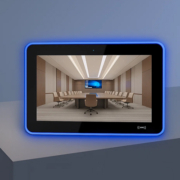
An entrance area display integrated with IoT sensors can communicate environmental metrics and facility-wide notifications.
digital signage display
2. Smart Retail Applications
IoT-enabled signage systems can enhance the customer shopping experience.
Applications encompass:
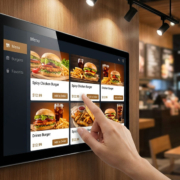
- Interactive product information displays
- Intelligent shelf-mounted signage
- Customer engagement features
- Stock level information
The system can integrate:
- RFID technology data
- Behavioral analytics
- Merchandise details
- to deliver customized retail experiences.
3. Industrial Monitoring Displays
In manufacturing facilities and storage centers, digital signage systems can integrate with IoT gateways to present:
- Equipment operational status
- Manufacturing output metrics
- Power consumption data
- Occupational safety protocols
Connectivity with industrial infrastructure may employ:
- RS485
- Modbus
- Ethernet
4. Smart Home Control Panels
Digital signage displays function as intelligent control interfaces.
Capabilities encompass:
- Illumination management
- Climate control systems
- Surveillance oversight
- Preset configuration management
Compatible technology platforms:
- Matter
- Zigbee
- KNX
Hardware Requirements for IoT-Connected Digital Signage
To facilitate IoT connectivity, displays typically necessitate adaptable hardware architectures.
Prevalent processing units include:
- Rockchip RK3566
- RK3568
- RK3576
- RK3588
These architectures facilitate:
- Android
- Linux
- Debian
- Ubuntu
- Yocto Linux
Supplementary hardware capabilities:
- Ethernet
- WiFi
- Bluetooth
- RS485
- GPIO
- NFC/RFID
- Sensors
digital signage display
Advantages of Integrating Digital Signage Systems with IoT Gateways
Live Information Display Capabilities
Display systems are capable of presenting current data transmitted from interconnected devices.
Illustrations:
- Energy consumption monitoring dashboards
- Environmental condition metrics
- Manufacturing operational status
Smart Automated Operations
The integrated system possesses the capability to modify displayed content automatically in response to IoT-generated data.
Illustrations:
- Modify promotional content according to ambient temperature conditions
- Distribute critical alert notifications with automatic triggering
- Present occupancy and availability information across intelligent office environments
Unified Control Infrastructure
Organizations are able to oversee:
- Numerous display installations
- Connected IoT infrastructure
- Material and messaging revisions
- via a consolidated management interface.
digital signage display
Portworld IoT-Enabled Digital Signage Solutions
Portworld delivers tailored digital signage solutions engineered for intelligent IoT applications.
Key Capabilities:
- Android/Linux/Debian compatibility
- RK3566/RK3568/RK3576/RK3588 processor architectures
- Ethernet/WiFi/Bluetooth communication protocols
- RS485 and industrial-grade interfaces
- Zigbee/Matter/KNX protocol integration capabilities
- Touchscreen configuration options
- IoT gateway connectivity
- Centralized remote content management system
- OEM/ODM hardware manufacturing services
Primary Use Cases:
- Intelligent building management systems
- Connected residential environments
- Industrial asset and process monitoring
- Retail-based IoT infrastructure
- Public transportation signage and information systems