Can a Smart Control Panel Support Zigbee, Matter, WiFi, and Bluetooth?
As intelligent home automation systems continue to proliferate, residents frequently encounter devices manufactured by various companies and operating on distinct platforms, encompassing smart illumination systems, environmental sensors, access control mechanisms, climate management systems, and multimedia devices. A principal obstacle in the implementation of smart home automation involves facilitating seamless communication and interoperability among these heterogeneous devices.
A contemporary smart control panel can accommodate multiple communication protocols, including WiFi, Bluetooth, Zigbee, and Matter, positioning itself as a unified management interface for diverse smart devices.
Through the integration of multiple communication standards, a smart control panel delivers an increasingly adaptable and expandable infrastructure suitable for residential properties, hospitality establishments, office environments, and industrial facilities.
How Do Distinct Communication Protocols Interface with a Smart Control Panel?
A smart control panel typically does not establish connections with individual devices utilizing an identical protocol. Rather, it functions as a primary management system or interfaces with intermediary gateways that convert disparate communication specifications.
A representative system configuration appears as follows:
Smart Control Panel → Smart Gateway → Smart Devices
or:
Smart Control Panel → Multi-Protocol Hub → Zigbee / Matter / Bluetooth Devices
Wireless Connectivity in Intelligent Control Systems
Wireless networking represents one of the predominant communication technologies employed within intelligent residential automation frameworks.
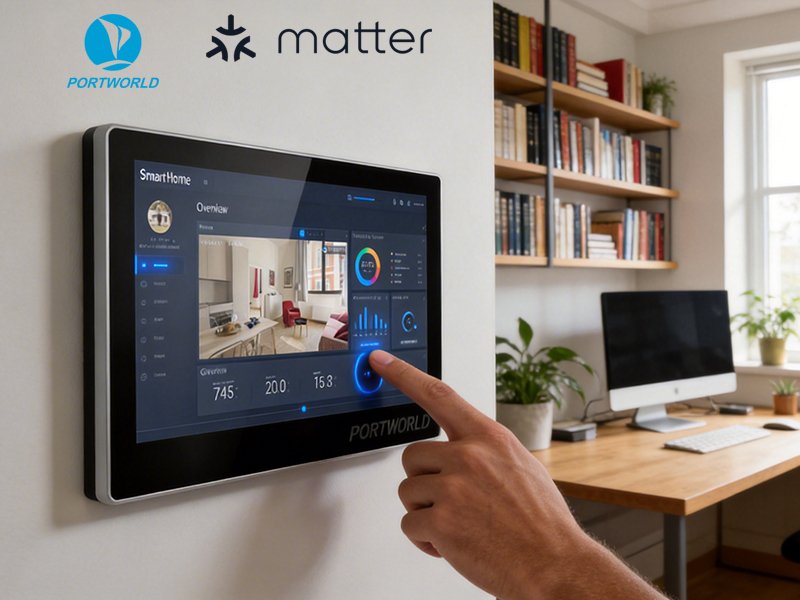
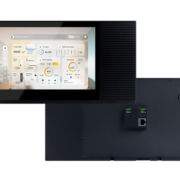
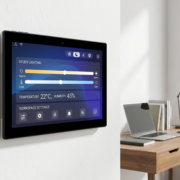
smart home control panel
An intelligent control system equipped with wireless connectivity can establish connections to:
- Cloud-based platforms
- Mobile software applications
- Intelligent household devices
- Internet of Things infrastructure
Benefits of Wireless Networking:
- Rapid data transfer capabilities
- Simplified network incorporation
- Optimal performance for multimedia, audio, and distributed computing applications
Common implementation scenarios:
- Intelligent residential management interfaces
- Distributed equipment administration
- Surveillance and threat detection
- Resource consumption optimization
Numerous Android-based intelligent control systems incorporate wireless connectivity to facilitate comprehensive residential automation integration.
Bluetooth and BLE Support
Bluetooth, particularly Bluetooth Low Energy (BLE), serves as a prevalent technology for establishing short-distance connections between intelligent devices.
A smart control panel equipped with Bluetooth functionality can interface with:
- Sensors
- Smart locks
- Wearable devices
- IoT accessories
Key benefits of BLE:
- Minimal power consumption
- Efficient pairing procedures
- Dependable short-range connectivity
As an illustration, a smart control panel may establish connections with Bluetooth sensors to present instantaneous temperature readings or environmental monitoring information.
Zigbee Integration with Smart Control Panels
Zigbee represents a widely adopted wireless communication standard utilized throughout the smart home industry.
It finds application in:
- Intelligent lighting systems
- Electronic switches
- Entrance sensors
- Motion detection sensors
- Smart power outlets
Primary advantages of Zigbee:
- Reduced energy consumption
- Mesh network architecture
- Capacity to support numerous interconnected devices
Typically, a smart control panel connects to Zigbee devices via an integrated Zigbee module or through an external Zigbee gateway device.
Illustrative example:
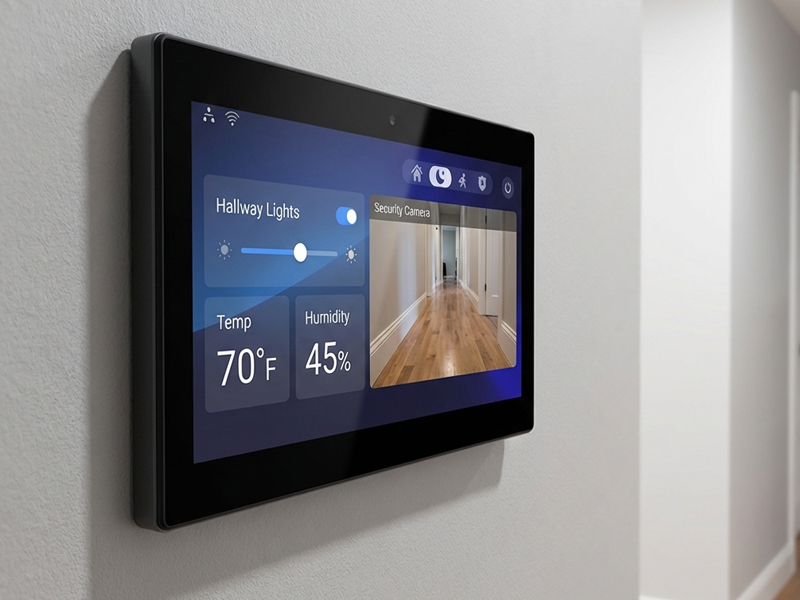
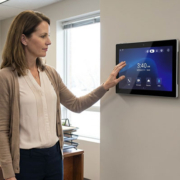
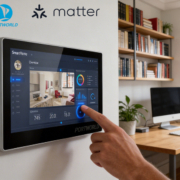
smart home control panel-1
Smart Control Panel → Zigbee Gateway → Smart Lighting & Sensors
This configuration enables residents to manage multiple energy-efficient devices distributed throughout their residence.
Matter Support in Smart Home Control Panels
Matter represents an emerging smart home standard developed to enhance interoperability across diverse technological ecosystems.
Matter facilitates seamless integration of devices originating from multiple platforms, encompassing:
- Apple Home
- Google Home
- Amazon Alexa
- Additional smart home platforms
A Matter-enabled smart control panel can effectively consolidate devices manufactured by various vendors.
Matter typically operates through the following connectivity methods:
- WiFi
- Thread
- Ethernet
A smart panel may function as:
- Matter controller
- User interface
- Gateway interface
depending on the specific hardware and software configuration.
Is it possible for a single intelligent control panel to accommodate all four protocols?
This is feasible; however, the feasibility is contingent upon the underlying hardware architecture.
A comprehensive multi-protocol intelligent control panel may incorporate:
| Protocol | Function |
|---|---|
| WiFi | Network connection and cloud services |
| Bluetooth/BLE | Short-range device connection |
| Zigbee | Low-power smart home devices |
| Matter | Cross-brand smart home interoperability |
To illustrate, a smart home system might function in the following manner:
Touch Panel
↓
WiFi / Ethernet
↓
Smart Gateway
↓
Zigbee + Matter + Bluetooth Devices
The control panel serves as the user interface, whereas the gateway orchestrates communication among the various connected devices.
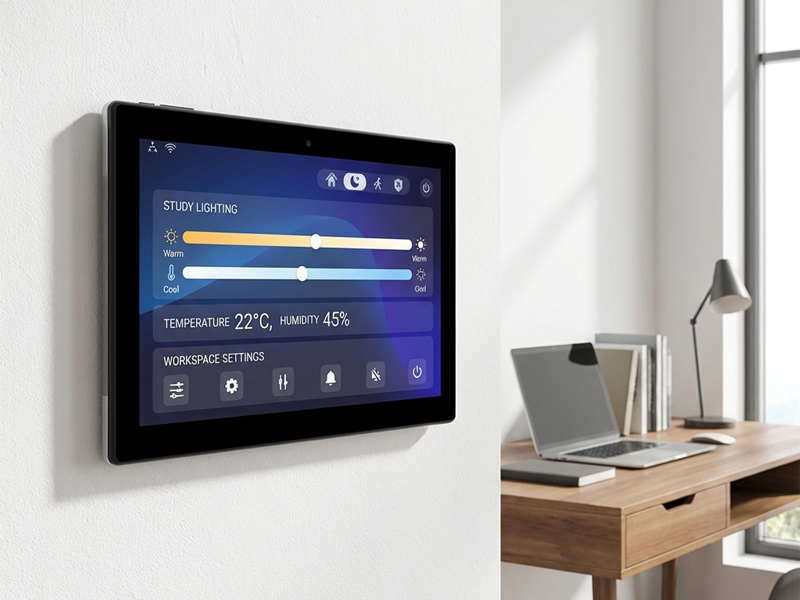
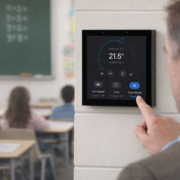
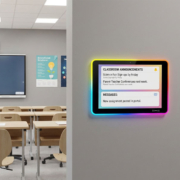
sm55p-smart home control panel
What Hardware Components Are Required for Multi-Protocol Smart Panels?
A smart control panel that supports multiple protocols typically incorporates the following components:
- High-performance processor
- WiFi connectivity module
- Bluetooth connectivity module
- Zigbee connectivity module
- Matter-compatible software framework
- Ethernet connectivity
- Gateway management software
For sophisticated implementations, Android-based panels equipped with processors such as the Rockchip RK3566 deliver sufficient computational capacity to execute bespoke smart home applications and perform gateway operations.
- Applications of Smart Control Panels with Multi-Protocol Capabilities
- Residential Smart Homes
Management capabilities:
- Illumination systems
- Heating, ventilation, and air conditioning systems
- Window coverings
- Security and access control systems
- Intelligent household appliances
- Hospitality Environments
Facilitate unified control of guest accommodations:
- Room illumination
- Climate regulation
- Window treatment operation
- Power consumption optimization
- Commercial Smart Buildings
Integration of:
- Automated building management systems
- Workspace control infrastructure
- Conference area oversight
- Utility consumption tracking
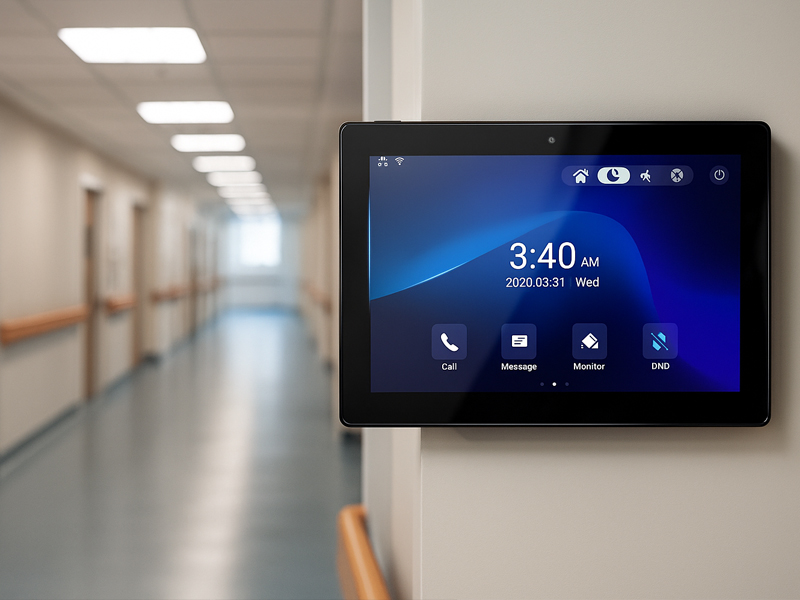
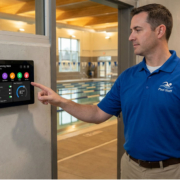
smart home control panel2
Portworld Smart Control Panel Solutions
Portworld delivers adaptable intelligent control panels engineered for diverse automation environments, encompassing:
- ESP32-based touch interface panels designed for Internet of Things applications
- Android intelligent control panels utilizing Rockchip processor technology
- Ethernet and Power over Ethernet-equipped control terminals
- Tailored hardware and software implementations
Specialized models including the YC-SM43P ESP32-S3 intelligent touch panel and RK3566-powered Android intelligent control panels offer extensive customization capabilities aligned with specific project specifications, encompassing communication protocols, operating system selection, and bespoke application software.
An intelligent control panel demonstrates capability to facilitate Zigbee, Matter, WiFi, and Bluetooth connectivity through embedded hardware components or linked intelligent gateway systems.
Through the integration of multiple communication standards, intelligent control panels facilitate:
- Enhanced interoperability across devices
- Unified command and management
- Scalable infrastructure development
- Optimized intelligent residential and commercial experiences
Within emerging intelligent residential and commercial infrastructures, multi-standard intelligent control panels will serve as fundamental components in consolidating disparate Internet of Things devices into a cohesive intelligent automation framework.