How Does Smart Control Panel ODM Manufacturing Work?
The smart home and building automation sectors are experiencing substantial growth, which has generated heightened demand for tailored smart control panels. Numerous enterprises, system integrators, and solution providers opt for Original Design Manufacturer (ODM) services to create proprietary smart panels rather than developing an entire product independently.
An ODM initiative for smart control panels encompasses considerably more than logo modification. The scope includes:
- Hardware platform selection
- PCBA design and customization
- Industrial design
- Software and firmware development
- Communication protocol integration
- Testing and certification
- Mass production
A qualified ODM partner facilitates the conversion of a concept into a dependable commercial offering.
1. What Constitutes Smart Control Panel ODM Manufacturing?
ODM refers to a manufacturing entity that designs and manufactures a product in accordance with customer specifications.
In contrast to OEM arrangements, where customers primarily furnish specifications and branding elements, ODM encompasses more extensive engineering participation.
A smart control panel ODM manufacturer can provide assistance with:
- Product architecture
- Hardware design
- PCBA development
- Mechanical structure
- Operating system customization
- UI/UX development
- Manufacturing process
- Quality testing
The resulting product may be commercialized under the customer’s proprietary brand.
Example:
Customer Idea
↓
ODM Manufacturer
↓
Hardware + Software Development
↓
Customized Smart Control Panel
↓
Customer Brand Product
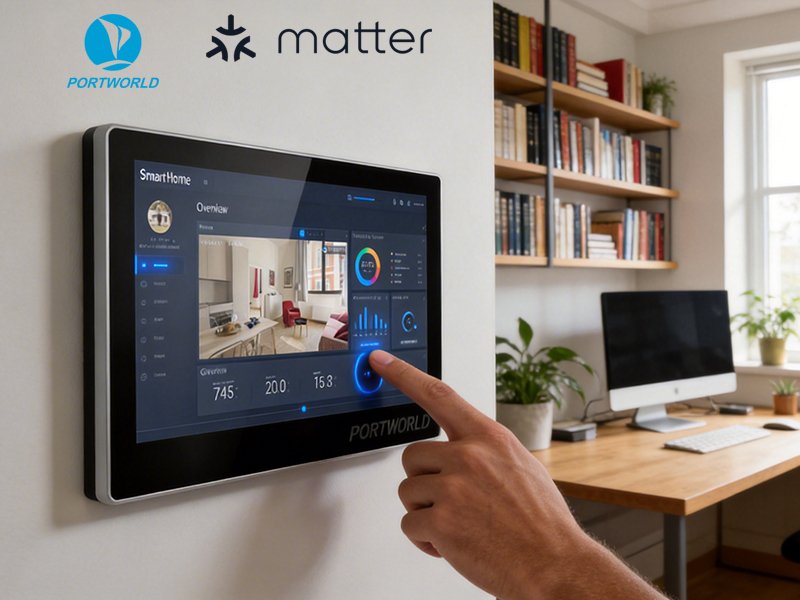
smart home control panel
2. Step 1: Establish Product Specifications
Every ODM project commences with a comprehensive requirements assessment.
Prior to hardware development, manufacturers must ascertain:
Intended Use Case
In what environment will the display be deployed?
Typical applications include:
- Residential smart systems
- Hospitality establishments
- Corporate workspaces
- Conference facilities
- Healthcare institutions
- Manufacturing and process automation
Display Dimension Specifications
Standard dimensions encompass:
- 4-inch
- 5-inch
- 7-inch
- 8-inch
- 10-inch
- 15.6-inch
Various applications necessitate distinct display dimensions.
For instance:
| Application | Common Size |
|---|---|
| Smart switch replacement | 4-5 inch |
| Hotel room control | 7-10 inch |
| Meeting room control | 10 inch+ |
| Building management | 10-15.6 inch |
Communication Requirements
The Original Design Manufacturer (ODM) team identifies the necessary communication protocols:
Wireless Options:
- WiFi
- Bluetooth
- Zigbee
- Matter
- Thread
Wired Options:
- Ethernet
- Power over Ethernet (PoE)
- RS485
- Modbus
- KNX
The selected communication architecture significantly influences the overall hardware design approach.
3. Step 2: Select Hardware Platform
The processor selection represents one of the most critical decisions in the development process.
Various applications necessitate different levels of computational capability.
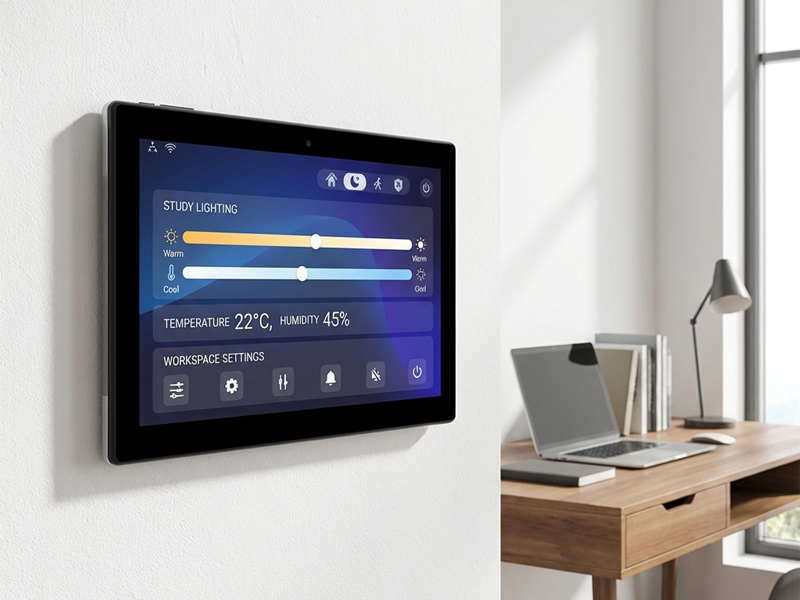
sm55p-smart home control panel
ESP32-Based Smart Panel Solutions
Applicable to:
- Internet of Things (IoT) controllers
- Intelligent switching systems
- Basic automation implementations
Key Benefits:
- Minimal power consumption requirements
- Economical pricing structure
- Accelerated development timeline
Illustrative Example:
Portworld YC-SM43P
Technical Specifications:
- ESP32-S3 microprocessor
- 4-inch interactive touchscreen display
- WiFi and Bluetooth connectivity
- RS485 serial communication interface
- LVGL graphical user interface framework support
Android and Linux Intelligent Display Systems
Applications:
- Residential automation systems
- Hospitality establishments
- Corporate workspaces
- Industrial and retail facilities
Standard Processing Units:
- Rockchip RK3566
- RK3568
- ARM-compatible architectures
Key Benefits:
- Sophisticated graphical interface
- Tailored software solutions
- Integrated media capabilities
- Enhanced computational performance
Product Specifications:
- Portworld YC-SM08M
- RK3566 central processor
- Android 11 operating system
- 8-inch capacitive touchscreen
- Power over Ethernet connectivity
Portworld YC-SM10P
- RK3566 processing architecture
- 10-inch interactive display
- Android-based operating environment
- RS485 serial communication and PoE support
4. Step 3: Hardware and PCBA Development
Following platform selection, the engineering team proceeds to design the internal electronic components.
smart home control panel
The PCBA comprises:
Main Processor
Functions include:
- Managing system operations
- Rendering user interface elements
- Facilitating device communication
- Memory
Comprises:
- RAM
- eMMC
- Flash storage
Purposes:
- Hosting the operating system
- Storing applications
- Preserving user settings
- Communication Modules
Selected based on project specifications:
- WiFi module
- Bluetooth module
- Zigbee module
- Ethernet controller
- RS485 circuit
- Power System
Engineered in accordance with installation specifications:
Typical configurations:
- DC 12V input
- DC 24V input
- PoE power supply
5. Step 4: Industrial Design and Mechanical Customization
The aesthetic qualities of a smart panel hold considerable significance, as it becomes an integral component of the architectural environment.
ODM customization may encompass:
Housing Design
Options:
- Polycarbonate housing
- Aluminum frame
- Tempered glass front panel
- Installation Design
Support for:
- 86-type wall mounting boxes
- European standard wall boxes
- North American standard wall boxes
- Proprietary mounting brackets
- Branding
Customization encompasses:
- Corporate logo application
- Initialization sequence animation
- Product identification labels
- Packaging specifications
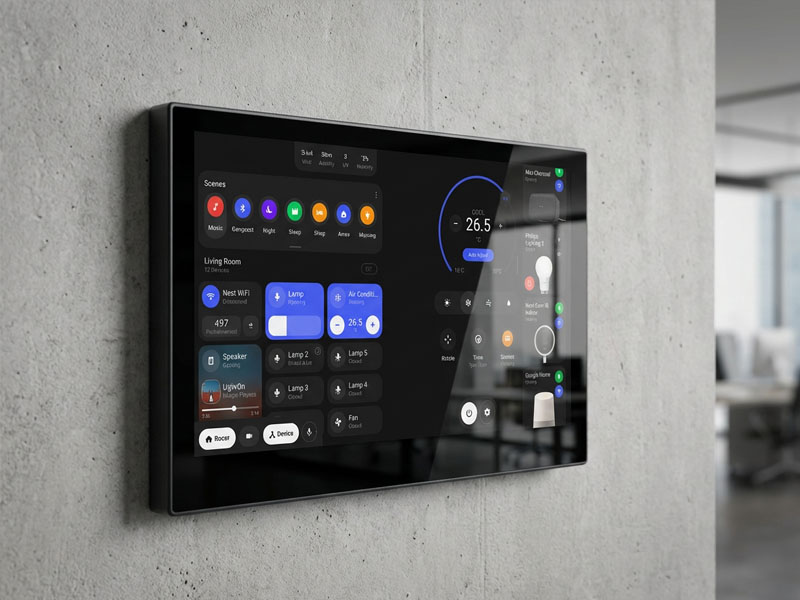
6. Step 5: Software and User Interface Customization
Contemporary smart panels necessitate tailored software solutions.
ODM services may provide:
Operating System Customization
Options:
- Android platform
- Linux distribution
- Debian operating system
- Ubuntu distribution
- Real-Time Operating System (RTOS)
- User Interface Design
Customization:
- Graphical icons
- Screen layout configuration
- Multilingual support
- Visual themes
- Management and control dashboards
Example:
- Smart Home Dashboard
- Lighting ON
- Temperature 23°C
- Curtains 50%
- Security Active
Smart Device Integration
The software demonstrates compatibility with the following platforms and ecosystems:
- Tuya
- Matter ecosystems
- Home automation platforms
- Building management systems
7. Step 6: Prototype Development
Originally, ODM manufacturers establish prototypes prior to initiating mass production operations.
Prototype evaluation procedures validate:
- Hardware operational performance
- Touch responsiveness
- Display visual quality
- Communication reliability
- Software operational capabilities
- Installation compatibility requirements
Multiple prototype iterations may be necessary to achieve final authorization.
8. Step 7: Testing and Certification
Smart control panels must successfully complete rigorous reliability assessments before entering production.
Standard assessment procedures encompass:
- Hardware Testing
- Electrical power testing
- Display functionality testing
- Touch sensitivity testing
- Interface compatibility testing
- Communication Testing
Validation of:
- WiFi connectivity
- Bluetooth connectivity
- Ethernet connectivity
- RS485 connectivity
- Zigbee/Matter compatibility verification
- Reliability Testing
Comprehensive evaluation includes:
- Temperature stress testing
- Humidity stress testing
- Accelerated aging testing
- Extended operational duration testing
- Regulatory Certifications
Based on target market requirements:
- CE
- FCC
- RoHS
- REACH
- UKCA
- KC
9. Step 8: SMT Assembly and Mass Production
After prototype approval, production begins.
The manufacturing process includes:
PCB Manufacturing
↓
SMT Component Placement
↓
Reflow Soldering
↓
PCBA Testing
↓
Device Assembly
↓
Firmware Programming
↓
Final Inspection
↓
Packaging
Professional ODM factories use production testing and quality control systems to ensure consistency between batches.
10. What Elements Can Be Customized Within a Smart Control Panel ODM Solution?
A comprehensive ODM solution enables customization across multiple dimensions:
Hardware Components
- Central processing unit
- Memory and data storage capacity
- Screen dimensions
- Connection ports and connectors
- Detection and measurement devices
- Visual and audio capture equipment
Software Architecture
- Operating system selection (Android or Linux)
- Core system programming
- User interface appearance and functionality
- Custom software programs
- Remote system updates and maintenance
Physical Design
- External casing and structure
- Construction materials
- Surface finish and hue
- Brand identification and markings
- Product packaging and presentation
Communication Capabilities
- Wireless local area network
- Short-range wireless technology
- Home automation protocol
- Interoperability standard
- Industrial serial communication
- Network connectivity
- Power over network delivery
Why Select Smart Control Panel ODM Services?
ODM manufacturing delivers multiple strategic benefits:
Accelerated Product Development
Leveraging pre-established platforms significantly reduces time-to-market.
Reduced Engineering Expenditure
Organizations eliminate the necessity of establishing an extensive in-house hardware development department.
Adaptable Customization Capabilities
Solutions can be tailored to accommodate diverse industry verticals.
Dependable Manufacturing Operations
Established ODM manufacturers deliver:
- Production oversight
- Quality assurance protocols
- Logistical coordination
- Portworld Smart Control Panel ODM Services
Portworld delivers specialized smart touchscreen panel solutions serving:
- Residential automation systems
- Hospitality environments
- Commercial workspaces
- Structural automation infrastructure
- Industrial human-machine interface applications
ODM service offerings encompass:
- Hardware Engineering
- Printed circuit board assembly design
- Microprocessor configuration
- Connectivity customization
- Screen technology selection
- Application Software Development
- Android/Linux platform adaptation
- User interface design
- Embedded software engineering
- Product Configuration
- Enclosure engineering
- Brand identity application
- Distribution packaging
Offerings feature:
- ESP32-based intelligent touch control systems
- RK3566-powered Android management interfaces
- Specialized industrial human-machine interface touch solutions