How to Choose the Best PoE Smart Touch Panel for Local Debian Linux Home Assistant Hubs
The smart home sector is progressing towards more open, secure, and locally managed automation solutions. Rather than depending solely on cloud-based systems, numerous homeowners, system integrators, and smart building developers are embracing local automation hubs that utilize Debian Linux, Home Assistant, and open communication protocols.
A Power over Ethernet (PoE) smart touch panel operating on a local Debian Linux Home Assistant hub offers an optimal blend of centralized control, dependable networking, and a streamlined wall-mounted user interface. Nevertheless, choosing the appropriate hardware necessitates thorough evaluation of processor performance, operating system compatibility, communication interfaces, and the potential for long-term customization.
For smart home brands and automation firms, the ideal touch panel serves not merely as a display device but also as an embedded computing platform that oversees the entire intelligent environment.
As smart home systems grow increasingly intricate, users anticipate a single central interface to manage lighting, HVAC, security, energy monitoring, and IoT devices. A conventional wall switch can only deliver limited functionalities, whereas a smart touch panel can present real-time data and execute tailored automation applications.
For a local Home Assistant setup, the panel must facilitate stable Linux operation, network communication, touchscreen interaction, and uninterrupted functionality. This is the reason why Debian Linux-based embedded panels are gaining traction in professional smart home initiatives.
In comparison to cloud-reliant solutions, a local Debian Linux hub offers benefits such as:
- Quicker response times
- Enhanced privacy protection
- Greater customization options
- Decreased reliance on external servers
- Consistent operation even with restricted internet connectivity
One of the key considerations when selecting a PoE smart touch panel is the hardware platform.
Home Assistant dashboards and automation interfaces necessitate greater processing power than basic touch controllers. An appropriate panel should deliver sufficient CPU performance and memory capacity to manage:
- Web-based dashboards
- Automation scripts
- Device integrations
- Multimedia interfaces
- Multiple communication services
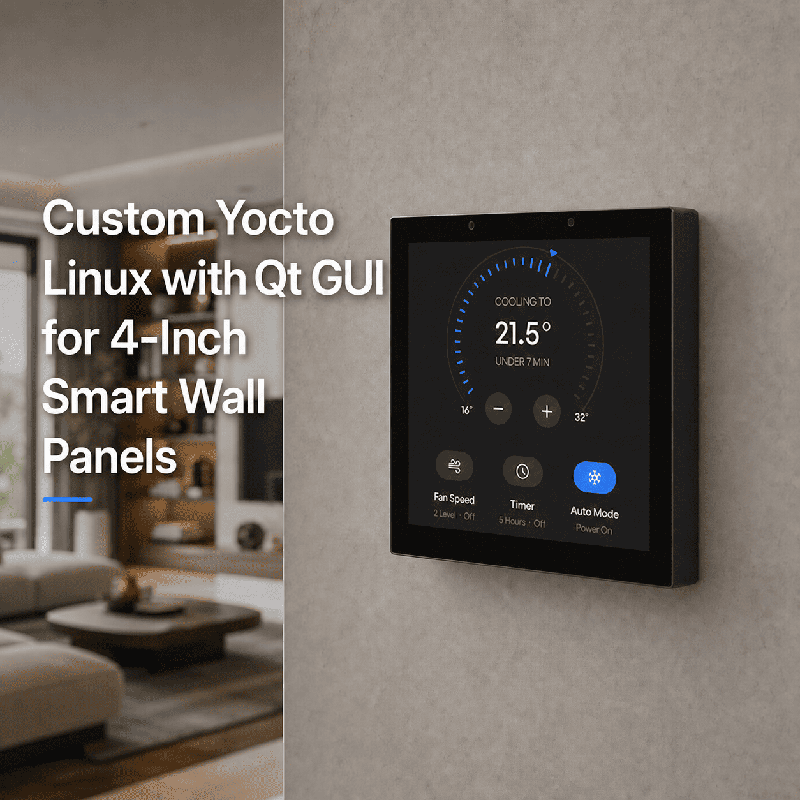
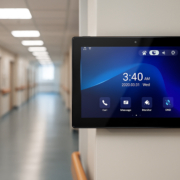
smart home control panel
Embedded processors like Rockchip platforms are commonly utilized in smart touch panels due to their favorable balance of performance and power efficiency.
For varying application needs, platforms such as Rockchip RK3566, RK3568, RK3576, and RK3588 offer versatile computing solutions for smart home control terminals.
The capability of Power over Ethernet (PoE) is another crucial factor for professional smart home installations.
A PoE smart touch panel can receive both power and network data through a single Ethernet cable, which streamlines installation and minimizes wiring complexity.
This feature is particularly beneficial for:
- New residential projects
- Smart apartments
- Hotels
- Commercial buildings
In comparison to traditional power installations, PoE deployment results in a cleaner setup and simpler maintenance, making it ideal for extensive smart automation projects.
Communication compatibility is essential for a smart home hub that operates on Home Assistant.
A professional smart touch panel must accommodate various connection methods, which include:
- Ethernet for network-based automation
- RS485 for industrial and building devices
- WiFi and Bluetooth for wireless IoT products
- USB expansion for additional peripherals
These interfaces enable the panel to connect with a range of systems, such as Zigbee gateways, Modbus devices, HVAC controllers, sensors, and smart home platforms.
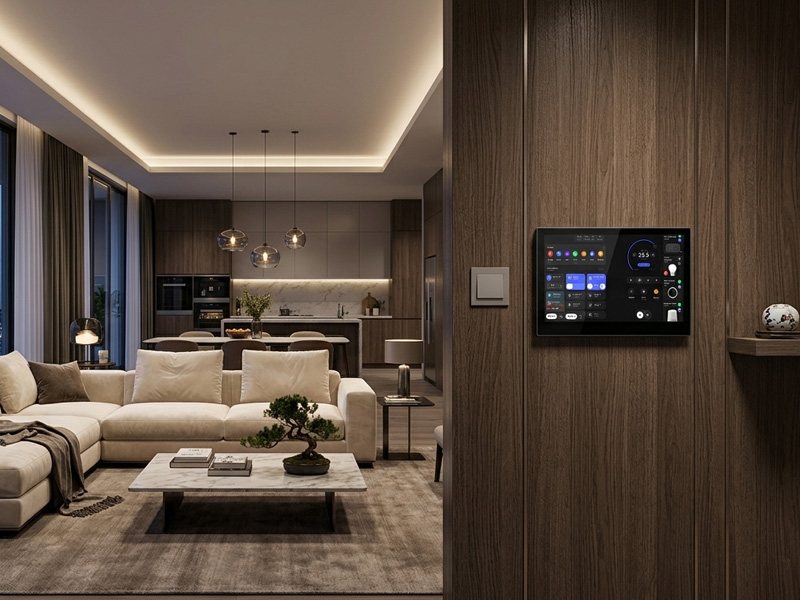
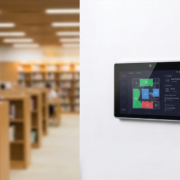
smart home control panel-1
Portworld offers tailored PoE smart touch panel solutions specifically designed for local Linux-based smart home applications.
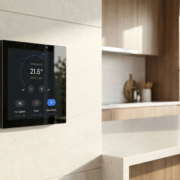
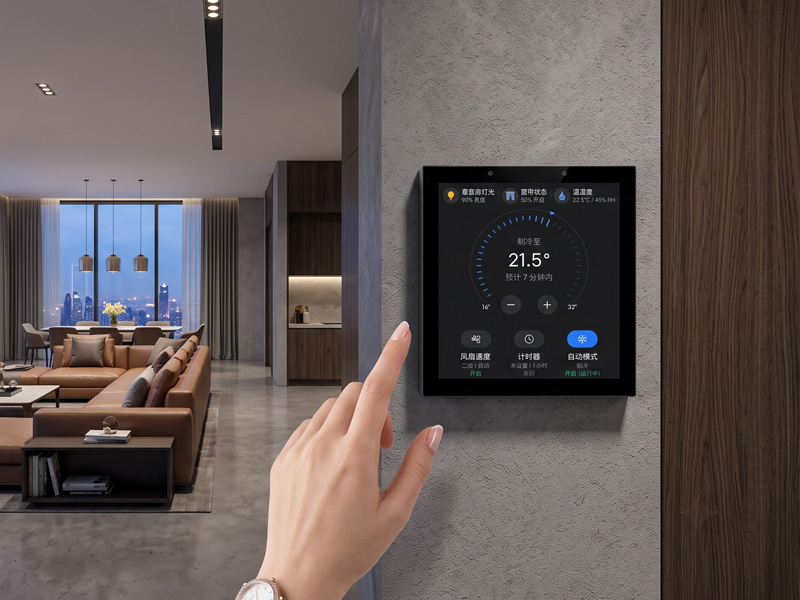
The YC-SM41P 4-inch smart touch control panel serves as a compact embedded solution ideal for smart homes, hotels, and building automation projects. It is compatible with Linux Debian environments and features:
- PX30 quad-core Cortex-A35 processor
- 4-inch 480×480 capacitive touchscreen
- Ethernet connectivity
- RS485 communication
- WiFi and Bluetooth
- 48V PoE support
- Wall-mounted embedded installation
For users who need larger dashboards and more sophisticated interfaces, Portworld also offers larger smart panels, such as the YC-SM116P 11.6-inch smart touch control panel, which is based on the RK3568 platform.
It includes:
- Large IPS touchscreen display
- Android/Linux customization
- Ethernet communication
- RS485 integration
- Customized firmware development
- Smart building applications
These platforms provide a robust hardware foundation for Home Assistant, IoT gateways, and local automation systems.
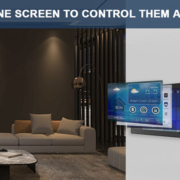
Smart Home Touch Control Panel
The flexibility of software is a crucial consideration when choosing a smart touch panel.
A reputable embedded manufacturer ought to offer more than just standard firmware. Various smart home initiatives may necessitate tailored operating systems, user interfaces, and integration techniques.
Portworld provides support for:
- Customization of Debian/Linux
- Development of Yocto Linux BSP
- Development of Qt/QML interfaces
- Optimization of firmware
- Integration of applications
- Solutions for remote updates
This enables clients to develop branded smart home control panels featuring their own software ecosystem.
For global smart home integrators, the optimal PoE smart touch panel is not merely the one with the largest display or the most advanced specifications. The best solution should integrate dependable hardware, open software support, adaptable communication, and the ability for long-term customization.