Custom Linux firmware development for smart control panels
In the realm of smart home automation and industrial building management, hardware constitutes only a portion of the overall solution. The true value frequently lies in the firmware that operates behind the touchscreen interface. For numerous OEM and ODM initiatives, the development of custom Linux firmware for smart control panels has emerged as a vital necessity to ensure stability, performance, and comprehensive system integration.
Linux offers a versatile and highly customizable platform for embedded smart control devices, rendering it particularly suitable for wall-mounted control panels utilized in residential, hospitality, office, and commercial environments.
Reasons for the Adoption of Linux in Smart Control Panels
Linux is extensively utilized in the development of smart control panels due to its lightweight nature, stability, and exceptional adaptability to embedded systems.
In contrast to general-purpose operating systems, Linux can be minimized and tailored specifically for control panel applications, thereby eliminating superfluous background processes and enhancing overall system responsiveness.
It is especially appropriate for devices that necessitate:
- Continuous operation 24/7
- Reliable network communication
- Integration of industrial protocols
- Long-term maintenance and dependability
Owing to these benefits, Linux has established itself as the preferred option for firmware development in building automation and smart panel applications.
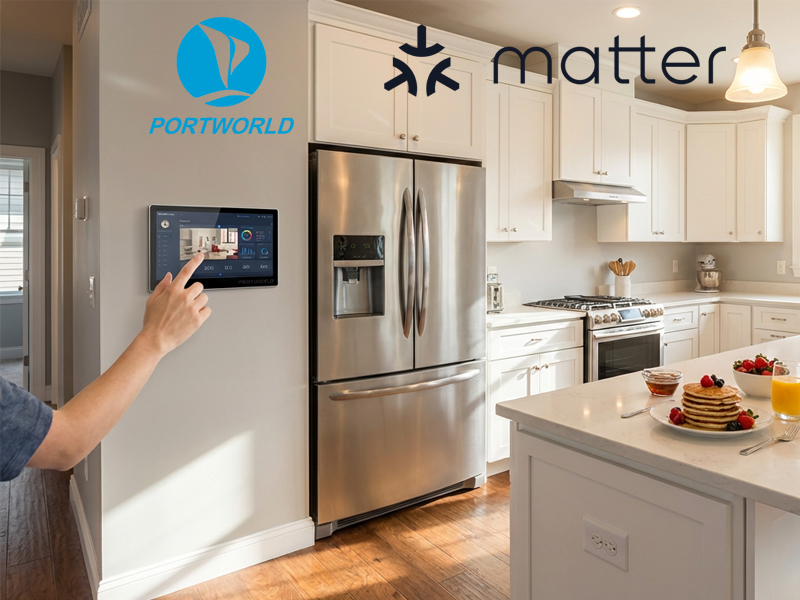
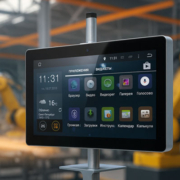
Smart Home Touch Control Panel
What is Custom Linux Firmware for Smart Panels?
Custom Linux firmware is a specialized operating system build specifically designed for a smart control panel hardware platform.
Unlike a standard Linux distribution, it is optimized for:
- Touchscreen interface performance
- Hardware drivers (display, touch, WiFi, Ethernet, RS485, etc.)
- Integration of smart home protocols
- Optimization of boot time
- Security and system stability
Typically, firmware is developed using frameworks such as Buildroot or Yocto to create a lightweight and highly efficient system.
Key Components of Linux Firmware Development
The development of Linux firmware for smart control panels encompasses several critical layers.
The initial layer is the bootloader, which guarantees that the system starts reliably and initializes the hardware correctly.
The subsequent layer is the Linux kernel, responsible for managing core hardware communication and system resources.
The third layer consists of device drivers that facilitate the operation of components such as touchscreens, displays, cameras, and communication interfaces.
The final layer is the application layer, where the smart home interface, automation logic, and control dashboard operate.
Each layer must be meticulously optimized to ensure seamless performance in real-world deployment scenarios.
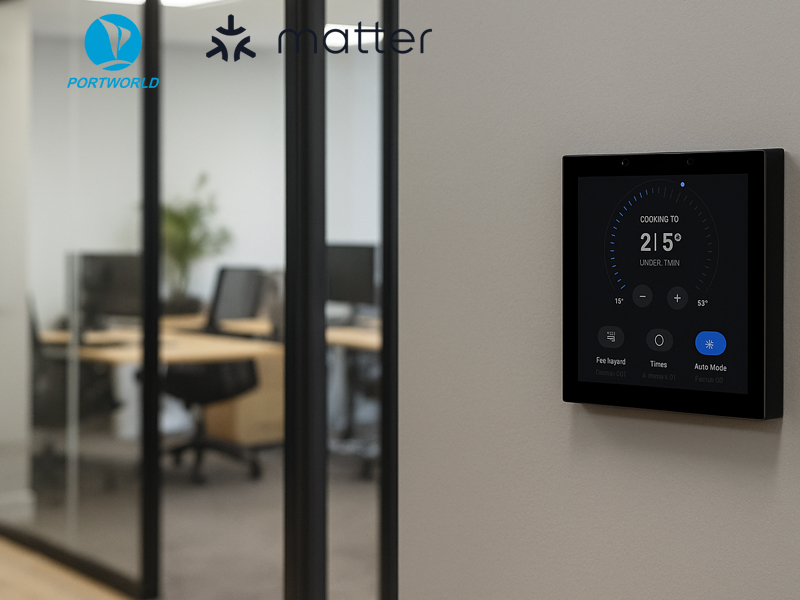
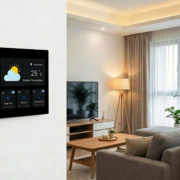
smart home control panel
Integration with Smart Home Protocols
A critical element of Linux firmware development for smart control panels is the integration of various protocols.
Smart buildings depend on numerous communication standards, and Linux excels in facilitating their unification into a cohesive system.
Commonly used protocols encompass:
- KNX for building automation
- RS485 and Modbus for HVAC systems
- MQTT for IoT communication
- Zigbee and Bluetooth for wireless devices
- TCP/IP for cloud connectivity
Custom firmware enables the seamless operation of all these protocols within a singular control panel ecosystem.
Advantages of Custom Linux Firmware
Custom Linux firmware presents several significant benefits for manufacturers of smart control panels and system integrators.
It grants complete control over system functionality, enabling developers to fine-tune performance for particular hardware setups.
Moreover, it enhances system stability by eliminating superfluous components and concentrating solely on essential functions.
Security can be bolstered by reducing potential attack vectors and managing access at the system level.
Furthermore, firmware updates can be tailored to facilitate long-term product lifecycle management, which is crucial for commercial and industrial applications.
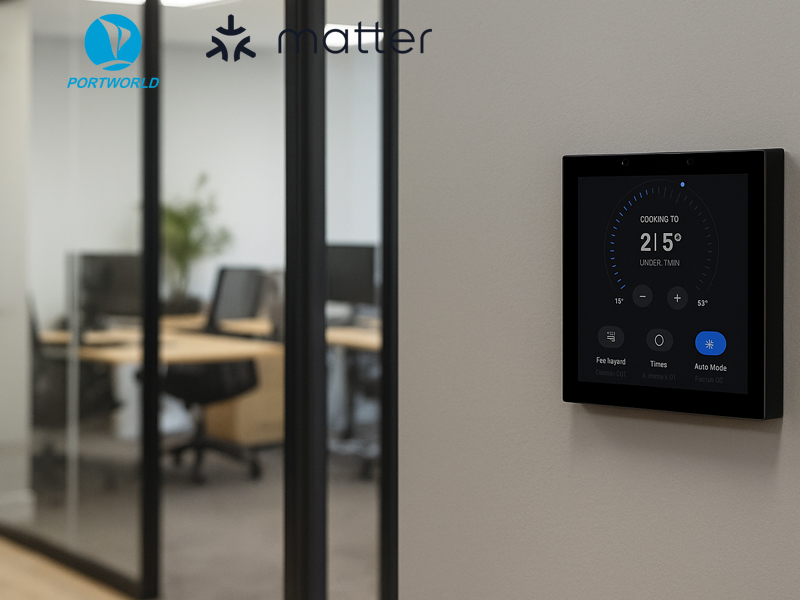
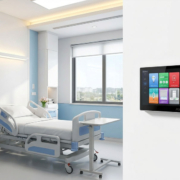
smart home control panel
Typical Uses of Smart Control Panels
Linux-based smart control panels find extensive application in settings where stability and reliability take precedence over intricate graphical interfaces.
In smart hotels, these panels facilitate room control systems that oversee lighting, HVAC, and guest services.
In office buildings, they function as terminals for meeting room control and environmental management interfaces.
In industrial settings, they act as monitoring panels for equipment status and energy systems.
In smart homes, they frequently serve as central control hubs that integrate with more sophisticated automation systems.
Development Obstacles in Linux Firmware Projects
While Linux provides significant flexibility, developing firmware for smart control panels presents several challenges.
A primary concern is hardware compatibility, particularly when it comes to integrating touchscreens, display drivers, and communication modules.
Optimization is also essential, as embedded systems demand rapid boot times and consistent performance during prolonged operation.
Another challenge involves ensuring seamless integration among various protocols and sustaining long-term firmware updates across different hardware revisions.
Addressing these challenges necessitates robust embedded engineering expertise and meticulous system design.
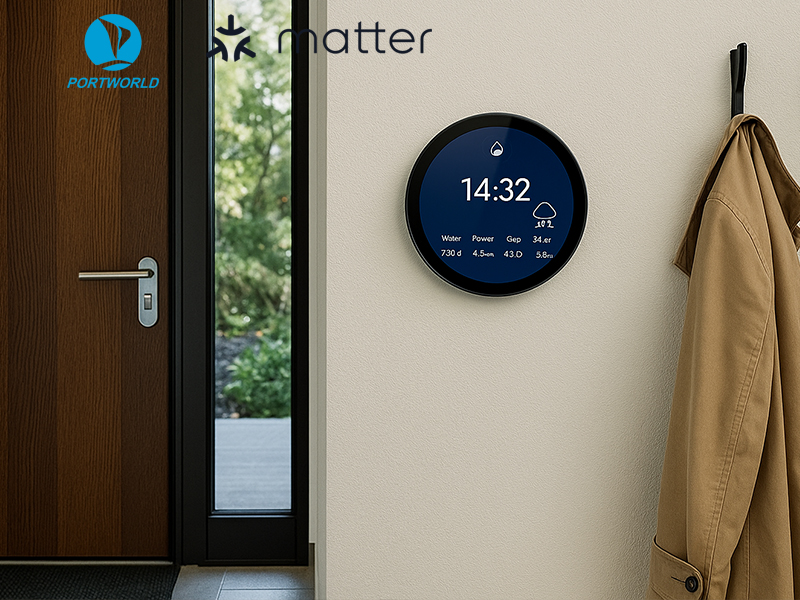
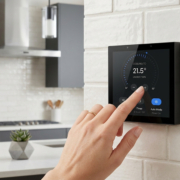
smart home control panel
Portworld Linux Firmware Solutions for Smart Control Panels
In practical applications, manufacturers like Portworld offer hardware platforms for smart control panels that accommodate custom Linux firmware development.
These solutions cater to smart home, hotel, and building automation initiatives, providing flexible integration options for system integrators and OEM/ODM clients.
OEM/ODM Role in Firmware Customization
Custom Linux firmware development is closely tied to OEM/ODM manufacturing.
Hardware and software must be designed together to ensure compatibility and performance.
OEM/ODM services typically include:
Hardware customization such as display size, interface design, and communication modules Firmware customization including kernel optimization, driver integration, and system tuning UI and application layer customization for smart control interfaces Branding and system packaging for commercial deployment
This combined approach ensures a fully integrated smart control solution from hardware to software.