
LED vs LCD Digital Signage Display: A Comparison
When it comes to digital signage displays, choosing the right technology is crucial for ensuring high-quality visuals, energy efficiency, and long-term durability. Two of the most commonly used display types for digital signage are LED (Light Emitting Diode) and LCD (Liquid Crystal Display). While both are widely used in various applications, including advertising, informational displays, and interactive kiosks, they each offer unique benefits and features.
In this article, we’ll compare LED vs LCD digital signage displays, highlighting the differences in performance, energy efficiency, cost, and overall application suitability.
What is LED Digital Signage?
LED digital signage displays use Light Emitting Diodes (LEDs) to produce the light necessary to illuminate the screen. These screens are often referred to as LED-backlit LCDs or direct-view LEDs. The key difference lies in how the light is generated. While LED-backlit displays still rely on liquid crystals to create the image, direct-view LED displays use LEDs to form the image directly.
- LED-backlit LCD: In these displays, LEDs provide the backlight for an LCD screen, offering better brightness and color contrast compared to traditional fluorescent backlit displays.
- Direct-view LED: In this type of digital signage, the display is made up entirely of individual LED pixels, offering brighter images with higher contrast and vivid color accuracy.

Wall-Mounted Touch Screen-1
What is LCD Digital Signage?
LCD digital signage displays use a liquid crystal panel that is backlit by fluorescent lamps or LEDs. The liquid crystals are manipulated by electric currents to create images and text on the screen. LCD screens are commonly used for indoor applications such as retail displays, menu boards, and corporate information systems.
Key Differences Between LED and LCD Digital Signage Displays
1. Brightness and Image Quality
- LED Displays: Direct-view LED screens are known for their superior brightness, which makes them ideal for both indoor and outdoor applications. These displays can produce high-quality, bright images even in well-lit environments or direct sunlight. The ability to control brightness levels also allows for better color contrast, sharper visuals, and overall higher image quality.
- LED-backlit LCD displays also offer excellent brightness levels compared to traditional LCDs. However, the brightness can vary depending on the quality of the backlighting.
- LCD Displays: While modern LCD displays can be quite bright, their brightness often falls short when compared to LED screens, particularly in environments with lots of natural or artificial light. However, they still provide good image quality for many indoor applications where lighting control is easier.
2. Energy Efficiency
- LED Displays: LED-backlit LCD displays are generally more energy-efficient than traditional LCD displays. Direct-view LED displays are even more energy-efficient as they produce less heat and consume less power compared to older technologies like fluorescent lamps.
- LED displays have a longer lifespan and are more environmentally friendly as they do not contain harmful substances like mercury, which is used in older backlit LCD displays.
- LCD Displays: Standard LCDs tend to consume more power compared to LED backlit models. The power consumption is generally higher, especially in large-format displays, and the backlight often uses fluorescent tubes, which are less energy-efficient.
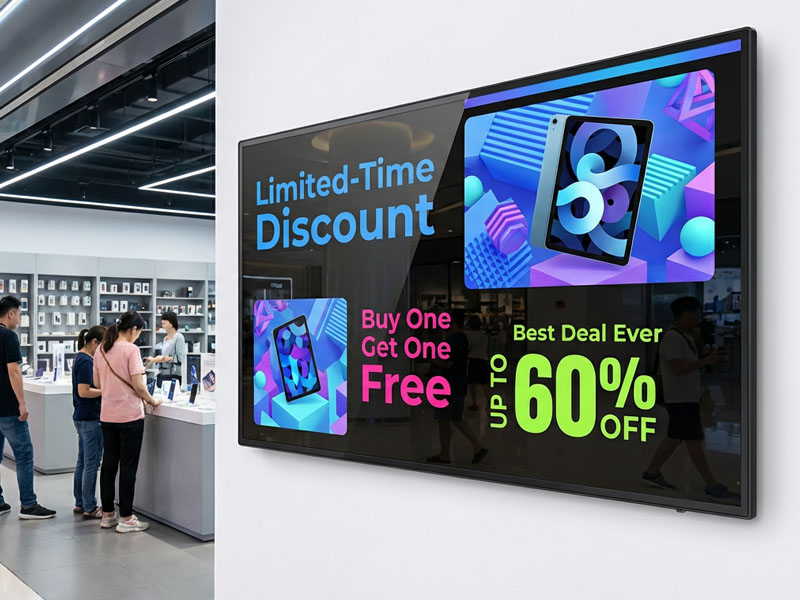
POS Digital Signage Display
3. Cost
- LED Displays: Generally, LED displays are more expensive, especially direct-view LEDs, due to the advanced technology and high-quality components involved. However, their superior image quality, brightness, and energy efficiency may justify the higher cost, particularly for outdoor or large-scale digital signage applications.
- LED-backlit LCDs, however, are more affordable and provide a similar quality of image as traditional LCDs, making them a popular choice for cost-effective solutions.
- LCD Displays: LCD digital signage displays tend to be less expensive compared to LED displays because they are based on older technology. However, they still offer good value for money and can be more budget-friendly for indoor applications with moderate lighting.
4. Durability and Lifespan
- LED Displays: LED displays (especially direct-view LEDs) are extremely durable and long-lasting. They are designed to operate for many years without degradation in performance. Their ability to withstand outdoor elements makes them a perfect choice for digital signage in harsh environments.
- LED-backlit LCDs also have a longer lifespan compared to traditional backlit LCD displays, but they are still vulnerable to burn-in issues if not properly maintained.
- LCD Displays: Traditional LCD displays may not be as durable as LED options. Their lifespan can be affected by the backlight technology, which can degrade over time. Additionally, LCD displays are more susceptible to damage from environmental factors such as humidity and temperature.
5. Viewing Angles and Contrast
- LED Displays: Direct-view LED displays offer superior viewing angles and high contrast ratios, meaning the image quality remains consistent from various angles and in different lighting conditions. The high contrast ratio also ensures that the screen delivers vibrant colors and deep blacks.
- LED-backlit LCDs also offer better contrast and viewing angles compared to older LCD models but may not perform as well as direct-view LEDs.
- LCD Displays: Standard LCD displays often have more limited viewing angles and lower contrast compared to LED displays. This can lead to color distortion and reduced image clarity when viewed from an angle, making them less ideal for high-traffic areas or public displays where viewers are often positioned at varying distances.
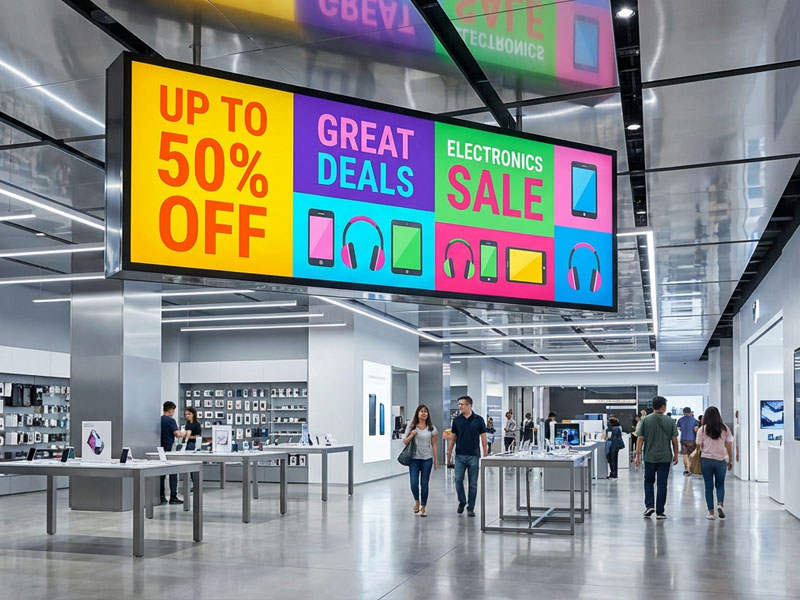
digital signage display
6. Applications and Suitability
LED Displays:
- Outdoor Digital Signage: The high brightness and weather-resistant properties make LED digital signage displays perfect for outdoor applications such as billboards, transit stations, and sporting events.
- Large-Scale Digital Displays: Ideal for large, high-traffic areas like shopping malls, airports, or public squares due to their superior performance in bright environments.
LCD Displays:
- Indoor Applications: LCD digital signage is best suited for indoor environments with controlled lighting, such as retail stores, corporate offices, and exhibition halls.
- Smaller Digital Signage: LCD is also a great option for smaller display screens or where budget constraints are important, like menu boards and kiosks.
Conclusion
Both LED and LCD digital signage displays offer distinct advantages depending on your application needs. If you need high brightness, energy efficiency, and long-lasting durability for outdoor digital signage, LED displays (particularly direct-view LEDs) are the best choice. On the other hand, LCD displays are more affordable and well-suited for indoor use in environments where lighting is controlled.