How Does a Smart Panel Work?
A smart panel is an advanced control interface that allows users to interact with and manage various smart devices and systems in their environment. These panels typically come in the form of touchscreens and integrate seamlessly with smart home, office, or industrial automation systems, enabling centralized control over everything from lighting and climate to security and entertainment. But how exactly does a smart panel work, and what makes it an essential component in modern smart environments?
In this article, we’ll dive into the workings of a smart panel, its key features, and how it enhances control and automation for homes, offices, and beyond.
Key Components of a Smart Panel
- Display Screen
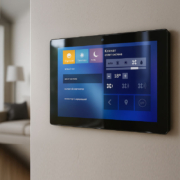
The core of any smart panel is its display screen, typically a capacitive touchscreen that allows users to interact with the system through touch gestures like tapping, swiping, and zooming. Smart panels often feature high-resolution displays that provide clear, crisp visuals for controlling connected devices, showing device statuses, and providing real-time feedback. - Processor and Operating System
The performance and functionality of a smart panel are driven by its processor and operating system (OS). Most smart panels run on robust operating systems like Android, Linux, or specialized embedded systems. These OS platforms enable smart panels to run applications, manage devices, and integrate with various home automation protocols (e.g., Zigbee, Z-Wave, KNX, or Wi-Fi). - Connectivity Options
Smart panels rely on wireless and wired connectivity to communicate with the devices they control. Common connectivity options include Wi-Fi, Bluetooth, Zigbee, Z-Wave, Ethernet, and Power over Ethernet (PoE). These protocols allow the smart panel to connect with devices like lights, thermostats, locks, sensors, cameras, and more. - Sensors
Some smart panels are equipped with built-in sensors, such as temperature sensors, humidity sensors, and light sensors, which allow the panel to interact with the environment in a more intelligent way. These sensors can detect environmental conditions and trigger automation actions, such as adjusting the temperature when the room becomes too warm or turning off lights when no motion is detected. - User Interface (UI) and Software
A well-designed user interface (UI) is crucial to a smart panel’s usability. The UI is what users interact with to manage their devices and view system status. It includes menus, buttons, icons, and touch-based controls, all of which make it easy for users to access the functions they need. Smart panels may come with pre-installed software, and often have the flexibility for custom software solutions tailored to the specific needs of the environment (home, office, hotel, etc.). - Cloud Integration
Many modern smart panels also offer cloud integration, which allows users to control their systems remotely via smartphones or other devices. Cloud connectivity ensures that the smart panel can be updated, monitored, and accessed from anywhere in the world, even if you’re not physically near the panel.
smart panel
How Does a Smart Panel Control Devices?
A smart panel typically functions as a central hub for all connected smart devices. Here’s how the process generally works:
- Connection to Devices
The smart panel communicates with devices via wireless (Wi-Fi, Zigbee, etc.) or wired connections (Ethernet, PoE). Once connected, the devices can be controlled through the smart panel interface. - User Interaction
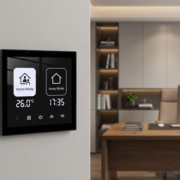
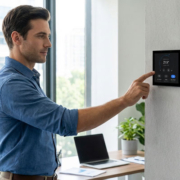
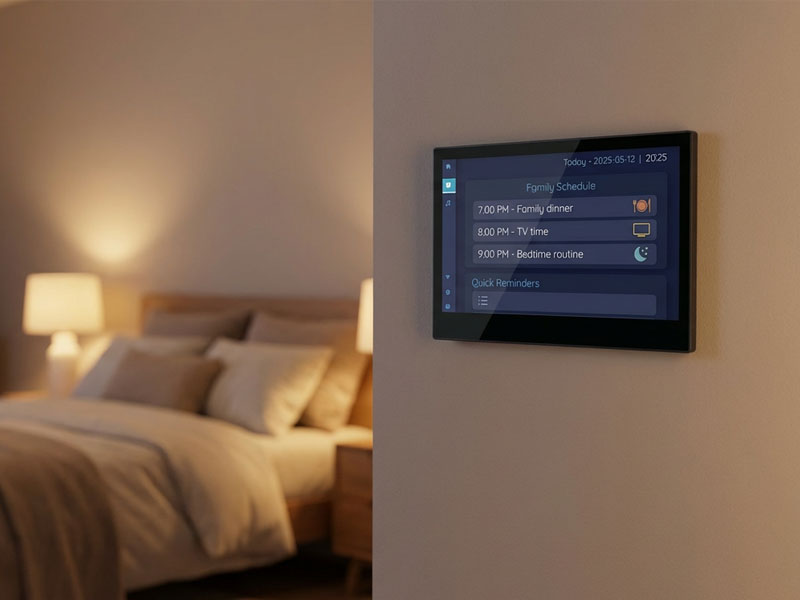
Users interact with the smart panel through its touchscreen interface. The panel may show the status of various devices (e.g., lights on or off, thermostat temperature, door lock status) and allow users to change settings, activate or deactivate devices, and set schedules or automation rules. - Automation and Scripting
Many smart panels support automation, allowing devices to operate based on triggers like time of day, sensor data, or other events. For example, users can set an automation rule such that the lights automatically dim when the room’s light sensor detects low levels of ambient light or when motion is no longer detected in the room. Automation rules can be customized directly via the smart panel’s interface or through connected mobile apps. - Control via Voice Assistants
Many smart panels can integrate with popular voice assistants such as Amazon Alexa, Google Assistant, and Apple Siri. This allows users to control devices via voice commands in addition to touch-based controls. For instance, you might say, “Alexa, turn off the lights in the conference room,” and the smart panel will relay that command to the connected smart lights. - Real-Time Feedback
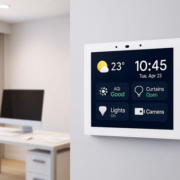
The panel continuously updates in real-time to reflect the current status of all connected devices. If you adjust the temperature or turn off a light, the panel’s display will instantly show the updated status. The system may also send notifications or alerts to users in response to certain events, such as a door being left unlocked or a motion sensor detecting activity when the system is in “away” mode.
The Benefits of Smart Panels
- Centralized Control
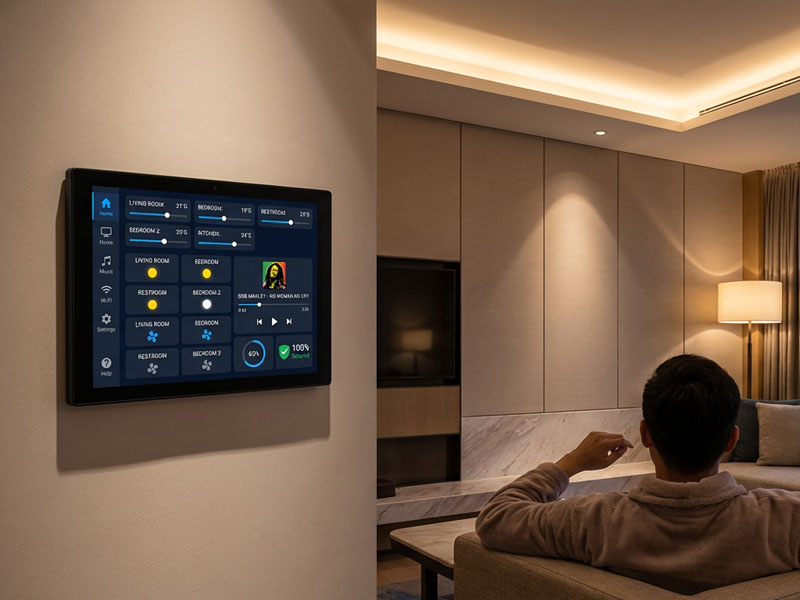
A smart panel centralizes control for all smart devices in a single, accessible location. This makes it easy for users to manage multiple devices and systems simultaneously, rather than having to interact with each device individually. Whether you’re adjusting the lighting, controlling the HVAC, or monitoring security cameras, a smart panel provides an all-in-one solution for managing your smart environment. - User-Friendly Interface
Thanks to intuitive touchscreen interfaces, smart panels are easy to use, even for those with minimal technical knowledge. The user interface is designed to be as simple and accessible as possible, with clear icons, touch gestures, and a straightforward layout for managing devices. - Integration with Other Systems
Smart panels often integrate with other home automation platforms like smart lighting, security systems, HVAC systems, and audio/video setups. This allows users to create a truly connected environment where all systems work together to improve efficiency, comfort, and security. - Customization and Flexibility
Many smart panels, especially those offered by companies like Portworld, support OEM/ODM solutions, allowing businesses and consumers to customize the hardware, software, and branding to their exact needs. Whether it’s a hotel looking for a specialized interface or a home seeking specific automation rules, smart panels can be tailored to suit any requirement. - Energy Efficiency
Smart panels can help improve energy efficiency by providing better control over your environment. For example, they can be programmed to optimize heating and cooling based on occupancy, or turn off lights and electronics when not in use. This helps reduce waste and lowers energy costs.
smart panel
Portworld’s Smart Panel Solutions
Portworld offers a variety of smart control panels ideal for smart home and office automation. Some of the standout models include:
- YC-SM41P: A 4-inch smart control panel that integrates with a wide range of smart devices and features a high-resolution touchscreen for smooth, responsive control.
- YC-SM1011: A 10.1-inch smart control panel perfect for more complex smart environments, offering seamless control of lights, security, climate systems, and more.
- YC-SM10P: A 10.1-inch POE panel with a sleek design, ideal for integration in modern homes and commercial spaces. Supports multi-touch gestures and real-time control.
- YC-SM08P: An 8-inch panel designed for easy integration into various wall-switch boxes, providing efficient control of automation systems in homes, offices, and hotels.
Portworld’s OEM/ODM solutions allow clients to fully customize their smart panels for their specific needs, whether it’s for home, office, or hospitality spaces. From software customization to hardware design, Portworld provides the flexibility and support to create the ideal smart control solution for any environment.
A smart panel works as the heart of a connected system, offering users a centralized, intuitive interface to control and automate their devices. Whether it’s for a smart home, office, or industrial application, these panels provide real-time feedback, support automation, and help streamline everyday tasks. By integrating advanced connectivity, a user-friendly interface, and powerful automation capabilities, smart panels are a must-have for anyone looking to optimize their smart environment.
With Portworld’s smart control panels, businesses and homeowners can enjoy fully customizable, reliable, and efficient solutions to meet their unique needs. Whether you need to control a few devices or manage an entire ecosystem, Portworld’s smart panels deliver cutting-edge performance and seamless integration.