
What to Include in an OEM Motherboard Project Specification
An OEM motherboard project begins with a well-defined technical specification. Before choosing a processor or designing the PCB, manufacturers must understand the product’s intended application, performance needs, interfaces, operating system, and production goals.
A thorough specification can minimize design revisions, reduce development time, and help ensure that the finished motherboard satisfies the end product’s requirements.
1. Product Application and Project Requirements
First, define where and how the motherboard will be used.
Key details include:
- Target application: industrial control, robotics, smart home, digital signage, medical terminals, or IoT devices.
- Operating environment: indoor, outdoor, industrial, or embedded installation.
- Expected operating hours and service life.
- Installation method and available space.
- Required certifications and industry standards.
The intended application guides the hardware architecture and environmental requirements.
2. Processor and Computing Performance
Selecting the processor is one of the most critical decisions in motherboard design.
Specify:
- Processor platform: Rockchip, NVIDIA, MediaTek, Intel, AMD, or another platform.
- CPU architecture and number of cores.
- Required GPU performance.
- AI computing needs, including NPU performance in TOPS, where applicable.
- Video decoding and encoding capabilities.
- Memory and storage capacity.
For example, Rockchip platforms such as the RK3566, RK3568, RK3576, and RK3588 address a range of performance needs, from embedded control to AI edge computing and advanced multimedia applications.
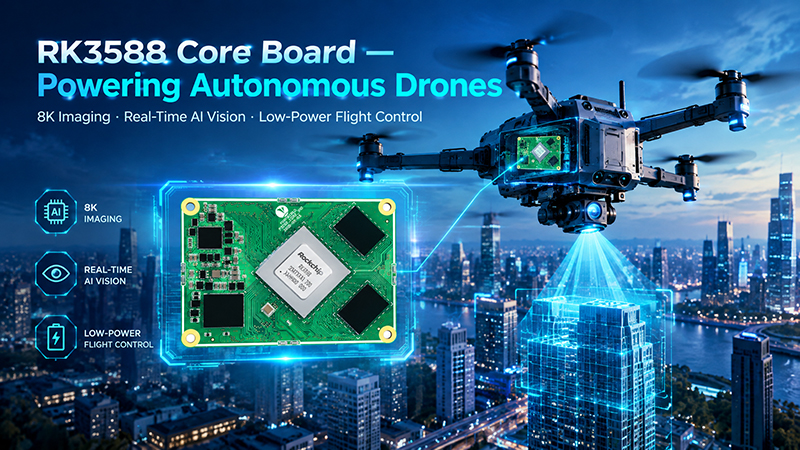
RK3588 Core Board- Drone Application Scene
3. Memory and Storage
Define the required memory and storage configuration before PCB design.
| Item | Specification to Confirm |
|---|---|
| RAM | Capacity and LPDDR generation |
| eMMC | Capacity and version |
| Flash | NAND or SPI Flash requirements |
| Expansion | MicroSD, NVMe, or other storage |
| Upgrade | Fixed or customizable configuration |
Memory and storage choices can affect PCB layout, power consumption, system performance, and overall cost.
4. Interfaces and Connectivity
Identify every interface the finished product requires. This is especially important for industrial and IoT motherboards.
Typical interfaces include:
- USB 2.0 / USB 3.0
- HDMI / DisplayPort / MIPI DSI
- Ethernet
- Wi-Fi / Bluetooth
- RS232 / RS485 / UART
- CAN Bus
- GPIO / I2C / SPI
- MIPI CSI camera interfaces
- Audio input and output
- PoE, if required
Also specify the number of ports, connector types, pin assignments, and whether any interfaces require expansion.
5. Display and Touchscreen Requirements
For products that include a display, provide the following information:
- Screen size and resolution.
- Display interface, such as MIPI, LVDS, eDP, HDMI, or RGB.
- Touchscreen technology: capacitive or resistive.
- Brightness and viewing angle.
- Number of displays supported.
- Required display orientation and multi-screen functionality.
Providing the display model or its datasheet can help the engineering team assess compatibility at an early stage.
6. Operating System and Software
Hardware and software development should be planned together.
Specify:
Operating system, such as Android, Ubuntu, Debian, Buildroot, or Windows, based on platform compatibility.
- Required OS version and kernel.
- Device drivers and peripheral support.
- Boot time and startup behavior.
- BSP and SDK requirements.
- Application software and API integration needs.
- OTA update and remote management requirements.
For OEM projects, clarify whether you require a standard OS image, customized firmware, SDK documentation, or complete software integration.
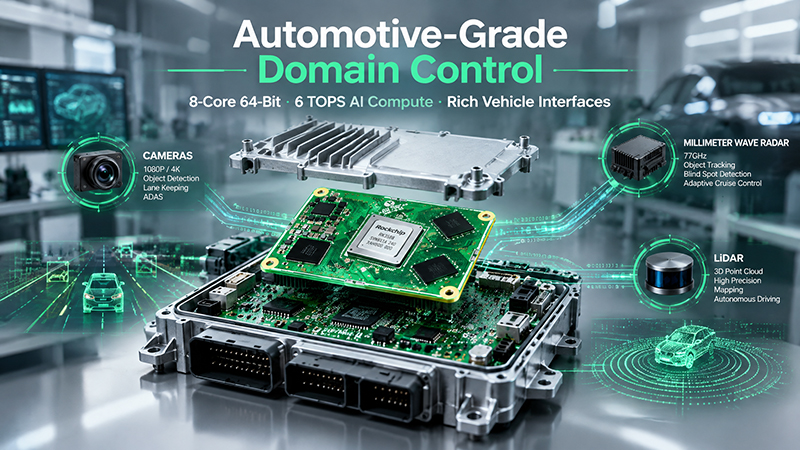
RK3588 Intelligent Driving Scene 2
7. PCB Dimensions, Mechanical Design, and Power Requirements
Mechanical and electrical requirements should be documented clearly.
- PCB and mechanical design
- Specify the board dimensions and thickness.
- Identify mounting-hole and connector locations.
- Define component-height limits.
- Describe cooling and heat-dissipation requirements.
- State enclosure dimensions and installation constraints.
Power requirements
- Specify the input-voltage range.
- State power consumption.
- Define standby-power requirements.
- Identify the power-connector type.
- Describe required protection measures.
- Note battery or PoE support, where applicable.
Documenting these details helps prevent integration issues during prototype testing.
8. Environmental and Reliability Requirements
For industrial and commercial products, specify the anticipated operating conditions.
Consider:
- Operating and storage temperature ranges.
- Humidity range.
- Vibration and shock requirements.
- System-level protection against dust and moisture.
- EMC and ESD requirements.
- Expected duration of continuous operation.
- Identify any required certifications or test standards at the start of the project.
9. Prototype, Testing, and Mass Production
An OEM motherboard specification should also outline the development and production plan.
Confirm:
- Prototype quantity.
- Functional testing requirements.
- Performance and stability testing.
- Required test reports.
- Pilot production quantity.
- Target mass production volume.
- Estimated annual demand.
- Packaging and delivery requirements.
Discussing these details early enables manufacturers to plan component sourcing, production capacity, and quality control.
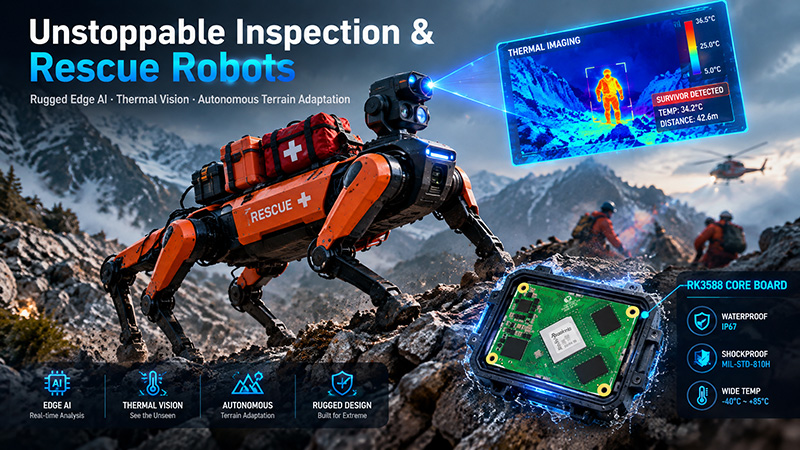
RK3588 Robot Application Scene 3
10. Project Timeline and Customization Scope
Finally, clarify the expected development schedule and responsibilities.
| Project Stage | Key Deliverables |
|---|---|
| Requirement review | Technical specification confirmation |
| Hardware design | Schematic and PCB design |
| Prototype | Engineering samples |
| Software development | BSP, drivers, and OS adaptation |
| Testing | Functional and reliability verification |
| Mass production | PCBA and finished motherboard delivery |
Also specify which components need customization, including the PCB layout, RAM, storage, interfaces, firmware, enclosure, and branding.
Working with an OEM Motherboard Manufacturer
A comprehensive project specification provides the engineering team with a clear foundation. It also helps assess technical feasibility, forecast development costs, and plan for mass production.
Portworld develops customized embedded motherboards and System-on-Module solutions using Rockchip, NVIDIA, and other computing platforms. Our services include PCB and PCBA design, hardware customization, BSP and OS adaptation, SDK support, interface expansion, and OEM/ODM manufacturing.
Whether you are building an industrial IoT gateway, AI robot, smart display, or embedded control system, Portworld can assist throughout the process, from initial hardware design through mass production.
Planning an OEM motherboard project? Contact Portworld to discuss your technical requirements.

