Digital Signage Display Manufacturer with Linux customization
As digital signage becomes increasingly integrated with industrial equipment, retail systems, and smart building infrastructure, organizations require displays that extend beyond basic advertising content delivery. These systems demand dependable embedded solutions, purpose-built interfaces, and adaptable software frameworks that can be customized to align with specific products and operational environments.
Linux represents a critical option for such initiatives due to its capacity to enable flexible system architecture and embedded application development. For enterprises seeking a digital signage display provider capable of Linux customization, the essential consideration is identifying a partner with comprehensive expertise in both display hardware and embedded Linux integration.
The Significance of Linux Customization in Digital Signage Applications
While a conventional digital signage display may suffice for elementary media playback functions, advanced applications frequently demand enhanced system-level control. Organizations may require customized initialization sequences, pre-configured applications, tailored network configurations, specialized communication protocols, or connectivity with peripheral devices.
Linux customization enables the operating system and application framework to be structured according to these specifications. Contingent upon the underlying hardware architecture, implementation may encompass system image modification, application installation, device configuration, interface customization, and integration with proprietary customer software.
For example, an industrial information terminal may need to communicate with external controllers through serial interfaces. A self-service kiosk may require a dedicated application to launch automatically after startup. A commercial information display may need to connect to a local server or content management platform.
These requirements should be considered together with the display, motherboard, and peripheral hardware during product development.
Embedded Hardware and Linux Must Work Together
Linux customization is not only a software task. Successful implementation depends on compatibility between the operating system, processor platform, display panel, touchscreen controller, network interfaces, and other peripherals.
The embedded motherboard determines which interfaces and hardware resources are available. The Linux software environment must then support the selected components through the appropriate kernel configuration, drivers, system services, and application-level integration.
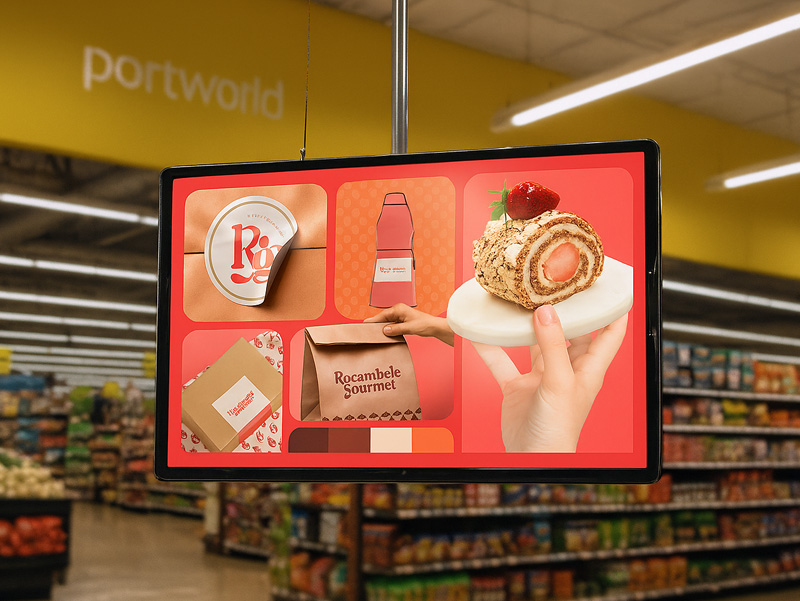
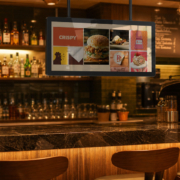
ultra thin hanging advertising screen
Depending on project requirements, engineering work may include:
- Linux system configuration: Customize the system image, boot behavior, system services, and application startup.
- Display and touchscreen integration: Configure supported display interfaces, resolution, touch input, and related drivers.
- Peripheral interface support: Integrate available USB, Ethernet, serial, GPIO, audio, or other interfaces where supported by the selected hardware.
- Network and Communication Configuration: Customize Ethernet, Wi-Fi, and application-level communication protocols to align with project specifications.
- Application Deployment: Pre-install customer applications, establish runtime environments, and configure automatic initialization when necessary.
- System Validation: Conduct comprehensive testing of the integrated hardware and software configuration to verify compatibility and ensure operational reliability.
- The precise scope of customization is contingent upon the selected motherboard model, Linux distribution variant, kernel version, and necessary peripheral components. These specifications must be established and confirmed prior to developing a finalized customization strategy.
Selecting the Appropriate Embedded Platform
Digital signage implementations do not uniformly demand identical computational resources. A basic information display system may emphasize consistent playback performance and fundamental connectivity features, whereas an interactive terminal application may require enhanced processing capacity, expanded memory allocation, increased storage capability, and comprehensive peripheral support.
Embedded platforms utilizing Rockchip processors represent a viable option for suitable Linux-based display applications. The optimal platform selection depends on the required application performance metrics, graphics rendering capabilities, display output specifications, available interface options, and software compatibility requirements.
As an illustration, Portworld provides embedded motherboard solutions including the YC-P3566 built upon the Rockchip RK3566 architecture and the P3576 constructed on the Rockchip RK3576 architecture. These motherboards can be assessed for projects demanding embedded computing functionality and display integration capabilities. Corresponding Linux distributions, device drivers, and interface specifications must be validated against the intended hardware configuration parameters.
Selecting the motherboard and establishing Linux specifications at an early stage can effectively minimize compatibility challenges throughout the prototyping and production phases.
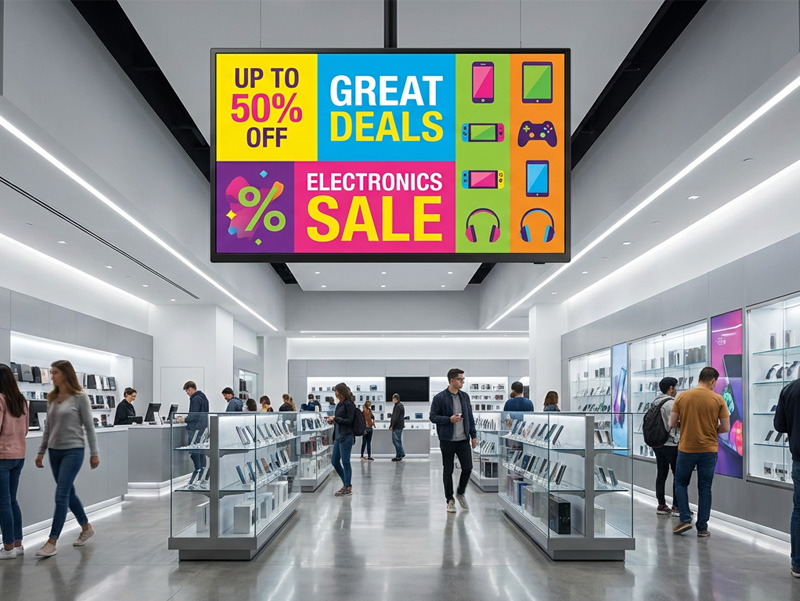
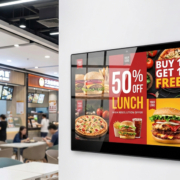
ultra thin hanging advertising screen
Linux Customization for Different Digital Signage Applications
Linux-based digital signage systems can address diverse commercial and industrial applications, contingent upon the hardware architecture and software specifications.
Within retail settings, displays may execute specialized promotional software, establish connections to on-site content management systems, or interface with additional retail infrastructure. In self-service kiosks and point-of-sale terminals, Linux may deliver a restricted application environment featuring customized initialization procedures and designated peripheral connectivity options.
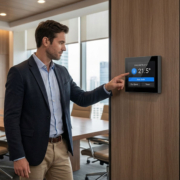
Industrial displays and information terminals may necessitate interaction with control systems, measurement devices, or supplementary equipment. Conference room displays may require integration with calendar management platforms or organizational information networks. In all scenarios, the necessary Linux configuration should align with the application’s specific operational requirements rather than depending on a standardized system configuration.
For initiatives involving extended operational deployment, it is equally critical to establish protocols for software deployment, system restoration, parameter administration, and routine support activities.
Original Equipment Manufacturer (OEM) and Original Design Manufacturer (ODM) Solutions for Linux-Based Display Systems
Organizations creating proprietary digital signage solutions frequently require capabilities that extend beyond standard commercial displays. These organizations may need a purpose-built enclosure, specialized input/output connectivity, a custom-configured embedded processor board, a purpose-adapted Linux operating system, and pre-configured application software.
A manufacturing partner offering comprehensive OEM and ODM capabilities can manage the coordination of these diverse requirements throughout the entire product development lifecycle.
Customization options encompass display technology selection, embedded processor configuration, connectivity interface implementation, Linux kernel and distribution customization, application software pre-installation, branding elements and housing design, and manufacturing workflow optimization. The engagement scope may vary from enhancing an established product platform to engineering a fully customized hardware and software solution tailored to specific application requirements.
To facilitate timely project completion, clients should communicate their functional requirements, preferred Linux distribution version, necessary connectivity specifications, display performance parameters, and software integration objectives at the earliest project stage. This approach enables the engineering team to make informed decisions regarding platform architecture, assess technical feasibility, and conduct comprehensive prototype validation.
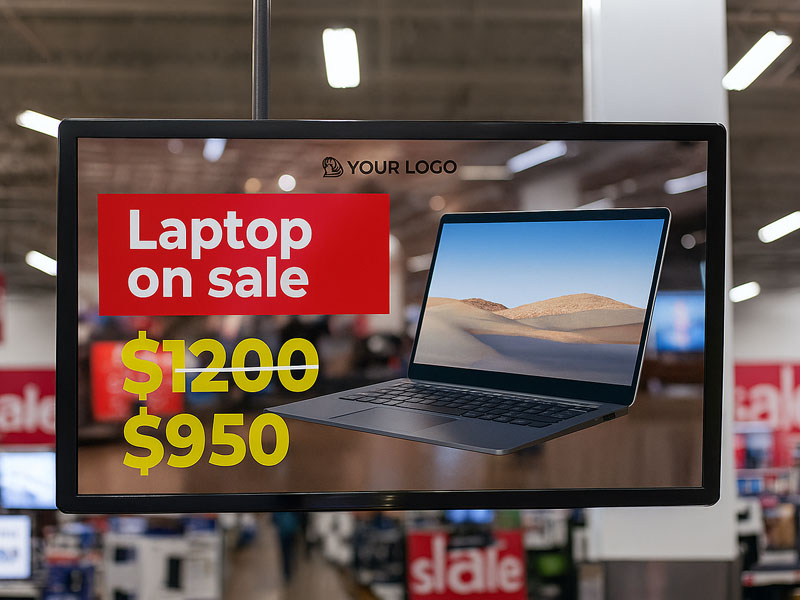
Wall-Mounted Digital Signage display
Critical Considerations When Selecting a Linux-Capable Digital Signage Manufacturer
When assessing a digital signage manufacturer, it is essential to look beyond the simple designation of “Linux compatibility.” The fundamental question that must be addressed is determining what degree of Linux support and customization your specific project necessitates.
Verify the processor architecture and Linux distribution that are supported, confirm the accessibility of necessary drivers, and validate that both the display and peripheral interfaces have undergone proper testing. Inquire regarding the manufacturer’s methodology for application deployment, initialization configuration, system validation, and technical documentation provision.
Additionally, it is prudent to examine production consistency and sustained availability. A Linux-based display system intended for commercial or industrial applications should feature a well-documented hardware specification and a viable strategy for ongoing software support and future manufacturing continuity.
Establishing explicit requirements and conducting thorough technical validation at an early stage can substantially mitigate unforeseen engineering complications throughout the project lifecycle.
Portworld: Digital Signage and Linux Customization Solutions
Portworld, a division of Sunworld Technology Limited, delivers digital signage displays, touchscreen solutions, embedded motherboards, and bespoke hardware configurations designed for commercial and industrial environments.
Drawing upon more than 18 years of expertise in touchscreen and embedded hardware technologies, Portworld facilitates OEM/ODM initiatives encompassing display integration, embedded computing platforms, system configuration, and tailored product development.
The company’s comprehensive product range encompasses multiple display configurations, point-of-sale touch interfaces, interactive display systems, and embedded motherboard alternatives including the YC-P3566 and P3576 models. Throughout each project engagement, clients may address hardware specifications, Linux operating system requirements, connectivity options, software implementation, housing design modifications, and manufacturing logistics.
Linux compatibility varies according to platform specifications; consequently, the appropriate distribution version, kernel configuration, device drivers, display connectivity standards, and peripheral capabilities must be evaluated relative to the intended system architecture prior to implementation.
Through strategic alignment of display infrastructure and embedded computing specifications, Portworld assists clients in assessing comprehensive solutions tailored to their digital signage requirements.
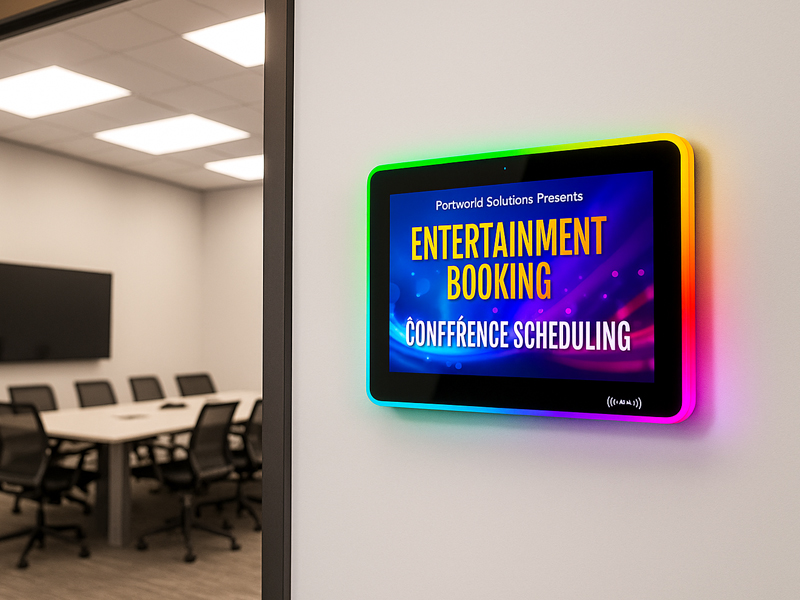
YC-LE156
15.6″ Meeting Room Display PanelsEstablish Your Linux-Based Digital Signage Solution
Selecting a digital signage display manufacturer equipped with Linux customization capabilities enables organizations to develop solutions that align precisely with their specific application needs.
The optimal strategy involves treating the display specifications, embedded hardware, Linux environment, interfaces, and application workflow as a unified initiative. This approach can streamline the development process, enhance system compatibility, and establish a well-defined progression from prototype evaluation to commercial-scale manufacturing.
Seeking a digital signage display manufacturer offering Linux customization services? Reach out to Portworld to explore your display requirements, embedded motherboard alternatives, Linux setup, and OEM/ODM development solutions.