How to Customize a Digital Signage Display for a Specific Application
Digital signage displays have become increasingly prevalent across diverse settings, including retail establishments, dining facilities, hospitality venues, medical institutions, conference spaces, transportation hubs, and manufacturing environments. Nevertheless, a display system engineered for retail advertising purposes may prove inadequate for applications such as self-service ordering kiosks or outdoor information dissemination systems. Each specific use case presents distinct specifications regarding display dimensions, luminosity levels, tactile responsiveness, network capabilities, operating systems, and physical deployment methods.
For organizations engaged in the development of proprietary commercial display solutions, the ability to tailor a digital signage display to meet particular application requirements is fundamental. The objective extends beyond merely substituting the screen or housing components. Rather, it encompasses the development of an integrated display system that aligns with the operational context, accommodates the necessary software infrastructure, and demonstrates consistent manufacturability at the projected production volume.
digital signage display wall mounted
Commence with Application Requirements, Not Display Specifications
Prior to determining which digital signage display to implement, establish the functional objectives of the device and identify the intended installation location.
A retail promotional display may serve primarily to showcase marketing videos, merchandise details, and corporate branding materials. A restaurant self-service ordering station requires a highly responsive touch interface and integration with point-of-sale software systems. A hospitality information display may necessitate a compact form factor and dependable internet connectivity, whereas a conference room display system may require seamless integration with scheduling applications or collaborative work platforms.
These distinctions influence virtually every hardware selection decision. A display utilized for passive promotional purposes may not necessitate touch capability, whereas an interactive self-service kiosk relies on dependable touch responsiveness. A screen positioned in a high-luminosity retail environment may demand elevated brightness levels compared to a display situated in a regulated interior setting.
Initiate the process by recording the intended use case, intended audience, physical placement location, hours of operation, anticipated user engagement, and underlying technology framework. This approach furnishes the manufacturer with a substantive foundation for proposing an appropriate system configuration rather than recommending a standardized display that could necessitate expensive adjustments at a later stage.
Select Appropriate Display Dimensions, Light Output, and Input Interface Technology
Display characteristics must correspond to the distance from which content will be viewed, the available space for installation, and the nature of user interaction anticipated.
Compact screens prove suitable for point-of-sale terminals, environmental control systems, condensed information displays, and integrated commercial apparatus. Expansive displays frequently serve better purposes for promotional content, community announcements, navigational systems, and ceiling-mounted visual signage. The most suitable dimensions depend on the nature of the content, the distance from which viewers will observe it, and the surrounding physical context rather than proportions in isolation.
Light intensity represents an equally critical factor. Enclosed-space displays typically have distinct specifications compared to screens positioned adjacent to apertures or exposed to solar radiation. Exterior installations may necessitate high-intensity display panels, appropriate weatherproofing measures, and heat dissipation systems. The requisite luminosity and protective certifications must be validated according to the particular deployment scenario.
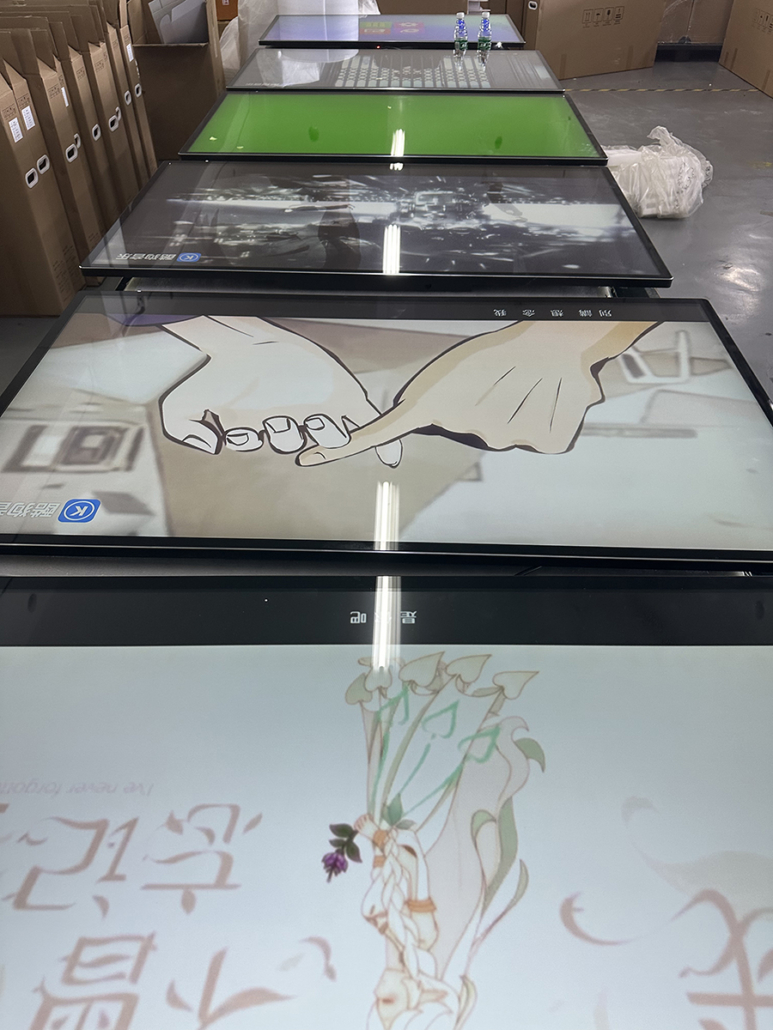
digital signage display wall mounted
Touch technology implementation requires careful alignment with specific application requirements. Project teams must evaluate whether multi-touch functionality is necessary for users, assess the frequency of screen interaction, and determine whether the display construction is compatible with the operational environment. For applications demanding specialized optical characteristics, an optical bonding display warrants thorough consideration.
Portworld provides a comprehensive selection of commercial touch display solutions, encompassing POS displays, wall-mounted digital signage, optical bonding configurations, and outdoor signage systems. Choosing an appropriate base model establishes a foundation for subsequent application-specific modifications.
Customize the Hardware Around the Installation
The enclosure, mounting infrastructure, connectivity interfaces, and power delivery mechanisms can prove equally critical as the display panel itself.
For wall-mounted advertising displays, the enclosure must accommodate particular mounting specifications and cable management pathways. A countertop POS terminal may necessitate a sturdy base, minimal spatial footprint, and convenient access to peripheral connection ports. An embedded display may require customized dimensions or specialized mounting points to integrate seamlessly into machinery, kiosks, or control systems.
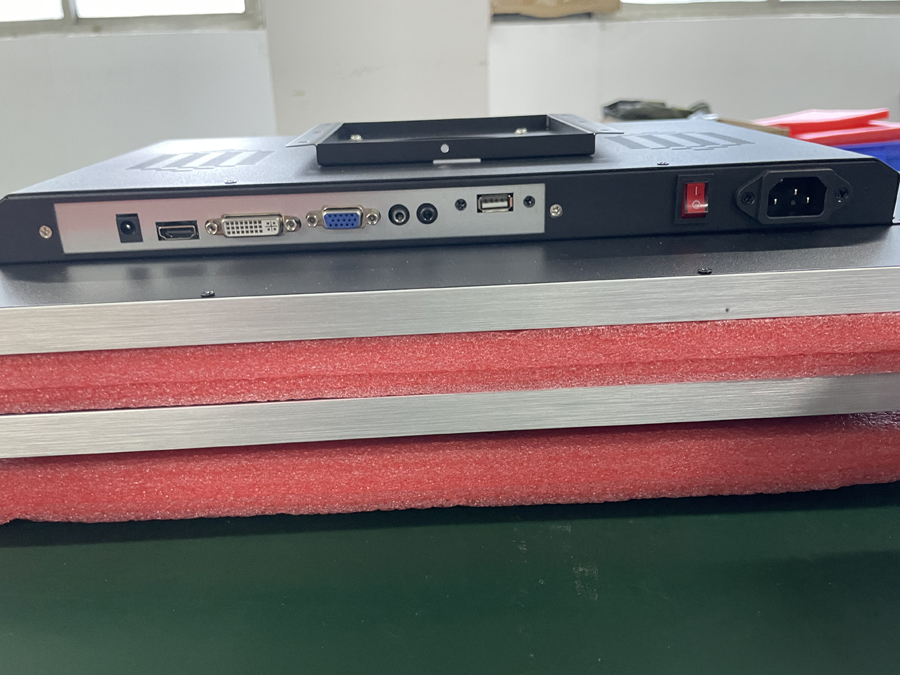
Connectivity planning should proceed concurrently with hardware design. Depending on the specific application, necessary connections may encompass Ethernet, Wi-Fi, Bluetooth, USB, serial protocols, audio capabilities, or supplementary connections for peripheral devices and integrated systems. Power consumption specifications and cable organization strategies should be addressed prior to finalizing the enclosure configuration.
For multi-location deployments, standardizing hardware configurations across all facilities is advantageous, as it streamlines installation procedures, facilitates maintenance operations, simplifies component replacement, and enables more efficient bulk procurement planning.
Portworld’s OEM/ODM capabilities enable collaborative discussions regarding enclosure design specifications, interface configurations, branding elements, and additional hardware requirements, contingent upon the chosen model and applicable project specifications.
Select an Operating System and Software Configuration
A digital signage display delivers value only when it possesses the capability to execute the software necessary for the intended application.
Android may prove appropriate for numerous standalone commercial displays, interactive terminals, and application-driven devices. Linux-based configurations warrant consideration for initiatives involving specialized system integration or embedded software needs. The optimal selection is determined by application requirements, software compatibility, performance specifications, maintenance protocols, and available development resources.
Software customization may encompass system configuration, customized startup screens, automated application initialization, pre-loaded applications, and integration with the customer’s content management infrastructure. For initiatives employing remote content management systems, the team must validate network specifications, device enrollment procedures, content scheduling mechanisms, and remote update protocols prior to finalizing the hardware configuration.
Should a customer maintain an existing software platform, the display manufacturer must verify compatibility with the requisite operating system, processor architecture, interface specifications, and application dependencies. This verification is particularly critical for large-scale deployments, where incompatibility identified following production initiation can compromise the entire project scope.
Portworld delivers comprehensive hardware and software customization capabilities for compatible products, encompassing operating system setup and integration strategy development. Particular software engineering and infrastructure-level modifications must be assessed in relation to the designated hardware configuration.
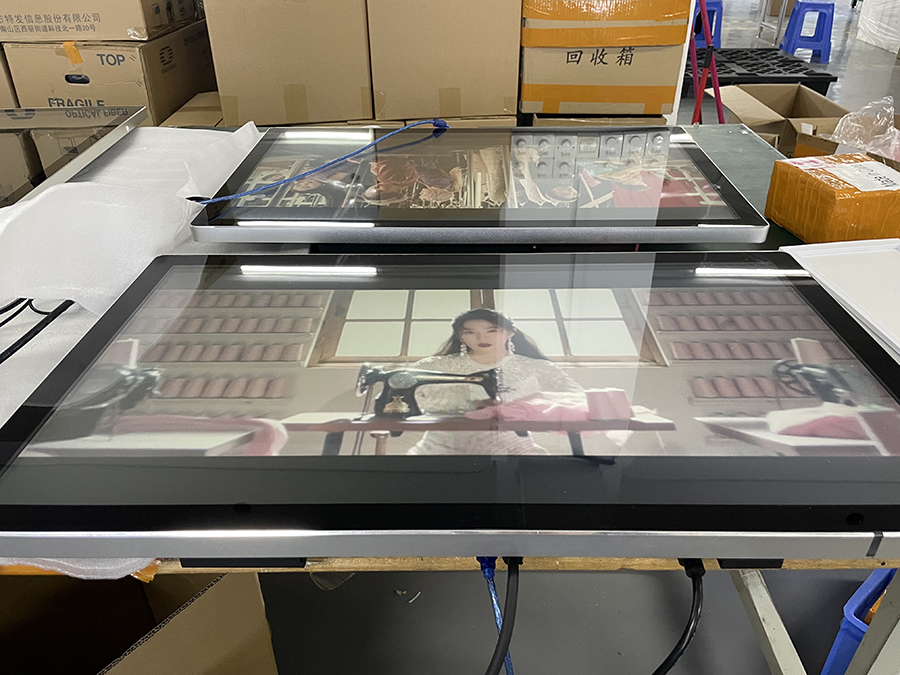
digital signage display wall mounted
Align Display Specifications with Industry-Specific Requirements
Optimal customization selections become evident when the intended application is examined thoroughly.
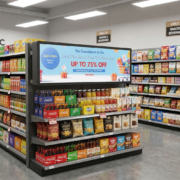
Retail and Commercial Shopping Environments: Promotional display systems must communicate marketing content with clarity and complement the establishment’s aesthetic standards. Contingent upon the specific application, stakeholders may emphasize expanded screen dimensions, minimized frame widths, wall-mounted installation, or centralized content administration capabilities.
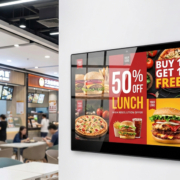
Food Service and Self-Service Kiosk Operations: Menu selection and point-of-sale platforms generally demand tactile responsiveness, consistent operational reliability, data network access, and interoperability with payment processing or transaction management devices. These technical specifications should be validated during the planning and development phase.
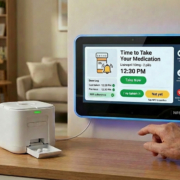
Hospitality and Corporate Facilities: Status notification systems and collaborative workspace panels may necessitate space-efficient designs, seamless integration, network infrastructure support, and compatibility with facility management or calendar synchronization applications.
Medical and Community Information Services: Display installations for patient registration, wayfinding, or informational purposes should be engineered according to required connectivity options, physical deployment conditions, universal design principles, and integrated software processes.
Exterior Advertising: Exterior signage installations demand thorough evaluation of solar exposure visibility, moisture and particulate resistance, thermal fluctuations, air circulation requirements, and structural integrity. Specifications must be assessed for the entire system rather than extrapolated solely from the display component.
Identical display dimensions can fulfill distinctly different applications, therefore operational specifications should guide the selection of ultimate hardware and software architecture.
Develop Prototypes and Conduct Testing Prior to Full-Scale Manufacturing
Validating a trial unit before authorizing large-scale manufacturing represents one of the most critical phases in digital signage customization.
A trial installation enables the client to evaluate actual image fidelity, tactile responsiveness, installation compatibility, control panel usability, system functionality, and data transmission reliability. Should the equipment function continuously over prolonged intervals, the assessment methodology should encompass ambient operating conditions, heat dissipation characteristics, system reliability, and the designated deployment environment.
Application validation should incorporate the client’s genuine software wherever feasible. Verify that the software initializes appropriately, establishes connections with necessary infrastructure, manages display orientation and pixel dimensions appropriately, and facilitates the intended upgrade and service protocols.
Upon sample approval, it is essential to document the hardware configuration, software version, enclosure design, branding, packaging, and testing requirements. This approved specification serves as the authoritative reference for production and facilitates the reduction of variations across manufacturing batches.
For customized projects, the development schedule and minimum order quantity are contingent upon the extent of hardware modifications, software development efforts, component sourcing timelines, and production specifications. These parameters must be established and agreed upon with the manufacturer prior to transitioning the project into mass production.
Engage a Digital Signage Manufacturer That Provides Customization Capabilities
Customizing a digital signage display necessitates expertise across multiple disciplines, encompassing display hardware, embedded computing, mechanical engineering, operating systems, application integration, and manufacturing processes. Partnering with a manufacturer possessing comprehensive understanding of these requirements can substantially streamline the coordination process.
Portworld, a division of Sunworld Technology Limited, brings more than 18 years of specialized experience in touchscreen and embedded hardware solutions. The company’s comprehensive product range encompasses digital signage displays, point-of-sale touch displays, optically bonded displays, collaborative meeting room panels, and outdoor signage solutions.
Portworld facilitates OEM/ODM customization consultations for customers designing application-specific commercial displays, addressing hardware configuration, enclosure and branding specifications, software configuration, and integration requirements tailored to individual projects. The scope of customization options is contingent upon the chosen model and applicable technical specifications.
An effective approach to initiating the customization process involves furnishing Portworld with comprehensive information regarding the intended application, desired screen dimensions, deployment environment, operating system preferences, necessary connectivity interfaces, software platform requirements, branding specifications, and projected order volume. This information enables Portworld to assess whether an existing model satisfies the requirements or if additional development efforts are warranted.
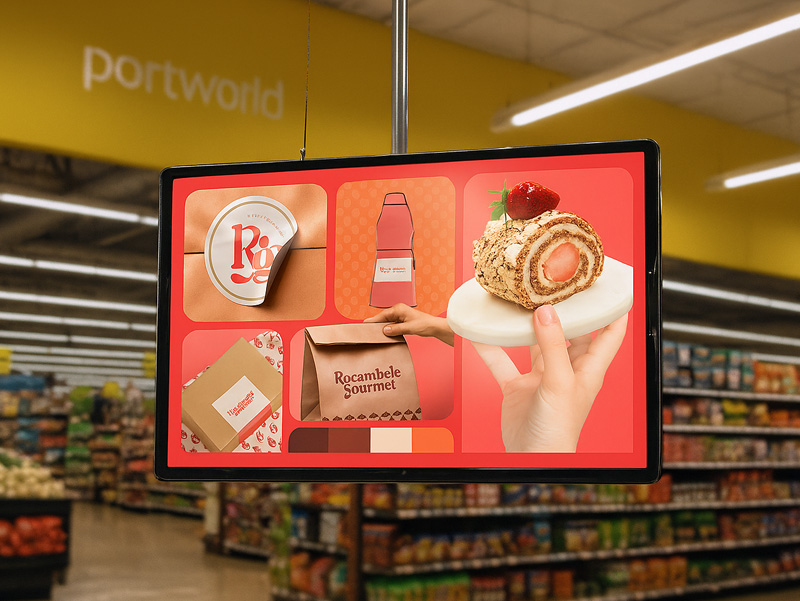
ultra thin hanging advertising screen
Develop a Digital Signage Solution Aligned with Your Application Requirements
Customizing a digital signage display necessitates a thorough comprehension of the operational function the device must execute. Display specifications, hardware interfaces, operating systems, enclosure design, and software integration must function cohesively as a unified solution.
For distributors, brand proprietors, and system integrators, meticulous specification definition and prototype evaluation can minimize integration complications and establish a more standardized product suitable for large-scale deployment.
Should you be undertaking a customized digital signage initiative, Portworld welcomes the opportunity to review your application specifications, preferred configuration parameters, and manufacturing objectives. The appropriate integration of display hardware and customization services can facilitate the transformation of your project specifications into a viable commercial display solution.