How to choose an outdoor digital signage display?
Outdoor digital signage displays are extensively deployed across smart cities, transportation hubs, retail environments, gas stations, electric vehicle charging facilities, and public information networks. Nevertheless, outdoor settings present distinctive obstacles that interior displays do not encounter, such as intense solar radiation, precipitation, particulate matter, climatic fluctuations, and mechanical stress.
Selecting an appropriate outdoor digital signage display necessitates thorough evaluation of luminosity, protective specifications, structural integrity, communication capabilities, and sustained operational dependability.
1. Select Appropriate Brightness Levels for Outdoor Visibility
The paramount consideration for outdoor displays is screen luminosity.
Interior displays typically operate at approximately 300–500 nits, whereas outdoor environments demand substantially elevated brightness to maintain legibility beneath direct sunlight.
Recommended luminosity specifications:
- 700–1000 nits: Partially sheltered outdoor locations with restricted solar exposure
- 1000–1500 nits: Outdoor environments experiencing moderate solar radiation
- 1500–3000 nits: Locations subject to direct sunlight exposure
High-luminosity displays guarantee optimal readability in venues including:
- Public transit stations
- Railway terminals
- Fuel distribution centers
- Commercial complex entrances
- Outdoor promotional spaces
Numerous displays incorporate an environmental illumination sensor that dynamically modulates brightness in response to ambient lighting circumstances, thereby minimizing energy utilization during evening hours.
2. Verify Waterproof and Dustproof Protection
Outdoor displays must endure exposure to rain, dust, and moisture.
The IP rating system classifies environmental protection levels.
Prevalent outdoor classifications:
IP65
Offers:
- Complete dust exclusion
- Resistance to pressurized water streams
- Applicable to the majority of outdoor installations
- IP66/IP67

55″ Outside Floor Standing Digital Signage
Delivers enhanced protection suitable for demanding conditions.
Ideal for:
- Seaside locations
- Manufacturing and industrial facilities
- Severe atmospheric conditions
A dependable outdoor digital signage system should incorporate:
- Completely sealed housing construction
- Water-resistant connection points
- Materials with anti-corrosion properties
- Effective water evacuation mechanisms
3. Evaluate Temperature Resistance Capabilities
Outdoor display systems must function reliably across diverse climatic conditions.
A comprehensive outdoor signage solution should accommodate an extensive operating temperature spectrum.
Standard specifications:
- Operating temperature range: -20°C to +60°C
- Optional enhanced range: -30°C to +70°C
Critical components include:
- Industrial-strength materials and components
- Advanced thermal regulation mechanisms
- Active cooling systems or passive heat dissipation solutions
- Supplementary heating apparatus for frigid climates
This guarantees dependable performance across:
- Snow-covered geographical areas
- Arid and semi-arid regions
- High-temperature outdoor settings
4. Select Appropriate Glass Protection Solutions
Public-facing outdoor displays are susceptible to unintentional impact or deliberate destruction.
Suggested protective measures:
Tempered Glass
Key benefits:
- Enhanced resistance to impact forces
- Extended operational lifespan
- Increased safety characteristics upon fracture
IK10 Anti-Vandal Glass
Applicable to:
- Public transit infrastructure
- Urban technology installations
- Outdoor interactive terminals
Core attributes:
- Robust impact-resistant construction
- Shielding against mechanical stress
- Extended durability and service longevity
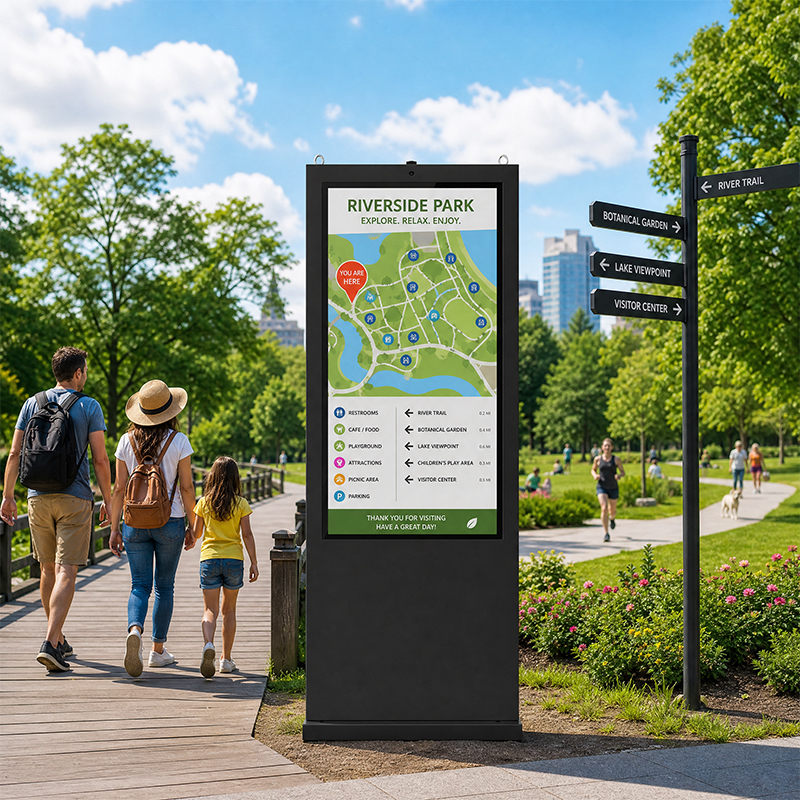
yc-5520 outdoor floor stand digital kiosk
5. Determine the Optimal Installation Configuration
Outdoor digital signage is available in various structural configurations.
Wall-Affixed Display Systems
Applicable for:
- Building entry points
- Retail establishments
- Public notification zones
Freestanding Kiosk Units
Applicable for:
- Commercial shopping centers
- Transit hubs
- Recreational destinations
Exterior Advertising Enclosures
Applicable for:
- Commercial promotion initiatives
- Intelligent urban infrastructure projects
- Community notification frameworks
6. Evaluate Network Connectivity Solutions
Outdoor signage systems necessitate dependable data transmission capabilities.
Primary connectivity alternatives:
Ethernet
Key benefits:
- Consistent signal reliability
- Ideal for permanent installations
Wireless Fidelity (WiFi)
Key benefits:
- Simplified implementation
- Adaptable positioning options
4G/5G Mobile Networks
Key benefits:
Optimal for geographically isolated installations
Supplementary connectivity methods:
- Power over Ethernet (PoE)
- Bluetooth technology
- RS485 serial communication
- Internet of Things communication protocols
7. Selection of Appropriate Operating System and Hardware Infrastructure
Outdoor digital signage installations typically necessitate robust and dependable embedded computing platforms.
Prevalent operating system options:
- Android
- Linux
- Debian
- Ubuntu
- Yocto Linux
Processor alternatives:
- Rockchip RK3566
- RK3568
- RK3576
- RK3588
These platforms facilitate:
- 4K video playback capabilities
- Remote management functionality
- Artificial intelligence applications
- Internet of Things integration
8. Evaluation of Remote Management Capabilities
Extensive outdoor signage deployments require unified command and control mechanisms.
A comprehensive system should incorporate:
- Remote content distribution and updates
- Device performance monitoring
- Firmware maintenance and upgrades
- Cloud-based content management system integration
This approach substantially diminishes operational maintenance expenditures and enhances overall system efficiency.
Applications of Outdoor Digital Signage Displays
Outdoor displays find widespread application across multiple sectors:
- Transportation
- Bus terminals
- Railway stations
- Airport facilities
- Metro transit information systems
- Retail
- Store window displays
- Mall entrance signage
- Exterior marketing campaigns
- Energy
- Petrol station promotions
- Electric vehicle charging station interfaces
- Smart City
- Community information kiosks
- Public digital advertising infrastructure
- Portworld Outdoor Digital Signage Solutions
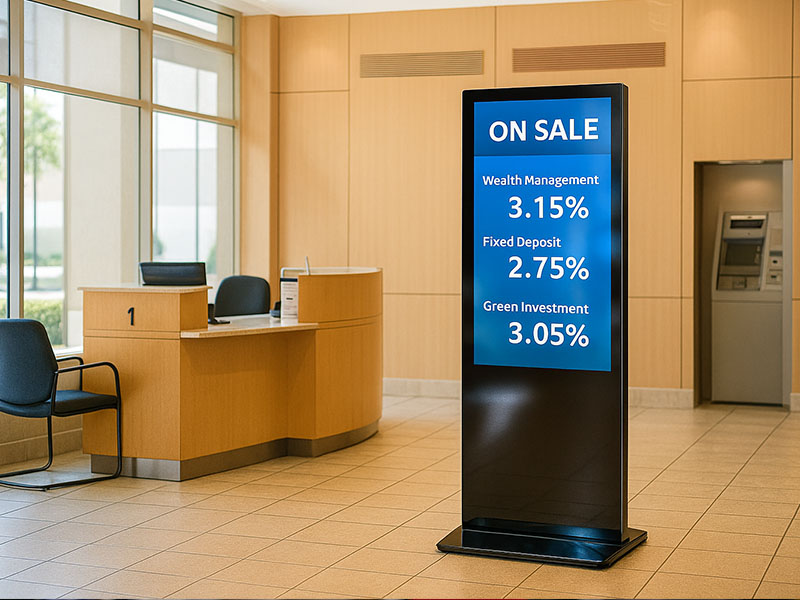
YC-5520FL
55″ Floor Standing Digital Signage
Portworld delivers tailored outdoor digital signage solutions engineered for rigorous commercial applications.
Key capabilities include:
- Display sizes ranging from 10.1″ to 65″
- Brightness levels between 1000–3000 nits
- IP65-rated waterproof construction
- IK10 anti-vandalism glass alternatives
- Compatibility with Android, Linux, and Windows platforms
- Processing options including RK3566, RK3568, RK3576, and RK3588 chipsets
- Multiple connectivity methods: Ethernet, WiFi, and 4G networks
- Integrated touchscreen and camera functionality
- Comprehensive OEM and ODM customization services
Primary use cases:
- Exterior advertising installations
- Urban information and communication systems
- Petrol station signage solutions
- Electric vehicle charging point terminals
- Public transit notification displays