How Matter Enables Multi-Brand Smart Home Integration
A significant obstacle in the development of smart home automation systems has consistently been the challenge of ensuring device interoperability. Manufacturers typically employ distinct technological ecosystems, which creates substantial difficulties for consumers attempting to integrate smart lighting fixtures, access control systems, environmental sensors, climate control units, and household appliances manufactured by various companies.
Matter was established to address this fundamental issue by establishing a standardized communication framework for smart home environments. This technology facilitates seamless interaction between devices manufactured by different companies and operating on different platforms through a unified communication protocol, thereby enhancing device compatibility, simplification of installation procedures, and overall user satisfaction.
Understanding Matter in Smart Home Automation
Matter represents an open-source connectivity standard for smart homes, created by the Connectivity Standards Alliance (CSA). Its primary purpose is to facilitate data exchange among intelligent devices, software applications, and technological platforms originating from different manufacturers.
Prior to the introduction of Matter, consumers frequently required multiple applications and control hubs to manage products from different manufacturers:
Brand A Smart Lights
↓
Brand A App
Brand B Smart Lock
↓
Brand B App
Brand C Thermostat
↓
Brand C App
Following the implementation of Matter:
Matter Smart Home Controller
↓
Smart Lights + Locks + HVAC + Sensors from Multiple Brands
A single unified interface enables the management of multiple devices simultaneously.
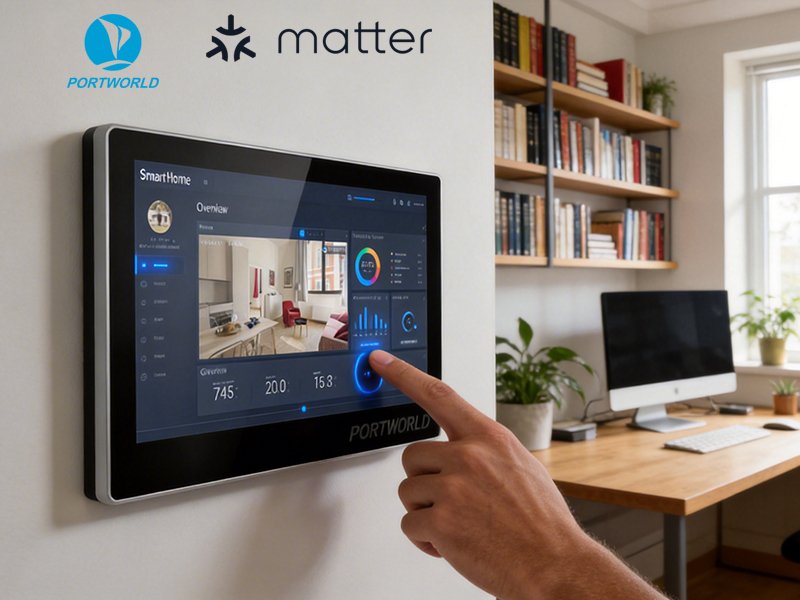
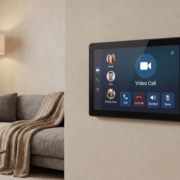
smart home control panel
How Does Matter Enable Multi-Brand Integration?
1. A Common Communication Language
Historically, distinct smart home manufacturers employed proprietary communication protocols and isolated cloud infrastructure.
Matter establishes a unified framework for seamless device-to-device information exchange.
For instance:
A smart control panel can interface with:
- Philips Hue lighting systems
- Smart locks manufactured by alternative suppliers
- HVAC control systems from competing brands
- Sensory devices from various manufacturers
without necessitating multiple proprietary ecosystems.
Matter leverages IP-based networking infrastructure including WiFi, Thread, and Ethernet, while Bluetooth Low Energy facilitates device provisioning and initialization.
2. Works Across Major Smart Home Ecosystems
Matter enhances interoperability among leading platforms, encompassing:
- Apple Home
- Google Home
- Amazon Alexa
- Samsung SmartThings
A Matter-certified device can be integrated into compatible ecosystems rather than remaining confined to a single manufacturer’s proprietary platform.
Example:
A homeowner acquires:
- Matter-compatible smart lighting
- Matter-compatible smart window coverings
- Matter-compatible climate control system
They can manage these devices via:
- Mobile applications
- Voice-activated assistants
- Intelligent control interfaces
3. Streamlines Smart Home Device Configuration
Conventional smart devices typically necessitate:
- Account creation
- Multiple application installations
- Integration of various cloud-based services
Matter streamlines the onboarding process.
Standard implementation:
- Activate the smart device
- Capture the Matter QR code
- Integrate the device into your smart home network
- Commence device management
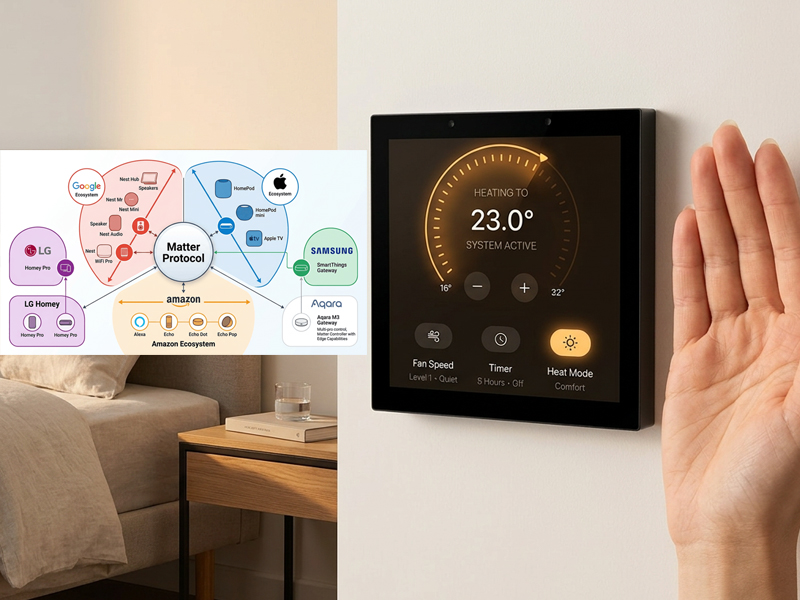
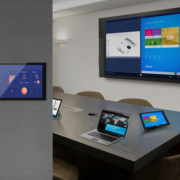
smart home control panel
Matter employs secure commissioning protocols to verify device authenticity and facilitate secure communication channels.
4. Facilitates Local Smart Home Management
Numerous conventional smart home infrastructures depend substantially on cloud-based platforms.
Matter prioritizes local network operations, delivering potential advantages including:
- Enhanced responsiveness
- Improved system dependability
- Minimized reliance on cloud infrastructure
Illustration:
A resident activates a smart control interface button:
Control Interface
↓
Matter Control Unit
↓
Automated Window Covering
The window covering reacts instantaneously without requiring cloud server processing.
Matter-Compatible Smart Control Panels
A Matter-compatible smart control panel serves as the unified central interface for managing multi-brand home automation systems.
System Architecture:
Smart Touch Control Panel
↓
Matter Controller / Gateway
↓
Matter Devices
The panel facilitates control over the following device categories:
- Lighting
- Intelligent bulbs
- Electrical switches
- Dimmer controls
- Climate Management
- Programmable thermostats
- Heating, ventilation, and air conditioning systems
- Temperature monitoring sensors
- Security Systems
- Electronic door locks
- Entry point sensors
- Motion detection sensors
- Window Treatments
- Motorized window coverings
- Automated blind systems
Matter technology provides comprehensive support for device classifications encompassing illumination systems, environmental control mechanisms, access control devices, sensor networks, and automated window treatment solutions.
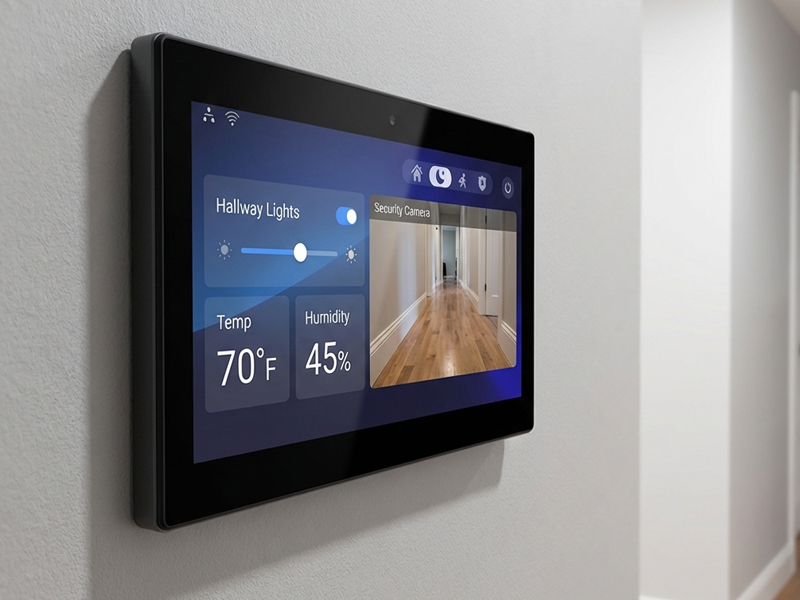
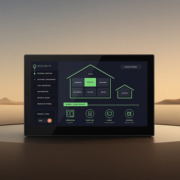
smart home control panel-1
Matter vs Traditional Smart Home Protocols
| Feature | Matter | Traditional Protocols |
|---|---|---|
| Brand Compatibility | High | Often limited |
| Ecosystem Support | Multiple platforms | Usually brand-specific |
| Setup | Simplified | Different methods |
| Communication | IP-based | Various proprietary methods |
| Expansion | Easier | Depends on ecosystem |
Is Matter Compatible with Zigbee and Other Devices?
Affirmative. Matter does not necessarily supplant existing technologies such as Zigbee.
Rather, bridges can facilitate the integration of existing devices into Matter ecosystems.
Illustration:
Zigbee Smart Light
↓
Zigbee-Matter Bridge
↓
Matter Smart Home Network
This approach enables existing smart devices to maintain functionality while achieving compatibility with Matter platforms.
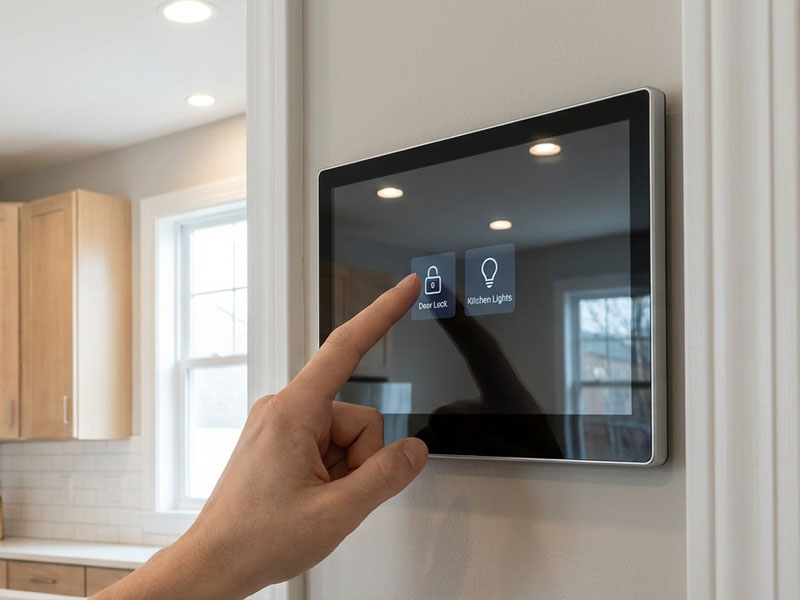
Illustration: Portworld Smart Control Panel Solution
For smart home automation initiatives, a touchscreen control panel can serve as the primary user interface while interfacing with Matter gateways and IoT systems.
Portworld smart control panels can be tailored for applications including:
- Smart homes
- Hotels
- Smart apartments
- Commercial buildings
Offerings can encompass:
ESP32-S3 Smart Touch Panels
Applicable for:
- IoT control
- Smart home interfaces
- Low-power automation
Capabilities:
- WiFi
- Bluetooth
- RS485
- Custom UI development
Android Smart Control Panels
Applicable for:
- Advanced smart home dashboards
- Multi-brand device control
- Building automation
Capabilities:
- Android/Linux support
- Ethernet/PoE
- Custom applications
- Gateway integration
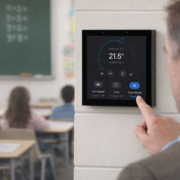
smart home control panel
Advantages of Matter-Based Smart Home Systems
Enhanced Cross-Brand Device Compatibility
Consumers have the flexibility to select products across multiple manufacturers.
Simplified System Scalability
Additional Matter-compatible devices can be integrated without requiring a complete system overhaul.
Improved User Experience
A unified smart control interface enables management of diverse device categories simultaneously.
Forward-Compatible Automation Infrastructure
Matter establishes a robust framework for emerging connected home technologies.
Matter facilitates multi-manufacturer smart home integration by establishing a standardized communication protocol that enables seamless interoperability among devices produced by various manufacturers.
Within residential properties, hospitality establishments, and commercial facilities, Matter-enabled smart control systems can deliver a consolidated management platform for regulating illumination, climate control systems, access control, window treatments, and Internet of Things devices manufactured by different vendors.