What Touchscreen Technology Is Best for Museum Digital Signage Displays?
Museums are increasingly adopting interactive digital signage displays to enhance visitor experiences. Rather than merely reading conventional information boards, visitors can now delve into artifacts, watch historical videos, zoom in on artwork details, and access multilingual content via touchscreen displays.
Nonetheless, selecting the appropriate touchscreen technology is crucial, as museums need displays that are robust, precise, user-friendly, and appropriate for public settings.
Capacitive Touchscreen: Optimal Choice for Interactive Museum Displays
For the majority of digital signage applications in museums, projected capacitive (PCAP) touchscreen technology is the favored option.
Like smartphones and tablets, PCAP touchscreens offer:
- Rapid response time
- Seamless multi-touch interaction
- Outstanding image quality
- Gesture support for actions such as zooming and swiping
- A modern and high-quality user experience
They are particularly well-suited for:
- Interactive exhibition guides
- Digital displays of artifact information
- Museum kiosks
- Educational touch panels
Infrared Touchscreen: Ideal for Large Museum Displays
Infrared (IR) touch technology is extensively utilized for large-format interactive displays.
The benefits include:
- Accommodates large screen dimensions
- Compatible with fingers, gloves, or stylus
- Exceptional durability for public environments
- Facilitates group interactions
Infrared touch technology is frequently employed for:
- Expansive interactive walls
- Digital mapping solutions
- Exhibition tables
- Public information kiosks
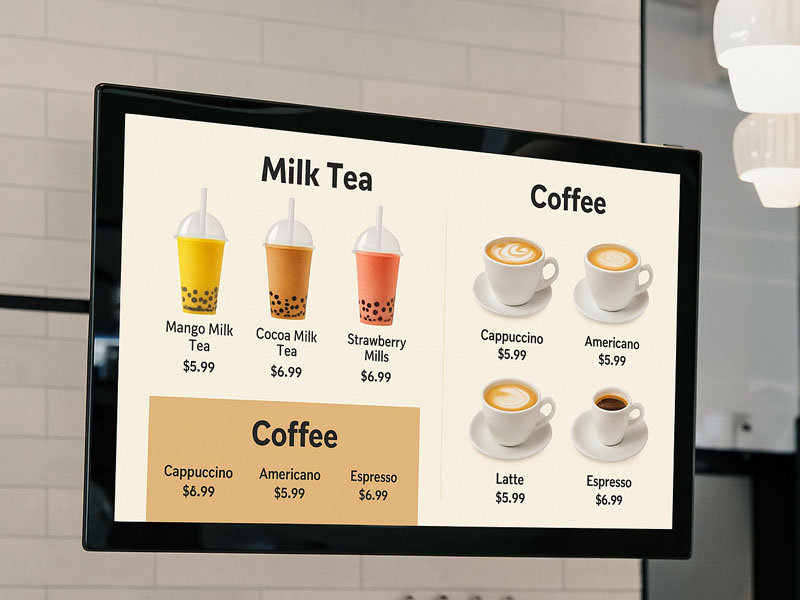
digital signage display
Capacitive vs Infrared Touch: Which One Should Museums Choose?
| Feature | Capacitive Touch | Infrared Touch |
|---|---|---|
| Touch Experience | ⭐⭐⭐⭐⭐ | ⭐⭐⭐⭐ |
| Multi-Touch | Excellent | Excellent |
| Large Screen Support | Medium | Excellent |
| Image Clarity | Excellent | Excellent |
| Glove Operation | Limited | Supported |
| Best Application | Interactive kiosks | Large exhibition displays |
For small and medium-size museum displays, capacitive touch is usually the better choice. For large public interactive screens, infrared touch can provide better flexibility.
Key Requirements for Museum Touchscreen Displays
1. Durable Glass Protection
Museum displays endure thousands of interactions each day.
Recommended features include:
- Tempered glass
- Anti-scratch surface
- Anti-glare coating
- Robust touch panel structure
2. High-Quality Display Panel
Museums frequently showcase artwork, historical images, and videos, making display quality essential.
Key specifications are:
- IPS panel
- High resolution
- Wide viewing angle
- Accurate color reproduction
3. Reliable 24/7 Operation
In contrast to consumer tablets, museum digital signage necessitates commercial-grade hardware.

Floor Standing Digital Signage-1
A professional solution should provide:
- Long-term operation
- Efficient heat dissipation
- Stable performance
- Remote content management
Portworld Interactive Touch Displays for Museums
Portworld offers tailored touchscreen digital signage solutions specifically designed for museums, galleries, and cultural exhibitions.
Solutions encompass:
Interactive Touch Displays
Features include:
- 10-point capacitive touch
- Support for Android/Linux
- Customizable screen sizes
- Optional NFC/RFID modules
- Integration of cameras
- OEM/ODM customization
Applications include:
- Museum information terminals
- Interactive exhibits
- Digital guides
- Educational displays
- YC-55MT Series Digital Signage Display
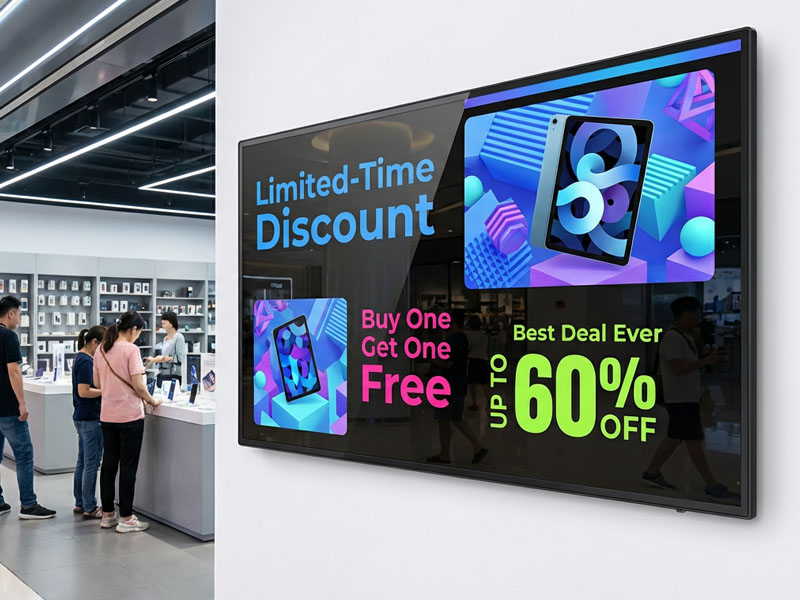
POS Digital Signage Display
The YC-55MT Series is ideal for museum settings that demand dependable information displays.
Key features include:
- Display options ranging from 10.1″ to 65″
- Support for Android/Linux/Debian
- Optional touchscreen functionality
- Installation in both portrait and landscape orientations
- 24/7 operational capability
The optimal touchscreen technology for digital signage in museums is contingent upon the specific application:
PCAP capacitive touch → Ideal for interactive kiosks and visitor terminals
Infrared touch → Most suitable for large exhibition screens and public interactive walls
Through touchscreen customization, support for Android/Linux, and OEM/ODM manufacturing capabilities, Portworld assists museums in developing captivating and dependable interactive digital experiences for contemporary visitors.